Finding the reason for a sport
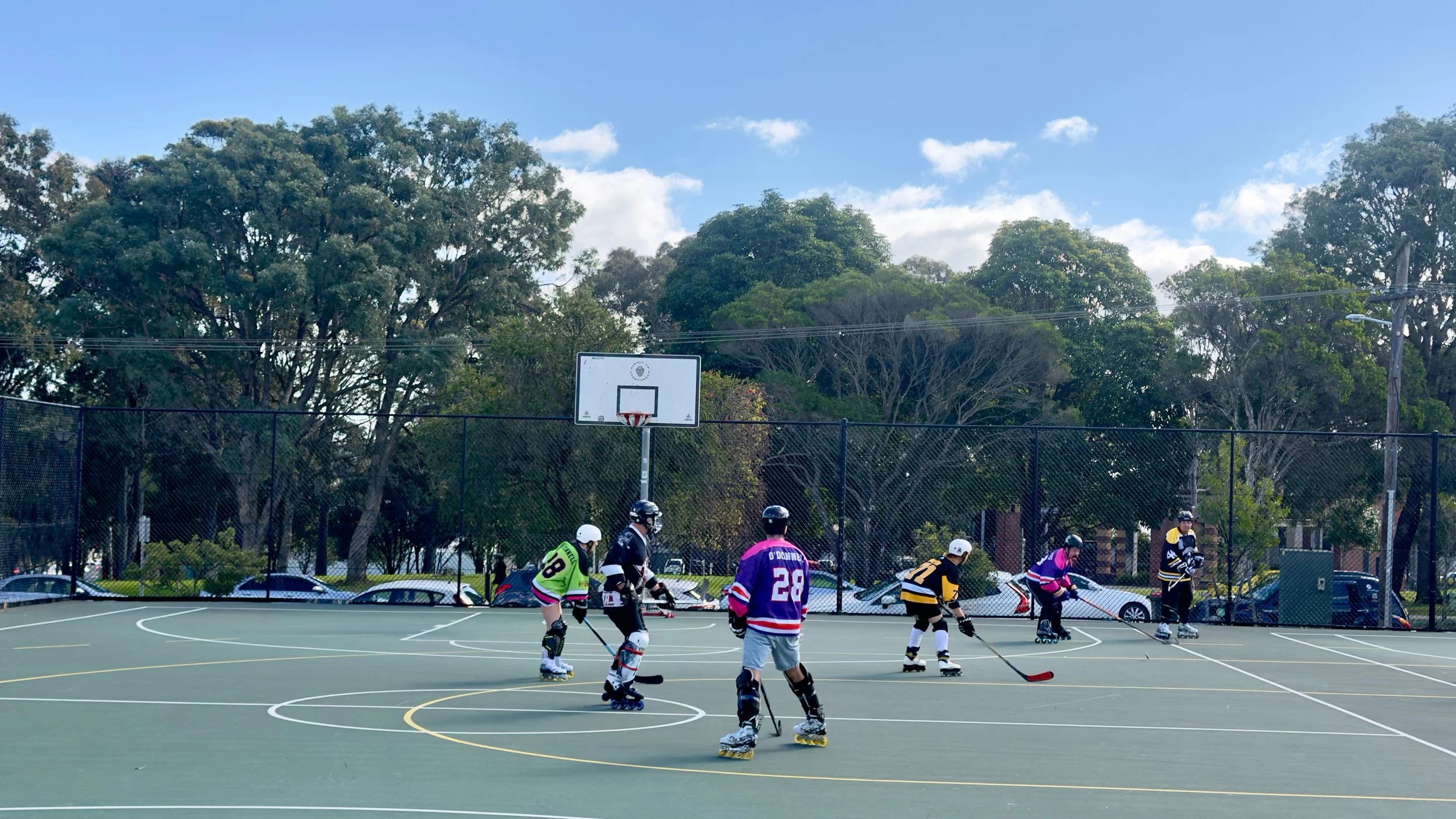
A plane rumbled overhead as I stood beside a basketball court in Sydenham.
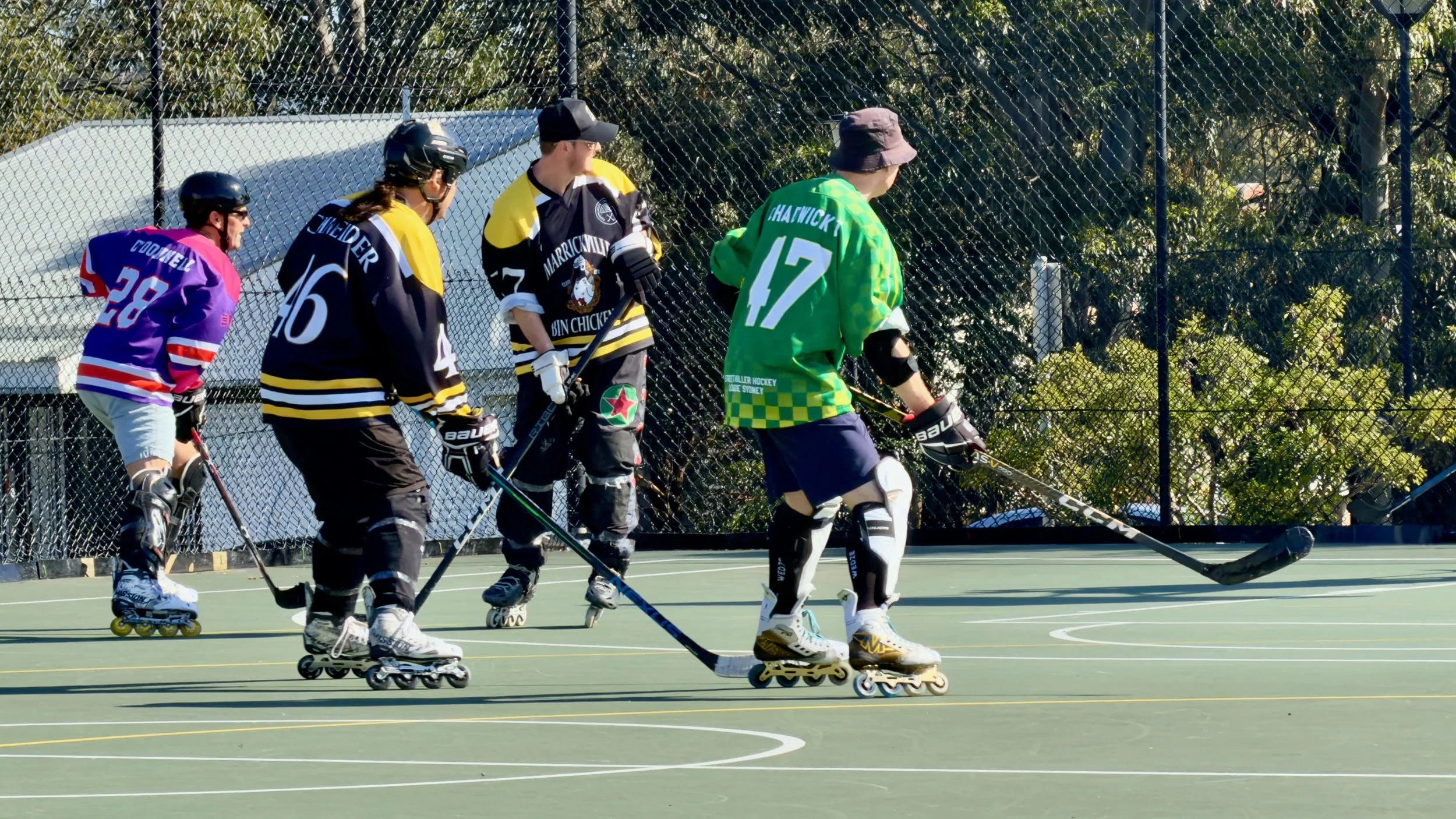
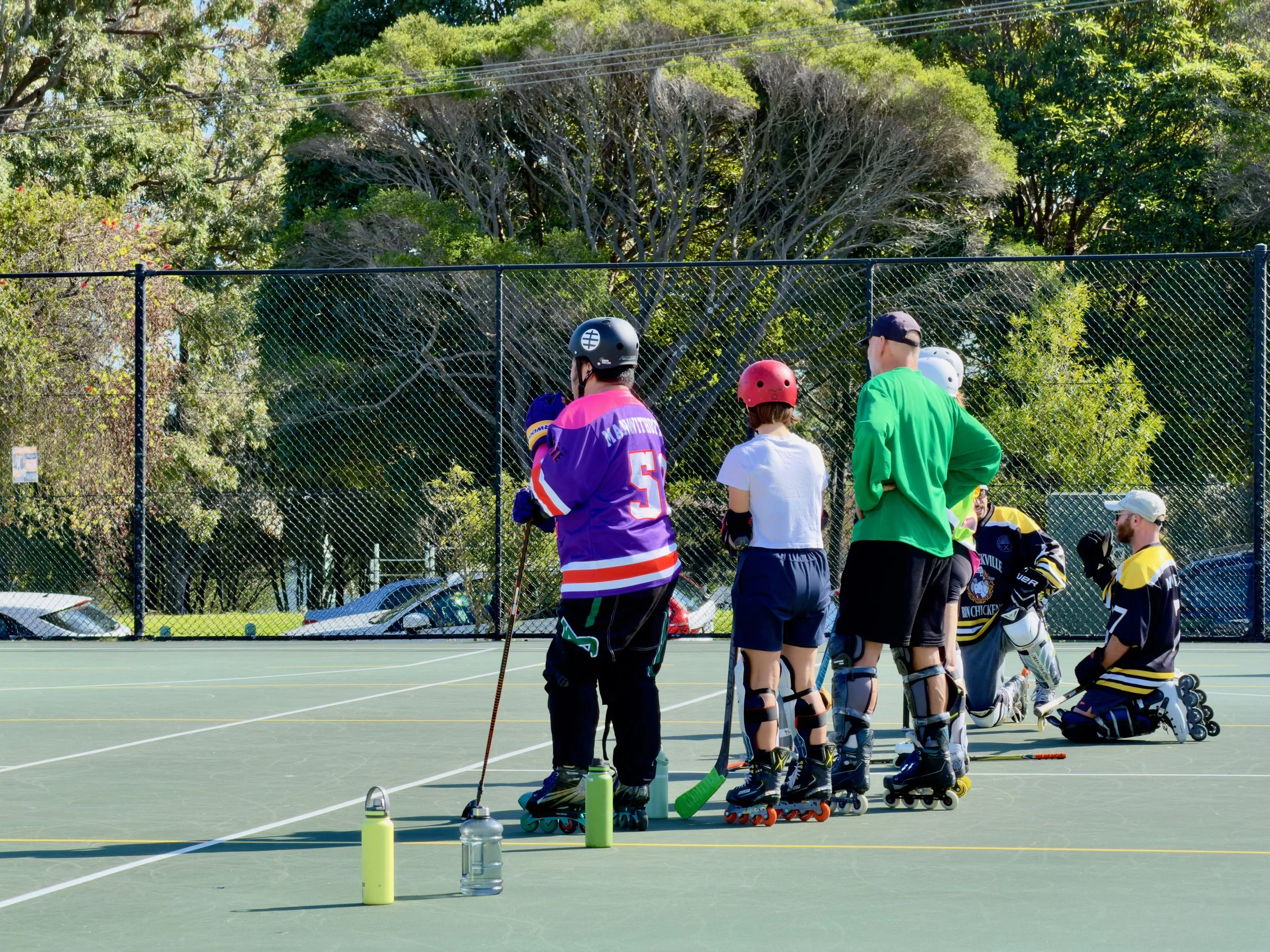
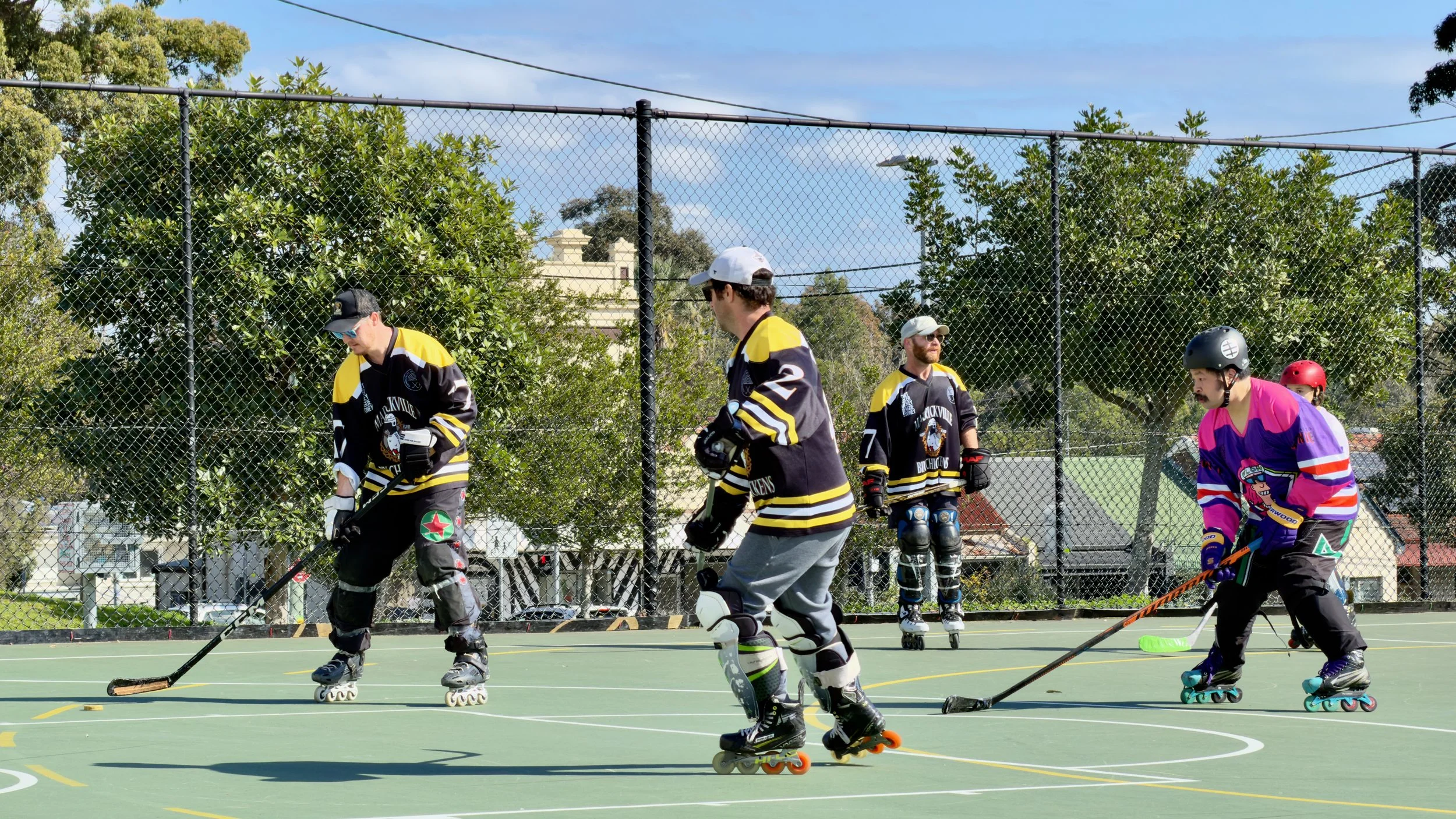
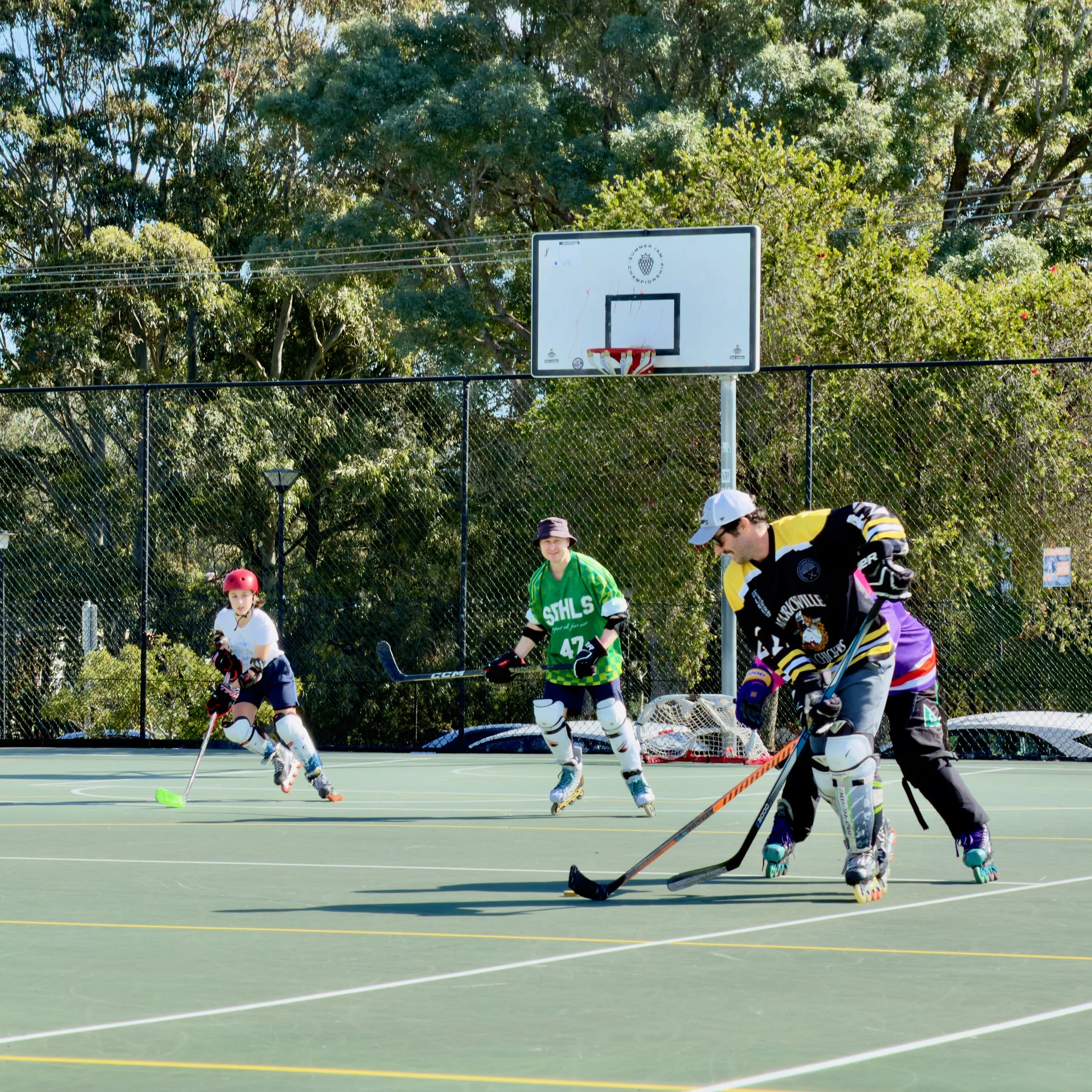
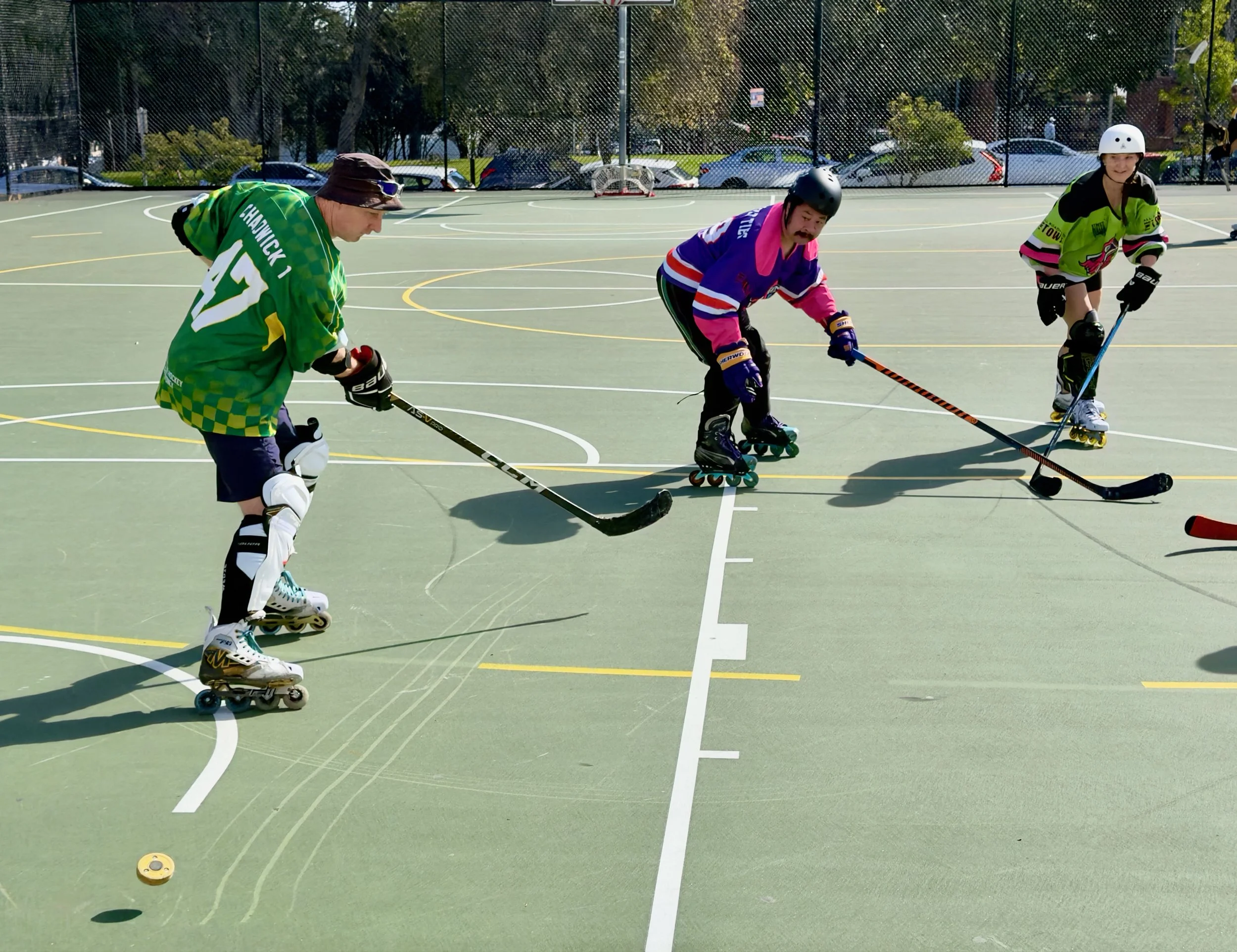
Players rolled onto the court wearing helmets, shin pads and gloves, hockey sticks tucked under their arms as naturally as if they were walking into an ice rink. Before the opening game of the season, players and coaches took newcomers through a development session while parents chatted with their young children sitting on the grass embankment overlooking the court.
After a few minutes, I realised something.
I was one of only four spectators. The other three were there to support someone they knew.
I was the only person there without a connection to anyone on the court.
That felt strangely appropriate.
This weekend had already become a weekend of firsts. Three of the four sporting events I attended were sports I'd never experienced before. Street roller hockey was the latest, drawing me to a public basketball court tucked beneath Sydney's flight path. It wasn't entirely unfamiliar territory, though. Years ago I'd photographed bike polo and unicycle hockey, two sports that had also found creative ways to adapt to urban spaces. Street roller hockey immediately felt like it belonged to that same family.
At first, I thought I was there to understand another sport.
Instead, I found myself watching the people around it. Before the opening face-off, experienced players and coaches patiently worked with newcomers. Once the game began, that didn't stop. Advice continued between shifts, encouragement came from the bench, and less experienced players were given opportunities to get out on the court.
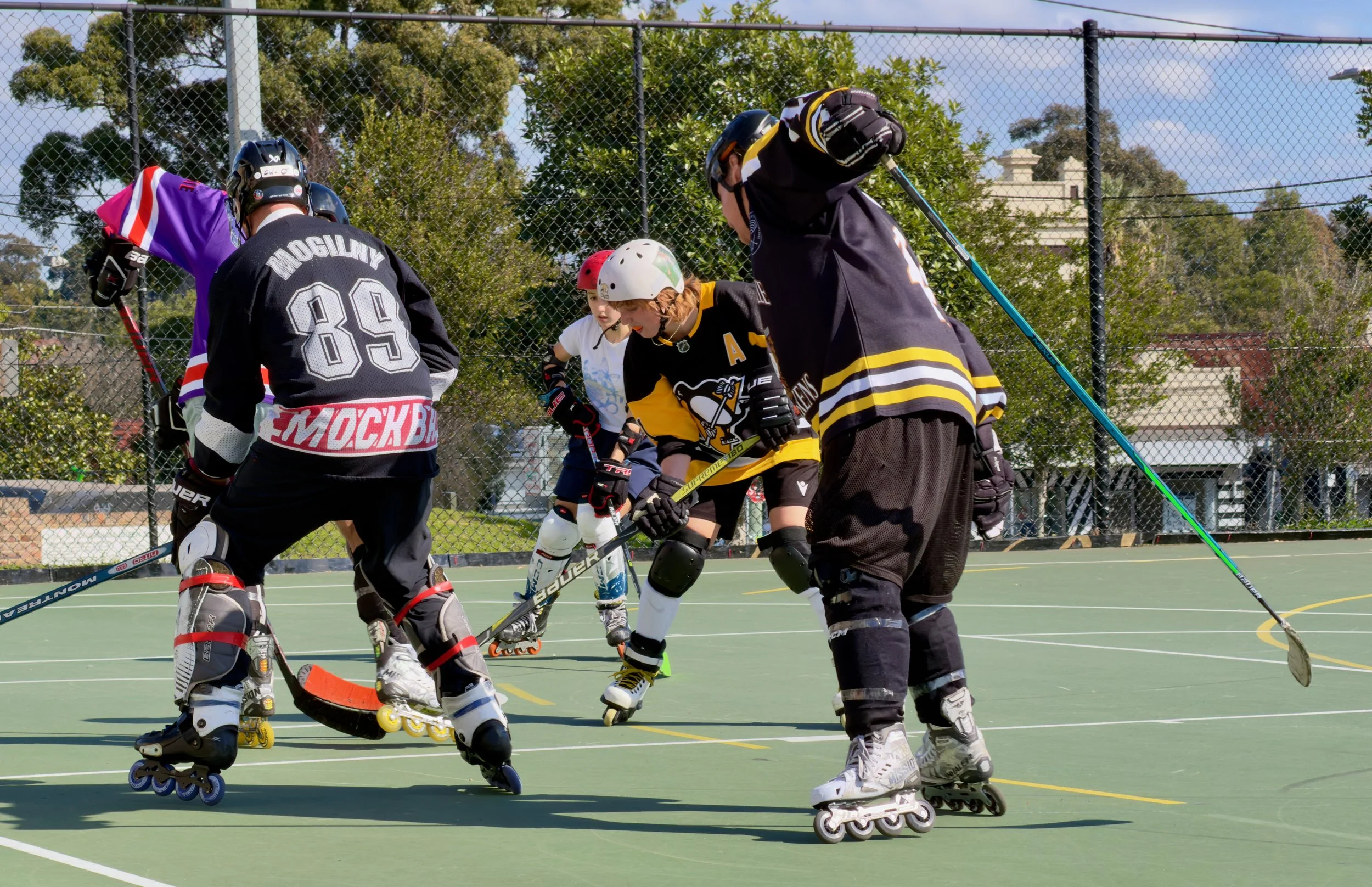
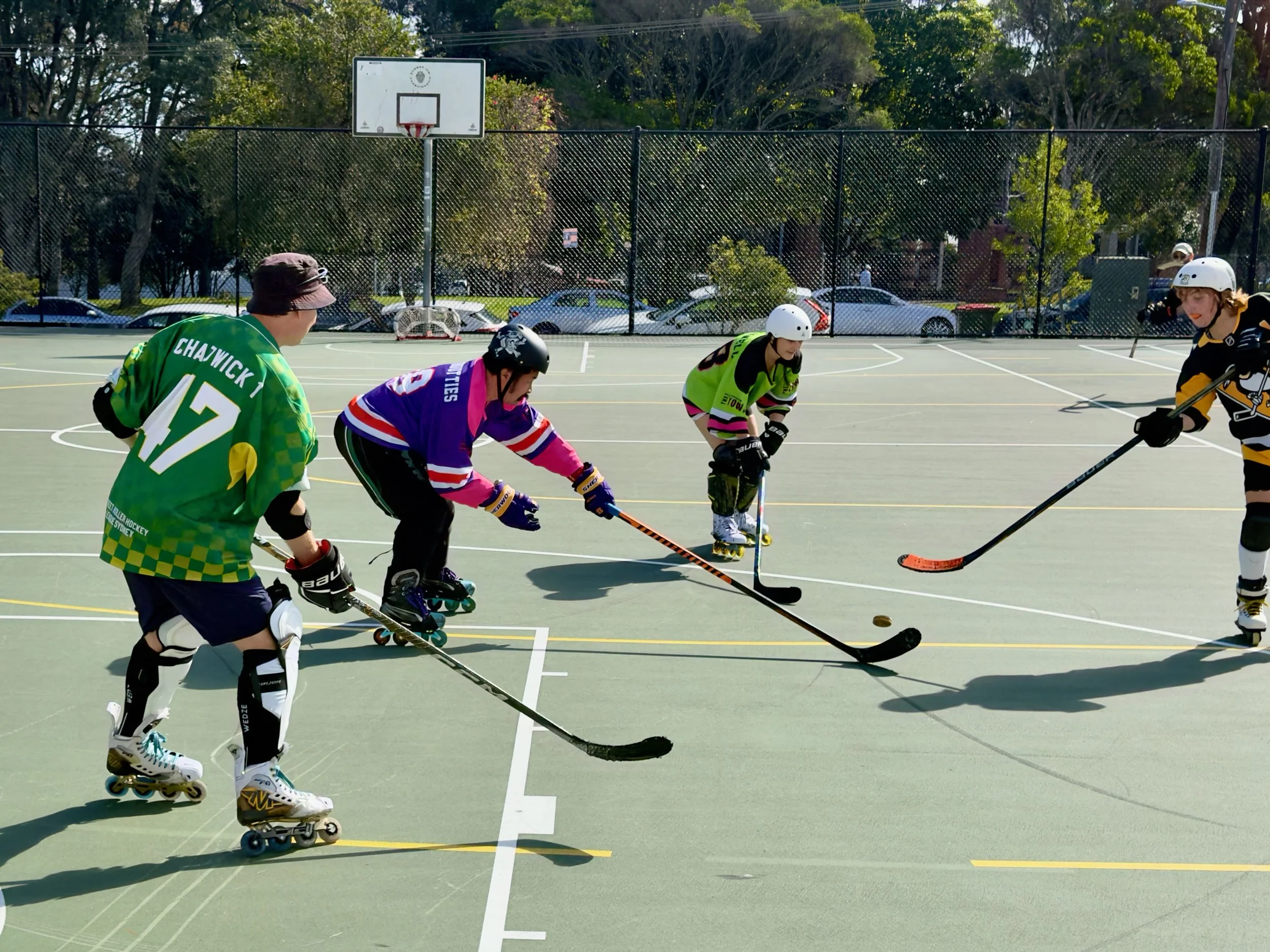
Saturday's opening round had been postponed, leaving both teams short of players when it was rescheduled for Sunday. Rather than call the game off, newcomers and players from other teams simply pulled on another jersey so both sides had enough numbers to play.
It also became difficult to work out where one role ended and another began. The person coaching before the game was skating alongside a newcomer a few minutes later. An experienced player became a mentor between shifts. The person keeping time wandered onto the court before the opening face-off to explain the format and rules for the game. Team captains, organisers and players all seemed to slip comfortably between whatever role was needed at the time.
Only then did I find myself asking a question.
What actually makes a sport?
There were no grandstands.
No sponsors.
No merchandise tents.
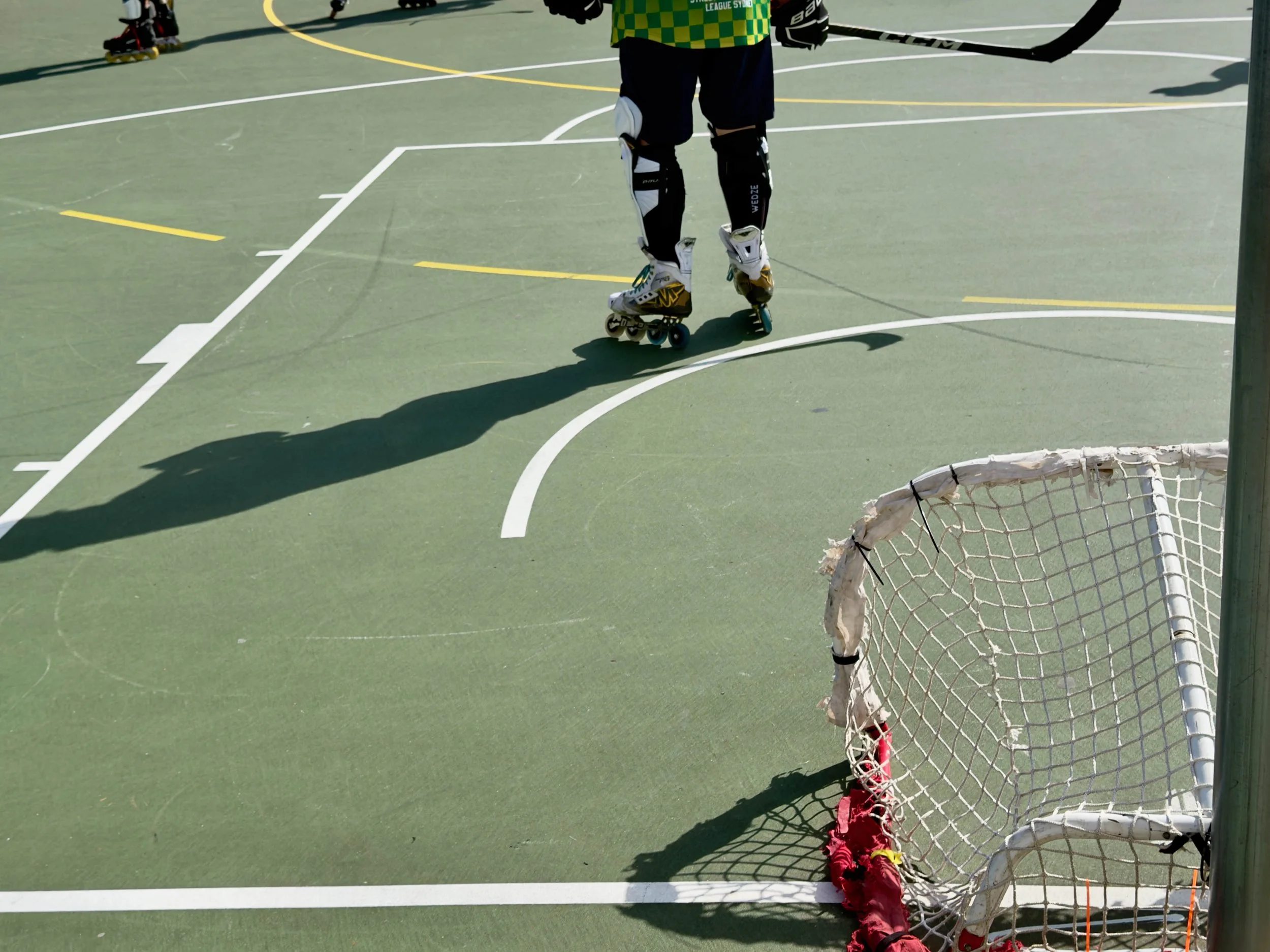
Just a basketball court, a handful of benches and the occasional aircraft reminding everyone how close we were to Sydney Airport.
Yet nothing about it felt incomplete.
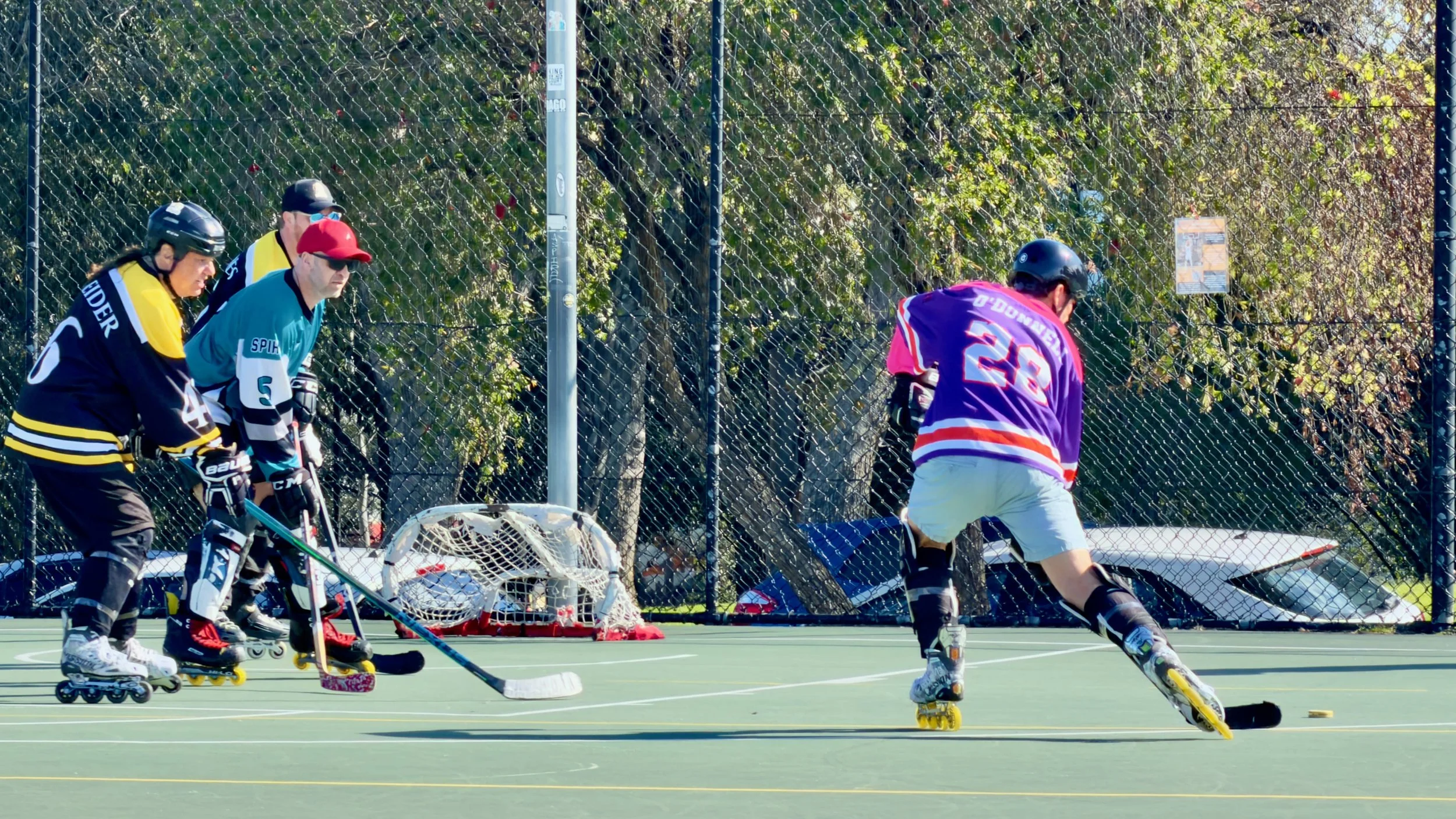
The game itself borrowed plenty from ice hockey. Three periods, rolling substitutions, sticks, pucks and quick transitions. It was familiar enough that I could follow what was happening, but different enough that I spent the first period simply watching before reaching for my camera.
I wanted to understand what I was looking at before trying to photograph it.
As I settled in, even the equipment seemed to tell part of the story. Some players had specialised skates, while others looked to be making do with what they already owned. Sticks were wrapped in tape. Shin pads were held in place with whatever tape happened to be available. Gloves varied from heavily padded to pairs that had clearly seen years of Sunday mornings.
None of it looked out of place.
It simply looked used.
Built up over time.
Collected piece by piece.
Whatever got people onto the court.
Watching also brought back memories I hadn't expected. As a teenager I spent far too many hours on inline skates. Later, my camera introduced me to bike polo and unicycle hockey, where I discovered that once people realised you were genuinely interested, it wasn't difficult to become part of the conversation.
Standing beside the court in Sydenham, I had that same feeling again.
I know I'll never play street roller hockey. My knee simply wouldn't tolerate the sideways forces skating demands.
Oddly, that didn't matter. I wasn't looking for a new hobby.
I was looking for another story.
The final score - a 15–13 win for the Frothies over the Hooks, barely registered alongside everything else I was watching.
The encouragement from more experienced players.
The willingness to share the court.
The ease with which people stepped into whatever role was needed.
Those were the things I found myself noticing.
As I walked away, I realised I still had more questions than answers.
I still couldn't explain every rule.
I still wasn't entirely sure how the equipment differed from its ice hockey equivalent.
I still didn't know how many leagues like this existed across Sydney.
But I'd already put another round in my calendar.
Because somewhere between the aircraft overhead, the taped hockey sticks and the handful of people gathered around a suburban basketball court, I found a quiet reminder that before there are stadiums, sponsors or television cameras, sport begins with people finding somewhere to play.