Everything Was Okay
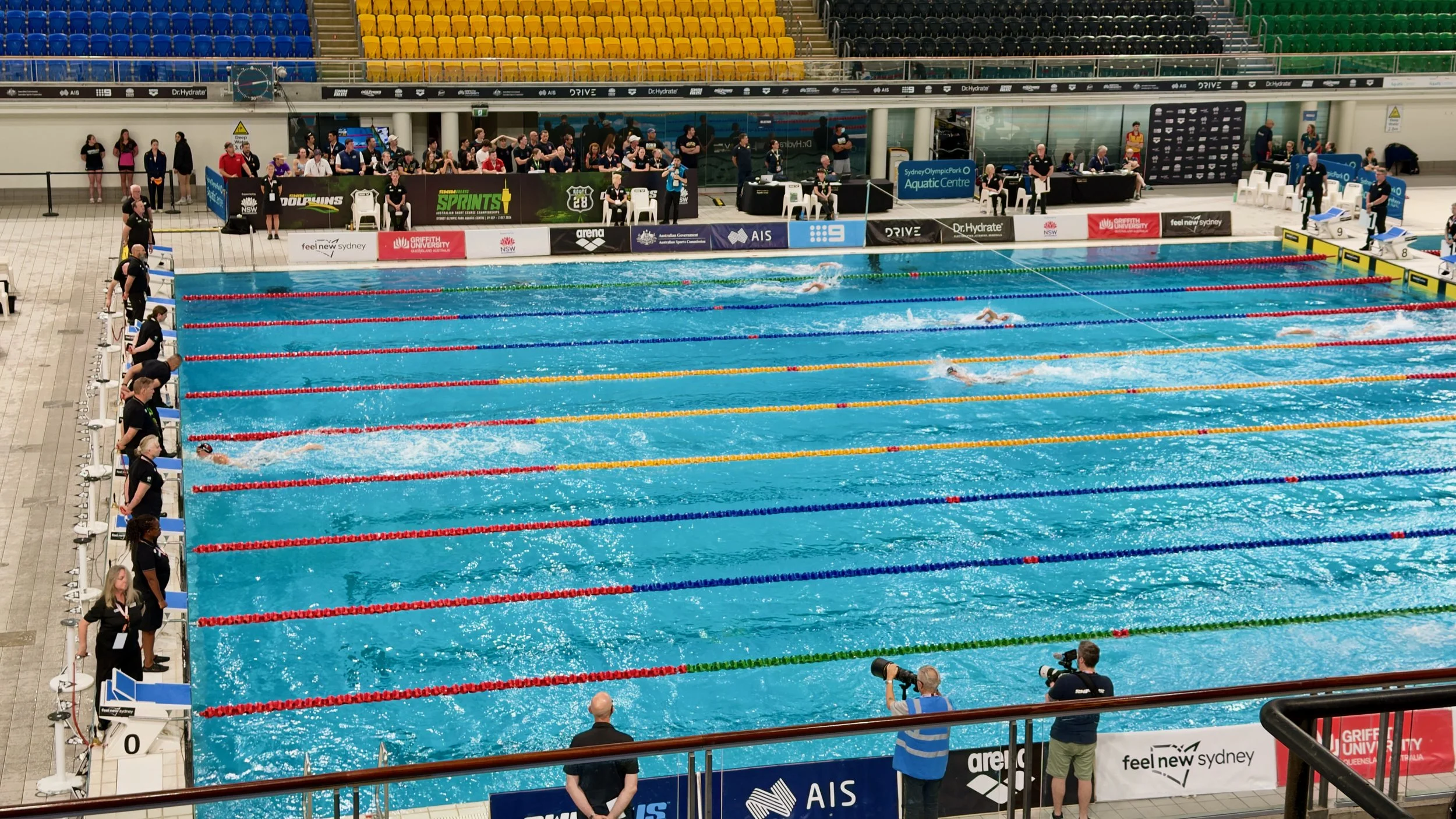
This was my second school night in a row at Sydney Olympic Park.
The night before had been basketball. Twenty-four hours later I was back, this time at the Sydney Olympic Park Aquatic Centre for the Australian Short Course Championships.
I had been here for swimming before, earlier in the year, when the pool hosted the national trials connected to Commonwealth Games selection. That night had felt like an event: lights, music, interviews, commentary, big names and a crowd constantly being reminded that what was happening in the water mattered.
This was different almost immediately.
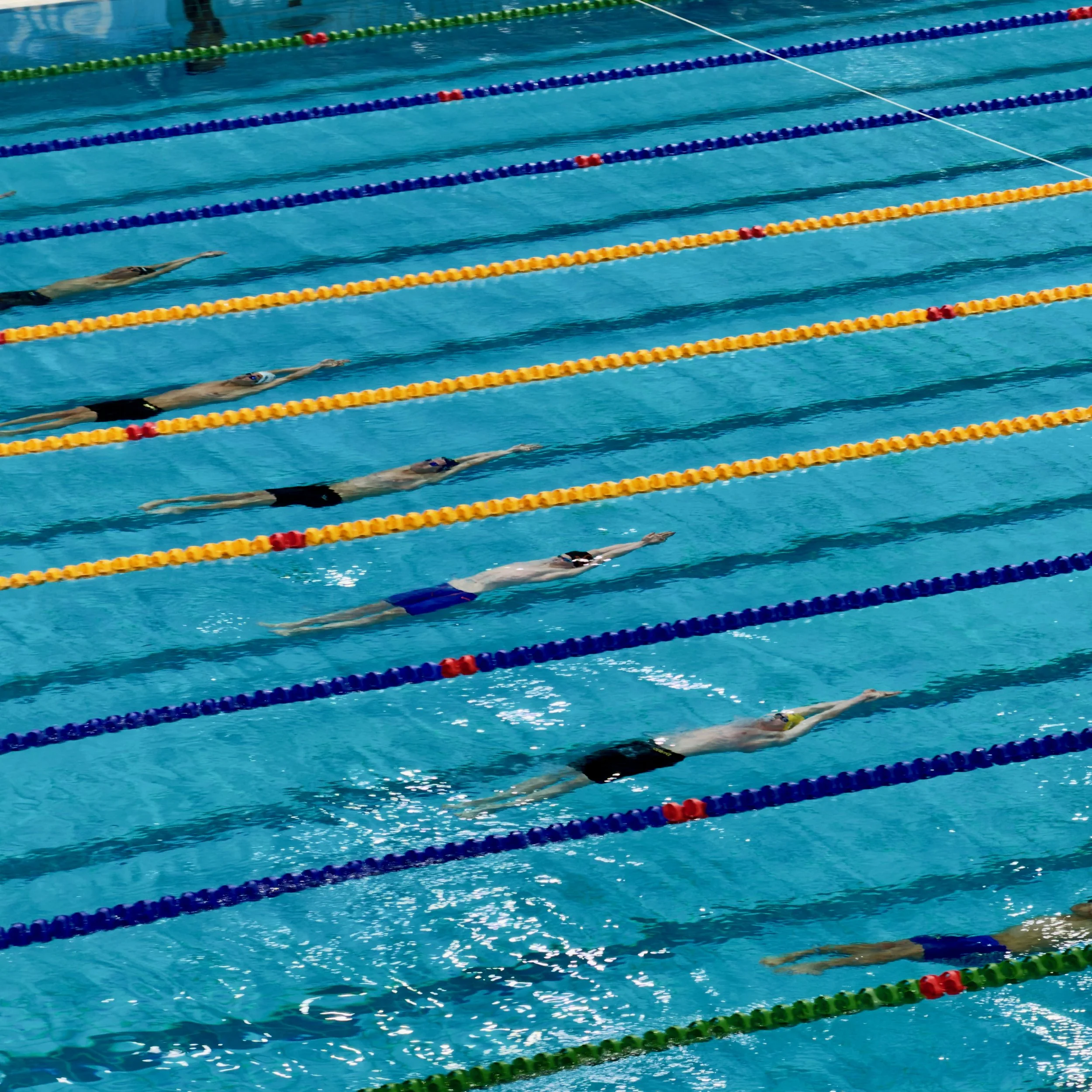
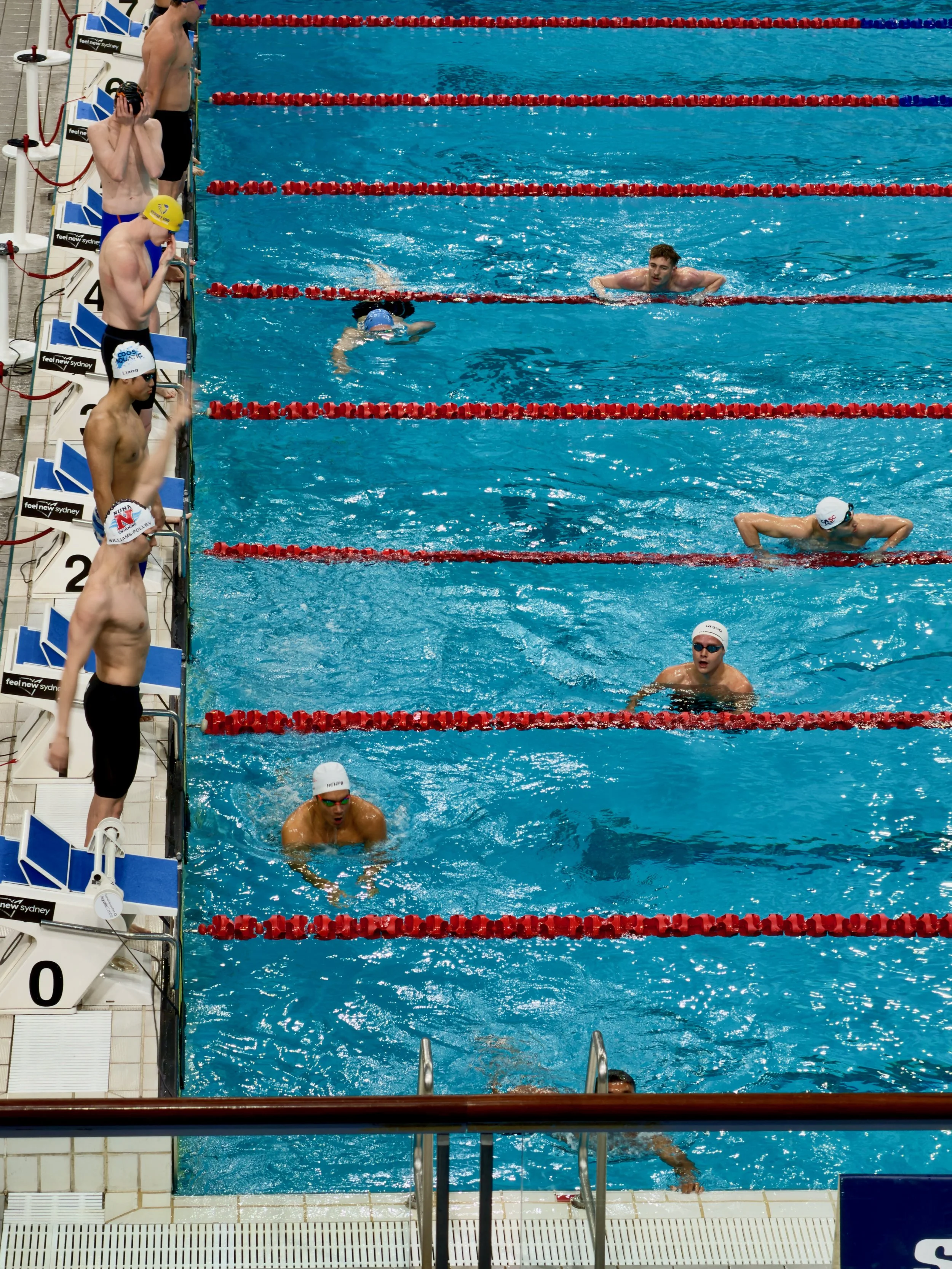
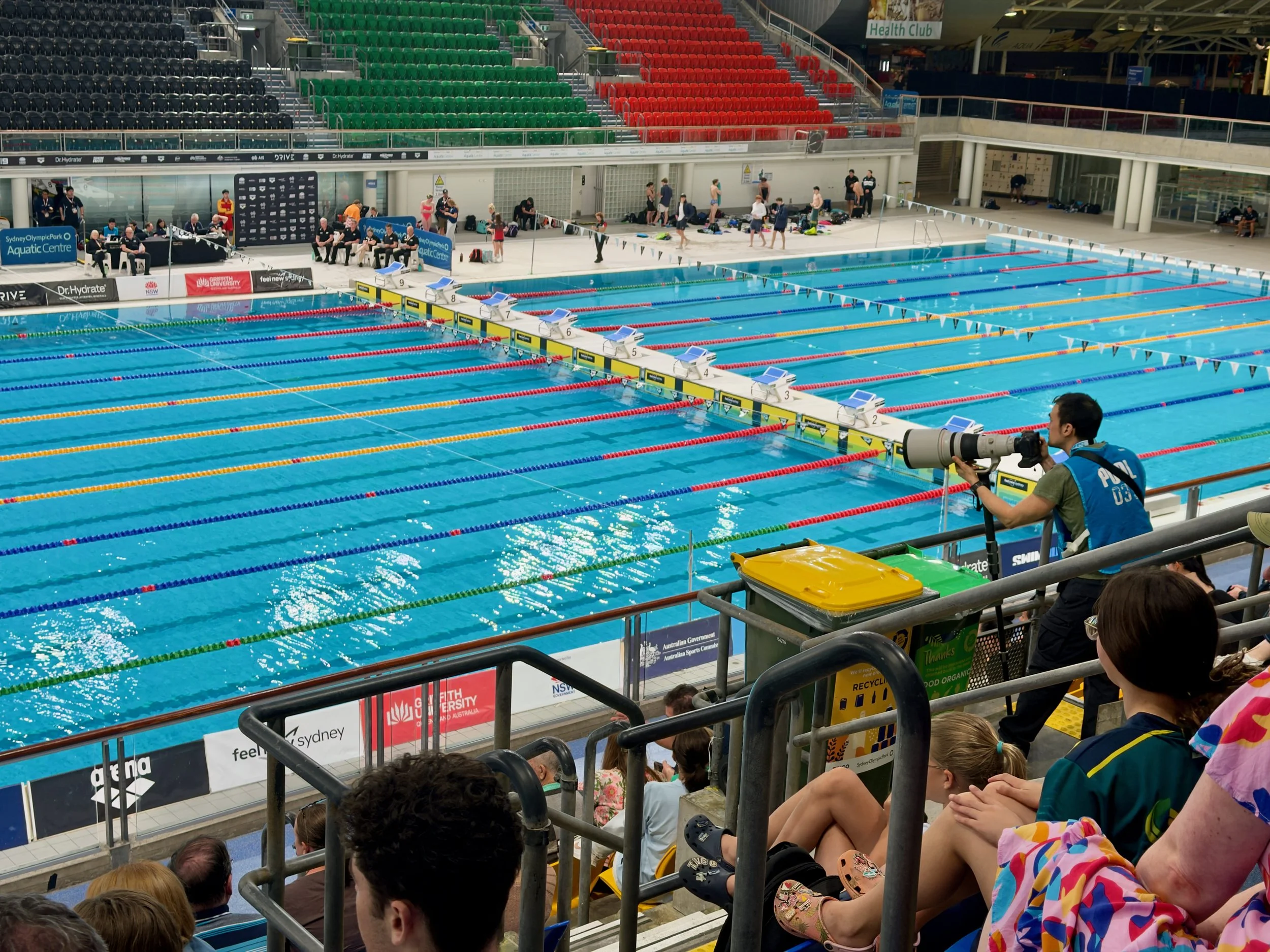
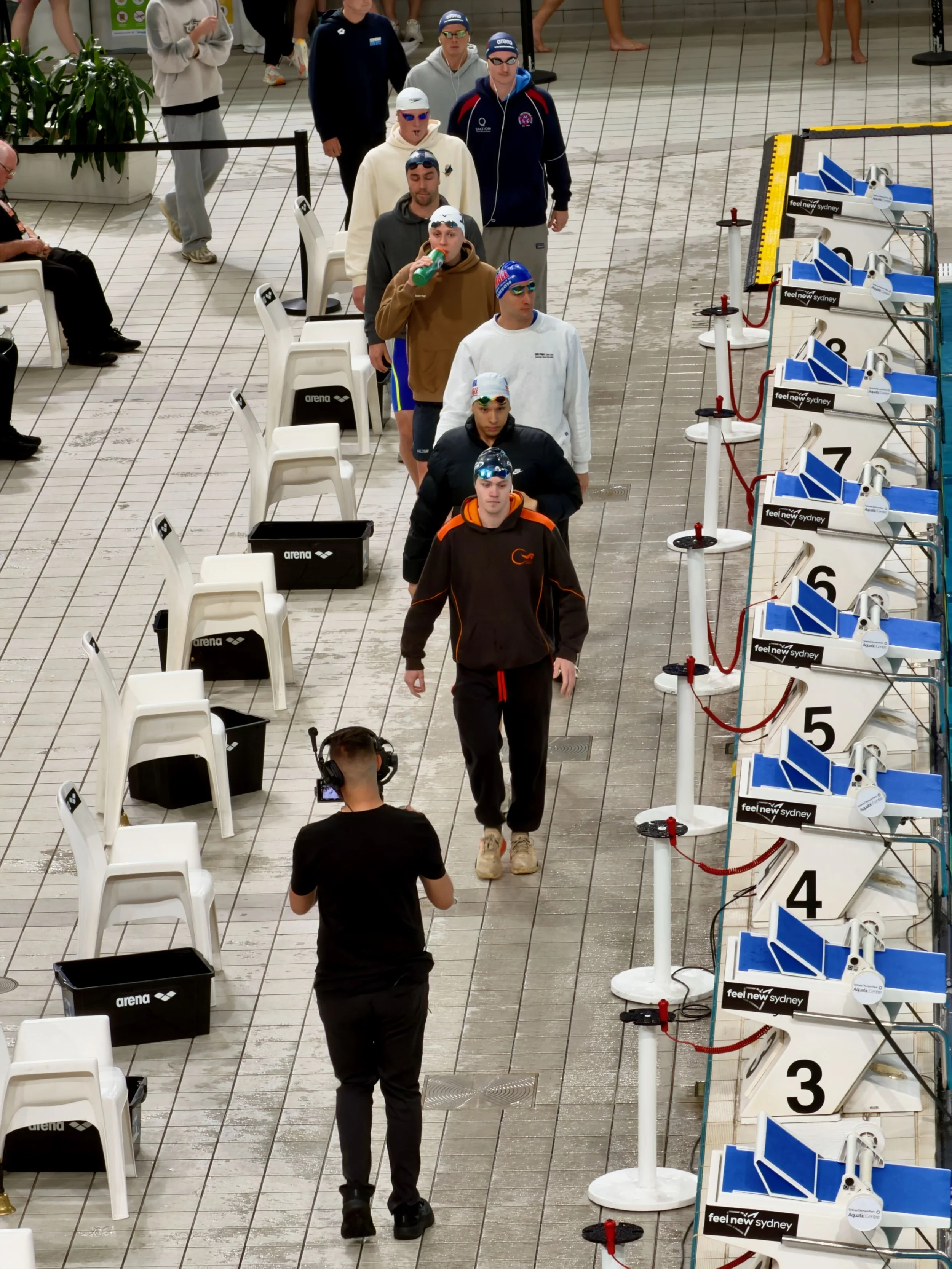
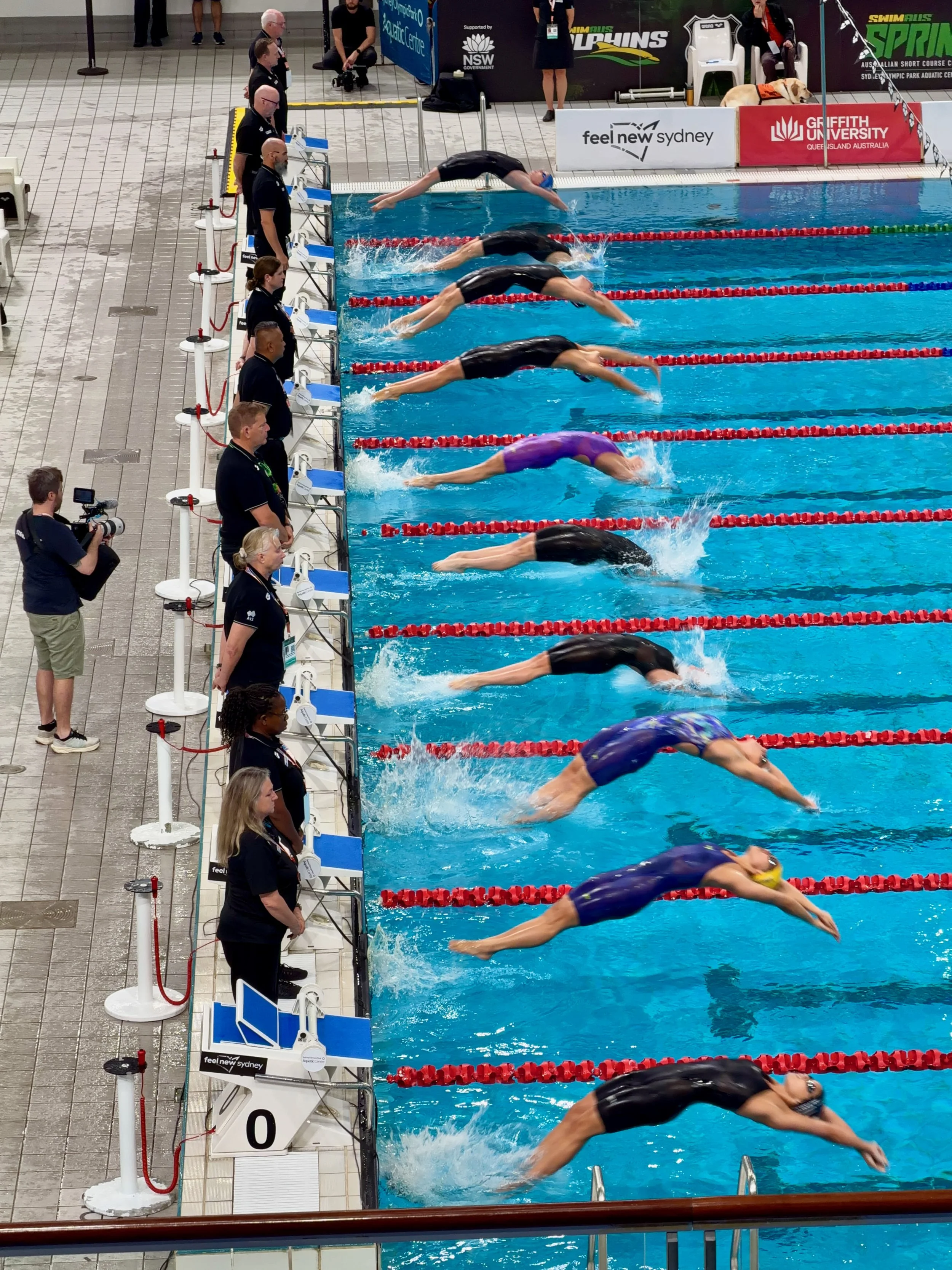
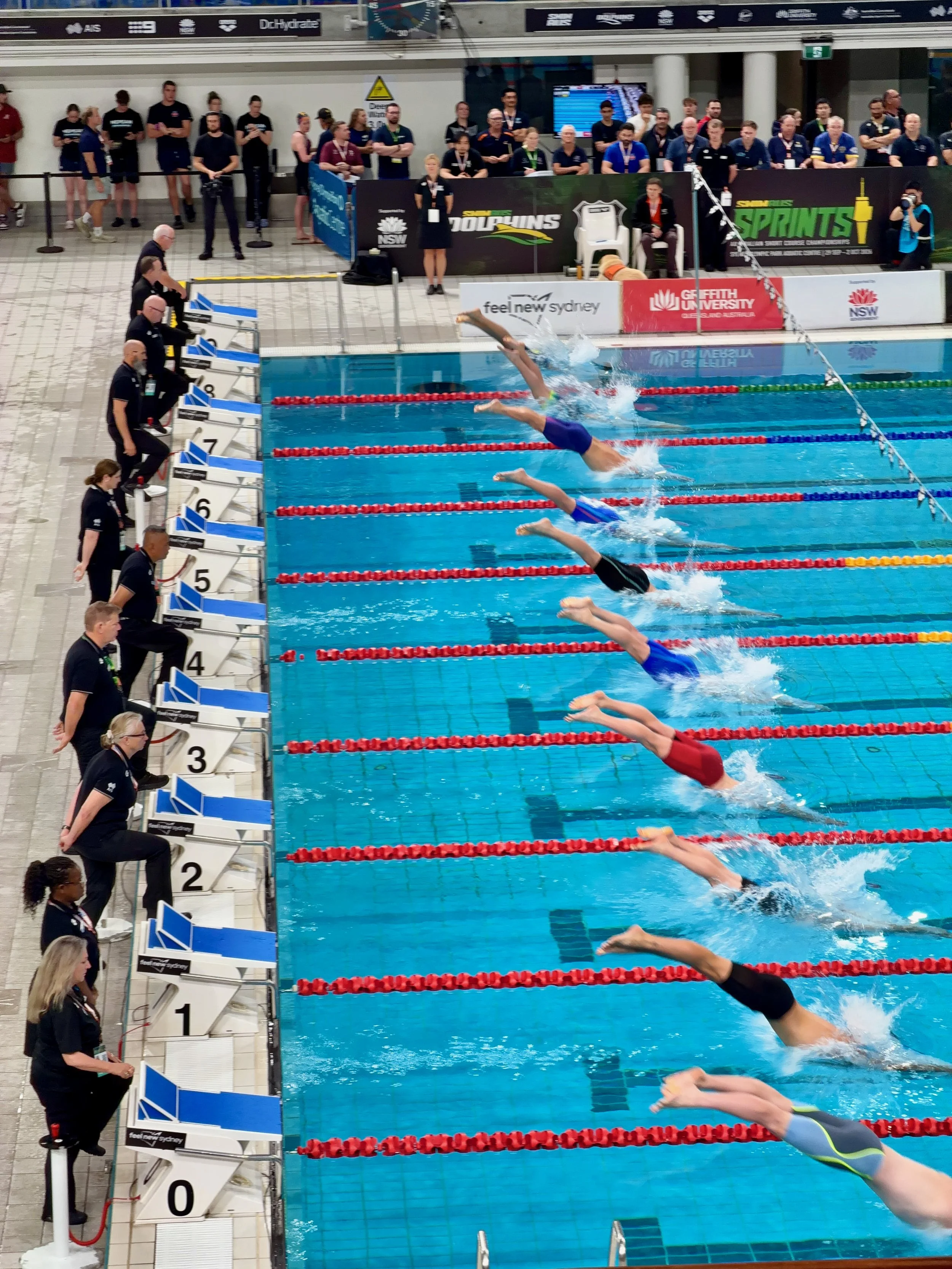
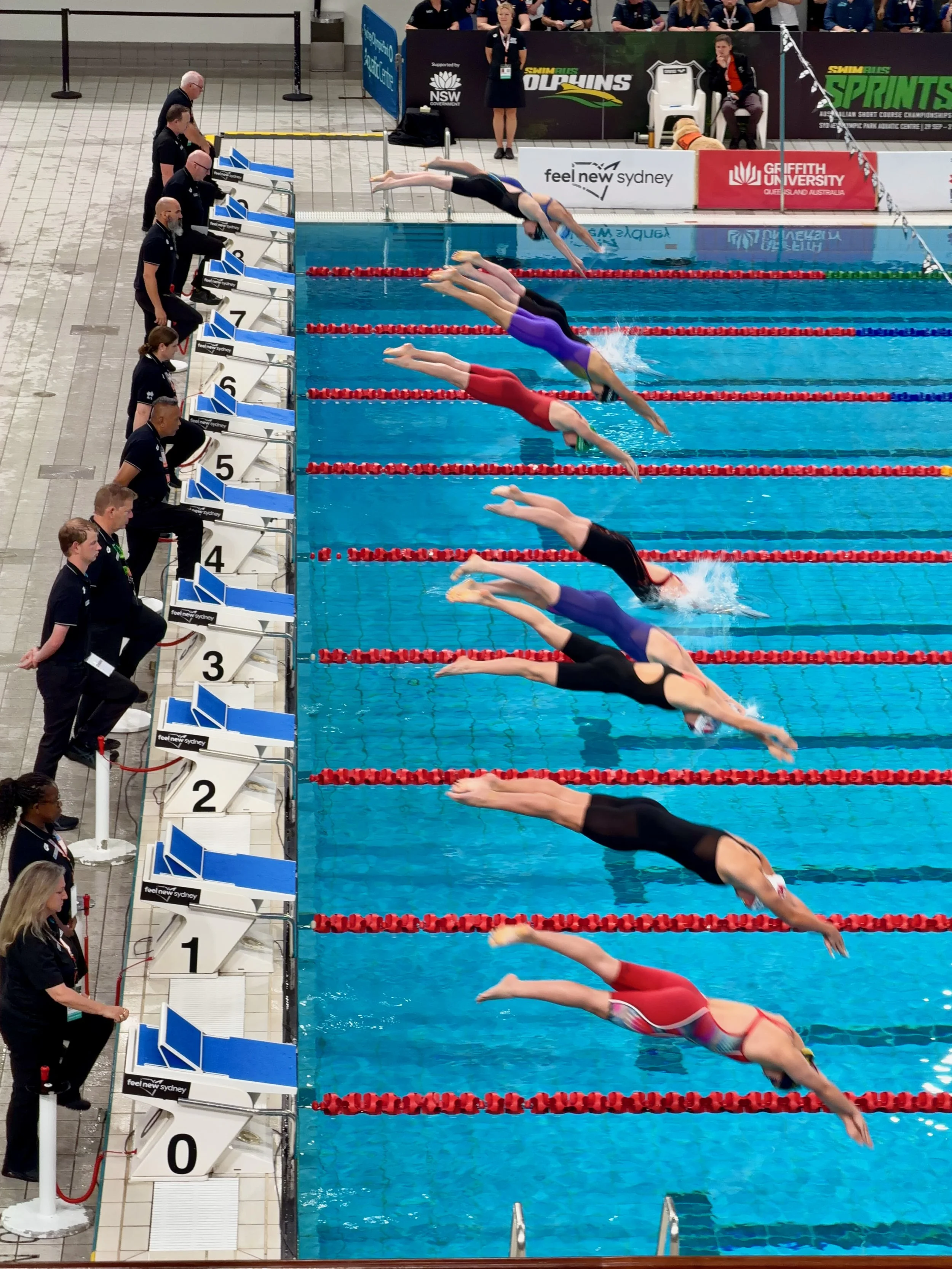
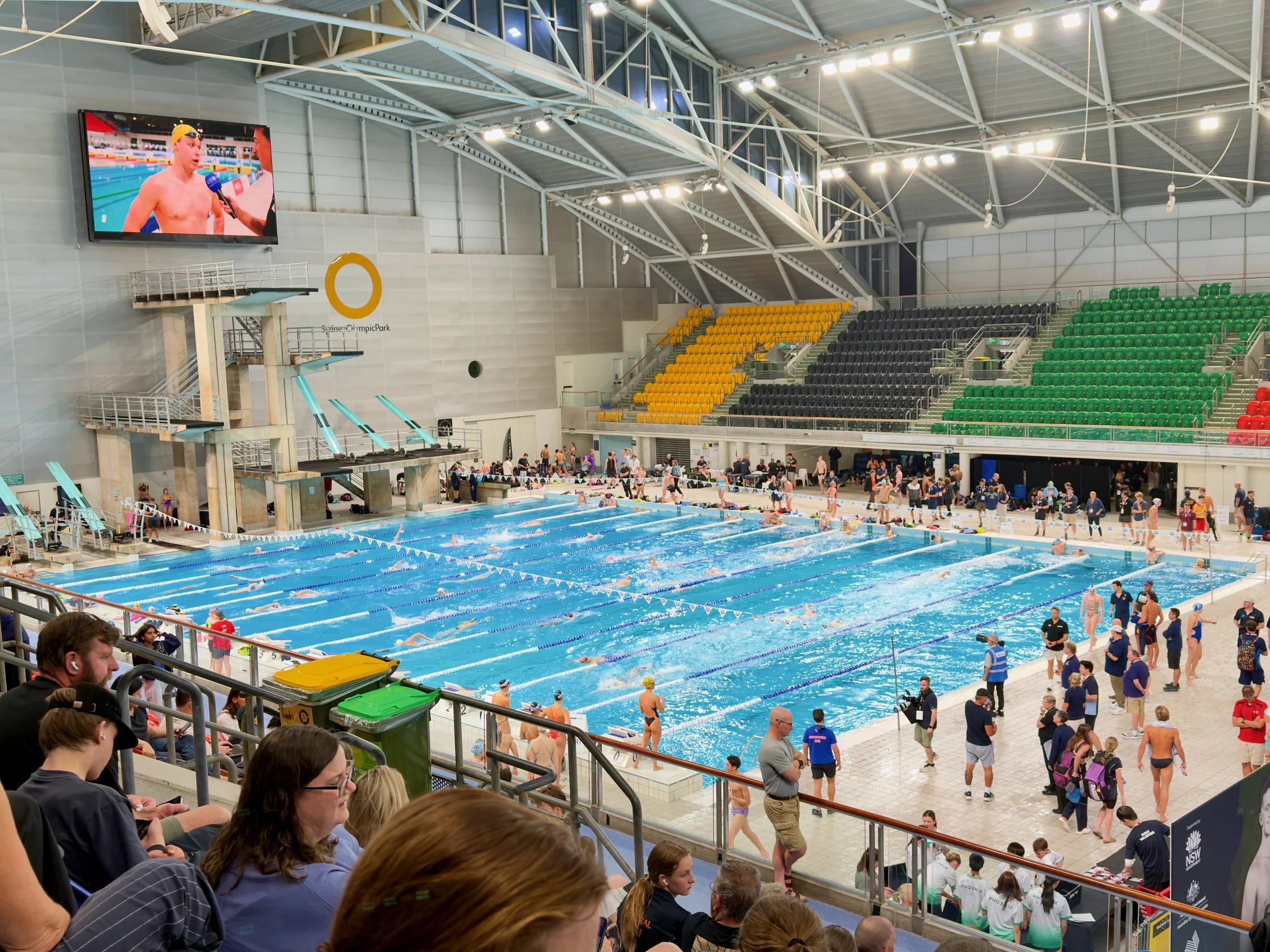
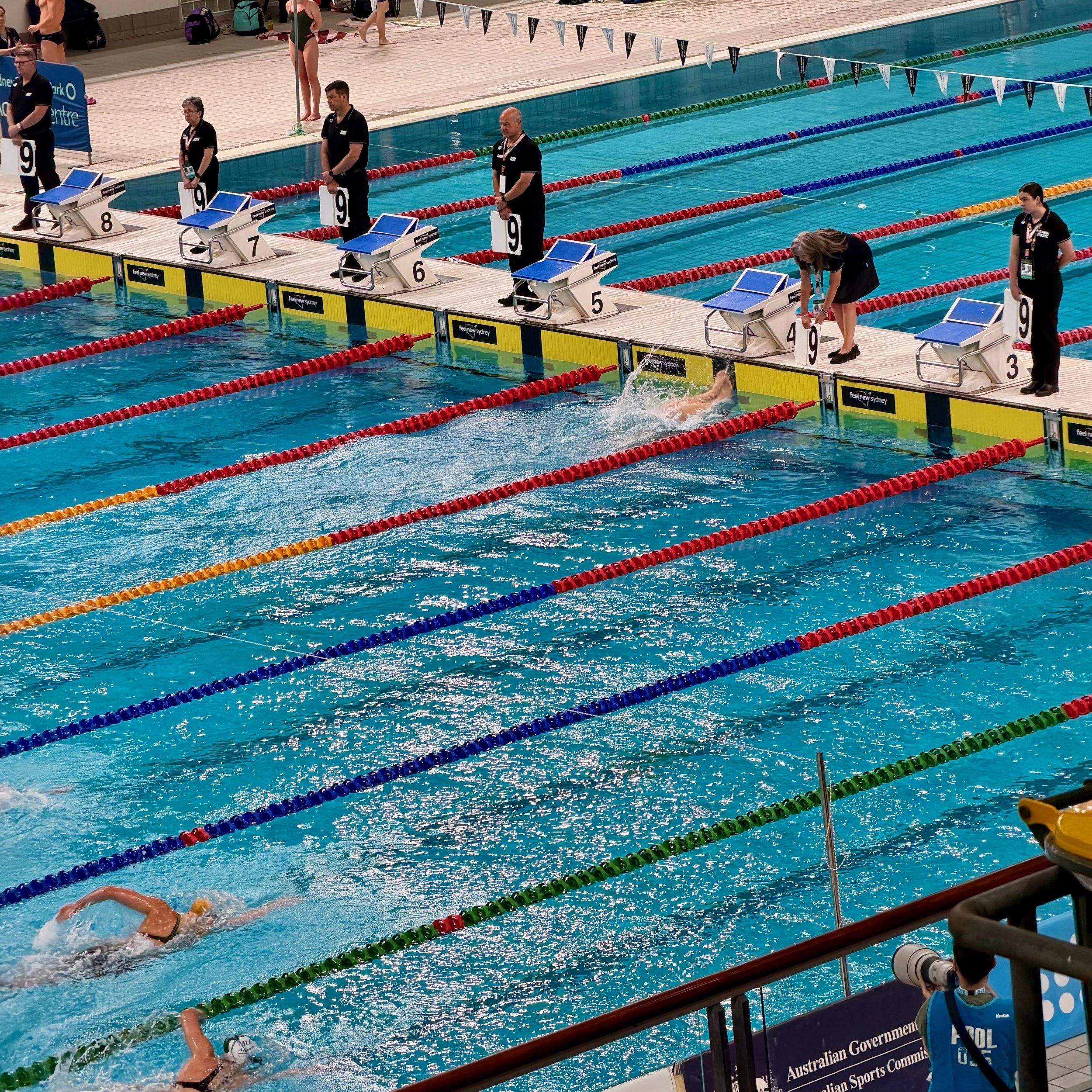
Short course means a 25-metre pool rather than 50 metres, so the competition course occupied half of the main pool. The diving pool was busy with swimmers warming up, while the other half of the 50-metre pool had a smaller number moving through warm-ups and warm-downs.
There were swimmers everywhere. There just wasn't much theatre around them.
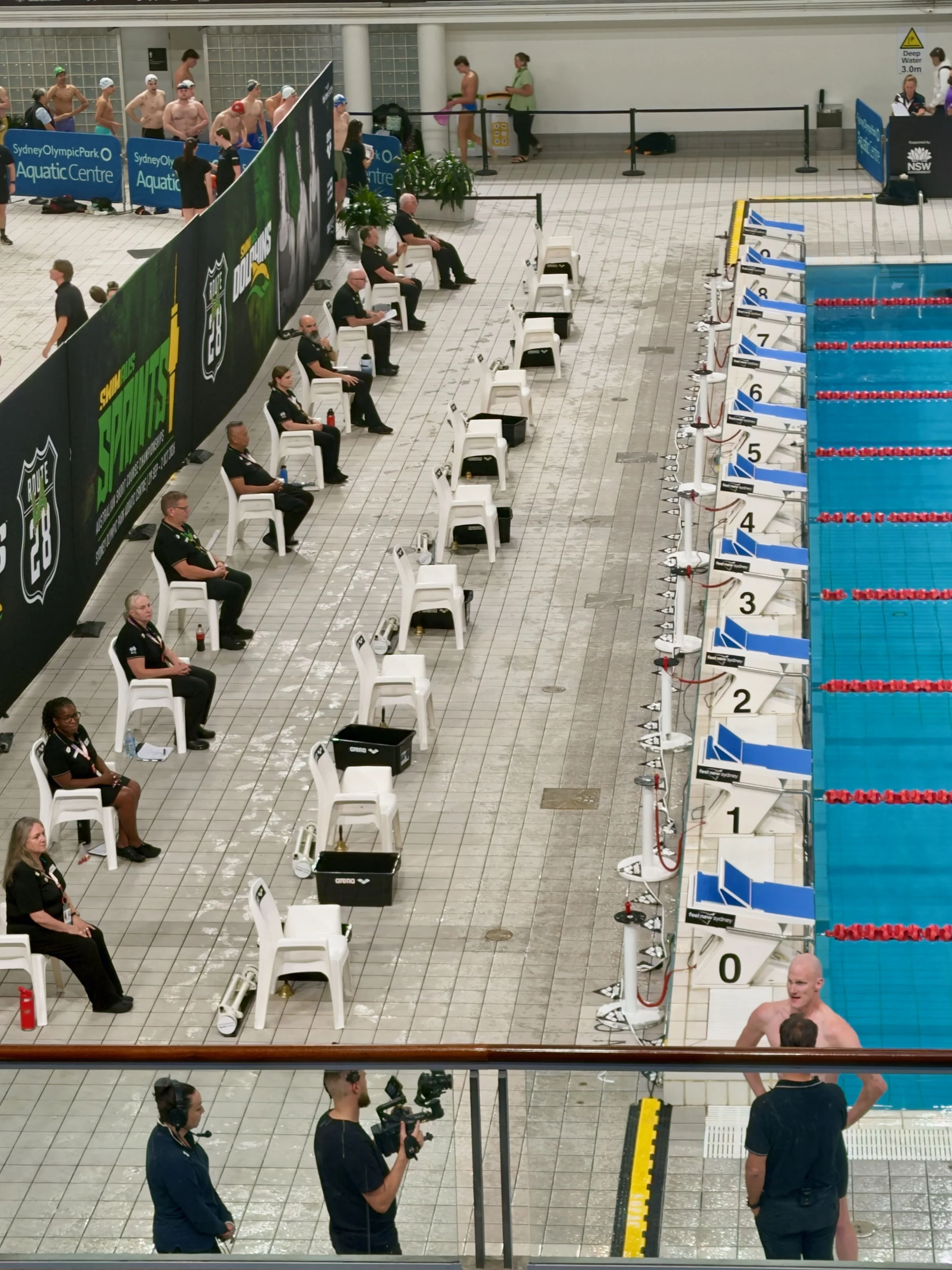
The competition area was properly separated from the public parts of the aquatic centre, but within the ticketed space everything felt more open than I remembered. There was less staging, no dramatic lighting or music filling the gaps, and fewer interviews. The announcers were there, but after a while they mostly became part of the background noise.
The crowd was small and subdued, although subdued did not mean uninterested. People talked through races. Some worked on laptops. Others read books or looked at tablets.
Then, every so often, somebody would stop.
The book went down. The conversation paused. Attention shifted towards the water.
A minute or two later, it was over and everything resumed.
Whatever had brought those people there, their attention was selective. Mine was not.
I did not know anyone competing and was not following a particular club, so I needed the event itself to do more of the work. At the earlier trials, it had. The production kept pulling attention back towards the pool.
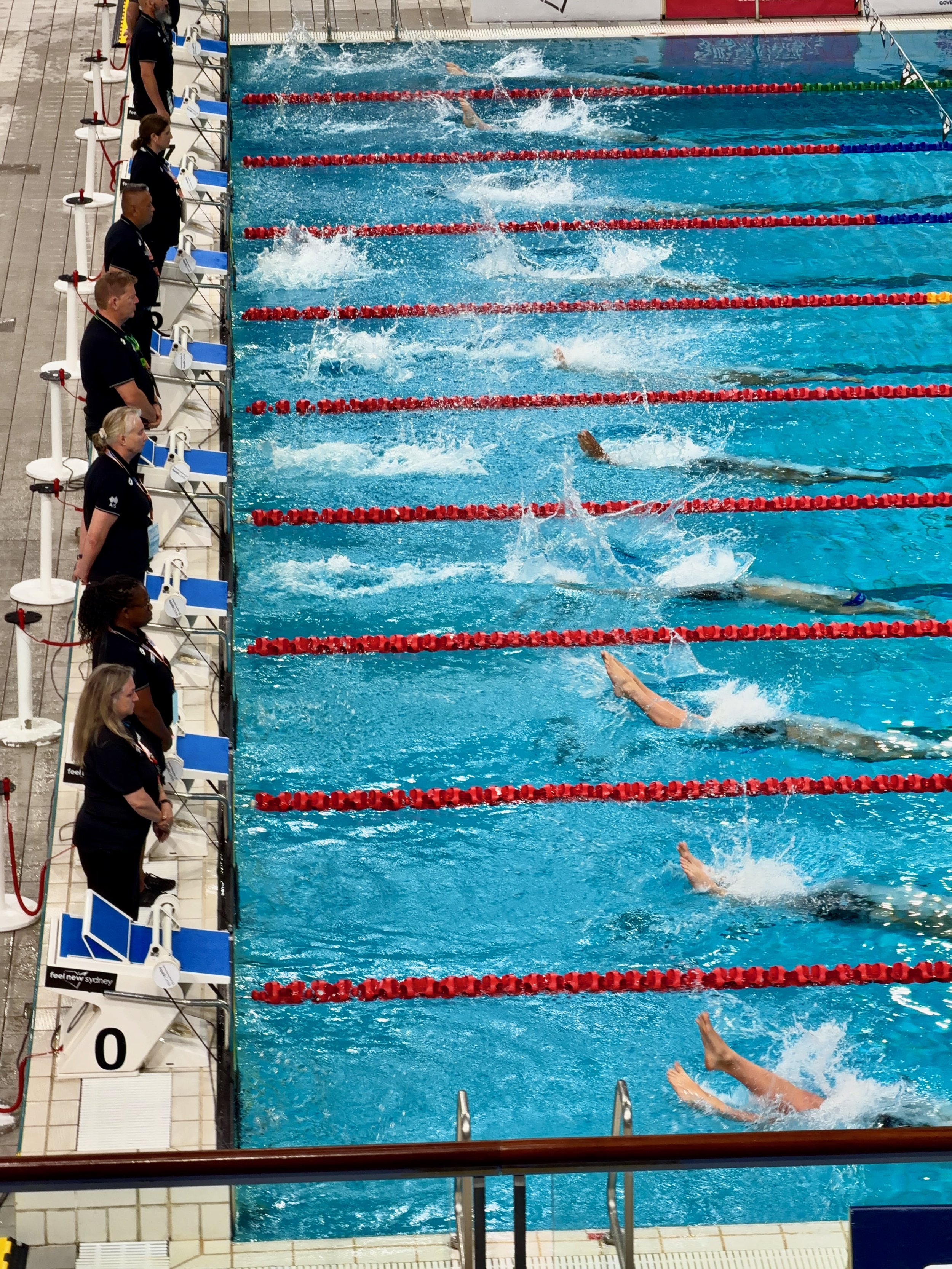
Here, one race mostly led straight into another.
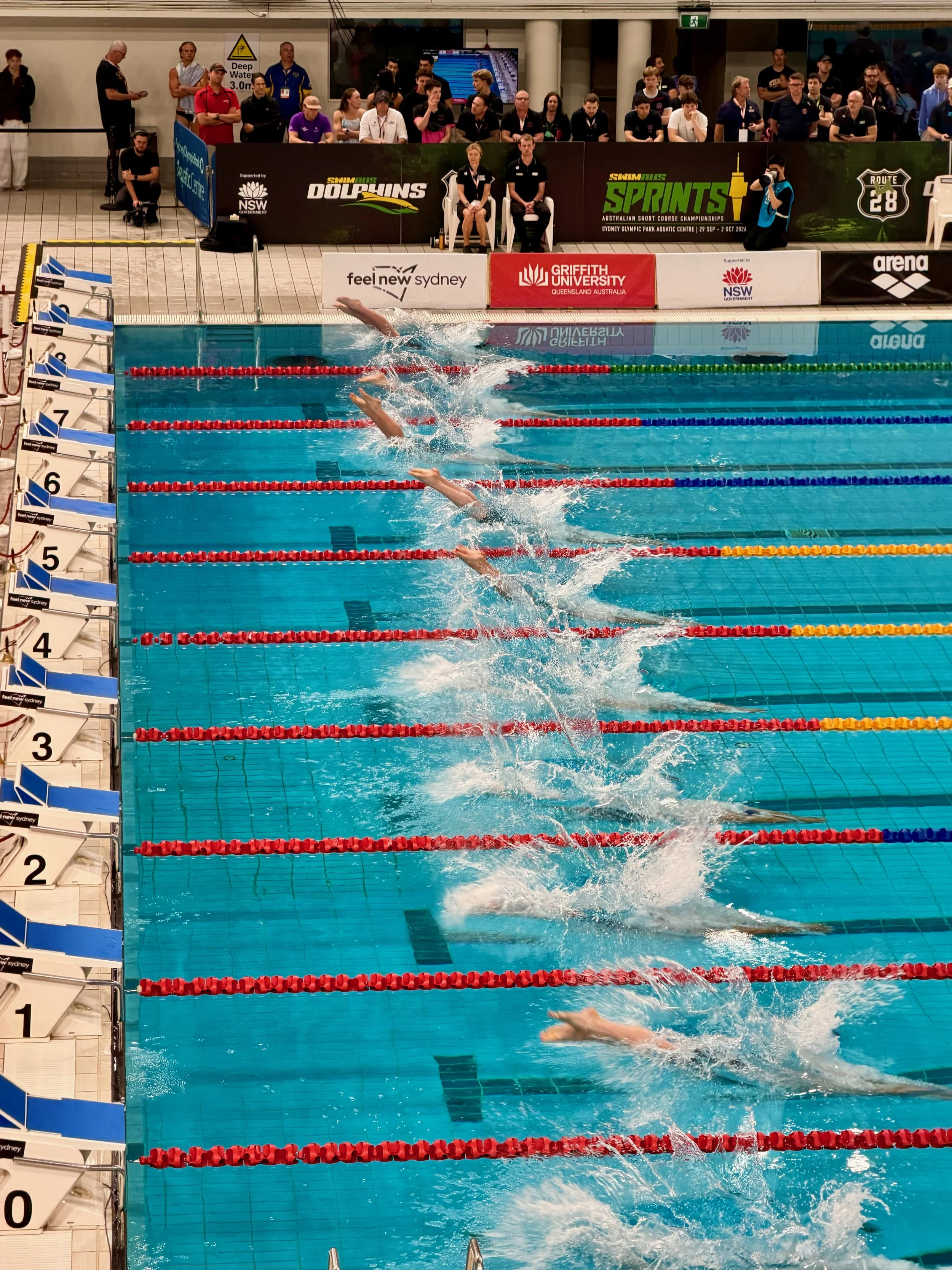
Swimming already moves quickly as a spectator sport. A race finishes, swimmers leave, the next group appears and the process begins again. Short course made that rhythm feel even more pronounced, with more turns, more walls and a constant sense of movement.
Yet the evening felt less alive.
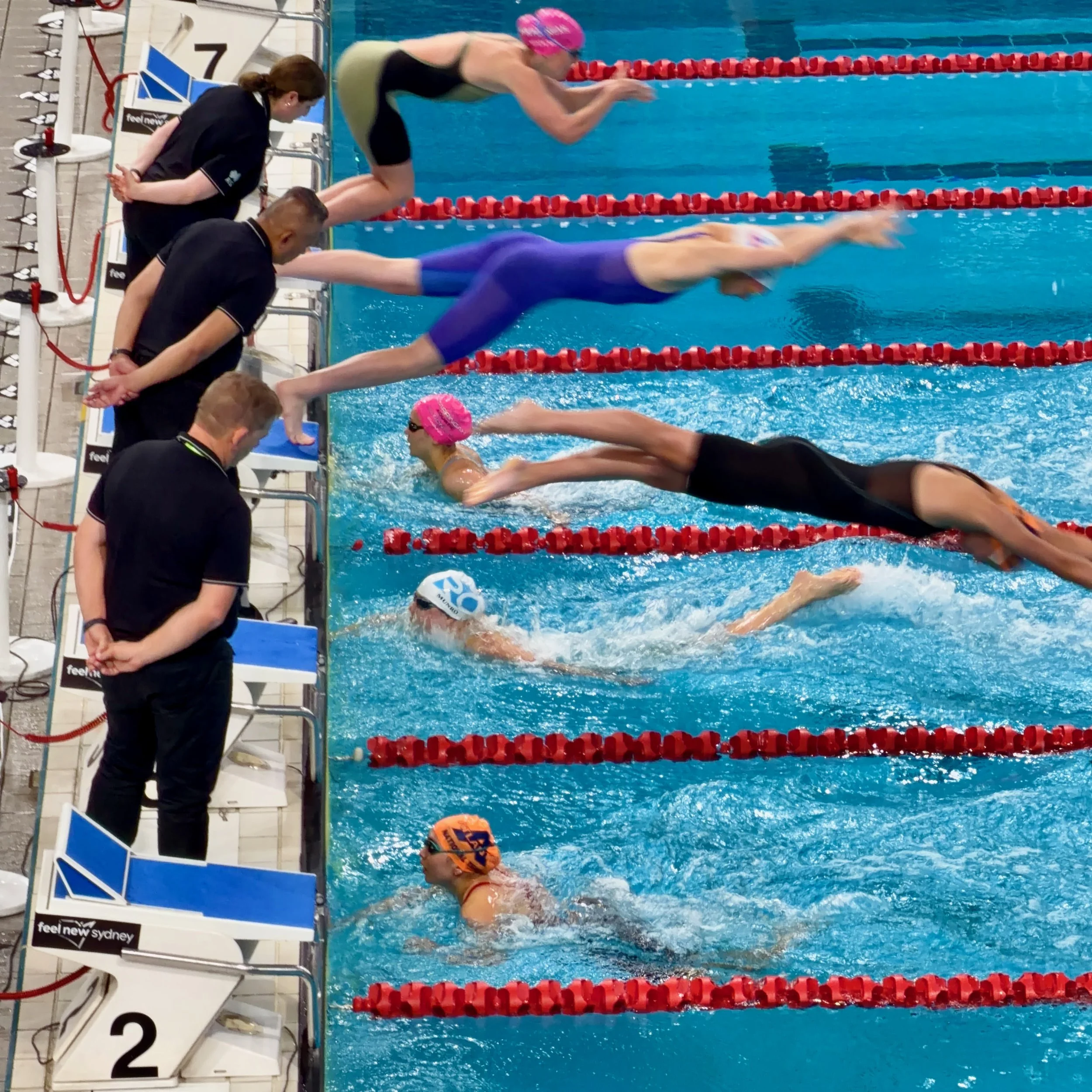
The racing itself was still high level. There were close finishes, national champions, international visitors and performances carrying World Short Course selection relevance. At least twice, the commentators picked out an international swimmer who had produced a time around the standard Australia was using for selection.
That did not mean the swimmer had qualified for their own national team, but it was a reminder that some of the lower finals contained international swimmers producing times close to Australia’s own World Championship selection standard.
Even then, the room barely changed.
That was probably the biggest difference between this night and my previous swimming visit.
At the trials, attention felt collective.
Here, it felt personal.
There were occasional poolside interviews and the commentary was more conversational, but nothing about the night was especially bad. The races ran efficiently. The swimming was strong. The $37 ticket covered both sessions that day, even though I had only come for the evening.
Everything was okay.
I had originally thought about coming back on Friday night for the final session. By the time I left, I was fairly sure I would not.
I was still glad I came.
It was another version of the same venue, and another version of swimming.
One night was enough.