More Like Siblings Than Rivals
When Australia and Ireland announced the first ever AFLW international, I bought a ticket almost immediately. There was one important detail that made this different from the men's international series. This wasn't the hybrid version of the game played between Australia and Ireland over the years. This was Australian football. Proper AFL. The same game these players spend their seasons playing in the AFLW.
Before the match had even been played, another conversation had begun. Tickets disappeared within days, prompting plenty of debate about whether the game should be moved from North Sydney Oval to the much larger SCG. That discussion stayed in the background as I caught the train to North Sydney. I had been listening to AFL commentary from the Swans v St Kilda match. As I walked through the gates, I switched the broadcast across to Australia versus Ireland. Almost immediately I found myself smiling.
"This player is from Ireland, but plays for North Melbourne."
"This one plays for GWS."
Another played elsewhere in the AFLW. The commentary wasn't introducing strangers. It was introducing players most Australian supporters already knew. That was my first hint this wasn't going to feel like a typical international.
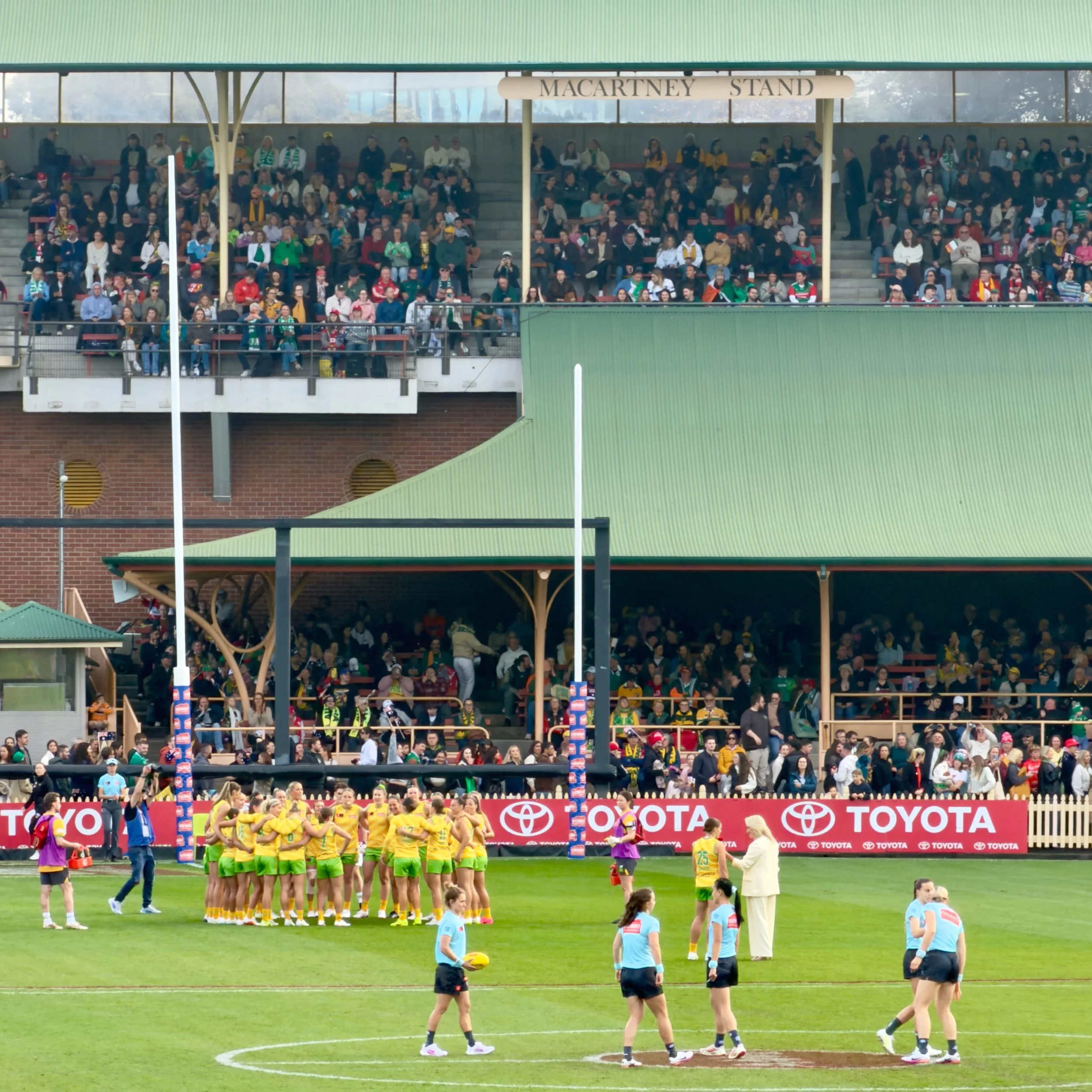
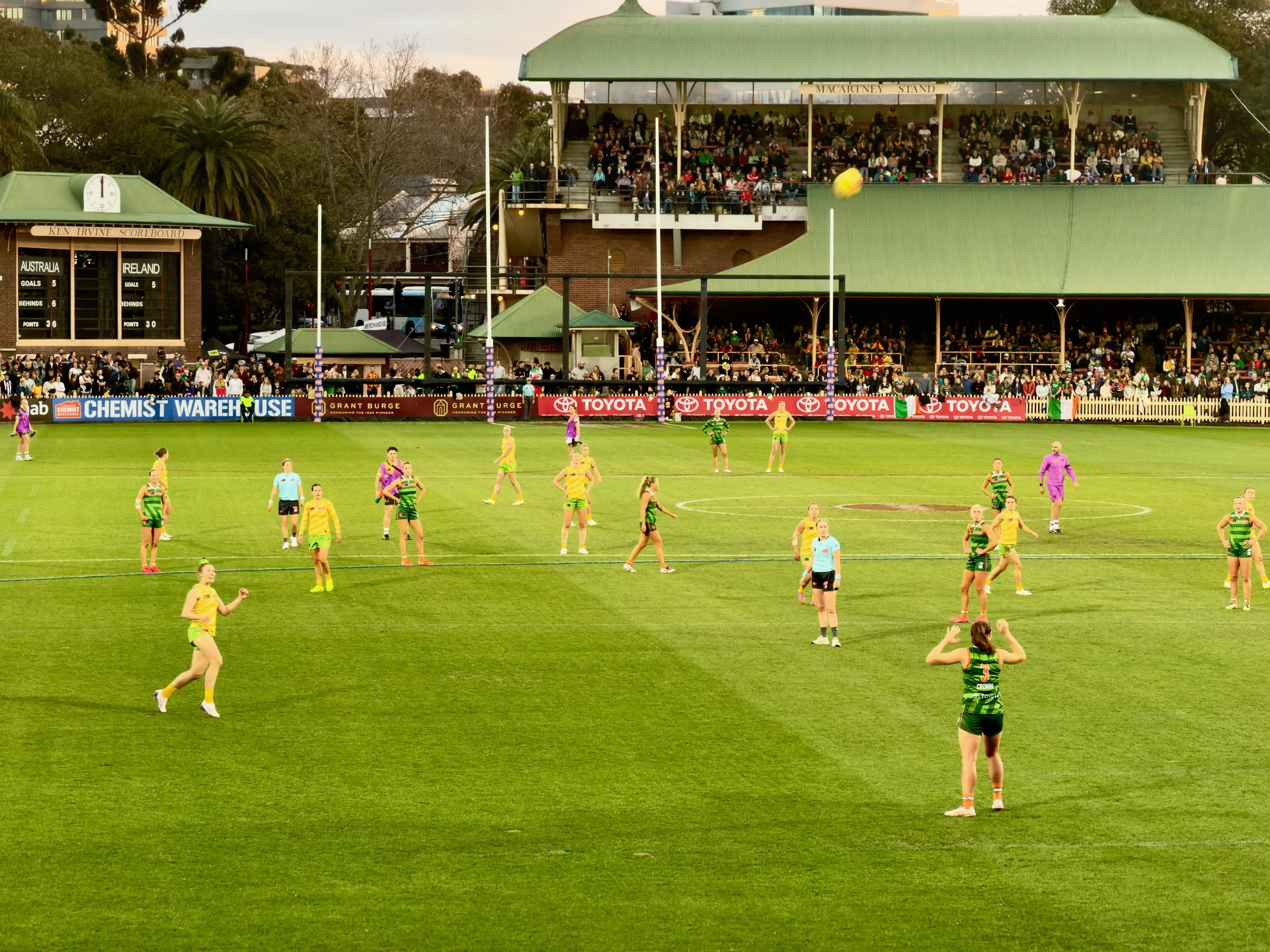
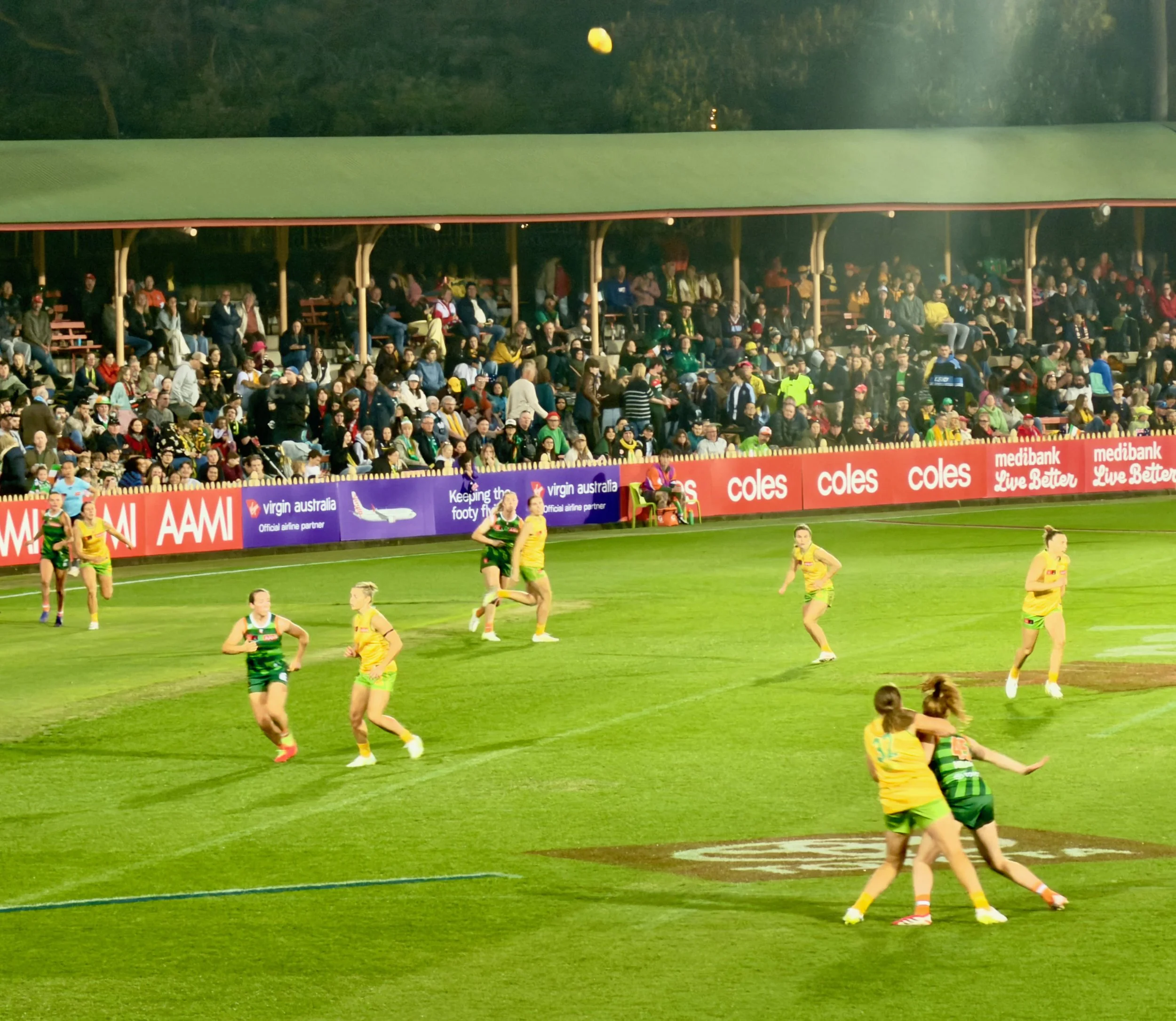
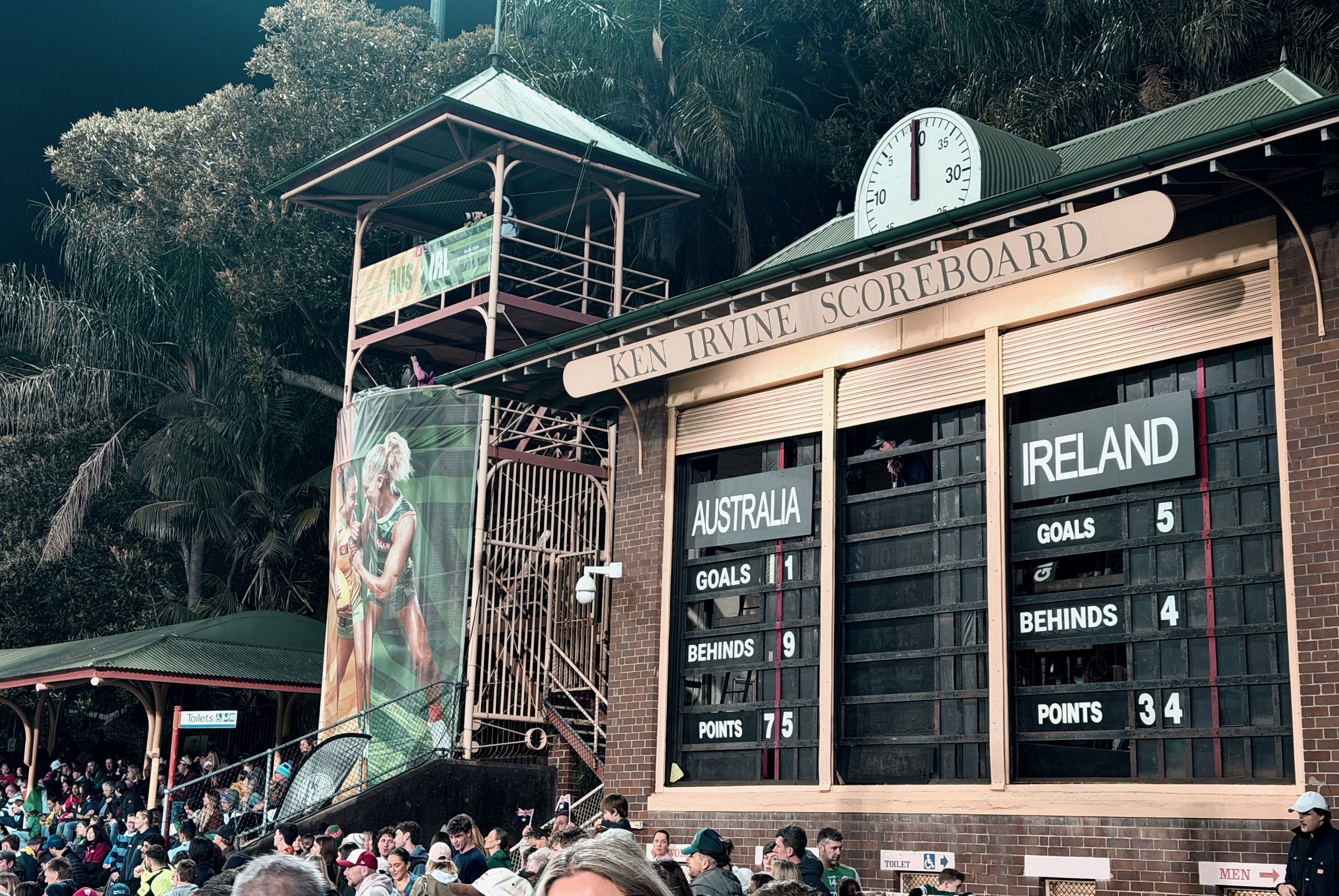
By the time I arrived, around forty minutes before the opening bounce, North Sydney Oval was already filling quickly. Finding a seat wasn't quite as straightforward as I'd hoped, but I eventually settled behind the goals. It wasn't where I would normally choose to sit, but it turned out to be the perfect place to watch two different football cultures unfold.
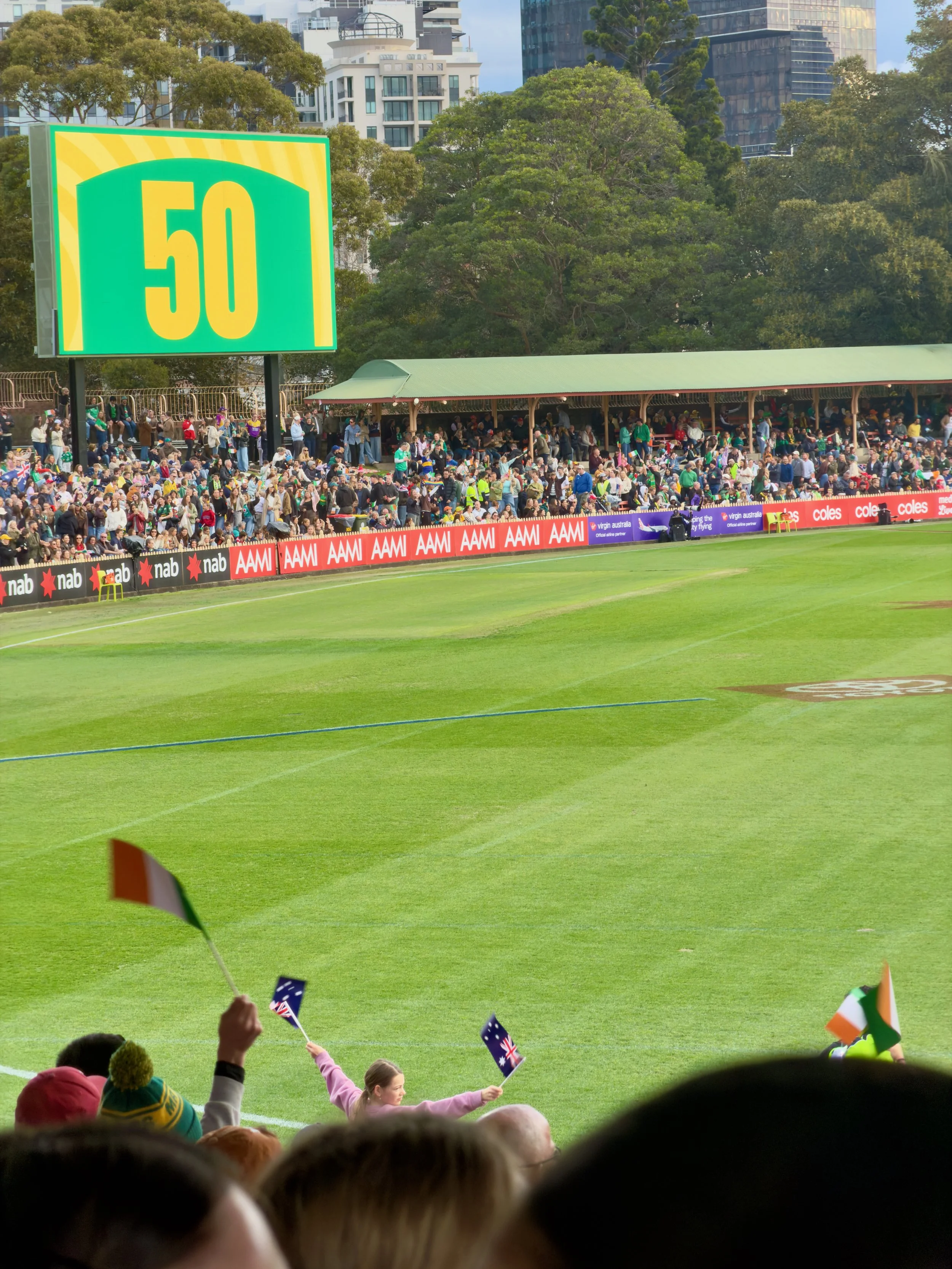
The crowd only reinforced the feeling. There were Irish flags everywhere. Green jerseys dotted the hill and grandstand almost as frequently as Australian colours. Many had clearly come simply because Ireland was playing. Living on the other side of the world doesn't present too many opportunities to support your own country, and North Sydney Oval suddenly became one of them.
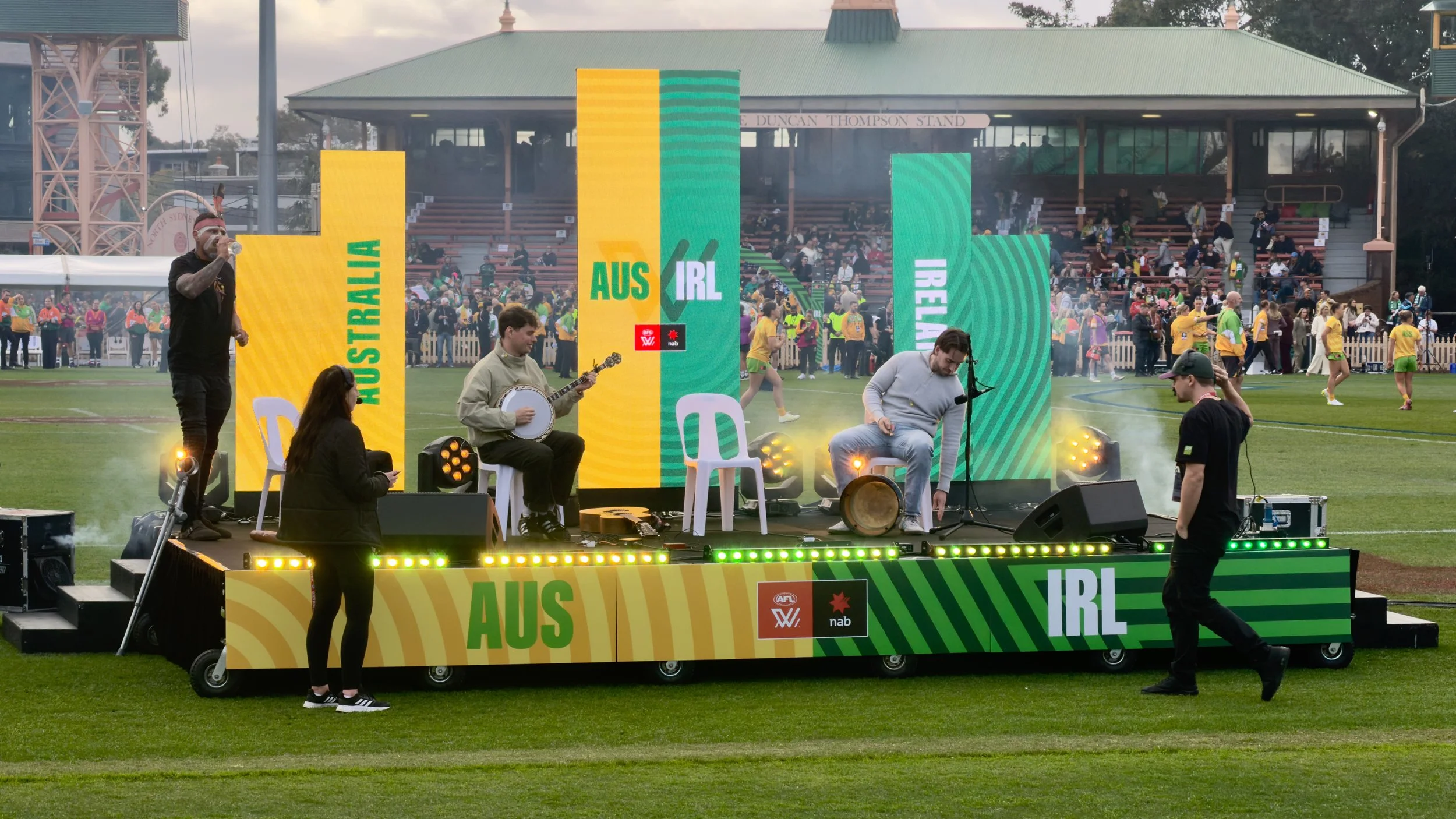
The afternoon comfortably celebrated both cultures. A Welcome to Country opened proceedings before a wonderful combination of didgeridoo and banjo set the tone. Irish dancing and music found their place as well. Every Australian goal was punctuated by a burst of didgeridoo through the stadium speakers. Nothing felt forced. It wasn't Australia hosting visitors so much as welcoming relatives.
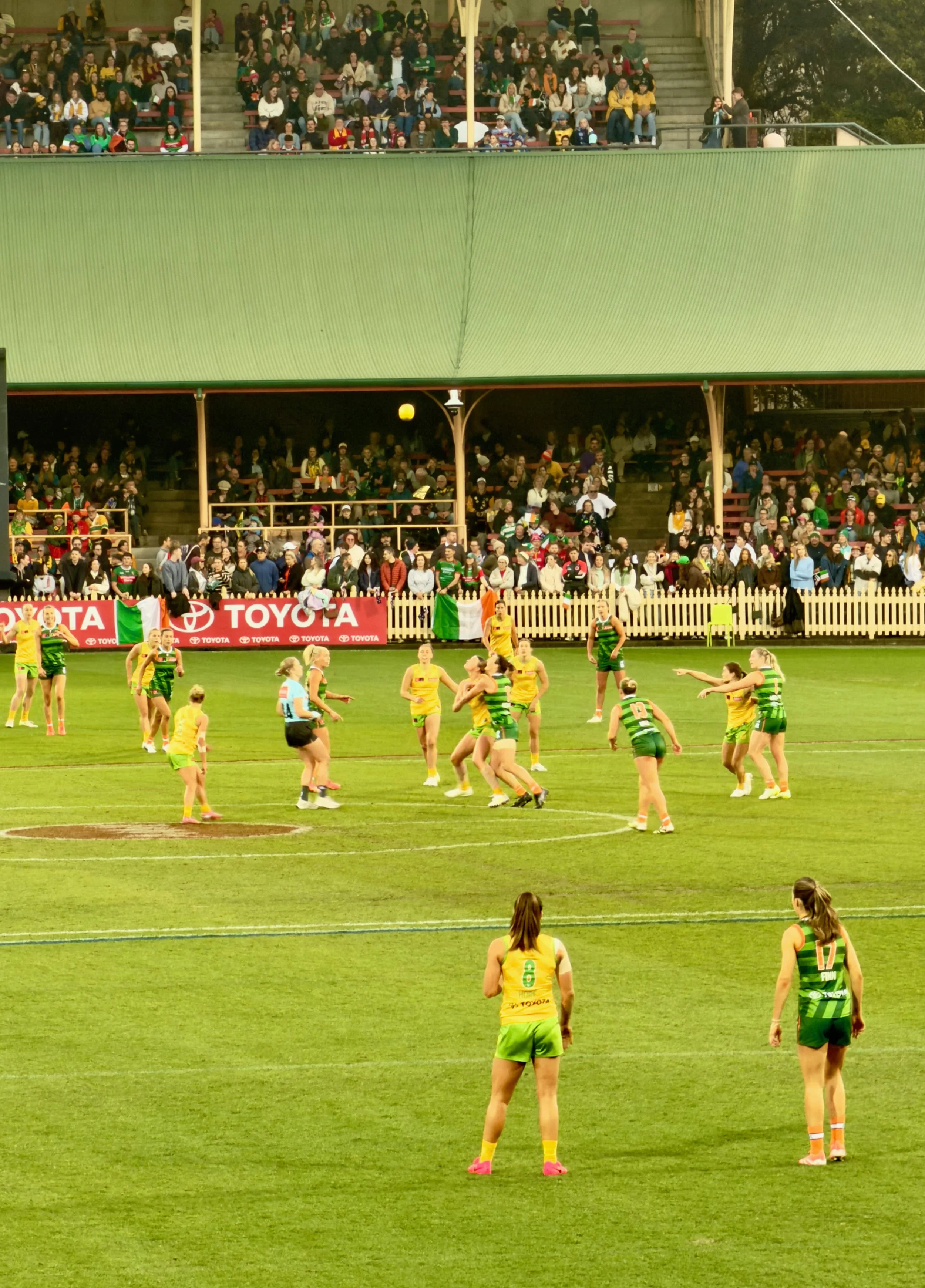
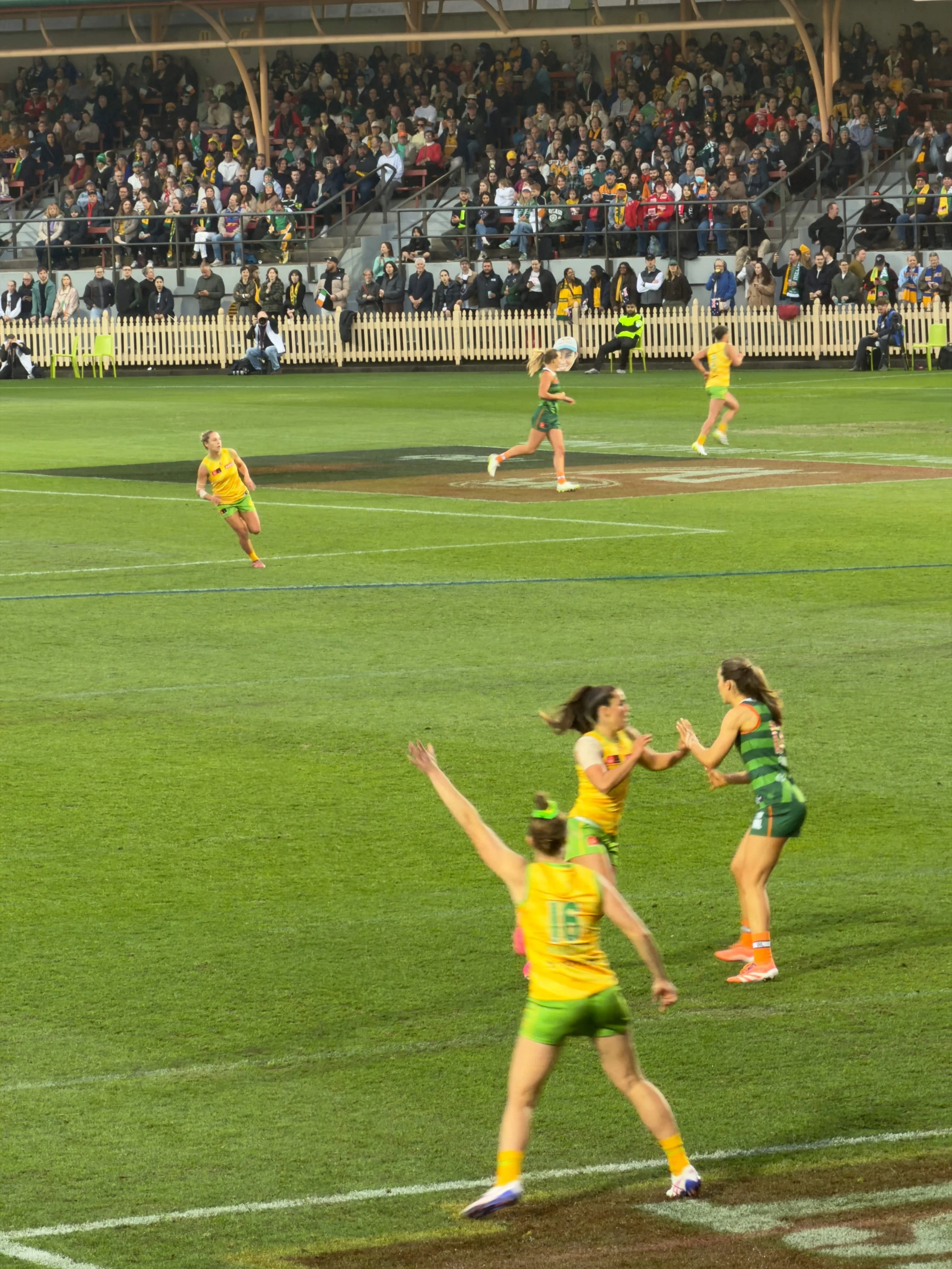
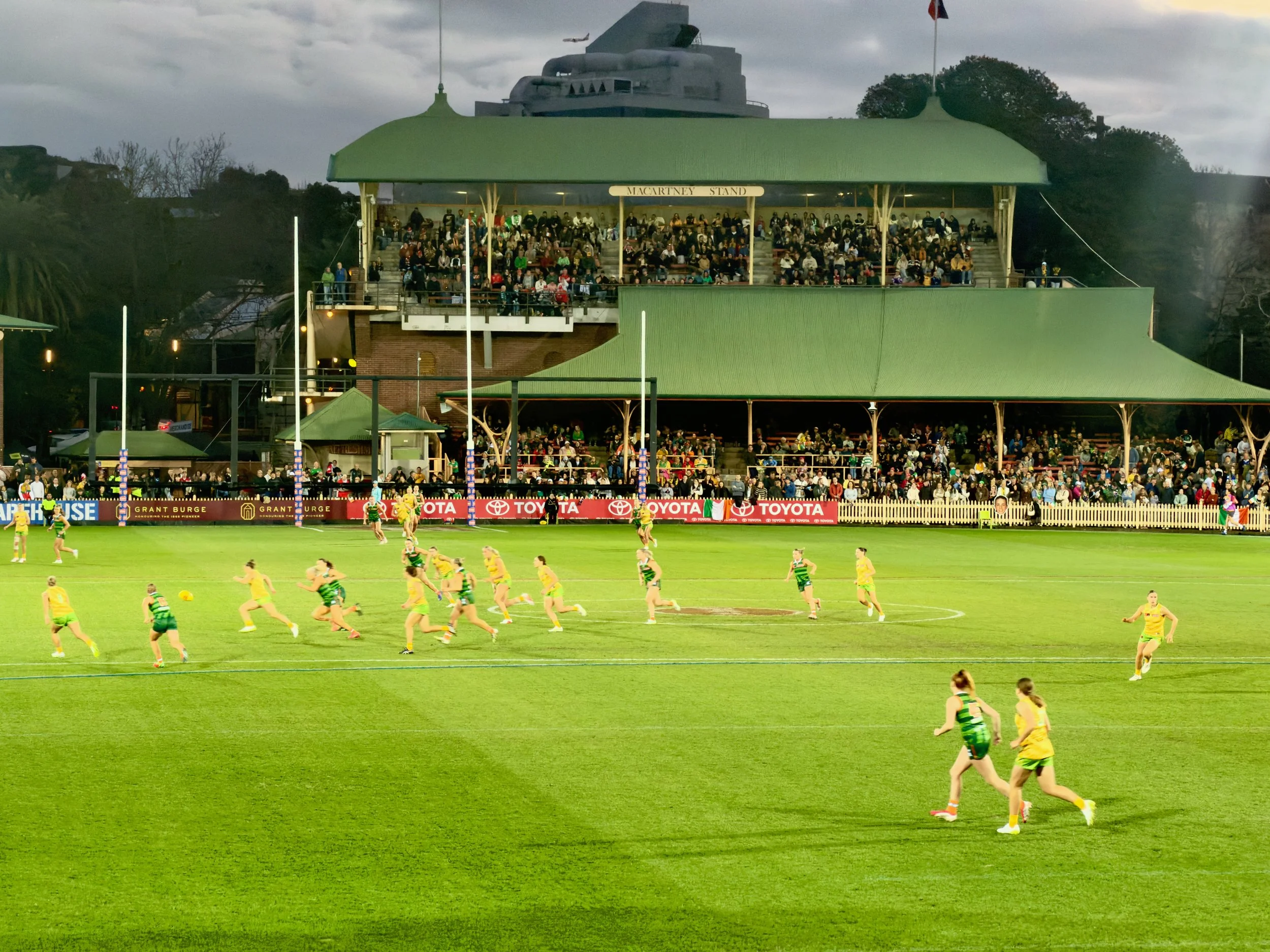
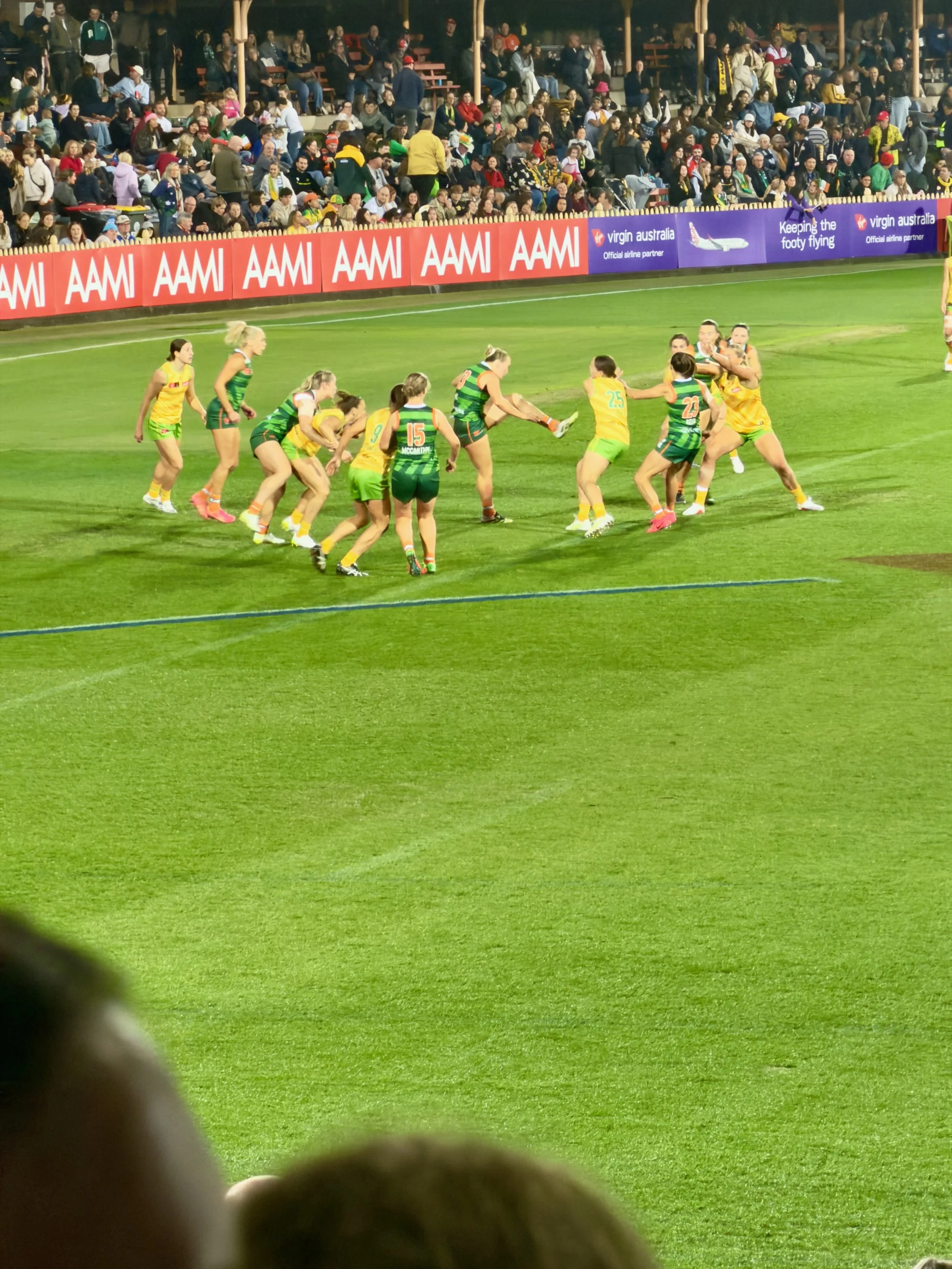
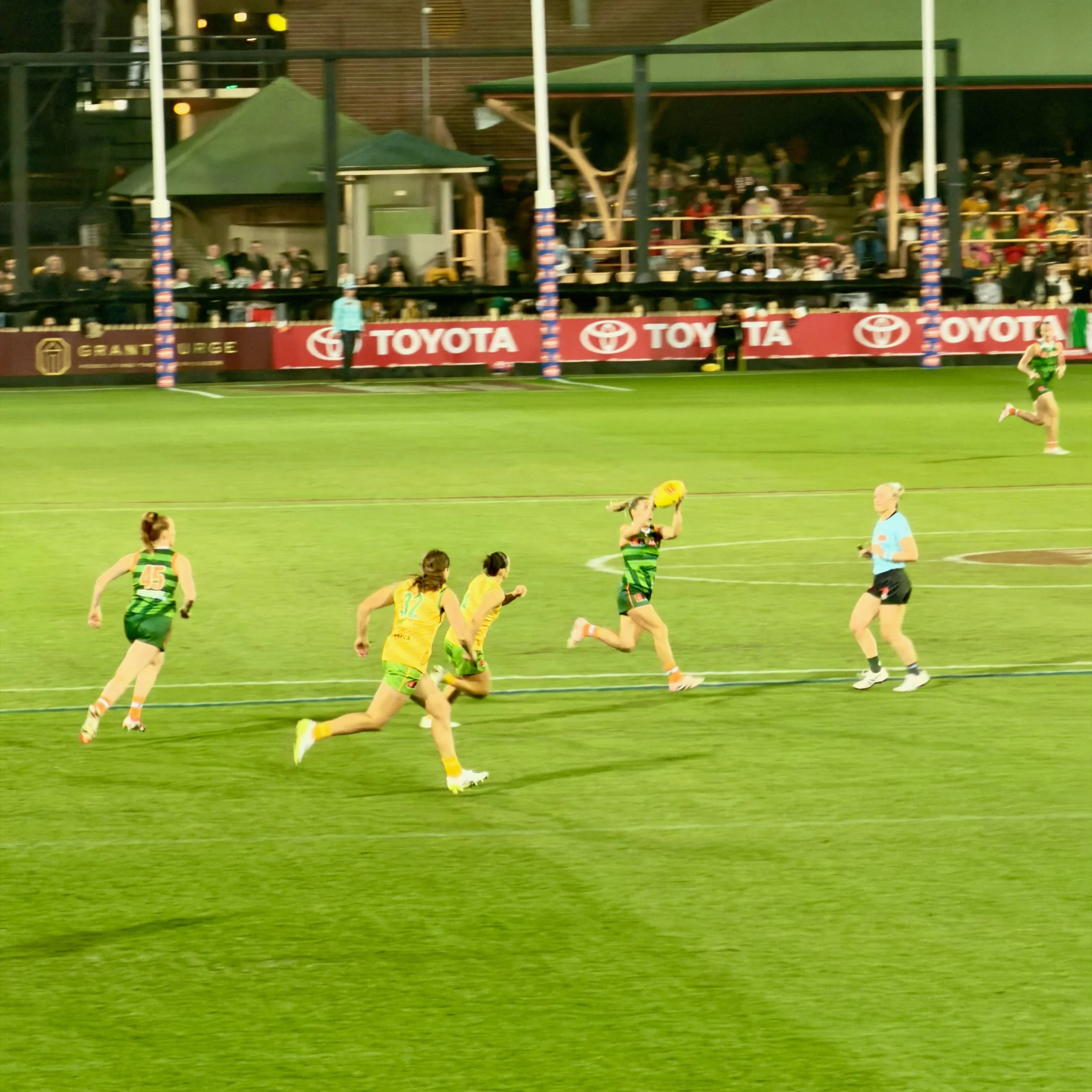
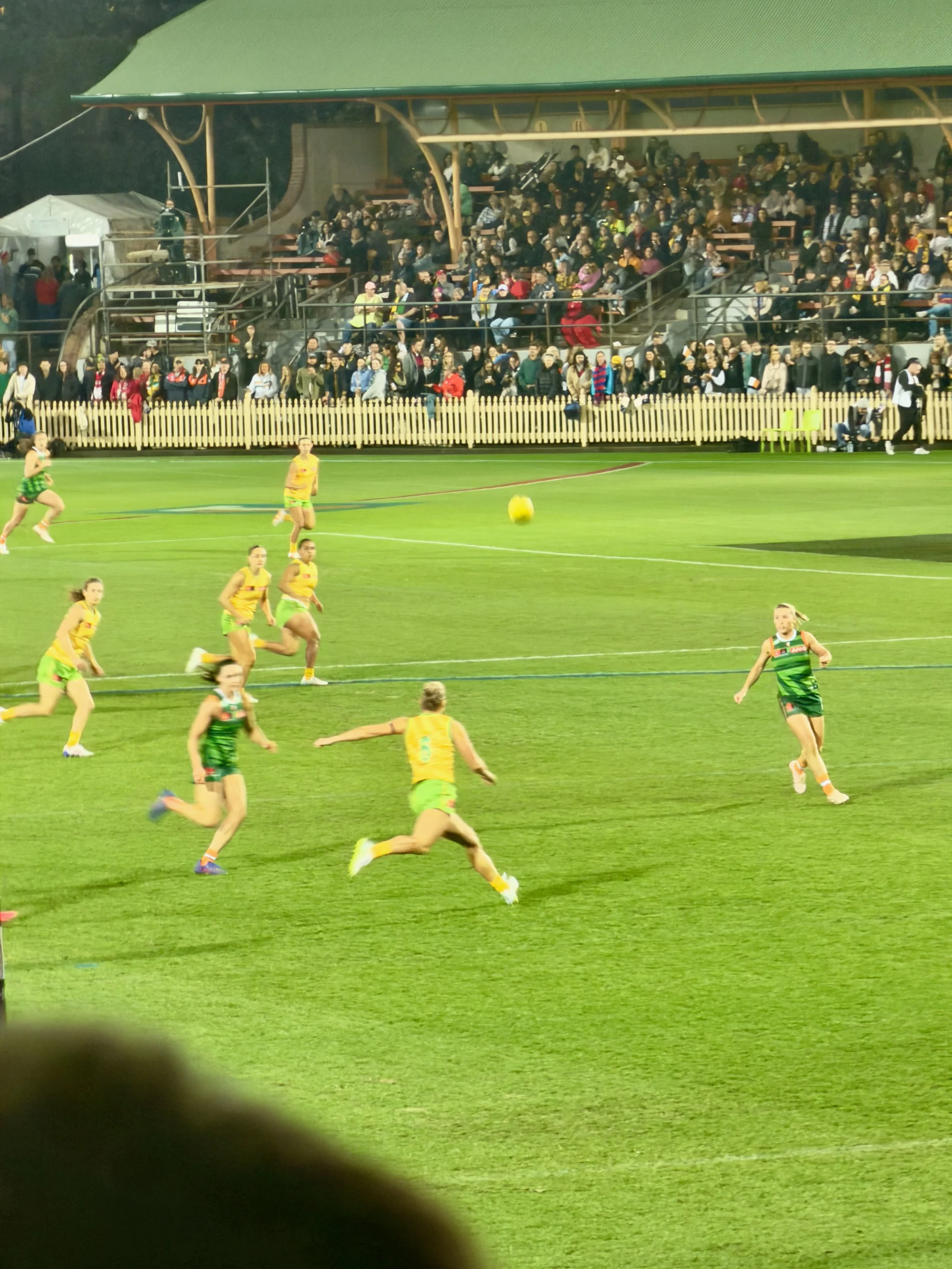
That feeling continued once the football began. Ireland never looked like a team learning Australian football. They played differently, certainly, but they looked completely at home. From behind the goals the contrast was easy to see. Australia spread the ground, looked for longer kicks and strong marks. Ireland moved in tighter numbers, using quick handpasses and flowing movement that felt unmistakably influenced by Gaelic football. They were speaking different football languages while playing the same game.
For much of the first half, Ireland gave Australia plenty to think about. Every Australian surge was met with another Irish response. The contest stayed alive long enough for both sets of supporters to believe. It was also properly physical. There was plenty of pushing and shoving off the ball. Nothing excessive. Nothing spiteful. Just the sort of competitive edge you expect when neither side wants to give an inch.
In many ways, it simply felt like another AFL match. Perhaps that's what surprised me most. This wasn't an exhibition. It wasn't a novelty. It was a genuine representative match between two countries that have quietly spent years building the game together.
Over the years, Irish players have become familiar faces across the AFLW. Australians have taken coaching knowledge back to Ireland. Players move in both directions. Long before this representative match was played, the relationship already existed.
Even Tadhg Kennelly came to mind. As a Sydney Swans member, there will always be a small part of me that jokingly thinks of him as the traitor who crossed over to help coach Ireland. I also absolutely love that man. That contradiction probably says everything about this rivalry. It isn't built on hostility. It's built on familiarity.
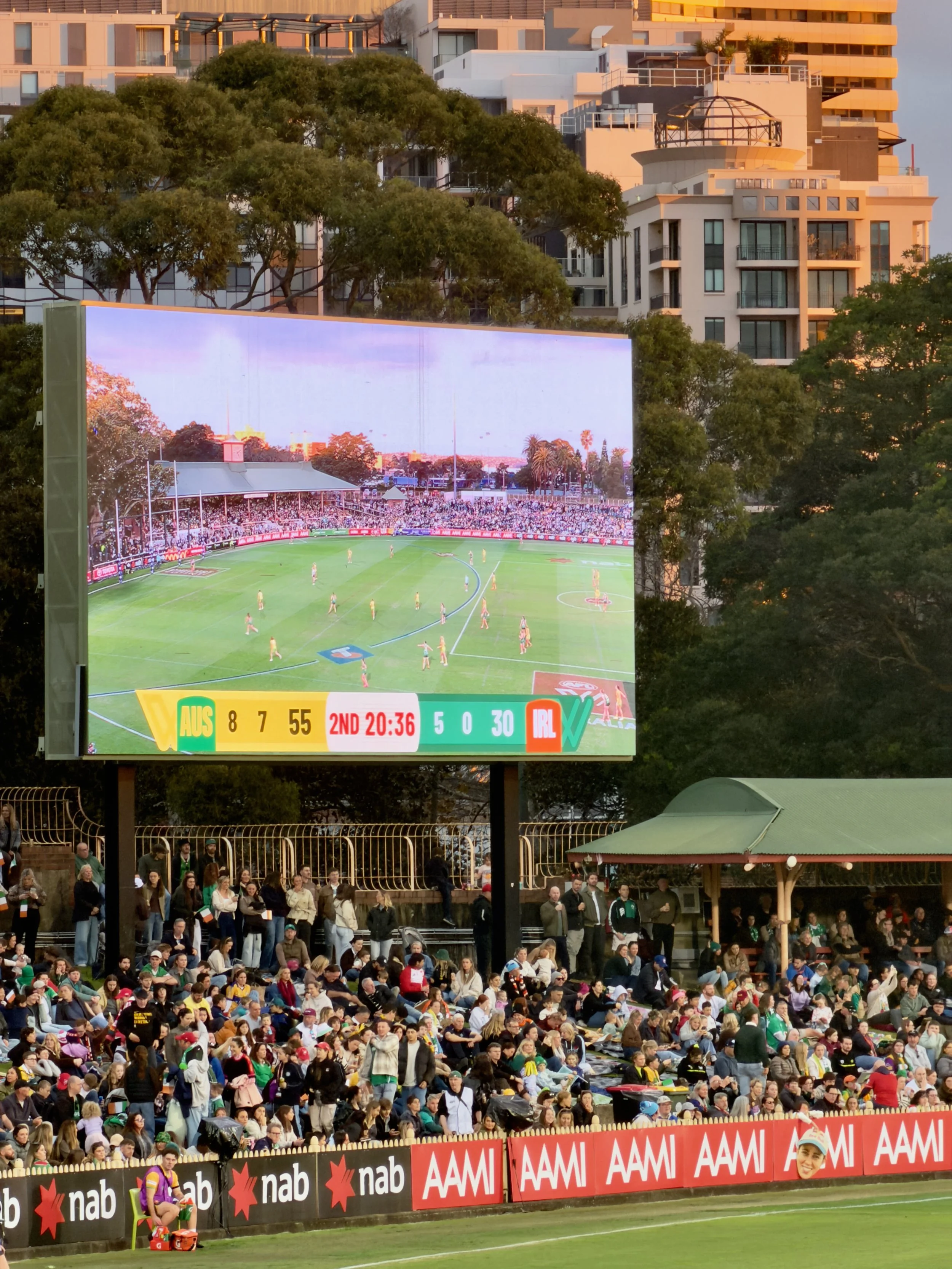
Sitting inside a packed North Sydney Oval, I couldn't imagine this afternoon feeling quite the same anywhere else. Every seat seemed occupied. The atmosphere wrapped itself around the old ground. Irish voices answered Australian cheers. The noise never disappeared into empty space. Sometimes sold out is exactly the right size.
Australia eventually pulled away on the scoreboard, but by then that hardly seemed the lasting memory. I arrived expecting an international between two countries. I left feeling as though I'd watched siblings. Not the kind who always agree. The kind who grow up together, borrow from one another, occasionally steal each other's ideas, compete fiercely, and still care deeply about what happens to the other. For a sport so closely associated with Australia, that's a remarkable relationship to witness.