Thumbs Up, Fighters
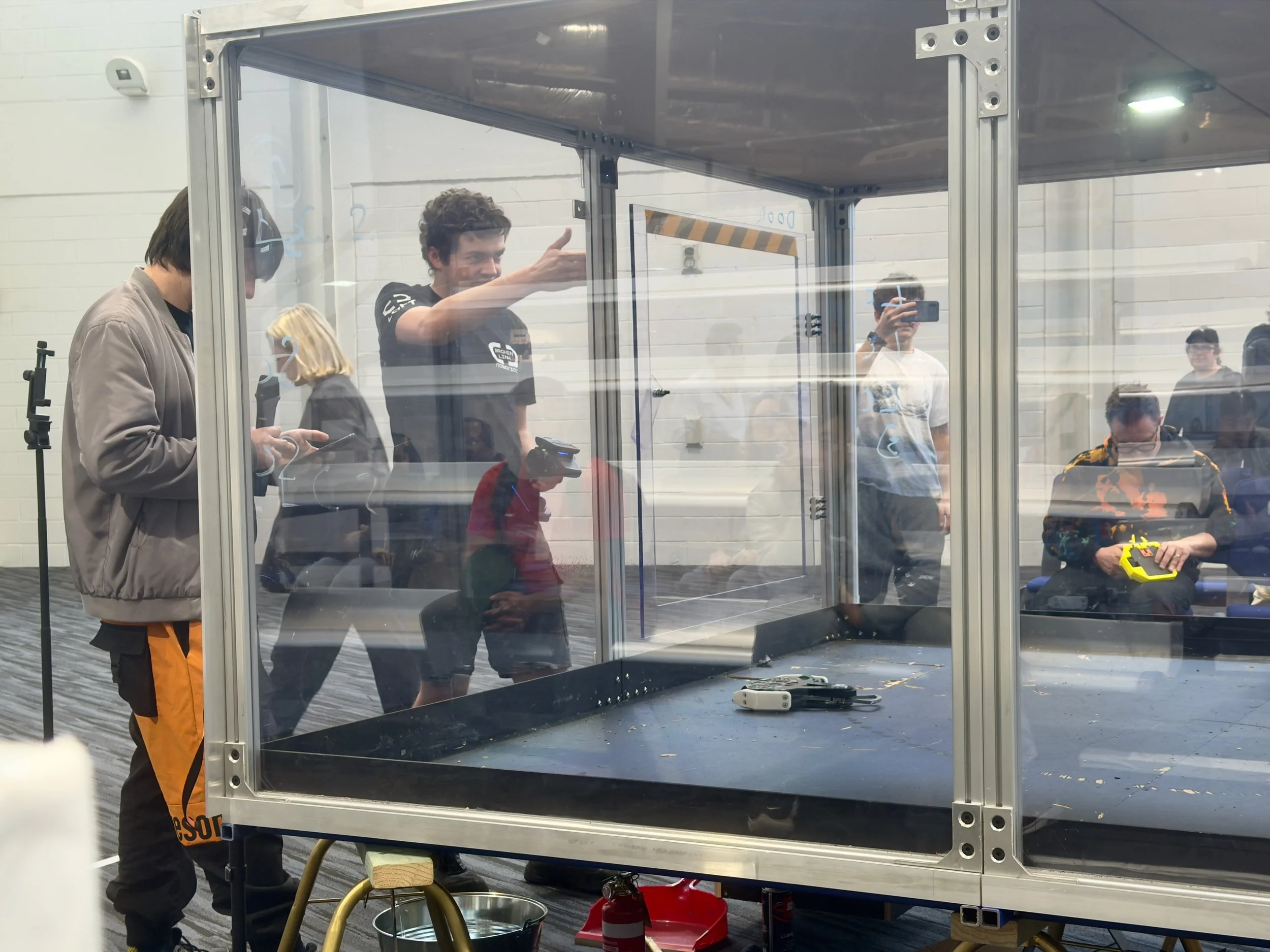
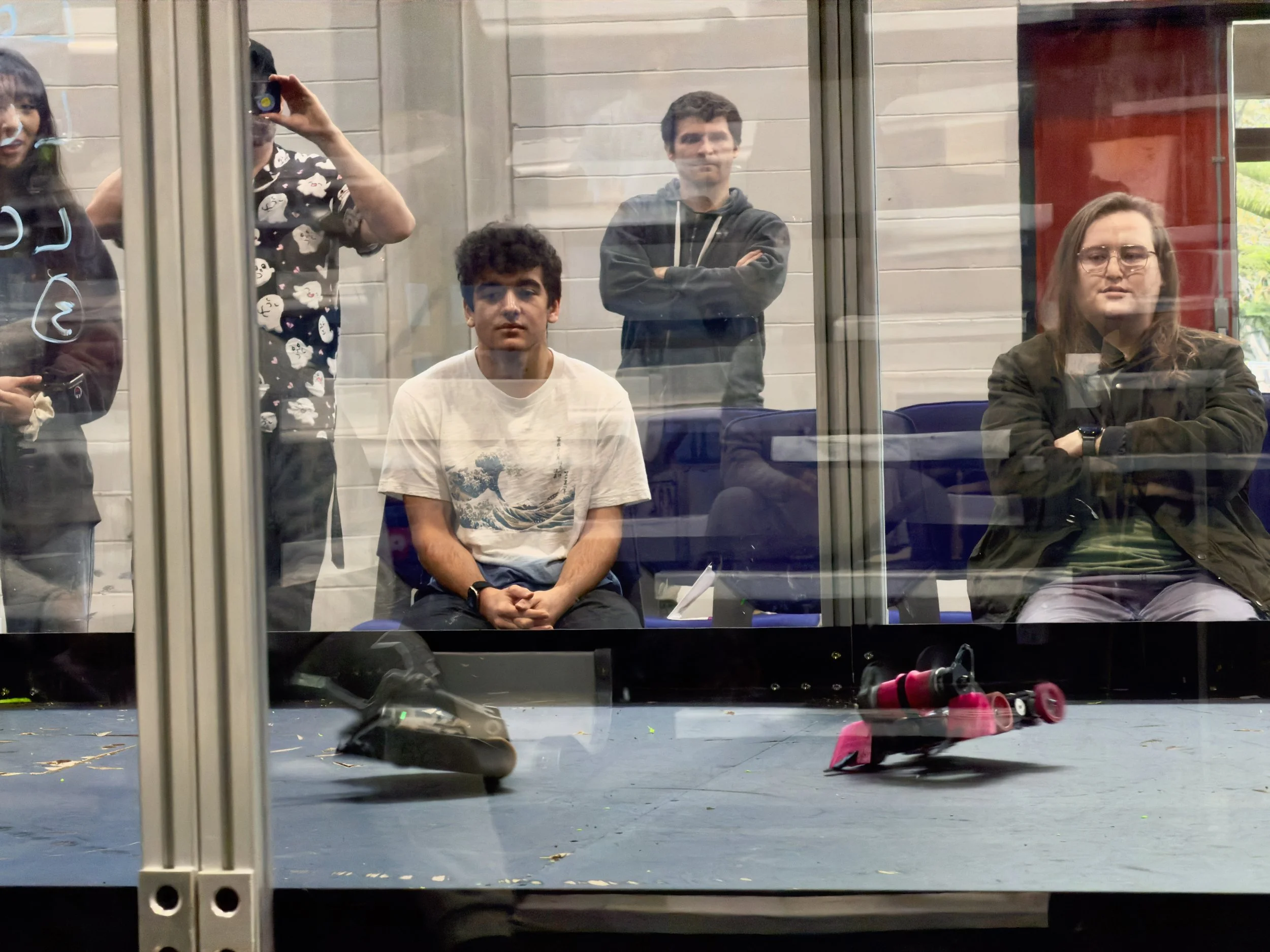
I had seen robot fighting on television before, so the basic idea was familiar enough. Put two machines into an enclosed arena and let them try to disable, overturn or destroy each other. What I had not appreciated was how much more physical it feels when you are standing less than two metres away.
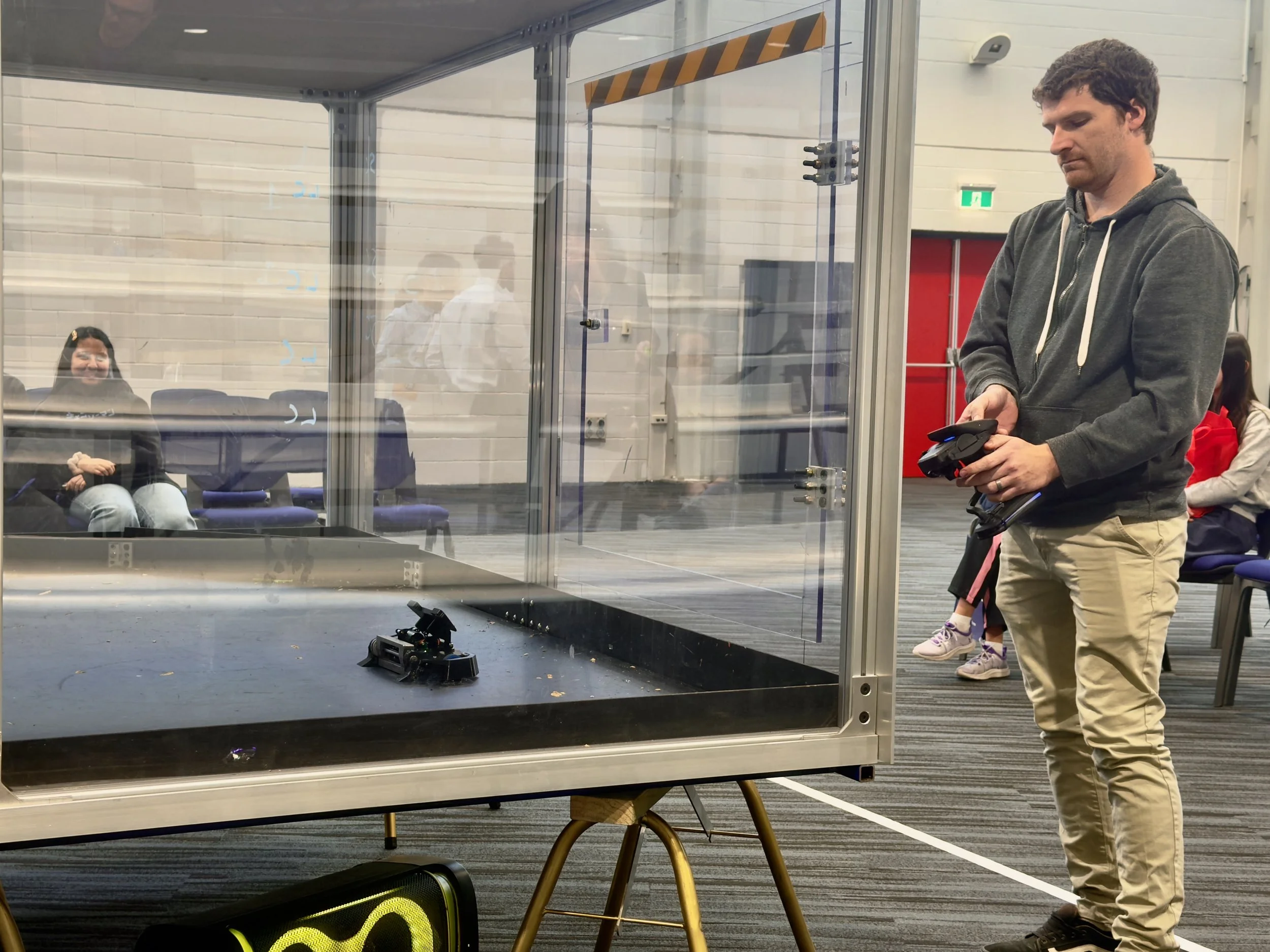
This version was smaller than the television shows. The robots weighed only a few kilos and the arena was set up inside an exhibition hall at Sydney Showground as part of a careers and employment expo. I was there for the full day, with fights running across the event and the later rounds gradually building towards the finals. The scale stopped feeling small as soon as the robots started moving.
Before each fight came the same instruction: “Thumbs up, fighters.” The drivers confirmed they were ready, then came the command to fight.
Almost everything that followed produced some kind of reaction. A robot being flipped brought a cheer. Someone being pushed towards the pit produced the drawn-out ooh of a crowd waiting to see whether it would fall. A machine balancing on the edge could hold everyone for a few seconds, while a clean hit against another robot brought noise immediately.
Then there were the really big impacts. Some robots were powerful enough to send their opponents into the roof of the arena. Sparks flew, pieces broke away and the Perspex walls took hits hard enough to make me wince.
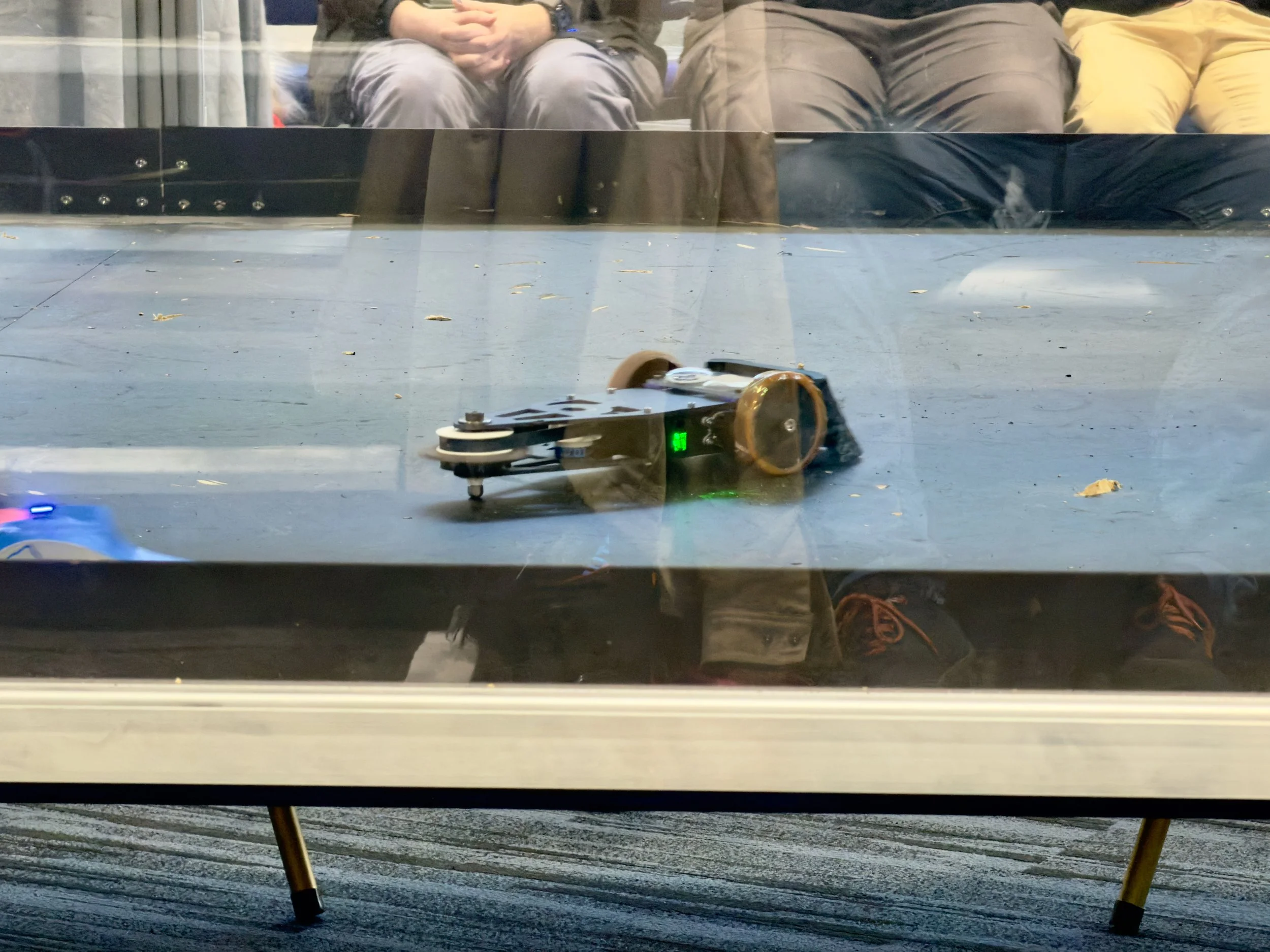
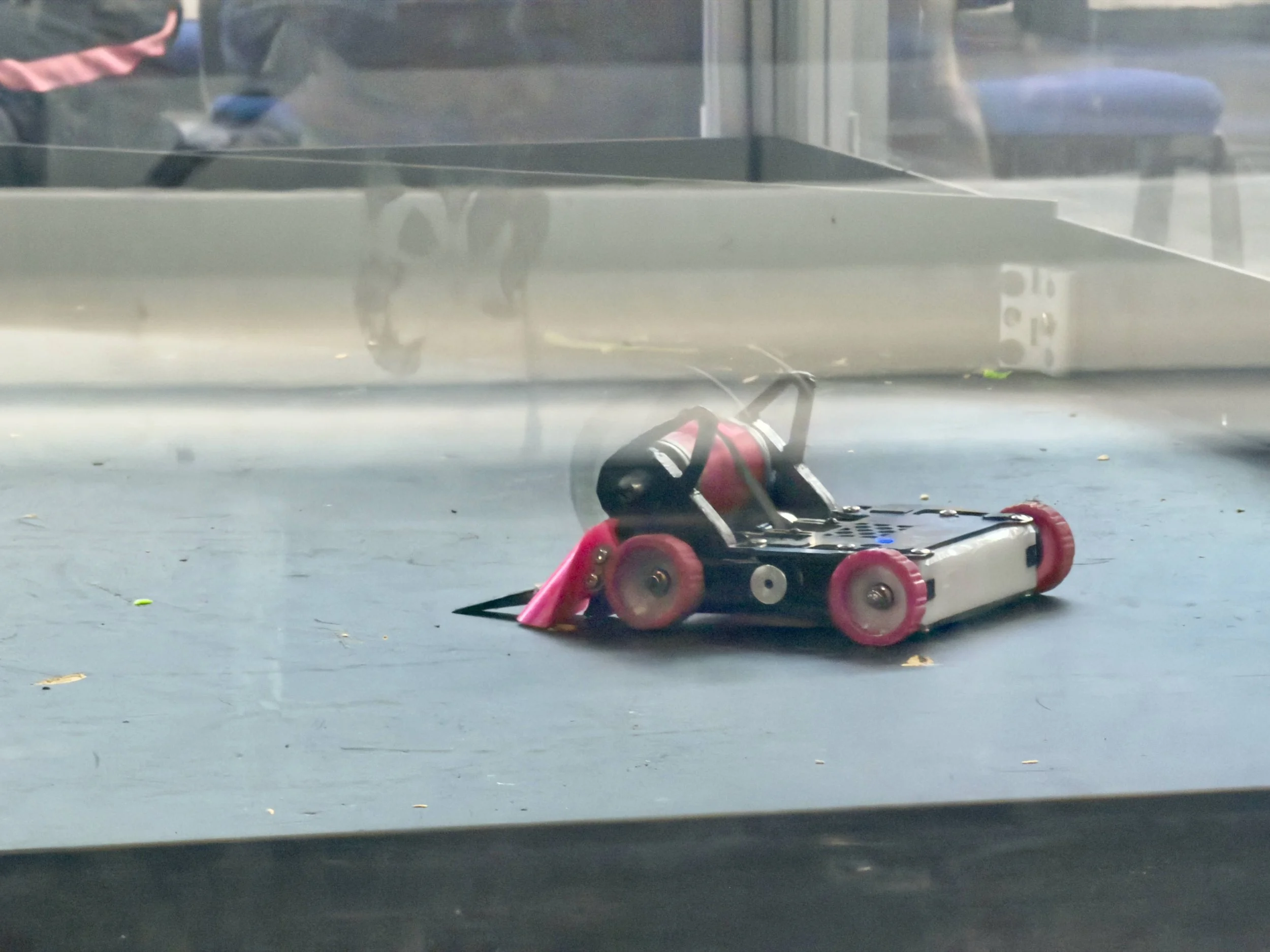
One horizontal spinner was particularly ridiculous. It seemed almost permanently on the edge of being out of control, and once it was up to speed every approach carried the sense that something was about to happen, although it was not always obvious to whom. It might connect properly and fling another robot across the box, tear something loose or damage itself. Sometimes it hit the wall so hard that it bounced across the arena from one side to the other like a ping-pong ball.
Standing that close, I did not just hear those impacts. I could feel them. There was tension whenever the spinner lined something up because all that stored energy had to go somewhere, and when it finally connected the result could make the crowd cheer, laugh and wince at the same time.
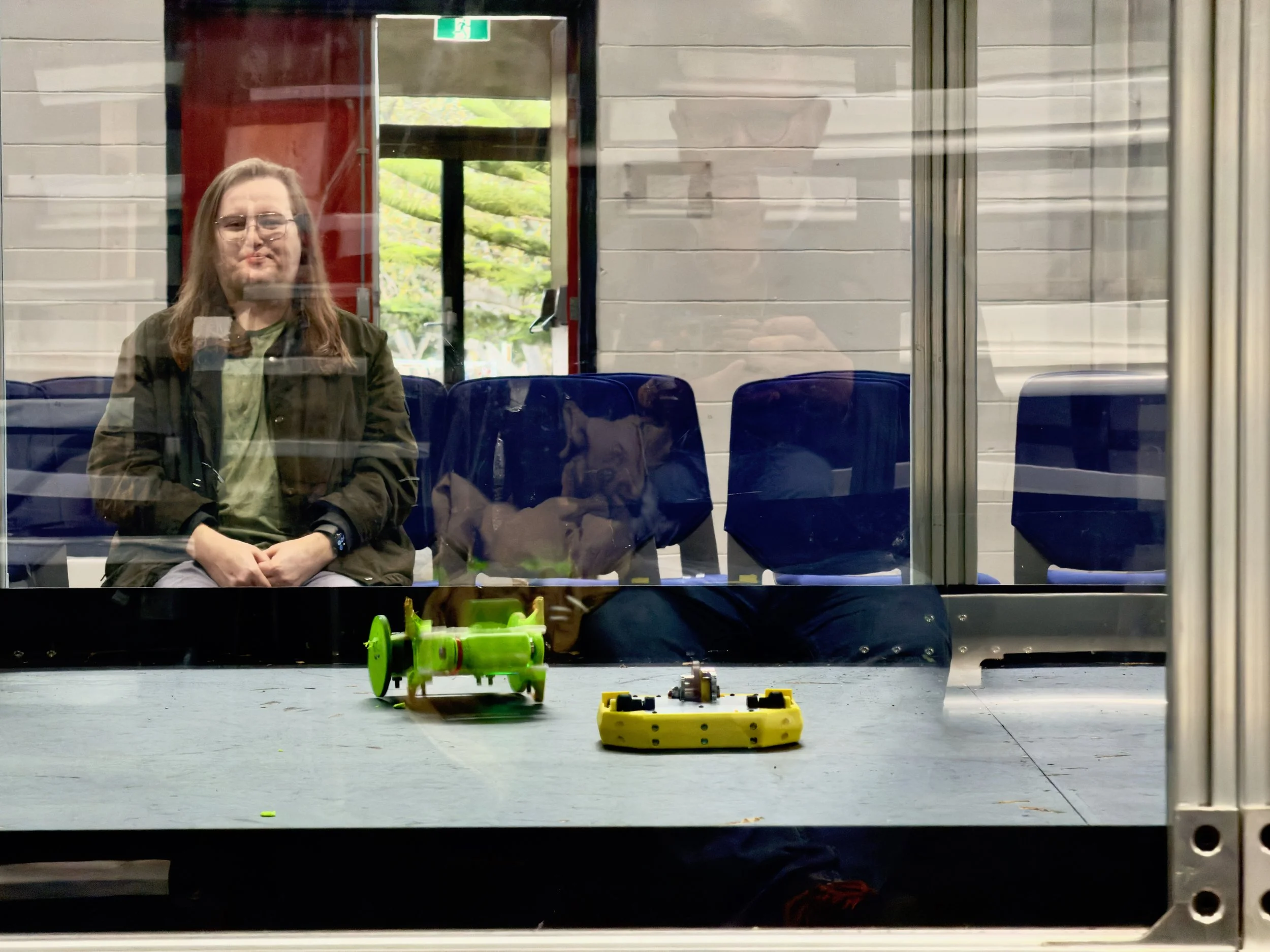
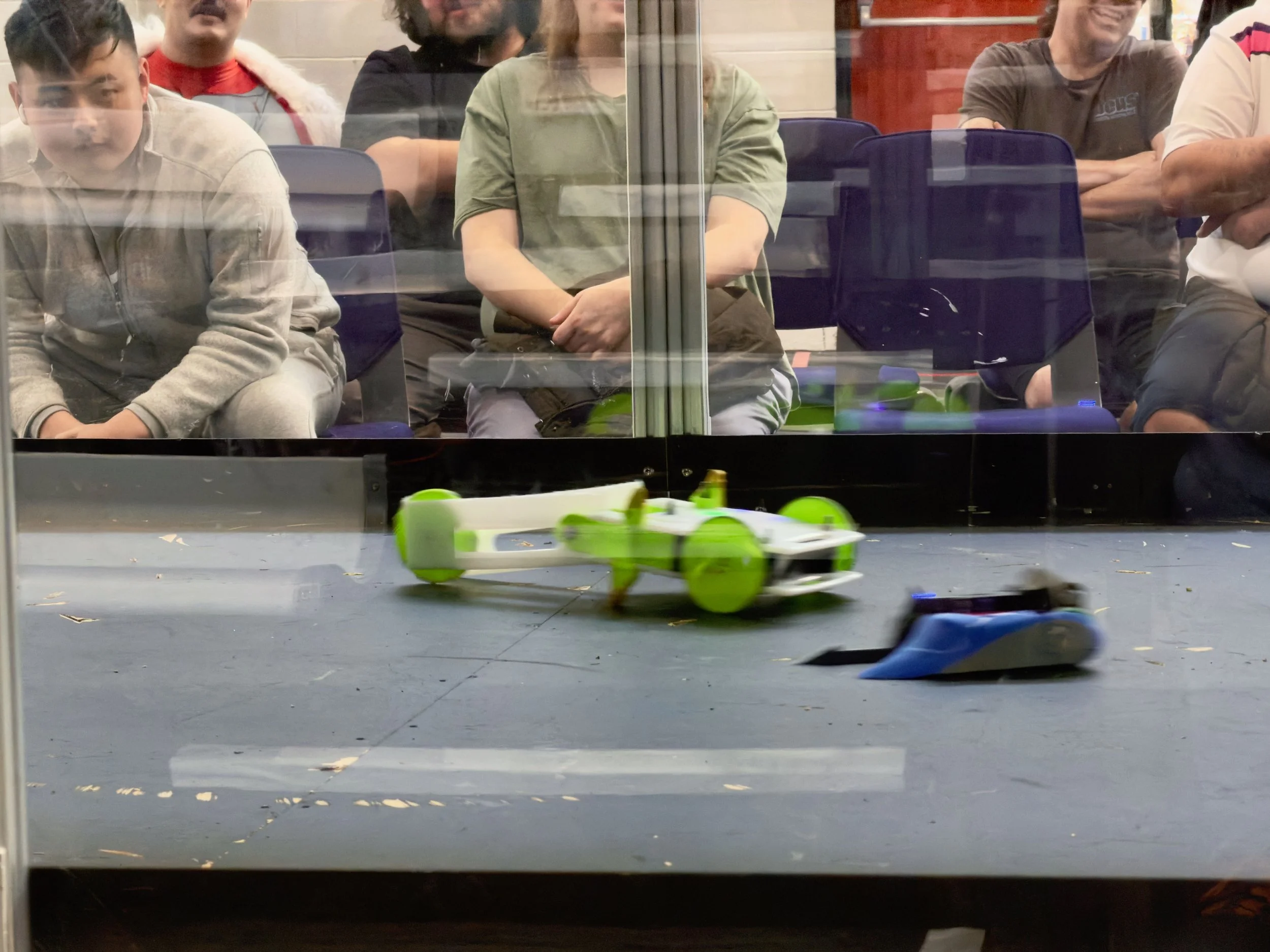
That unpredictability was a large part of the fun, although the fights could also become surprisingly tactical. Sometimes two robots slowed down and faced each other across the arena, almost like a standoff. Drivers held back, waiting for the right angle rather than charging straight in. Other machines were designed to push rather than smash, or to flip an opponent, force it into the pit or simply stop it moving.
Then one of them would commit and the arena would explode back into noise.
I discovered fairly quickly that taking photographs was difficult, not because the camera was hard to use but because I did not want to look away. A fight might last a few minutes, but the important moment could happen in less than a second. Looking down long enough to frame a photograph meant risking looking back to find a wheel missing, a weapon disabled or a robot suddenly upside down.
Even a few seconds of divided attention could mean missing the moment that decided the fight. It became one of those unusual events where trying to document what I was seeing could interfere with actually seeing it.
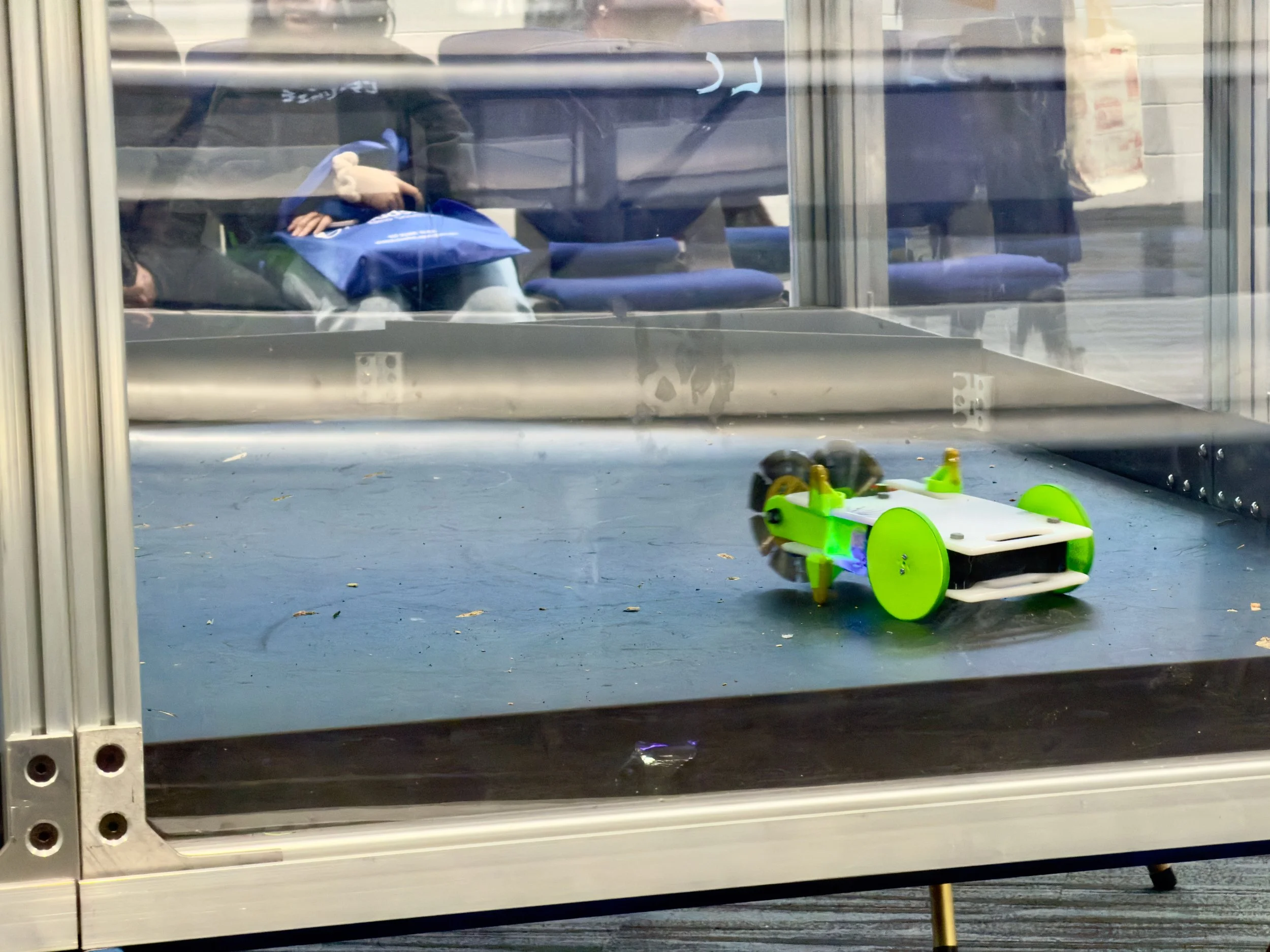
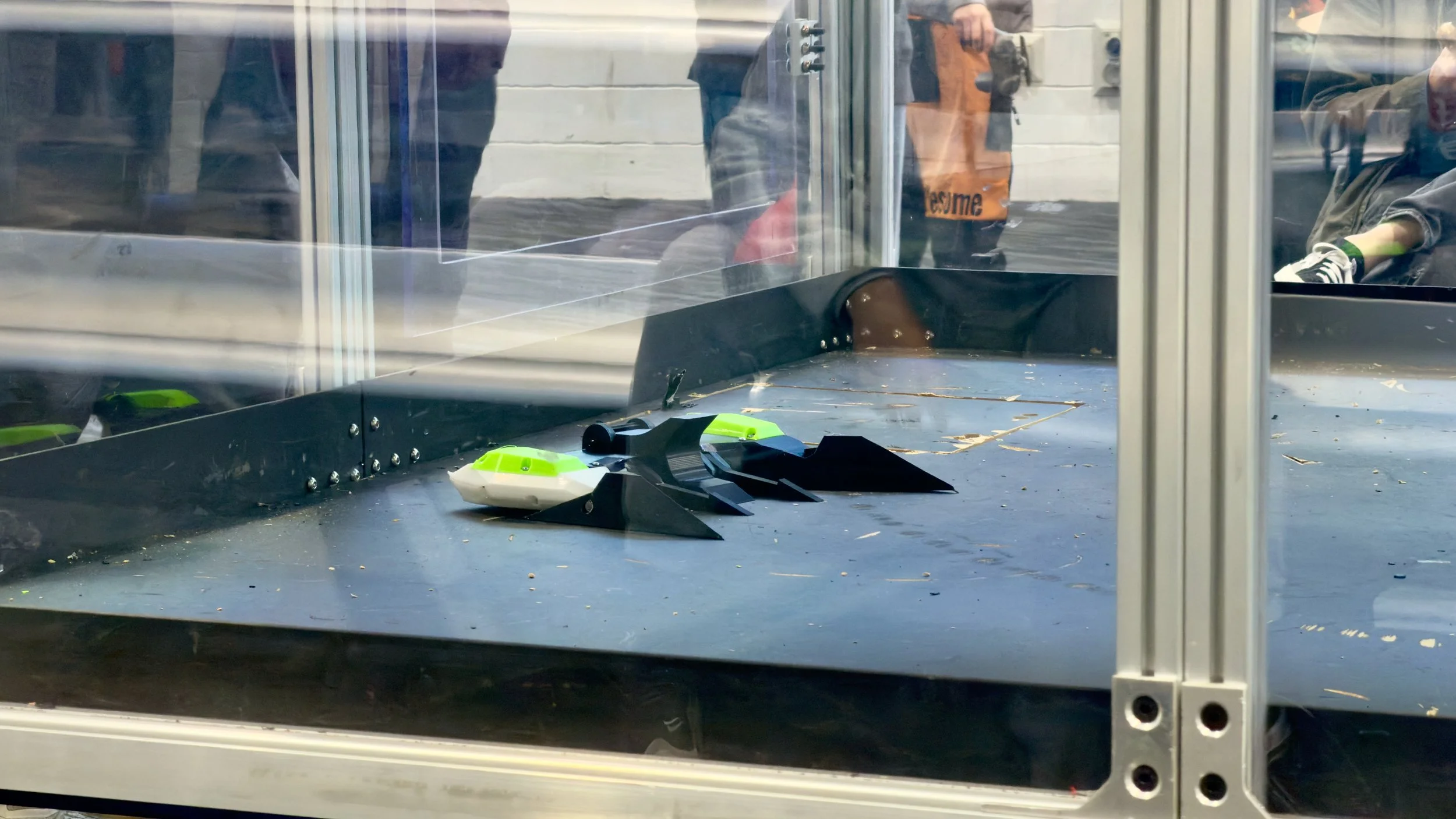
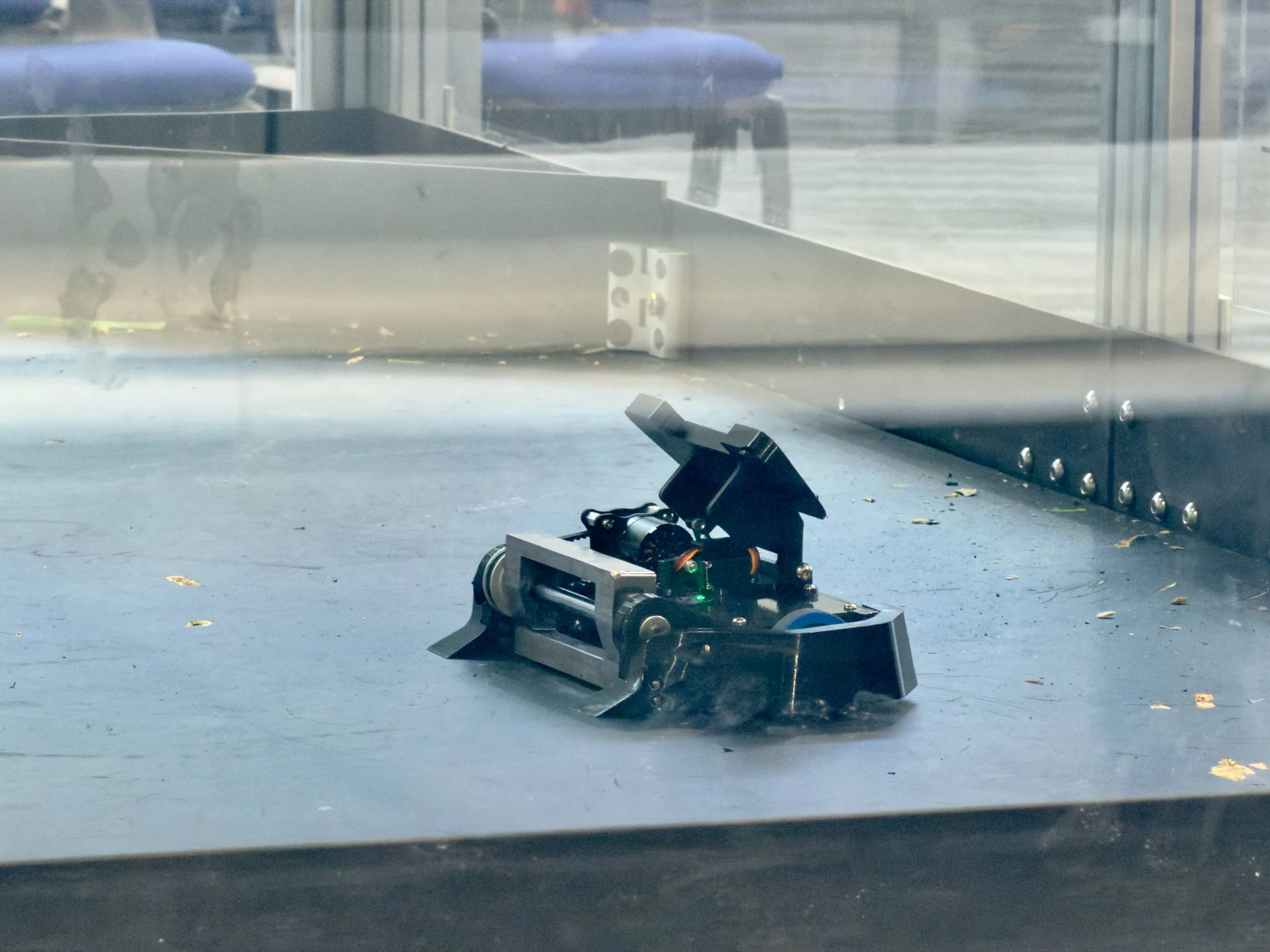
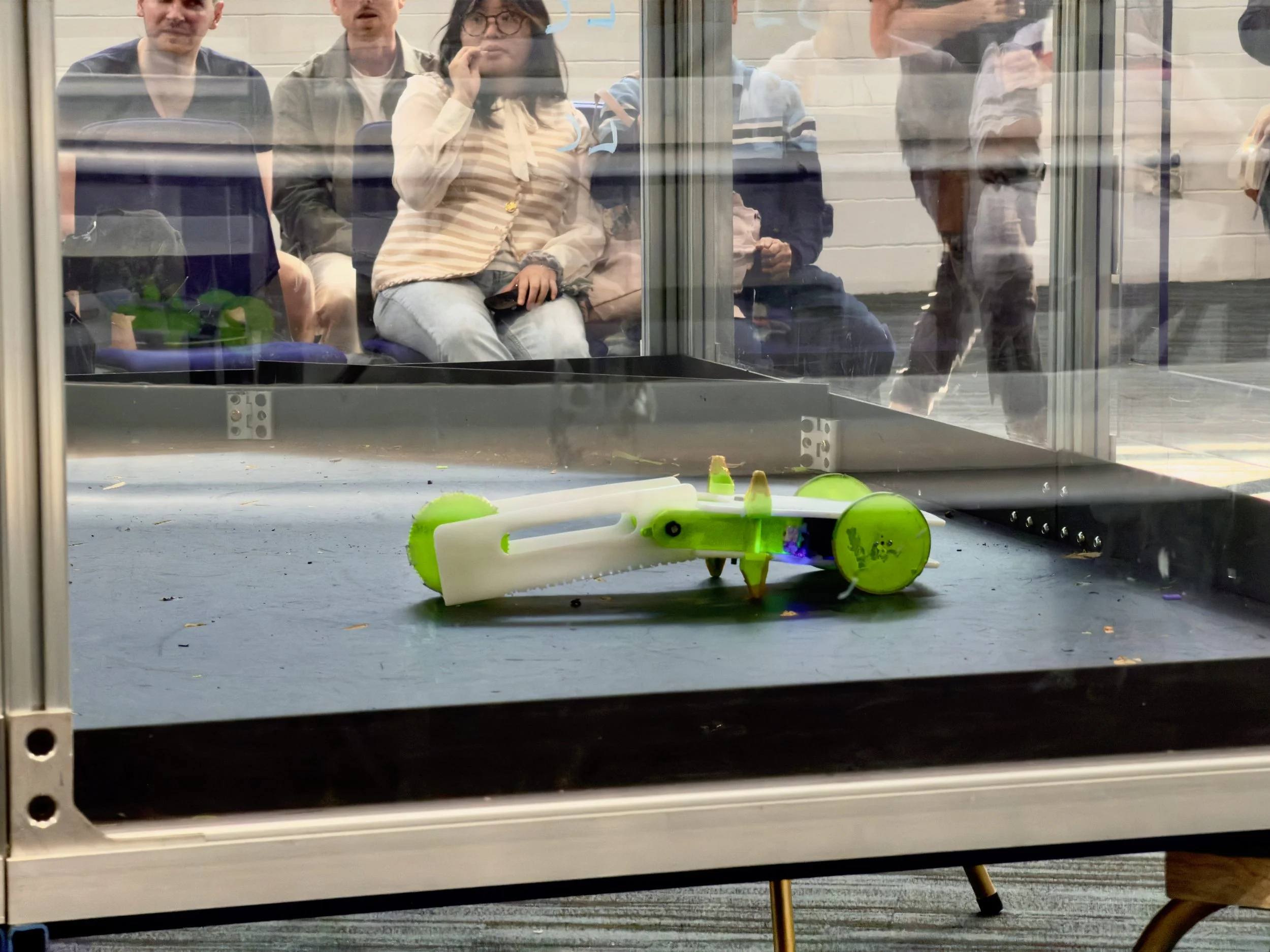
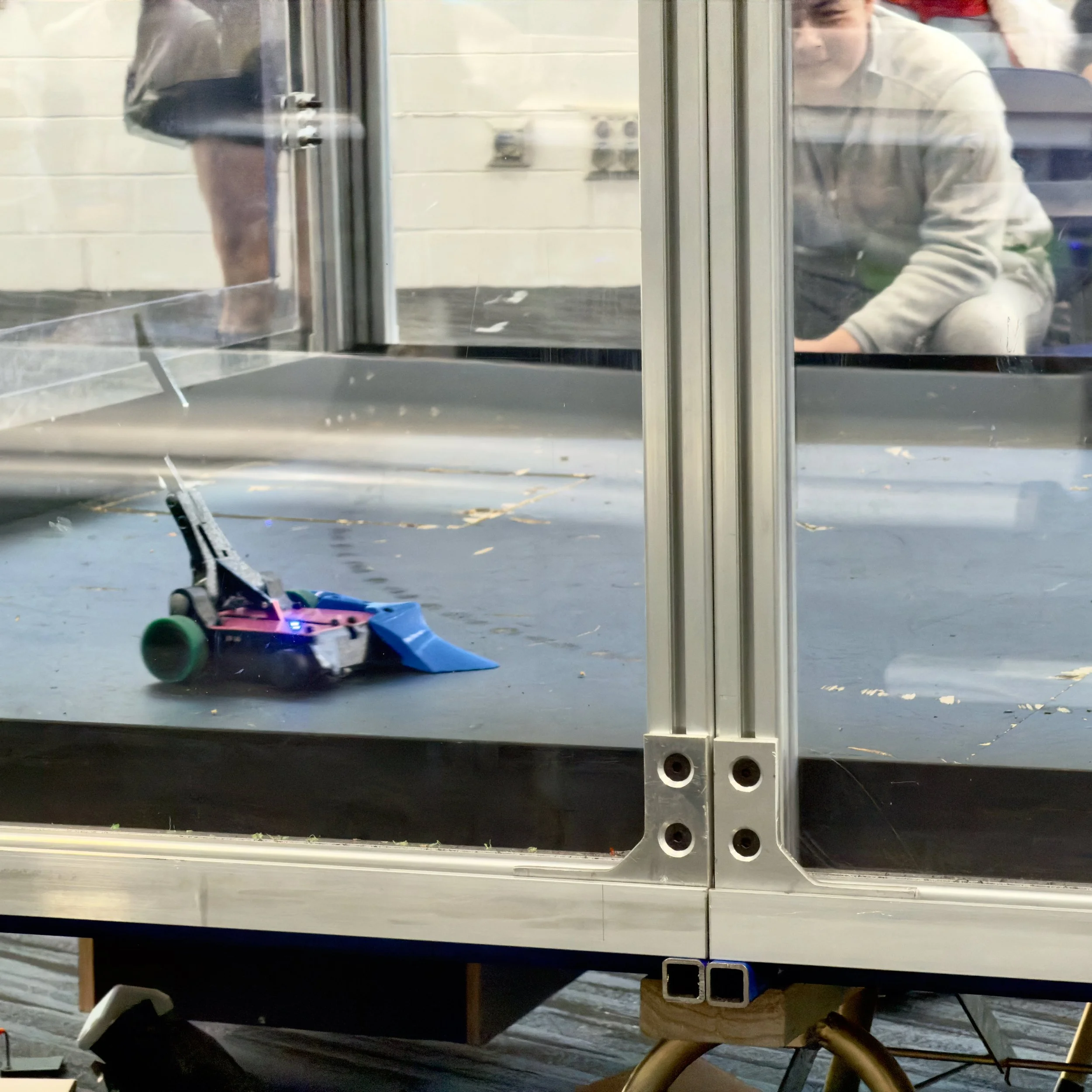
The robots themselves were fascinating before they even moved. Some looked beautifully finished, with clean lines and polished surfaces that made them seem almost too neat to be particularly dangerous. Others looked strange enough that I initially wondered why anyone had built them that way.
Then they started fighting. The polished machines revealed what they had been hiding, while some of the stranger designs suddenly made sense once I saw what they were trying to do. Whatever its design, it still had to survive whatever the other robot could do to it.
In one fight, both robots appeared badly injured within seconds. One lost the belt driving its main weapon, so it could still move but could no longer do much more than push its opponent around. The other suffered its own mechanical failure, accompanied by smoke, but it too could still drive. So they kept going, two damaged machines reduced to shoving one another around the arena, and it was still exciting.
More surprising was how the drivers reacted to damage. Some were visibly laughing during the fights, and afterwards the excitement was not always about who had won. A huge hit followed by almost no damage could be celebrated. So could a gouge, a missing piece or some other evidence of what the robot had just survived.
That was where the contradiction became hard to ignore. These people had designed and built the machines themselves. Some were beautifully finished, while others only revealed their cleverness once they started fighting. There was obvious pride in all that work, yet part of the purpose was to send the finished robot into an arena and discover, sometimes violently, what would break.
Winning mattered, but so did finding out what the machine could take.
The organisers doing the commentary were also competitors, swapping out when their own robots were due to fight. Their reactions often matched what I was seeing from the drivers: a good hit was worth appreciating even when it had happened to your own machine.
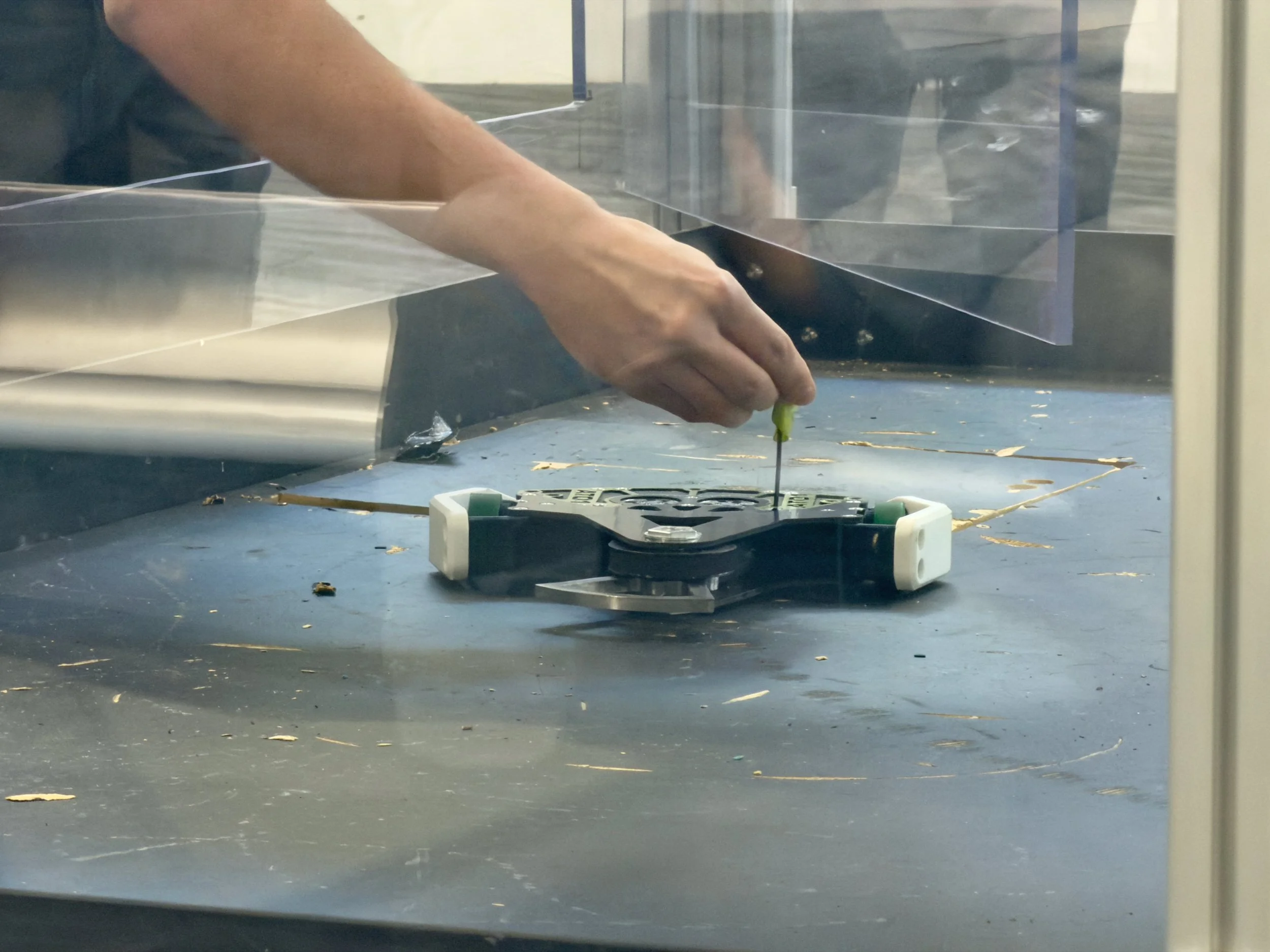
Between bouts, the consequences were everywhere. Electrical tape appeared, gaffer tape appeared and cable ties appeared. Some repairs looked less like restoration and more like a temporary agreement between builder and robot that it would function for another few minutes.
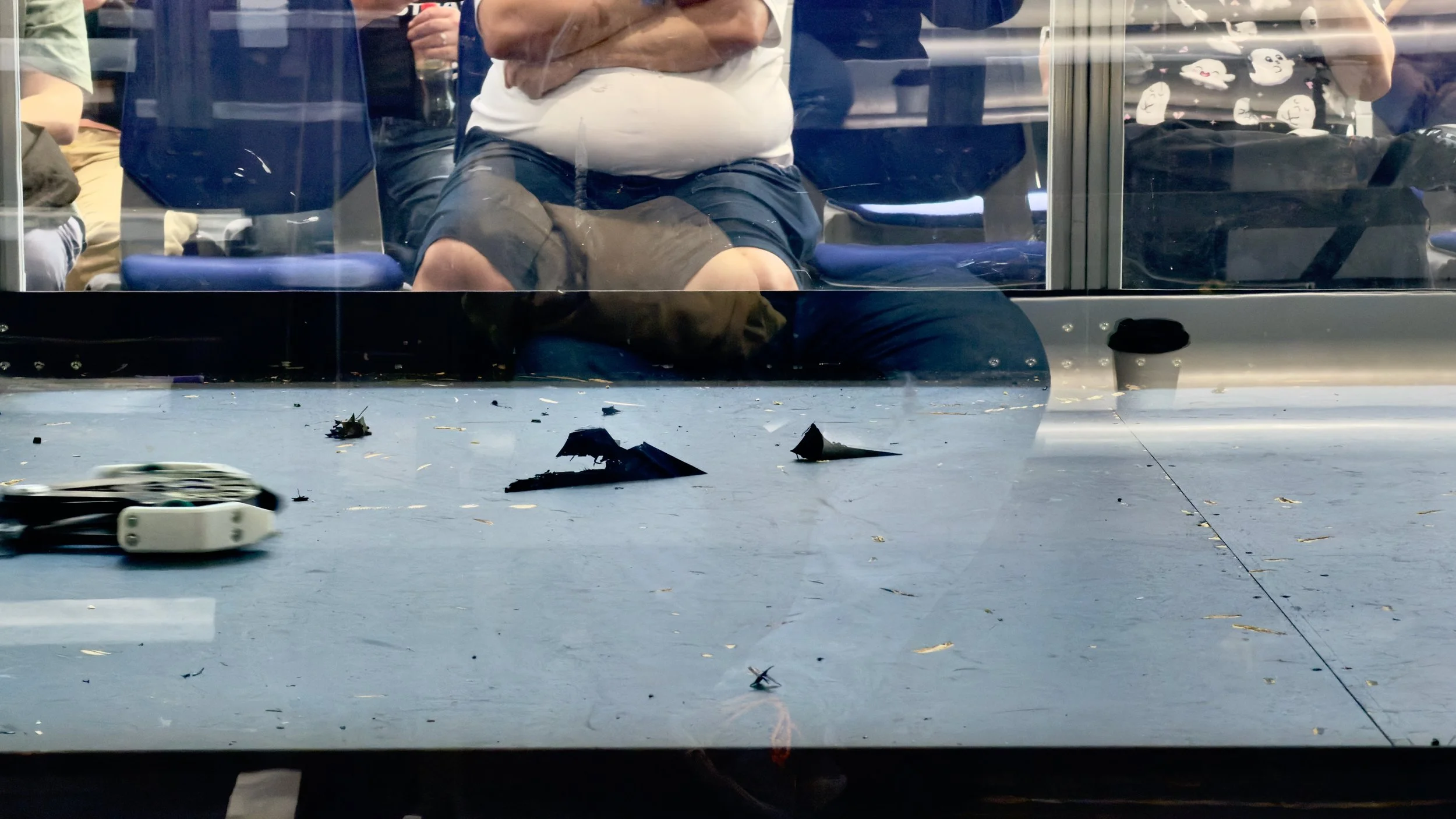
There was also the cleanup. A fight would finish and the box that had been full of noise and movement would suddenly become still. Pieces of robot could be scattered across the floor, and someone would go inside and sweep everything up before the next bout.
The destruction was routine enough to require a broom.
There was also a smell I had never associated with watching robot fighting on television: burnt electronics. Sparks can be seen on a screen and impacts can be heard through speakers, but there is no television equivalent of standing beside the arena while the smell of burnt or damaged electronics hangs in the air.
After the grand final, the organisers asked for every robot that was still working to come back into the arena for one final rumble. Whatever remained functional went in together.
The competition itself was finished, but the robots that could still move were sent back in anyway. Some were already damaged, and occasionally a driver even seemed to invite another machine to hit theirs. I could not always tell whether they hoped the impact might free something, knock something back into place or whether they simply wanted another hit.
I had come expecting robots smashing each other apart to be fun, and it absolutely was. What I had not expected was how much of the enjoyment came from seeing what something carefully built could survive.
“Thumbs up, fighters.”