

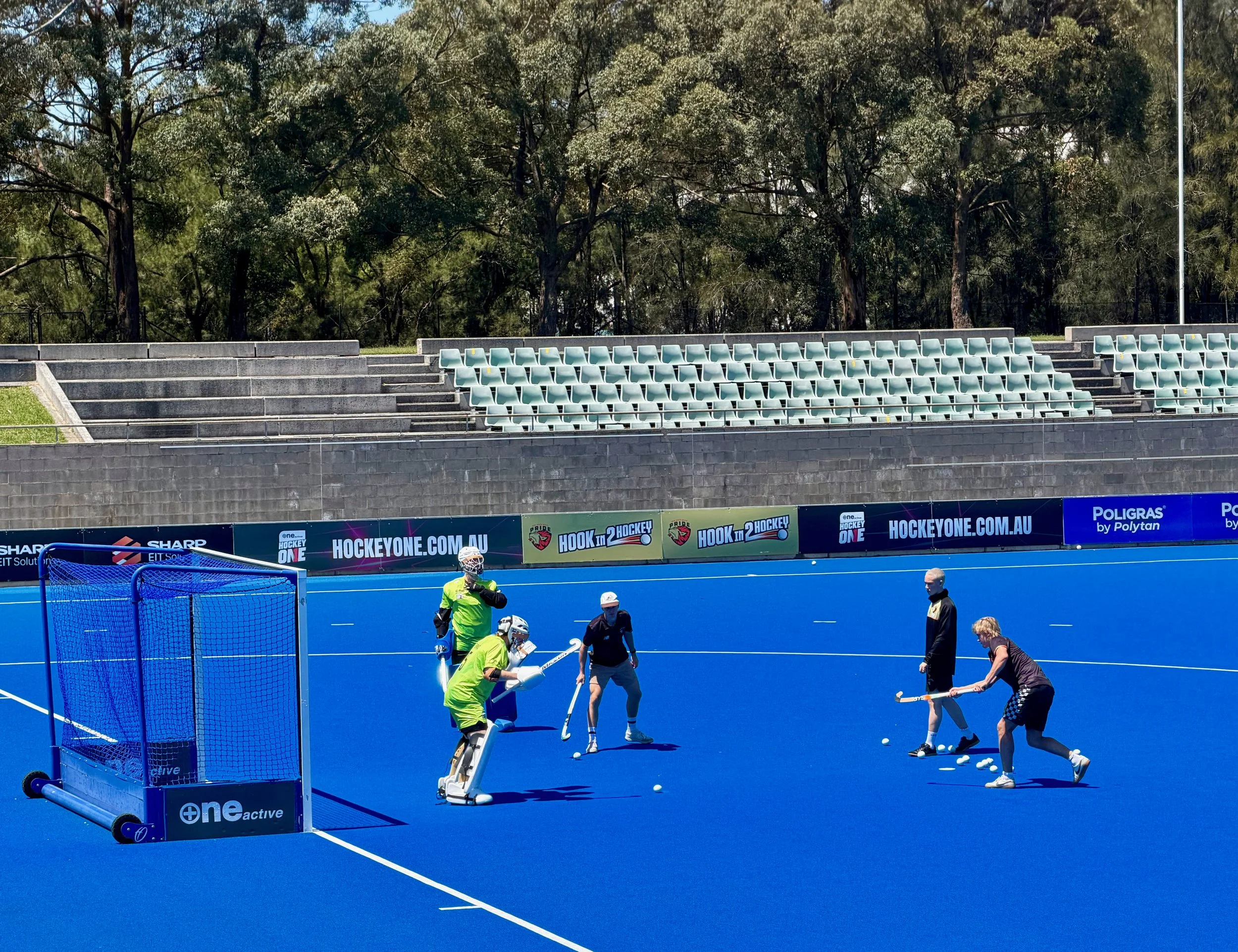
NSW Pride v Perth Thundersticks - Hockey One League
Sydney Olympic Park Hockey Centre, 24 October 2026
I watch hockey about once every four years.
Usually during the Olympics, when Australia's men's and women's teams are competing for medals. Occasionally I'll follow a World Cup or Commonwealth Games, but otherwise hockey doesn't feature particularly prominently in my sporting calendar.
Which is a little strange, because I quite enjoy watching it.
It's fast, intense and relatively easy to follow on television. But I'd never watched hockey in person, and until recently hadn't paid much attention to Australia's national competition.
So, with NSW Pride hosting Perth Thundersticks in a Hockey One double header at Sydney Olympic Park, I decided to see what I'd been missing.
Two games, men followed by women, and one ticket covering both.
I'd never been inside the Sydney Olympic Park Hockey Centre.
What a neat little venue.
The entrance takes you almost directly into the spectator area, with food, toilets and seating all close by. There was also a small NSW Pride merchandise stand.
Naturally, I bought a cap.
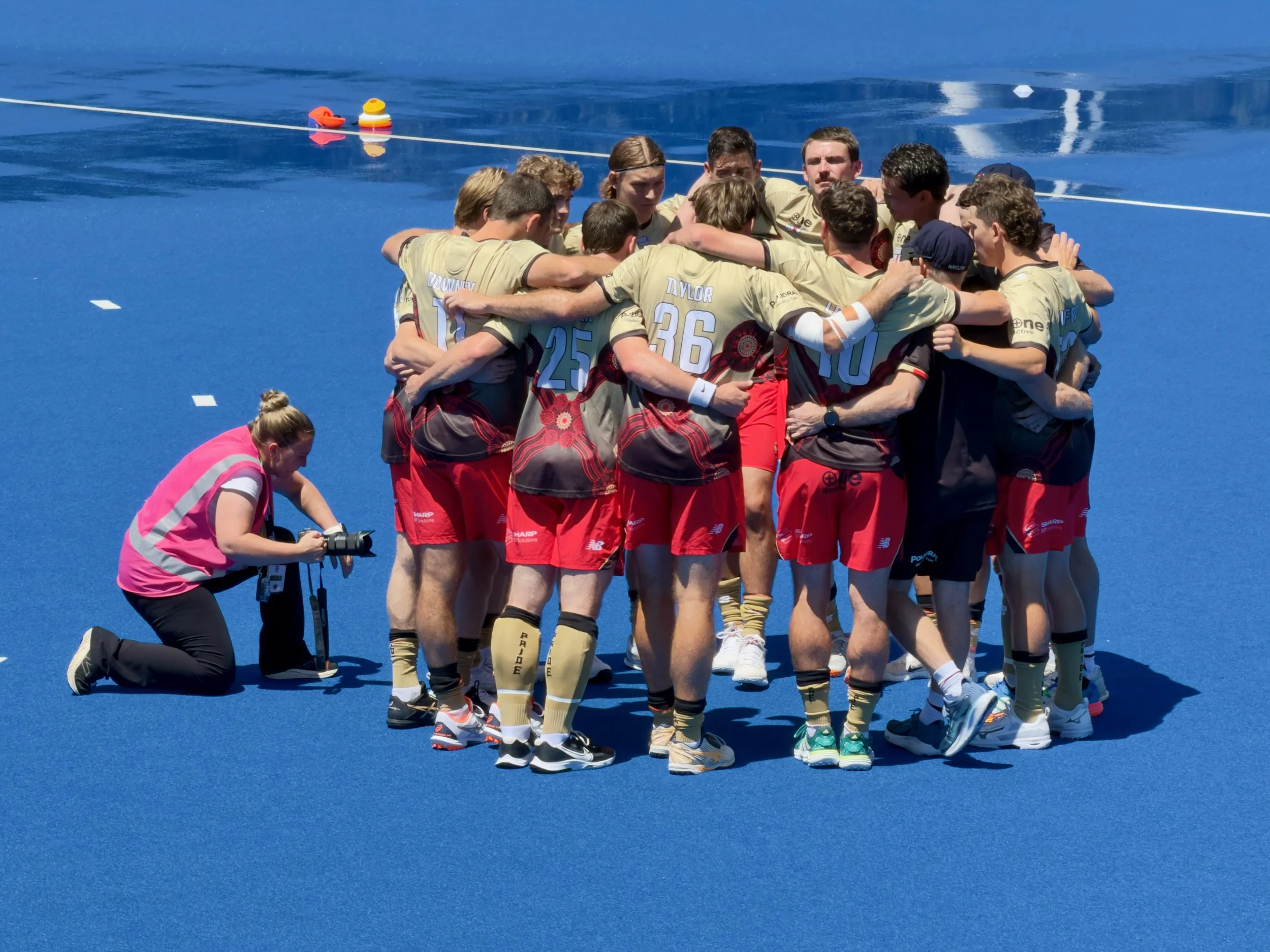
The red, black and gold logo is particularly appealing, and there was plenty of club merchandise being worn around the ground.
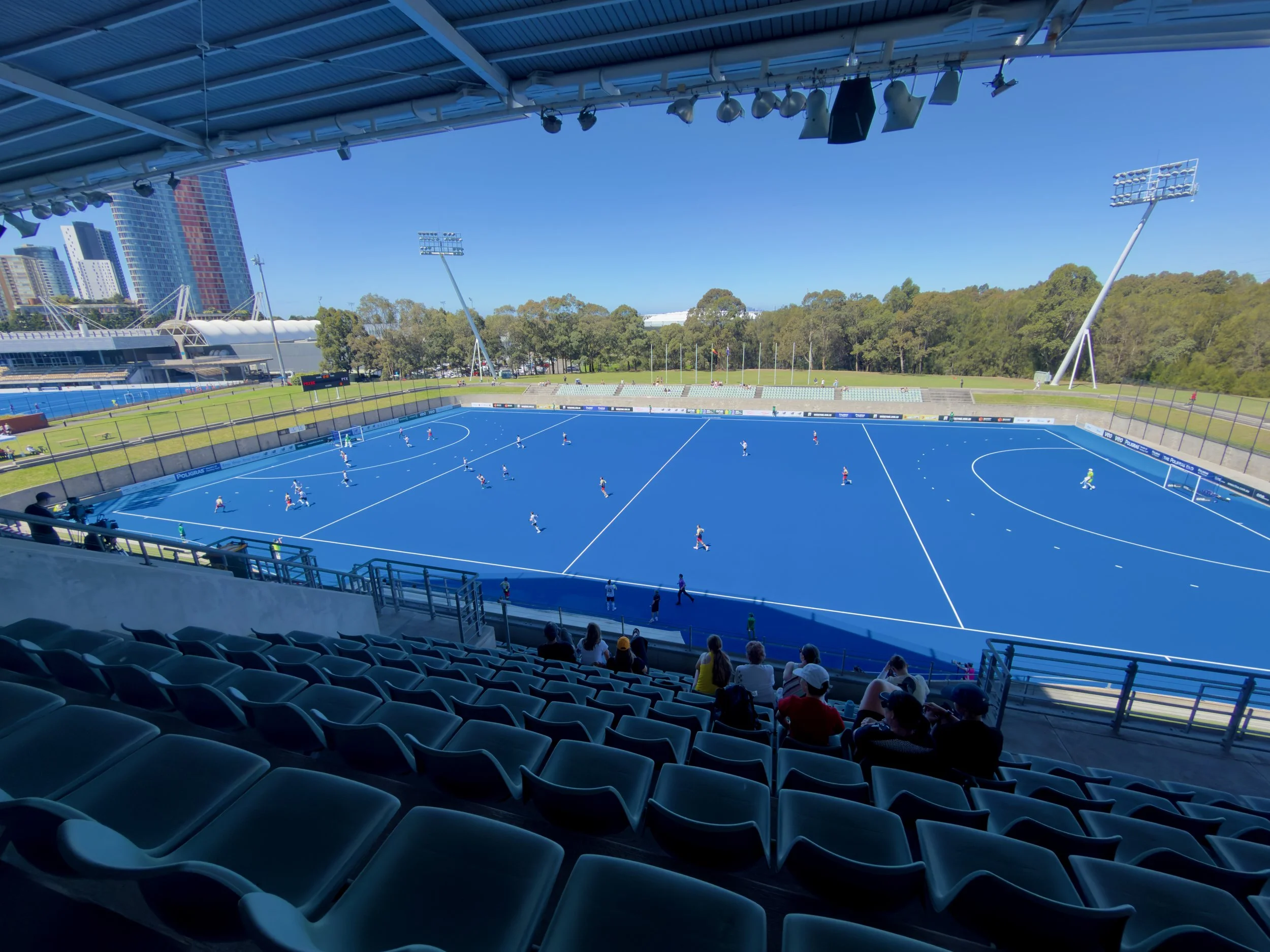
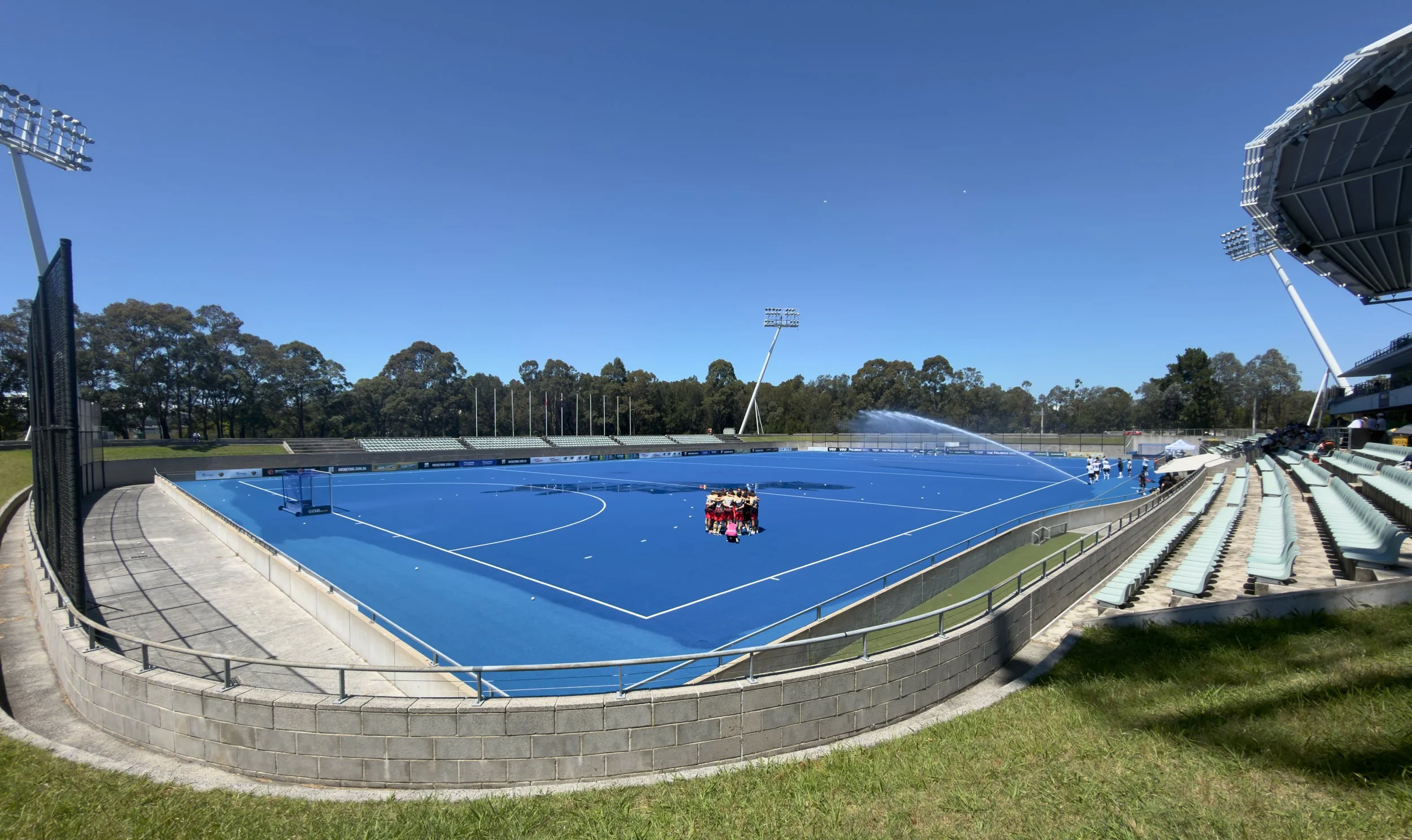
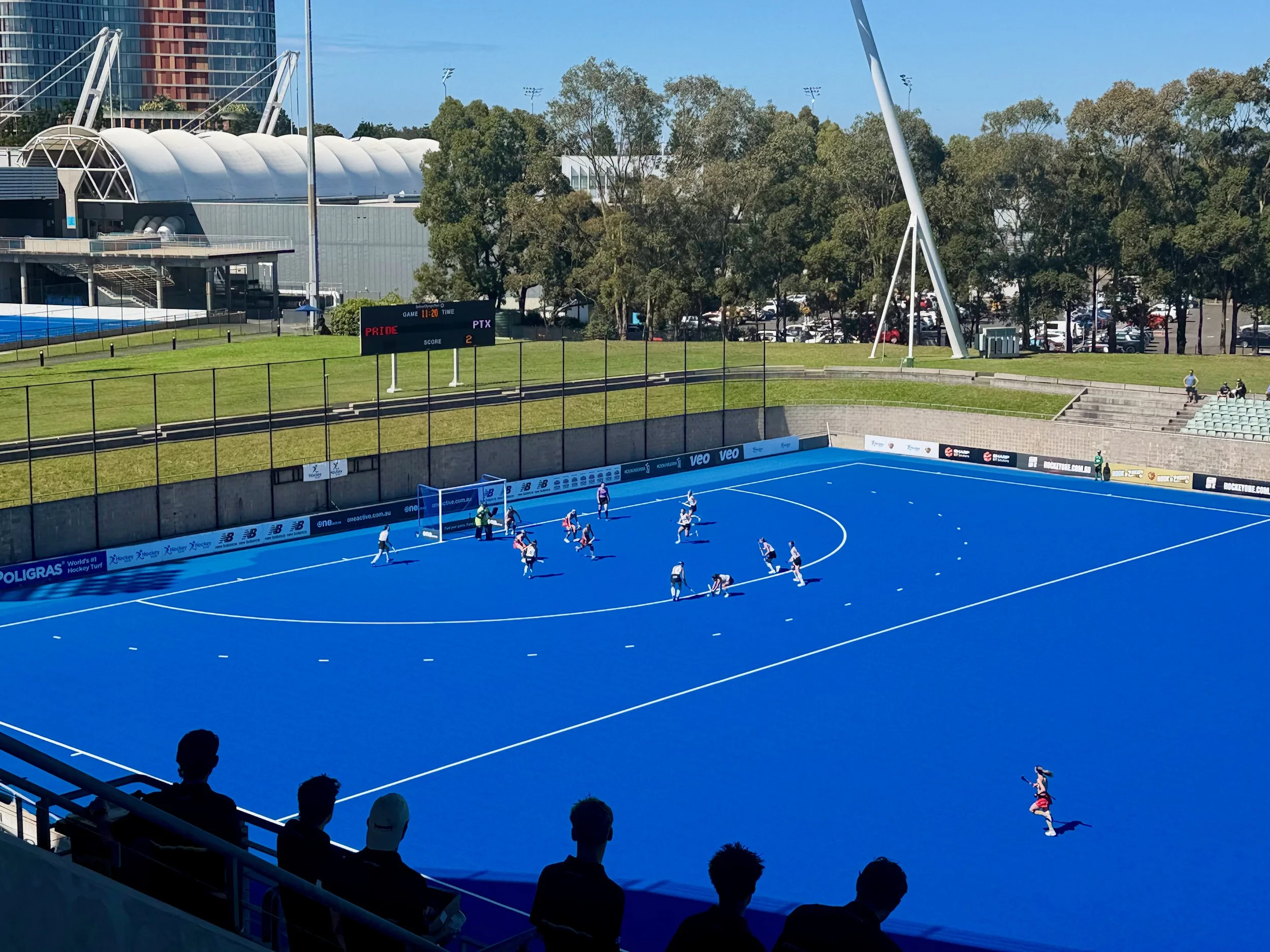
The playing surface sits below the surrounding ground level. Even standing alongside the field, you're looking slightly down towards the action. There's a covered grandstand on the western side, smaller seating areas opposite and grassed areas behind the goals.
It makes for an unusually good choice of viewing positions.
The whole event was professionally presented, something that had been apparent even before arriving. The match-day email provided useful information, and once inside there was music, an MC, face painting for children and a Mr Whippy van conveniently positioned nearby.
There were a few hundred spectators, spread around the venue. Not an enormous attendance, but an engaged one, with plenty of people wearing Pride merchandise.
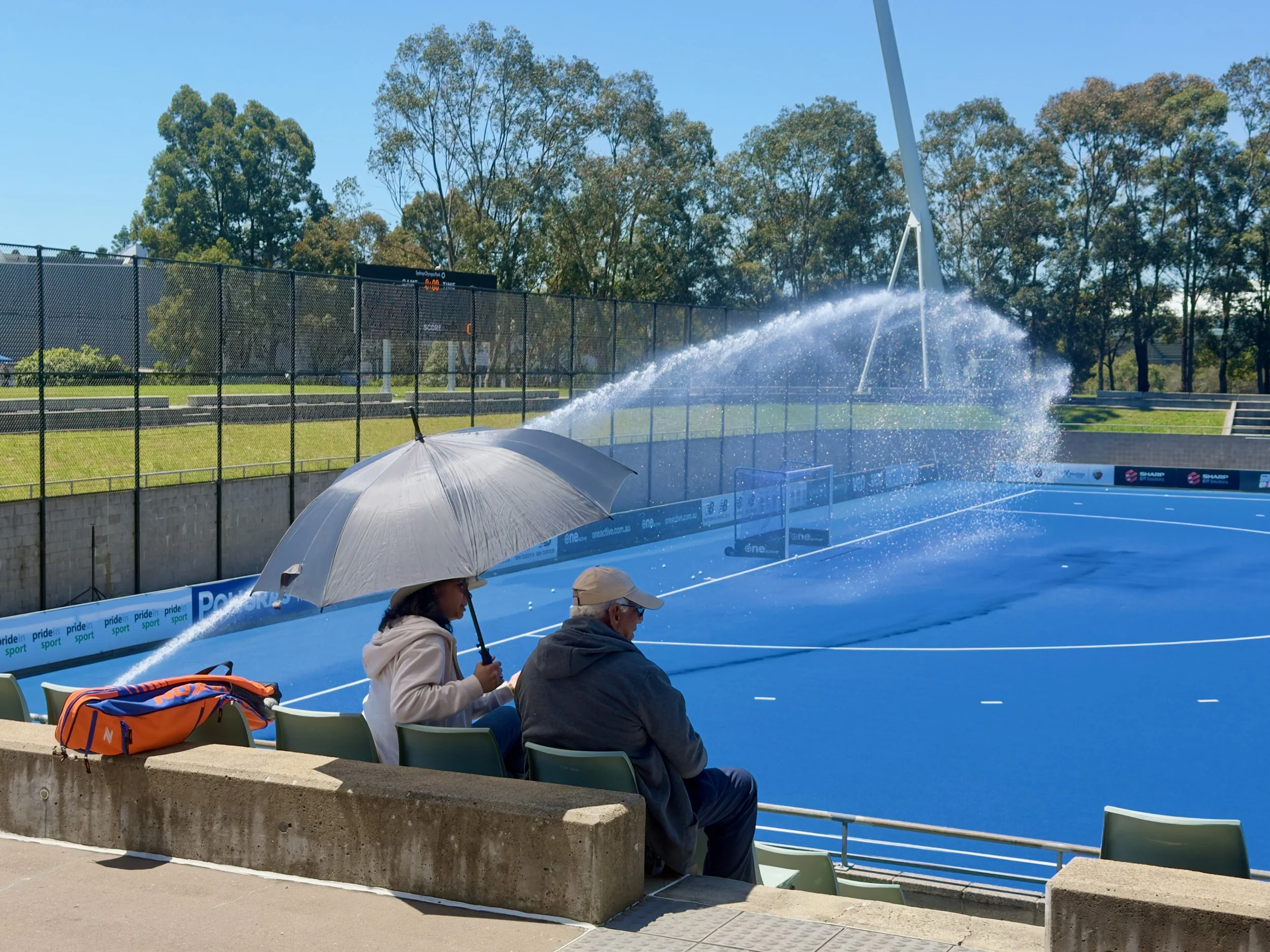
It was a beautiful Sydney afternoon, with a perfectly blue sky and a slight breeze offering occasional relief from the heat. With the men's game starting at one o'clock, the sunshine was relentless.
Despite having a reserved seat in the western grandstand, I spent much of the men's game down near the field, sitting and standing around the grassed area at one end.
I couldn't really explain why. It just felt like a good place to watch.
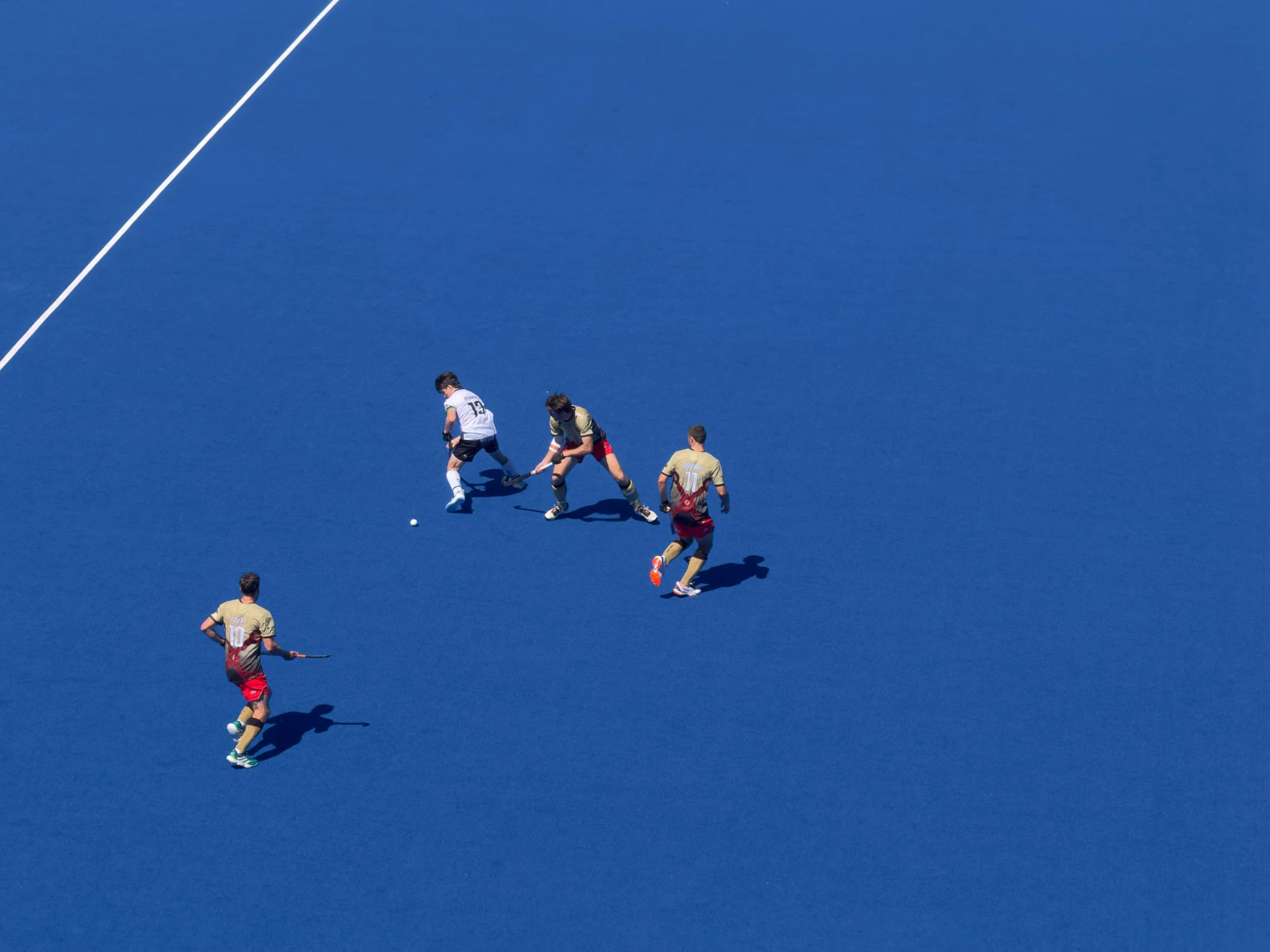
Being so close to the action was enjoyable. The speed of the ball, the sound of the sticks and the players moving around the field were all more apparent than they are on television.
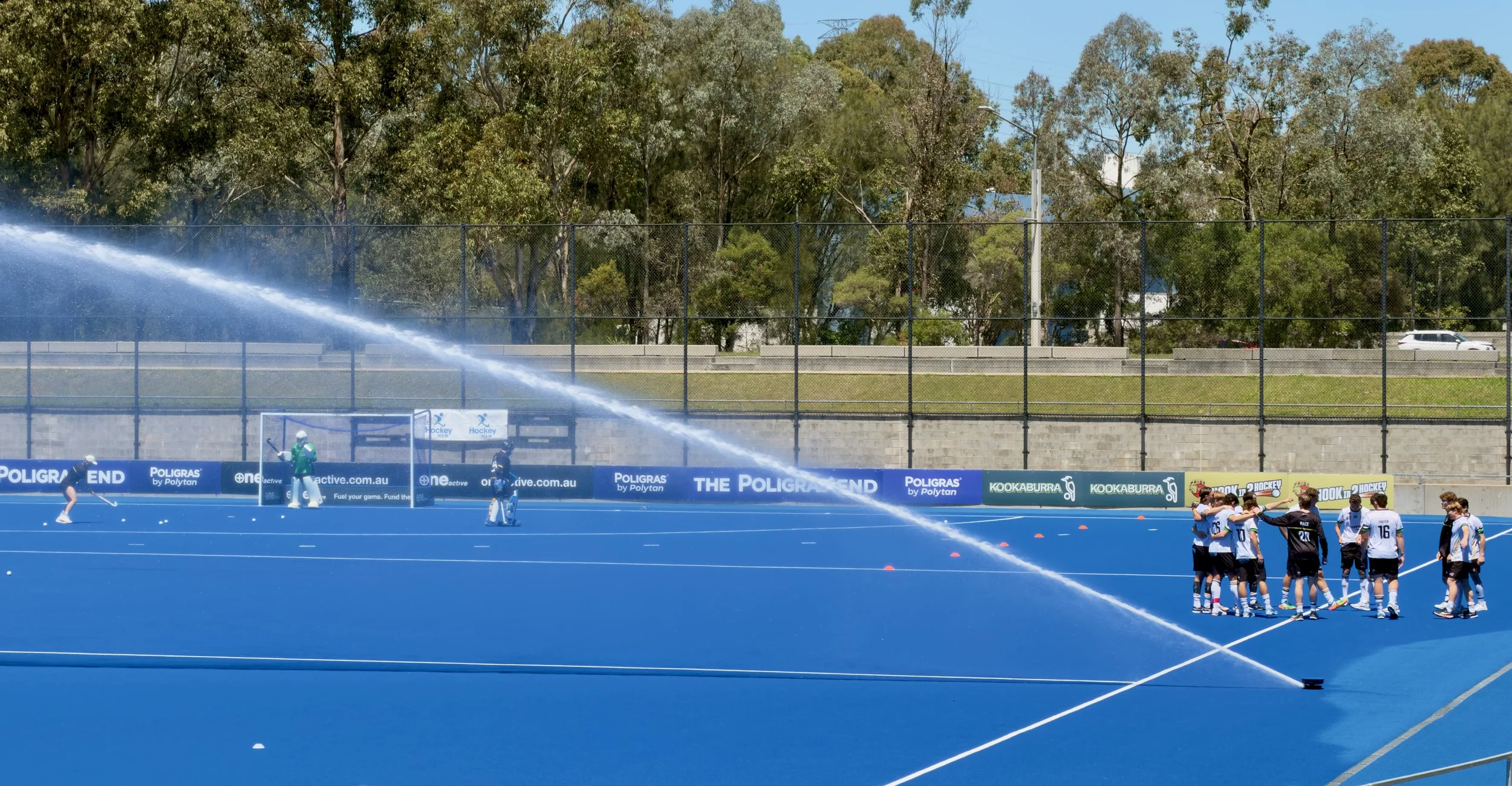
The blue synthetic surface was remarkably fast. The ball seemed to glide across it, sometimes leaving a faint spray of water behind as it travelled. The sprinklers came on several times during the afternoon, keeping the surface wet despite the heat.
It made me wonder how different the game would be on natural grass.
Perth scored early, and I soon discovered something I hadn't encountered before.
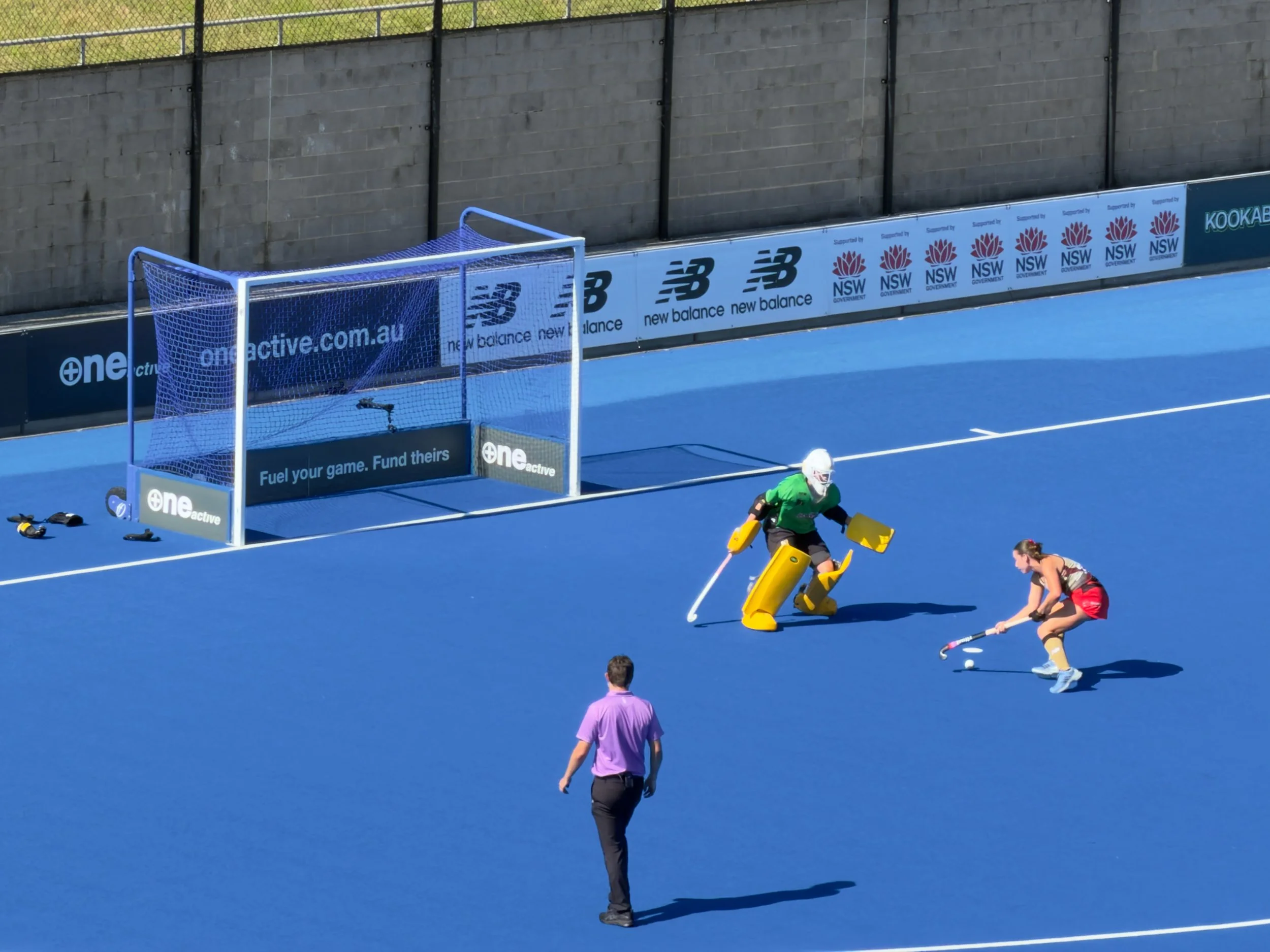
In Hockey One, a field goal gives the scorer an opportunity to take a one-on-one conversion against the goalkeeper. Successful conversion adds another goal.
It's an interesting addition to the traditional game, effectively allowing one attacking move to produce two goals.
That became relevant late in the men's match.
With NSW trailing 3–1 in the final minutes, they withdrew their goalkeeper to put another player into attack. The goalkeeper remained on the sideline, ready to return if needed.
One field goal and a successful conversion could have brought the scores level.
It didn't happen.
Perth won 3–1, their first victory of the season.
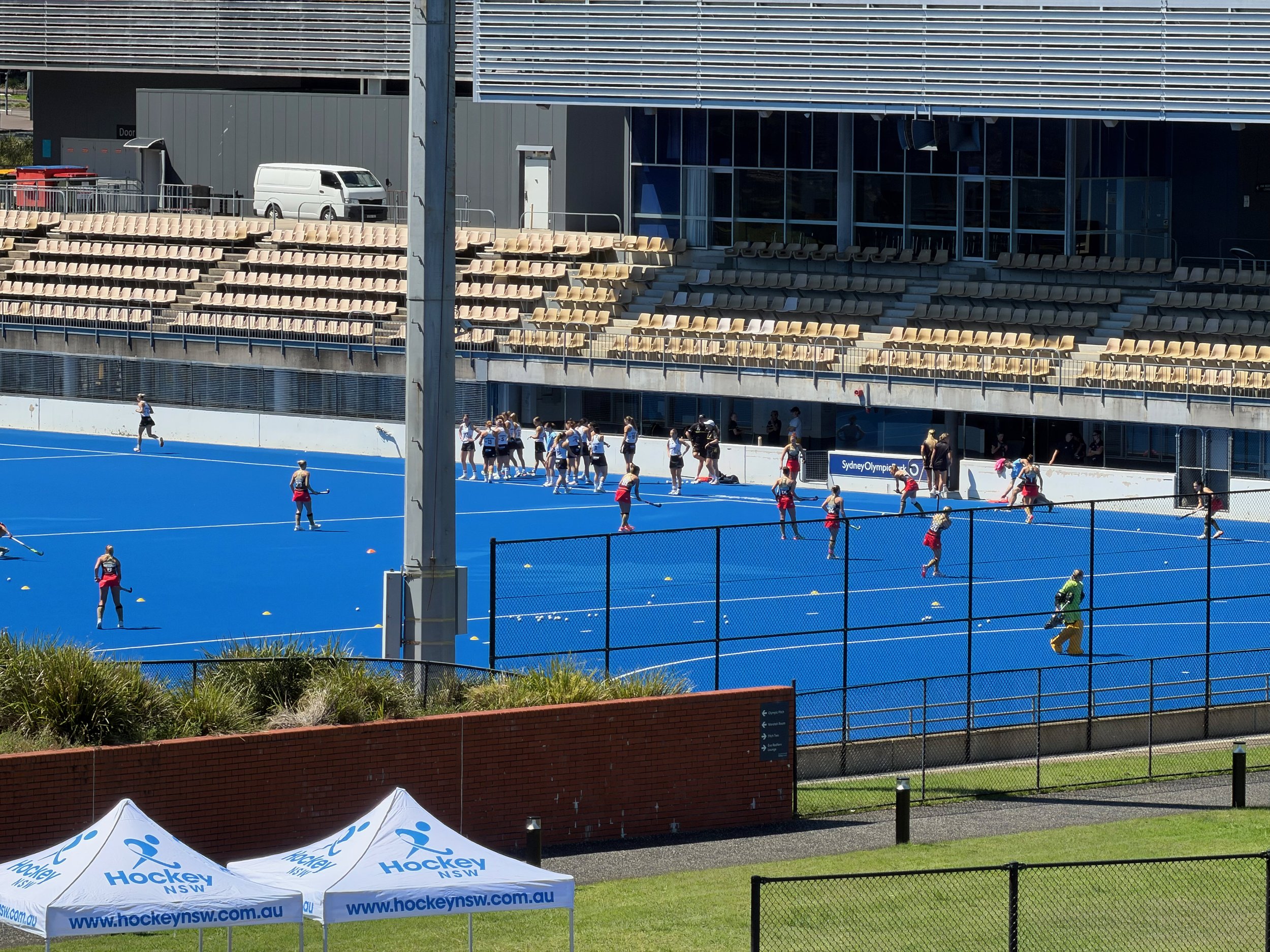
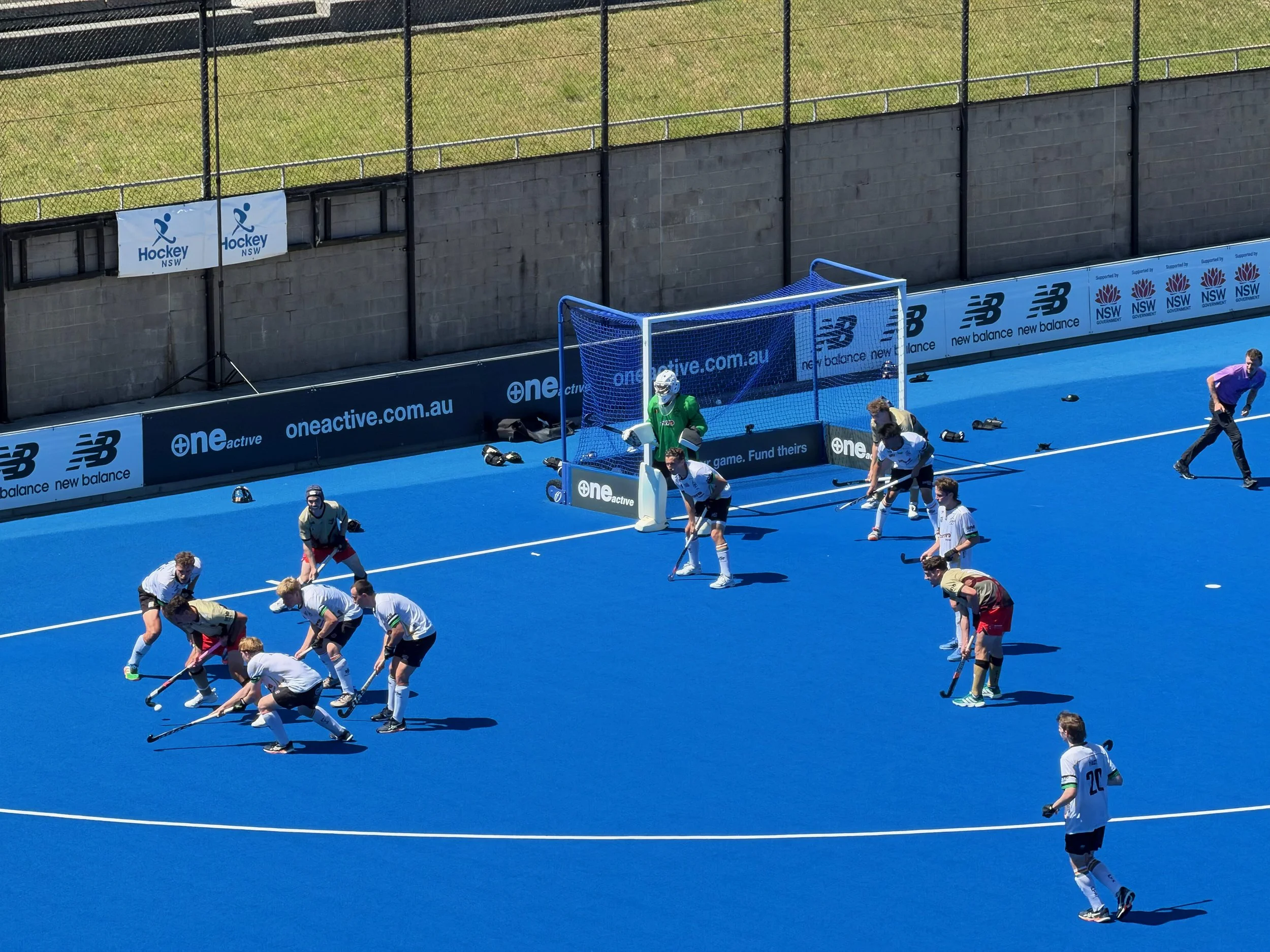
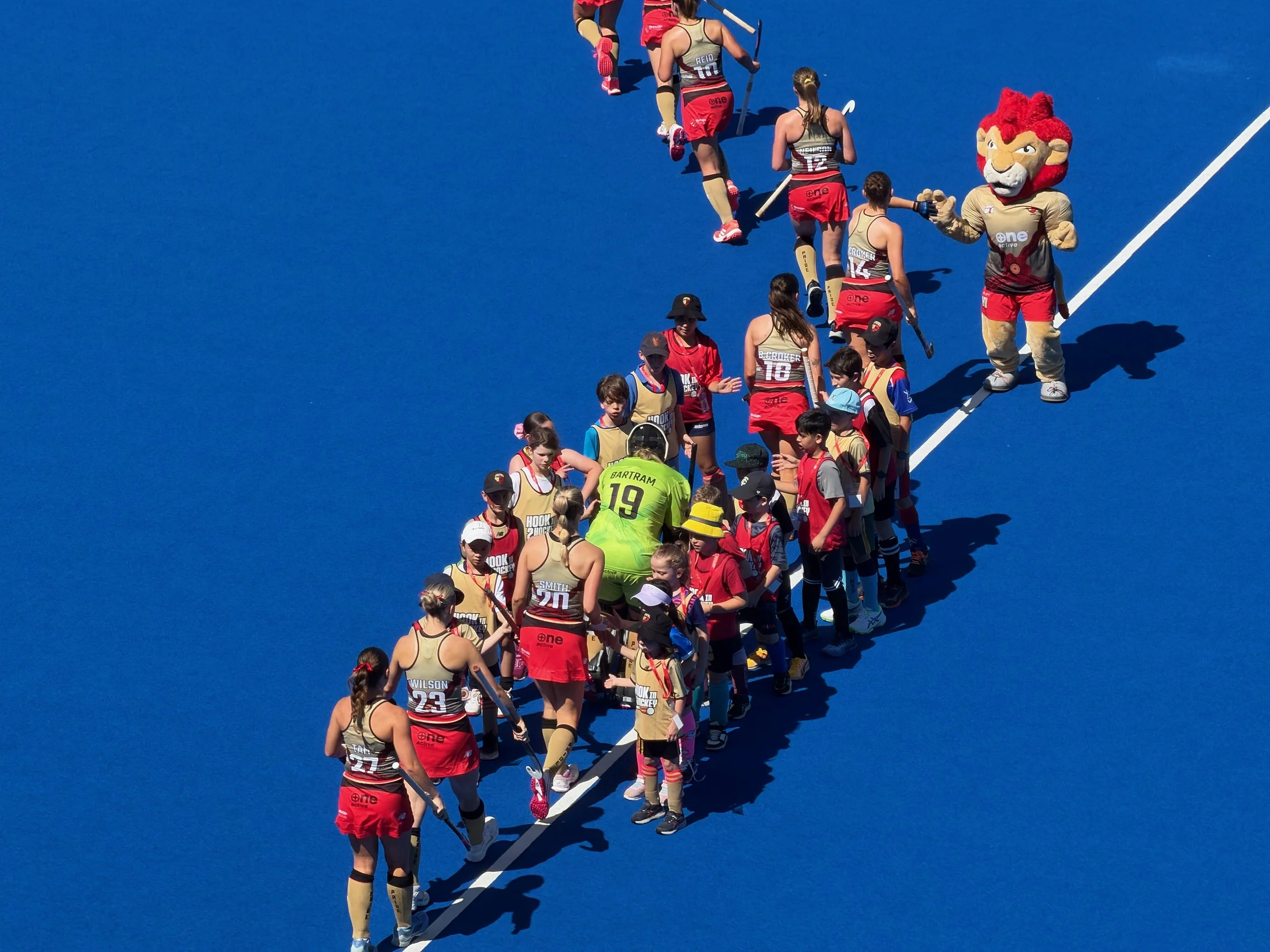
Between the matches, there wasn't a mass departure or an obvious rush of new arrivals. People continued chatting, moving around the venue and watching the preparations for the women's game.
The impression was that many had come for both matches.
Some of the Perth men made their way into the grandstand to watch the women. It was one of the appealing aspects of the double header, with both teams representing the same clubs and sharing the afternoon.
For the women's game, I decided to make proper use of my reserved seat in the grandstand.
The change in perspective was immediate.
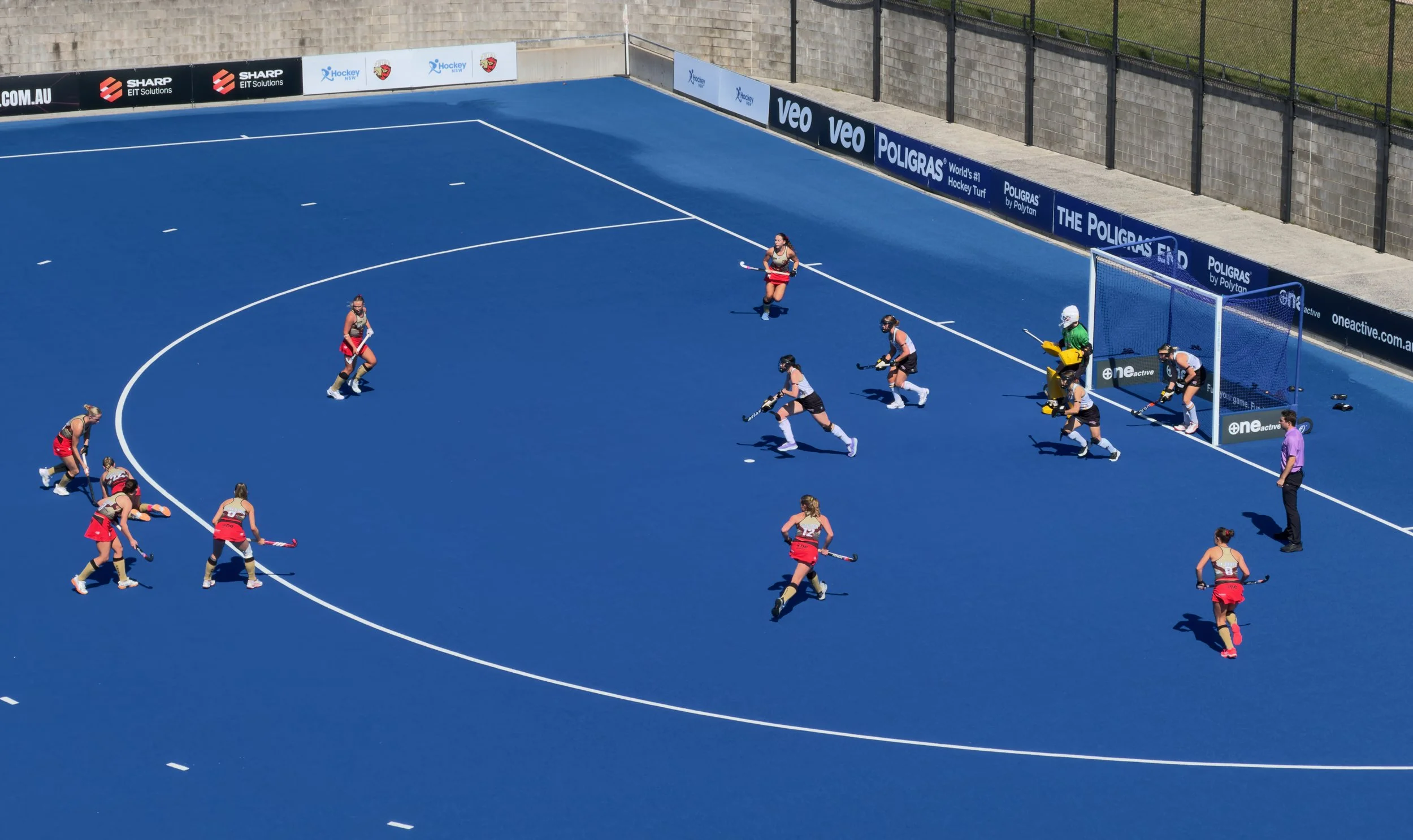
The blue playing surface was surprisingly vibrant under the afternoon sunshine, and from higher up, the white ball was remarkably easy to follow.
Certainly easier than following a red cricket ball across green grass.
More importantly, the movement of the ball around the field became much more obvious.
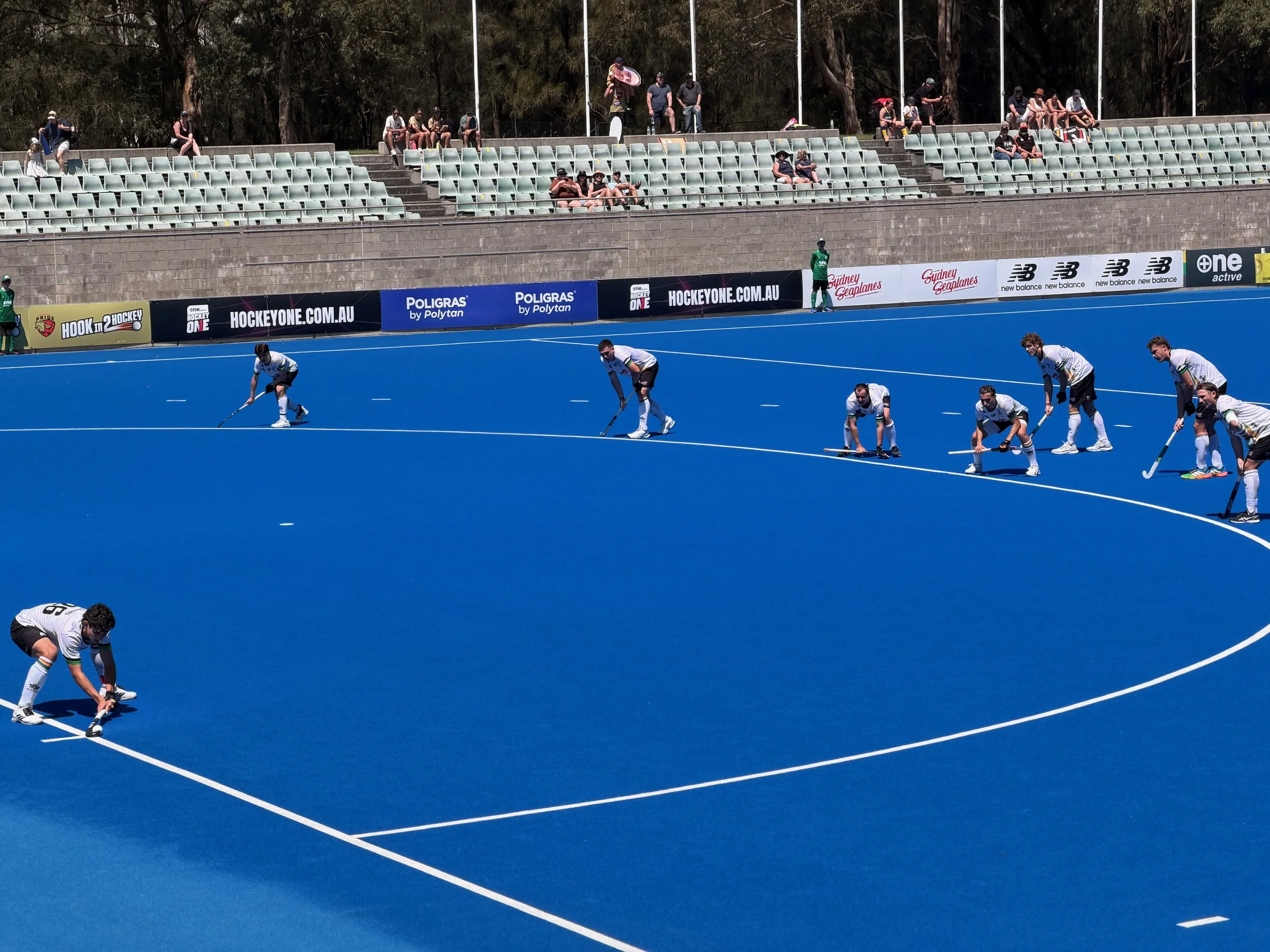
The speed of the passing, the long aerial balls and the way play could move from one end of the field to the other were all easier to appreciate.
I'd generally thought of hockey as a game played largely along the ground, with players passing and dribbling around opponents.
But lifting the ball over defenders was clearly an important part of the game. Some passes travelled almost the length of the field through the air.
What surprised me was how much of the field the teams used.
On television, hockey often appears relatively condensed, with the camera concentrating on the player carrying the ball and those immediately around them.
From the grandstand, it was a different picture.
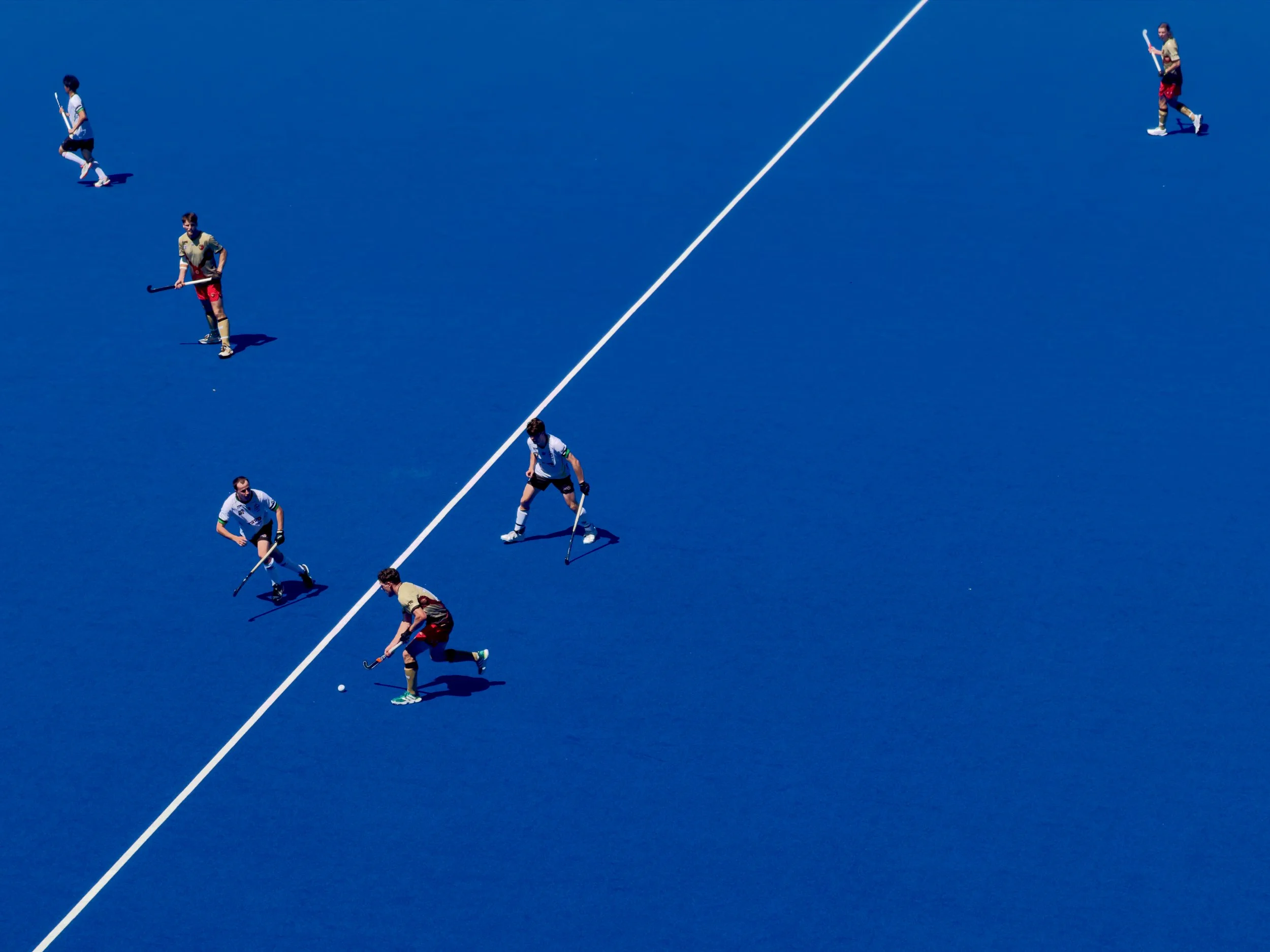
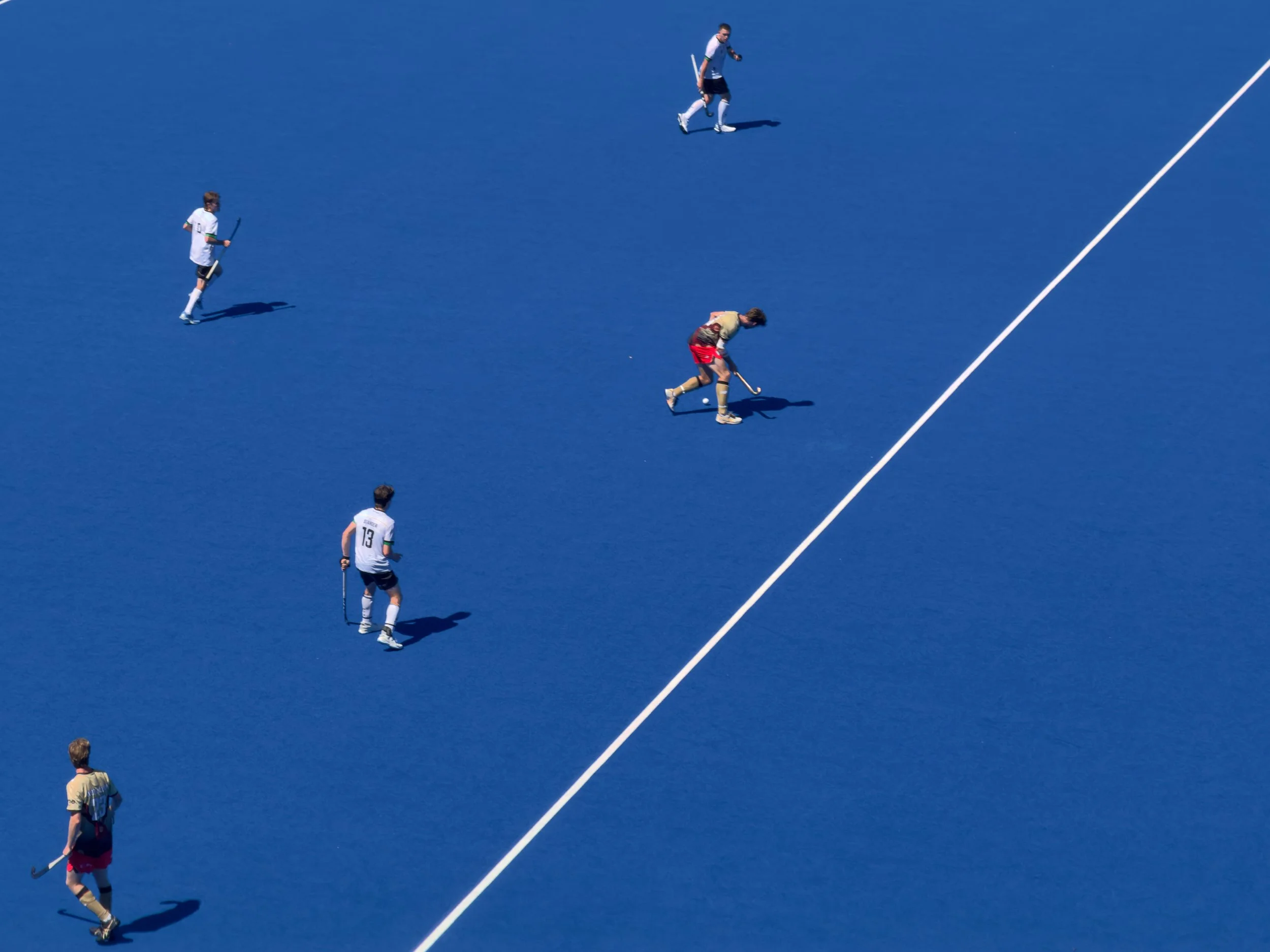
Players were spread across almost the entire field, creating passing opportunities well away from the action. The ball could travel enormous distances in seconds, with players already positioned to receive it.
From ground level, I'd appreciated the speed.
From the grandstand, I could appreciate the space.
There were other details that television hadn't prepared me for.
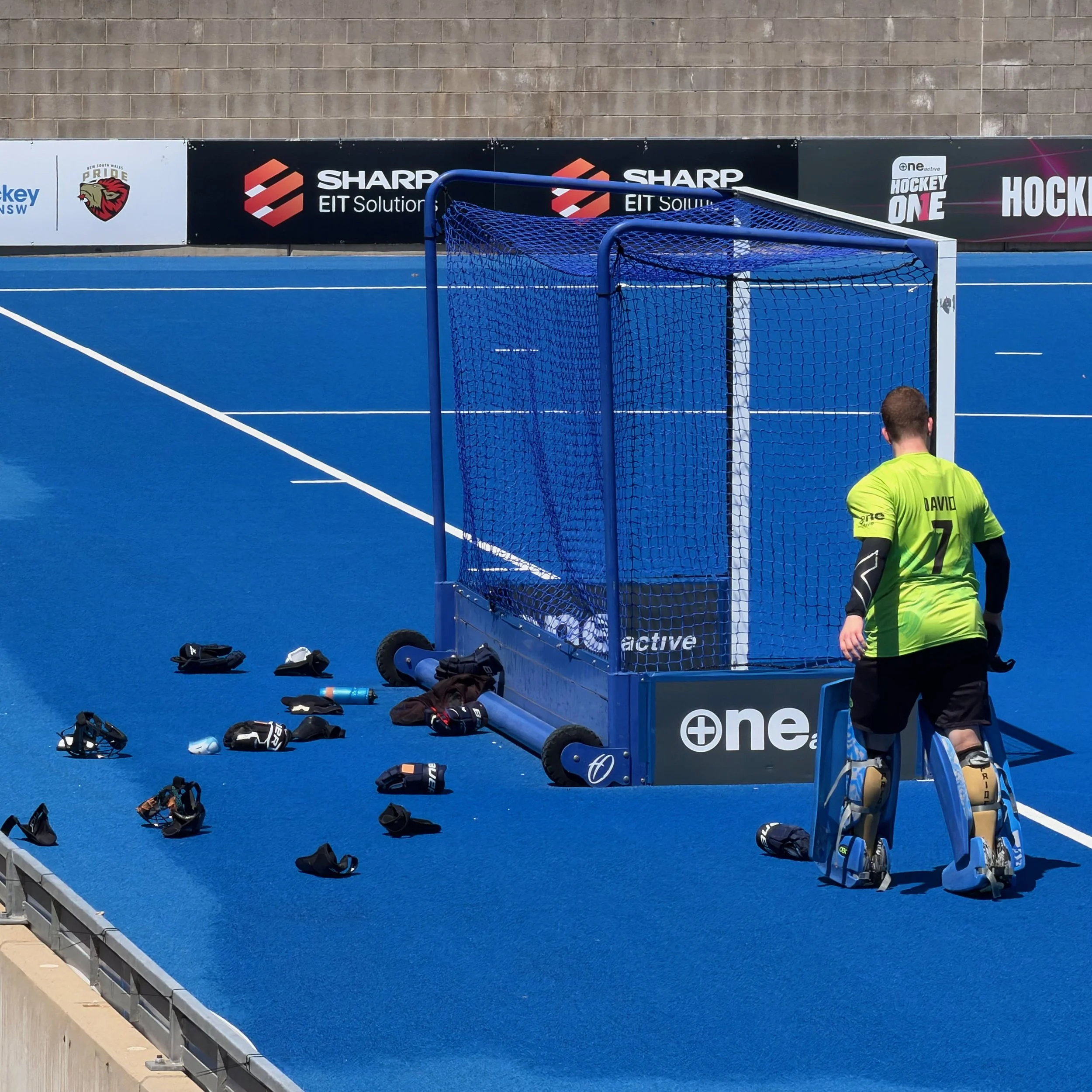
Whenever a penalty corner was awarded, the defending players scrambled behind the goal to collect protective equipment, hurriedly fitting knee protection and other gear before returning to defend.
Once the corner was taken and normal play resumed, everything went into reverse.
Players were suddenly trying to remove their equipment as quickly as possible, throwing it behind the goal before racing back into position.
Sometimes the ball was already moving again while they were still struggling to get everything off.
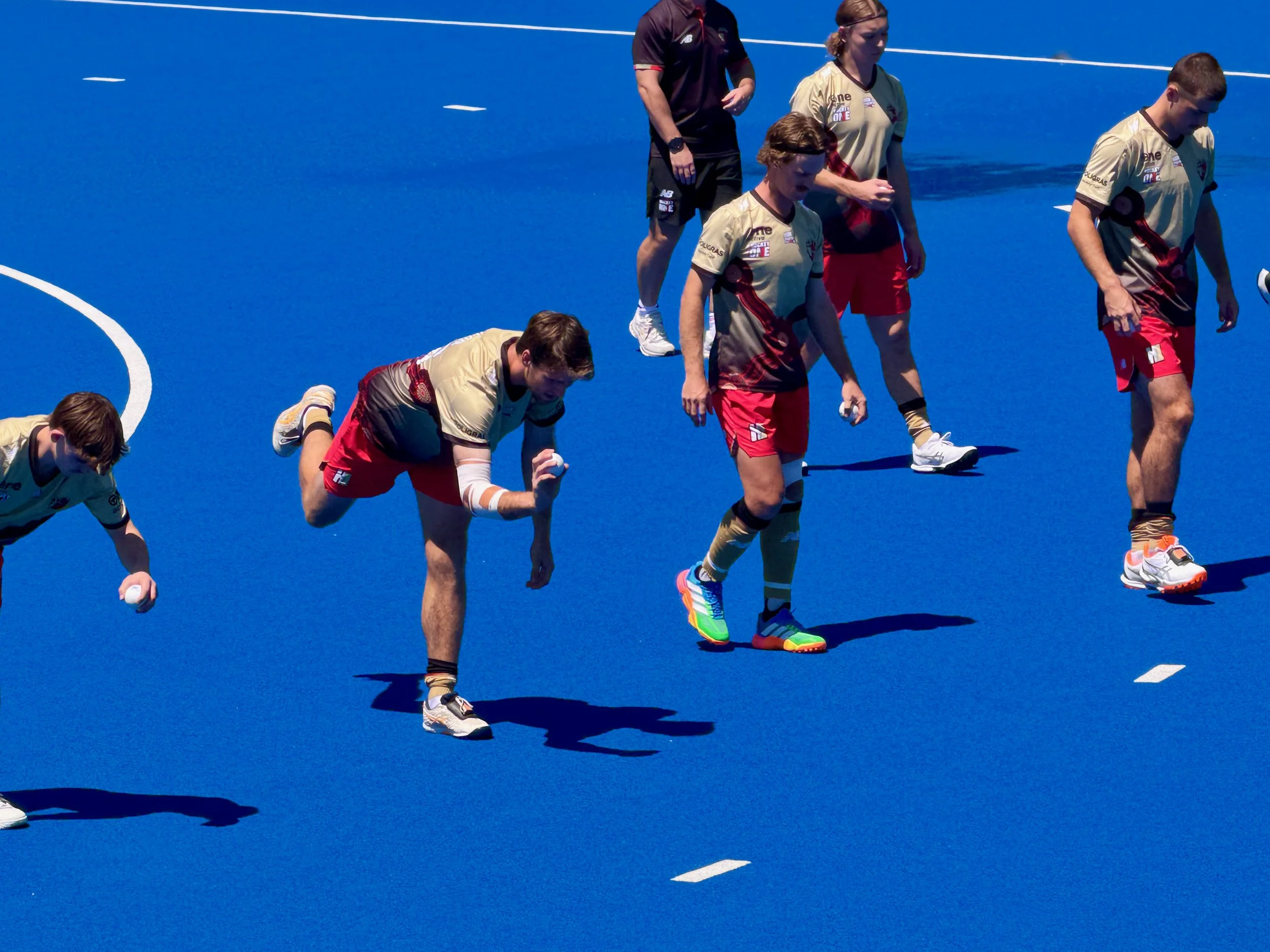
The goalkeepers were another spectacle, heavily padded and moving quite differently from everyone else. The men's warm-up included plenty of passing, shooting and running drills.
The women warmed up on the adjacent pitch while the men's game finished, leaving only a few minutes on the main surface before their match began.
During the afternoon, the MC did his best to encourage some crowd participation.
At one point, he asked who was supporting NSW Pride. A suitably loud response followed. Then he asked about Perth. Considering the distance involved, I wasn't expecting much, but the visiting supporters made themselves heard. There were fewer of them, but they certainly weren't afraid to compete with the home crowd. They had plenty to celebrate. The women's match was another Perth victory, this time 3–2.
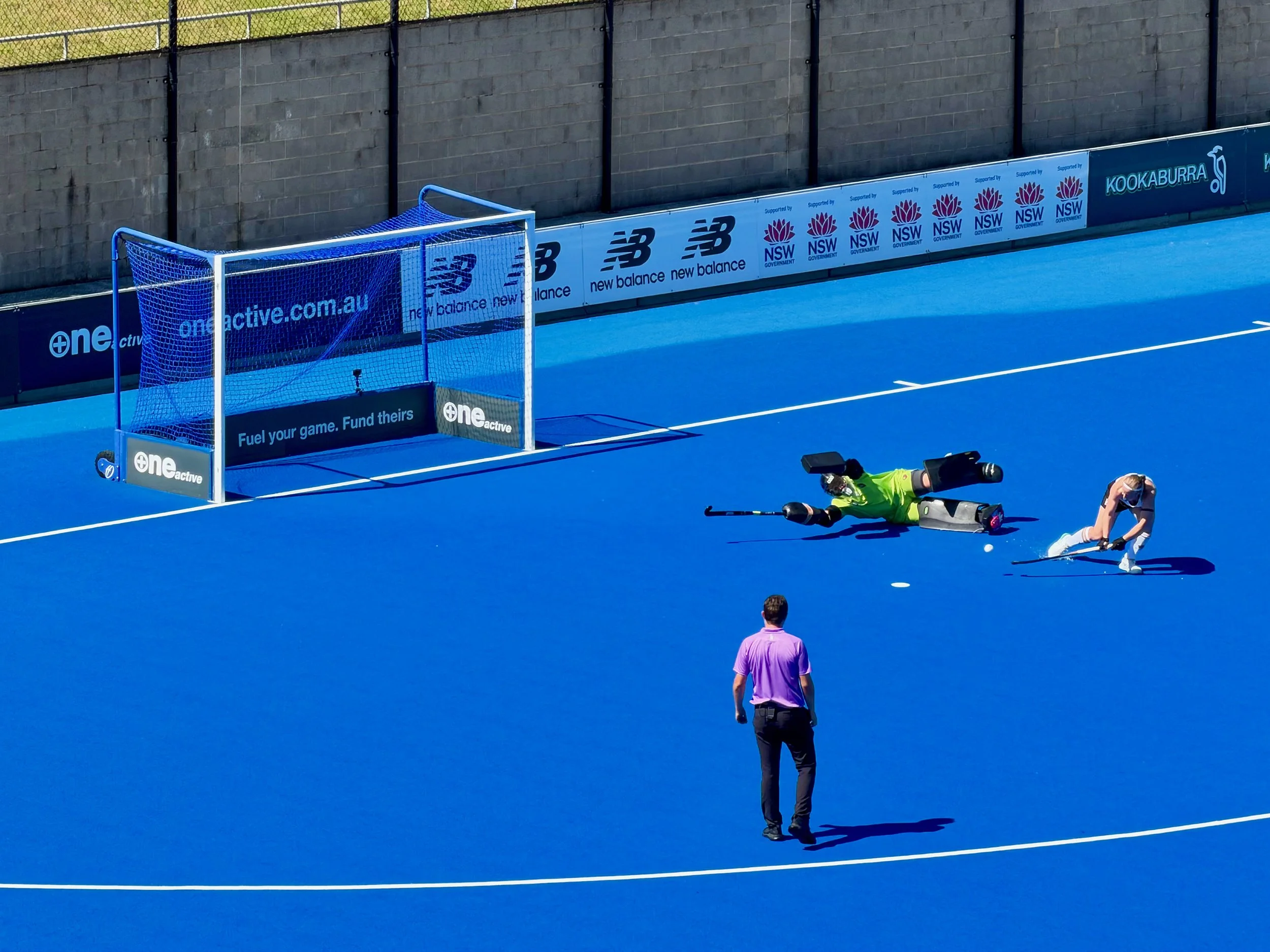
One NSW player produced a particularly spectacular moment, launching herself into a full-length dive in an attempt to deflect a long ball into the goal. She missed, sliding across the surface without making contact. But it was an impressive effort, and I certainly applauded it.
On television, close-ups and commentary can build considerable tension around penalty corners and attacking opportunities. At the ground, those moments felt less dramatic without someone explaining the significance of every movement.
It's something I've noticed in other sports, particularly AFL. Watching the whole field provides a different experience from following a television broadcast.
Eventually, it was time to leave. On the walk from the Hockey Centre to the bus, I came across a red-bellied black snake.
I'd arrived expecting a fast, intense sport played largely in confined spaces.
What I found was a game that used almost every metre of the field, with the ball moving at remarkable speed and players creating opportunities well away from the television camera's usual focus.
I'd watched hockey at the Olympics for years.
Apparently, I'd only been watching part of it.