I had done enough preparation to know what colour T-shirt to wear.
This was my first APIA Leichhardt game, so there was no long history of support behind the choice. I had looked up their colours before leaving home and dressed accordingly. Melbourne Victory were the A-League team, APIA the NPL side, and that was enough for me. For one night, I wanted the underdog.
There was also a more practical reason I was at Leichhardt Oval on a Wednesday night. Sydney FC had played their Australia Cup quarter-final at Fairfield the night before, but getting there on a school night had seemed a little ambitious. Leichhardt was much more achievable, and it turned out to be a very good alternative.
I had not been to Leichhardt Oval for years. My previous visit went far enough back that it involved Manly playing the Balmain Tigers, when Balmain still existed as its own first-grade rugby league team.
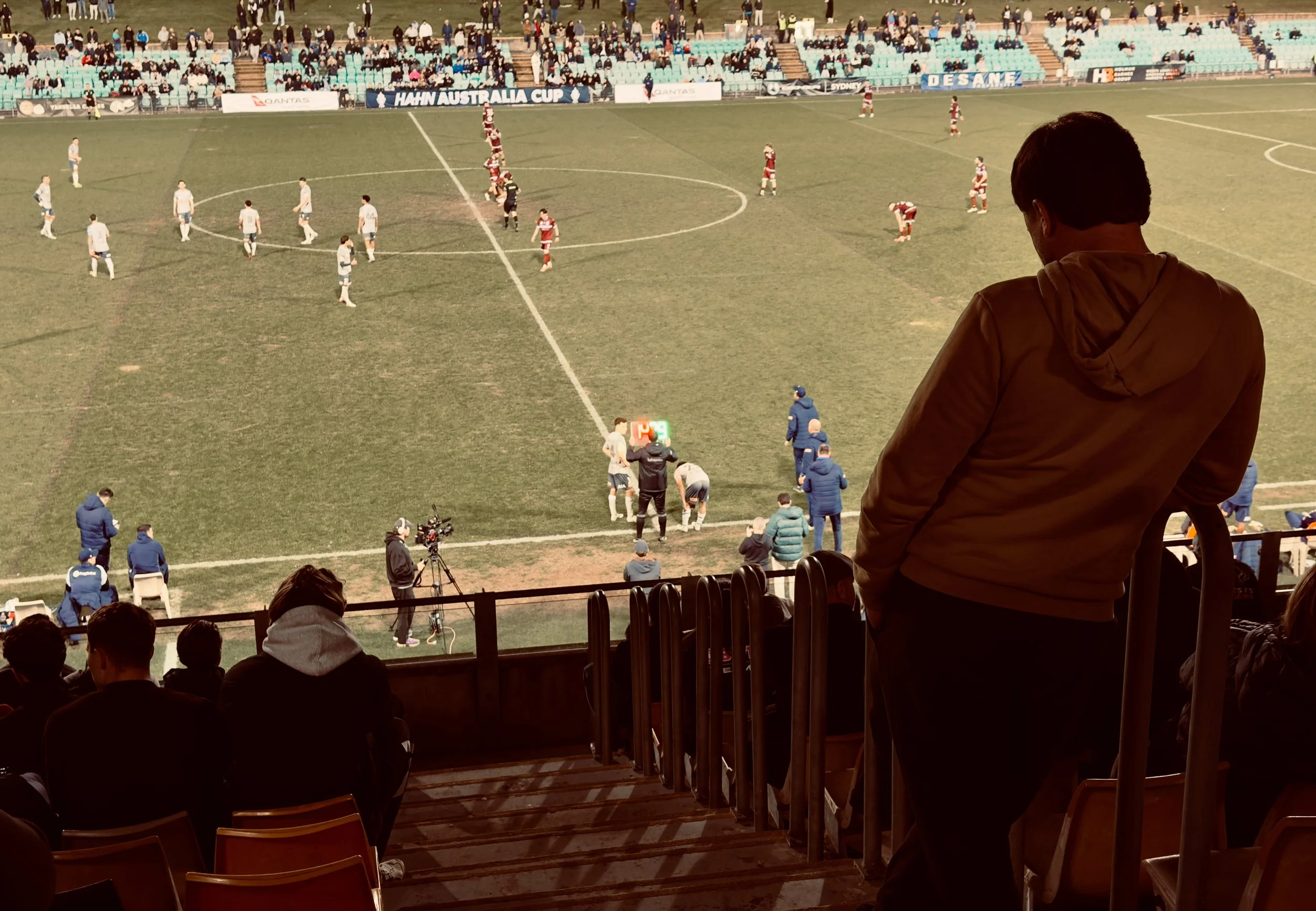
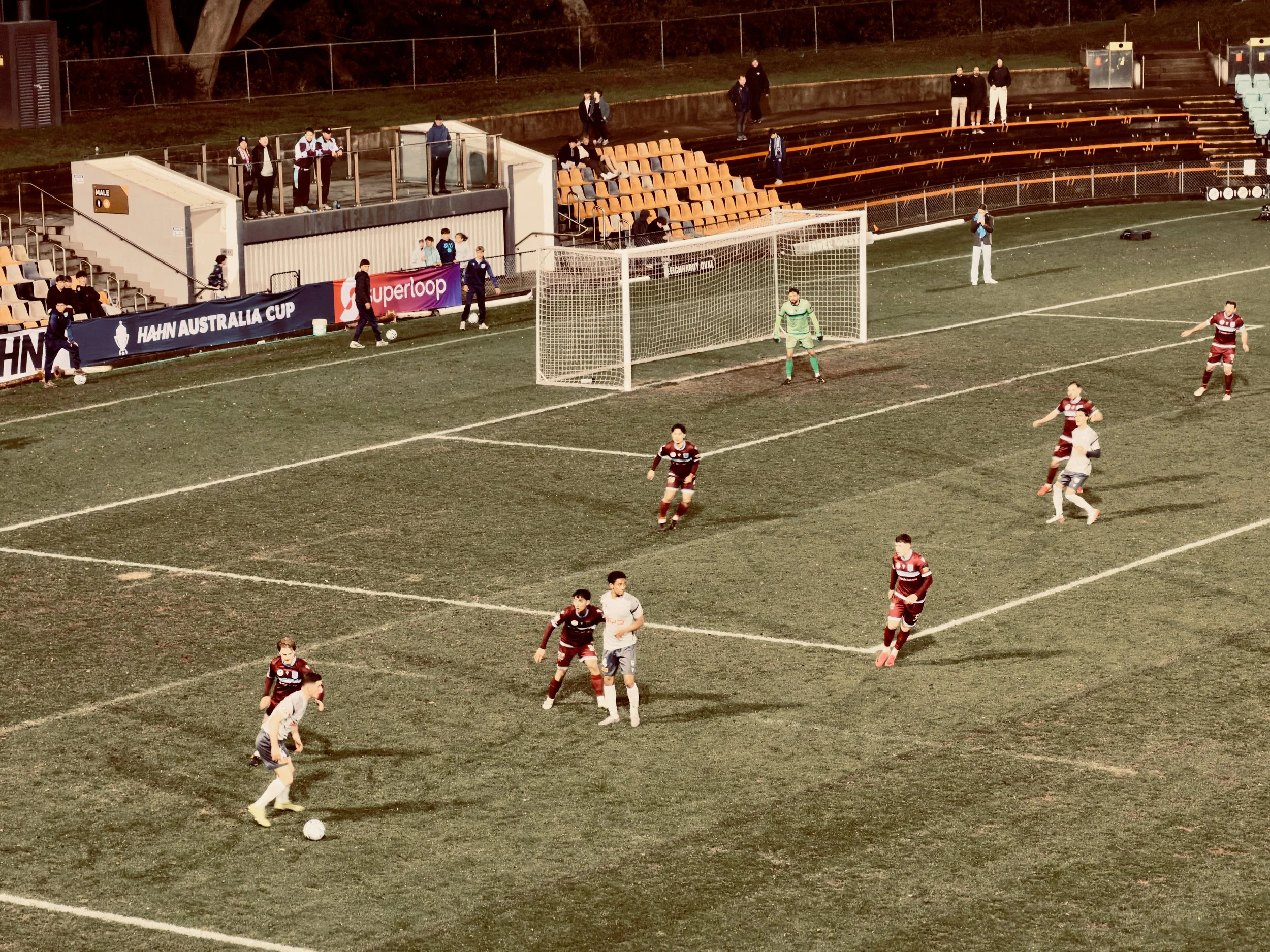
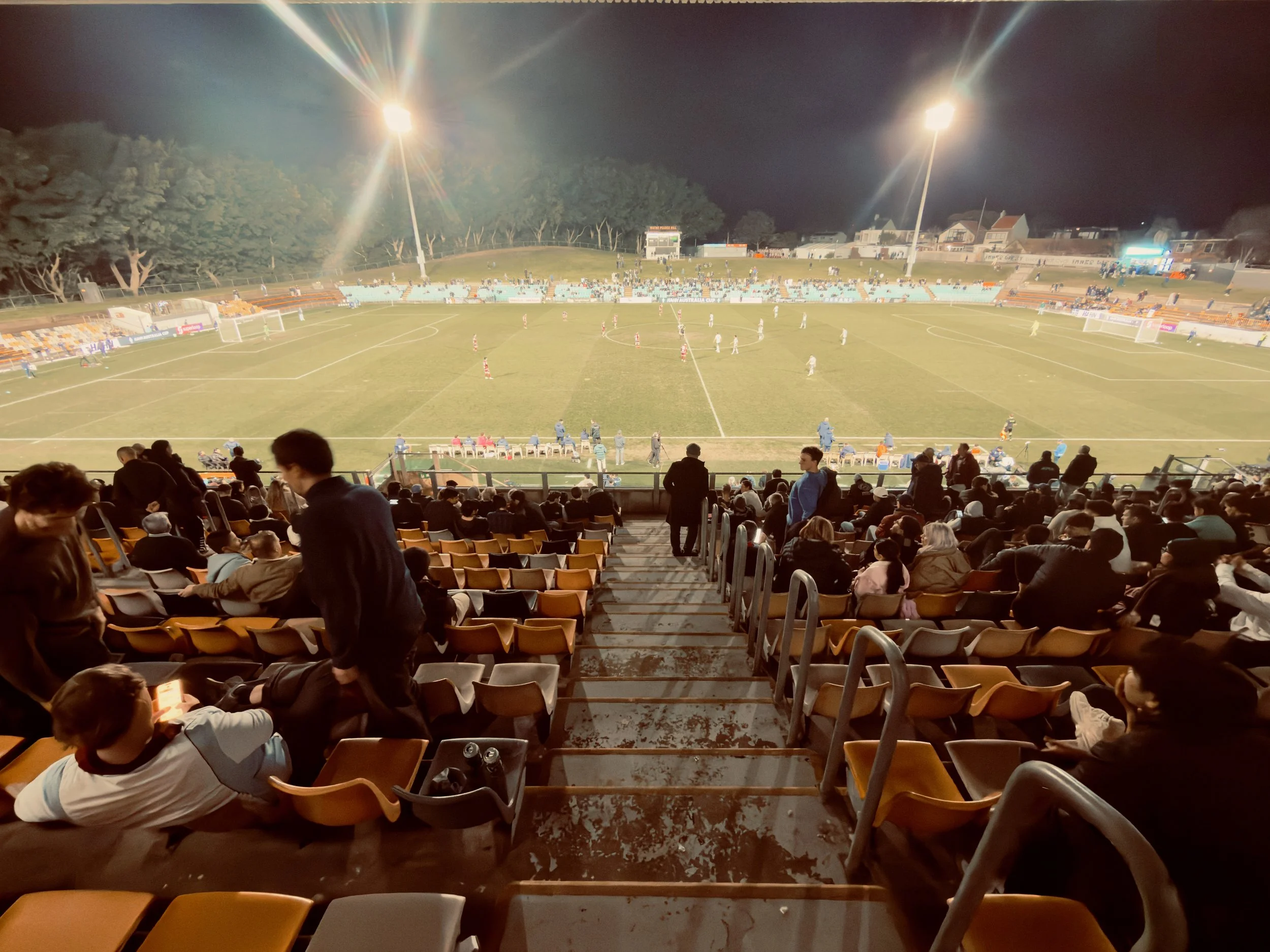
The old grandstand looked as though some of those years had remained with it. The seats were cramped and faded, with different colours appearing here and there where broken ones had apparently been replaced. It was not polished, and neither was the field. Late in the season, patches of grass had been worn away and muddy sections were clearly visible. I wondered whether that surface might matter. It did. Players slipped throughout the night.
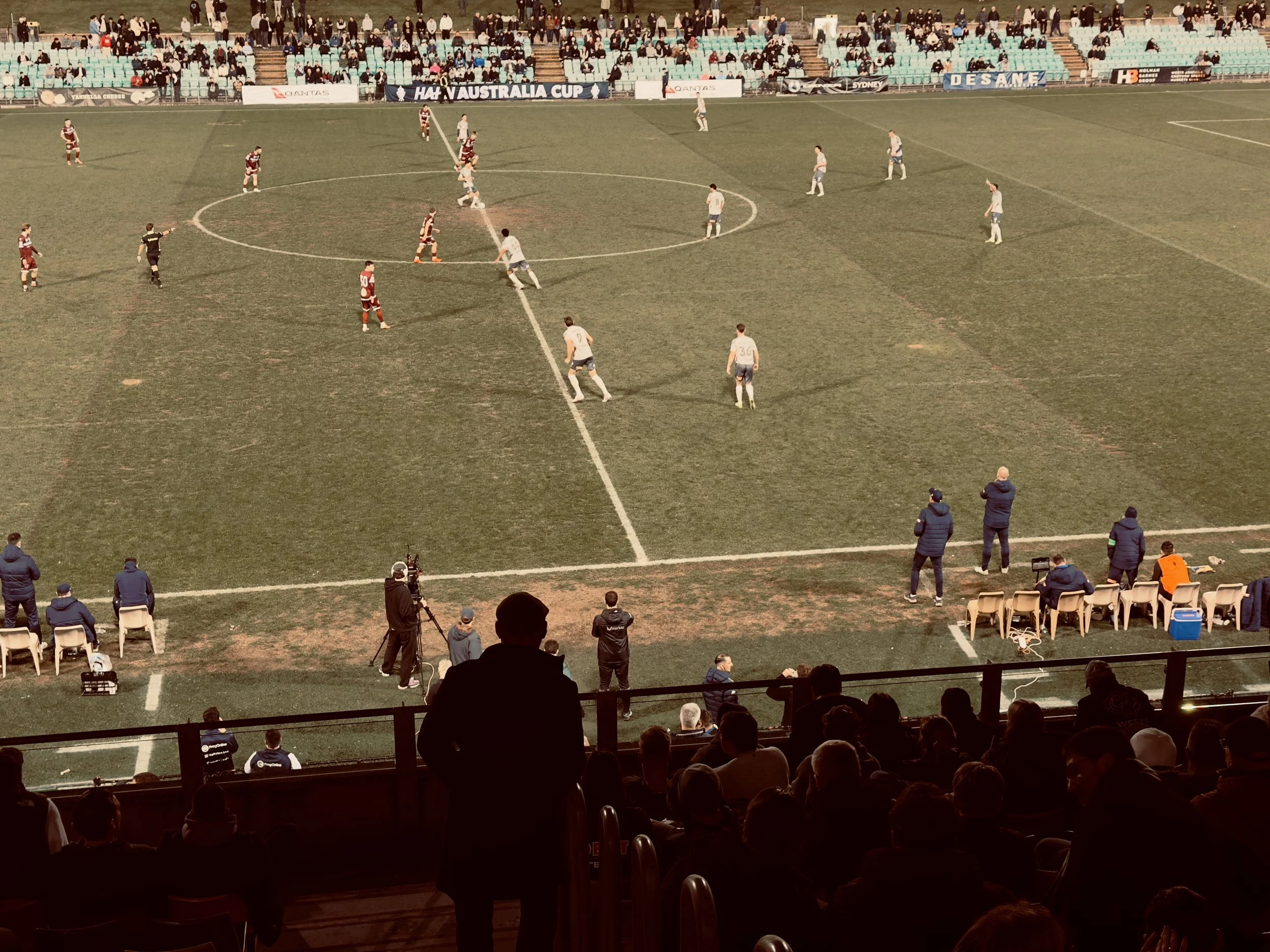
I went almost instinctively to the back of the grandstand, close to halfway. Only after sitting down did I realise I had done something different. This was my twelfth football match of the year, but most of the others had been watched from somewhere close to ground level. Here I was properly elevated, far enough back to see much more of the whole field. More importantly, I could see everyone else.
There were plenty of gaps in the grandstand, but that did not make the ground feel empty. People were sitting around the fence, in the seating at either end and in the rows underneath the grandstand. On the grassy hill they sat and stood wherever they could find a view. There seemed to be people everywhere, and they were loud.
The announced crowd was a little over 2,100, which sounded pretty healthy for a Wednesday night. From where I was sitting, almost all of them seemed to be there for APIA. There were beanies, jackets, jerseys and shirts around the ground, and a merchandise stand caught my attention because I had not seen one at the other NPL matches I had attended. It felt like another small sign that this was a club crowd, not just a cup crowd.
I wanted APIA to win. I had even dressed for the occasion. But this was still someone else’s club and someone else’s crowd. My allegiance was mostly an intellectual one: NPL club against A-League club, semi-professional against fully professional, David against Goliath.
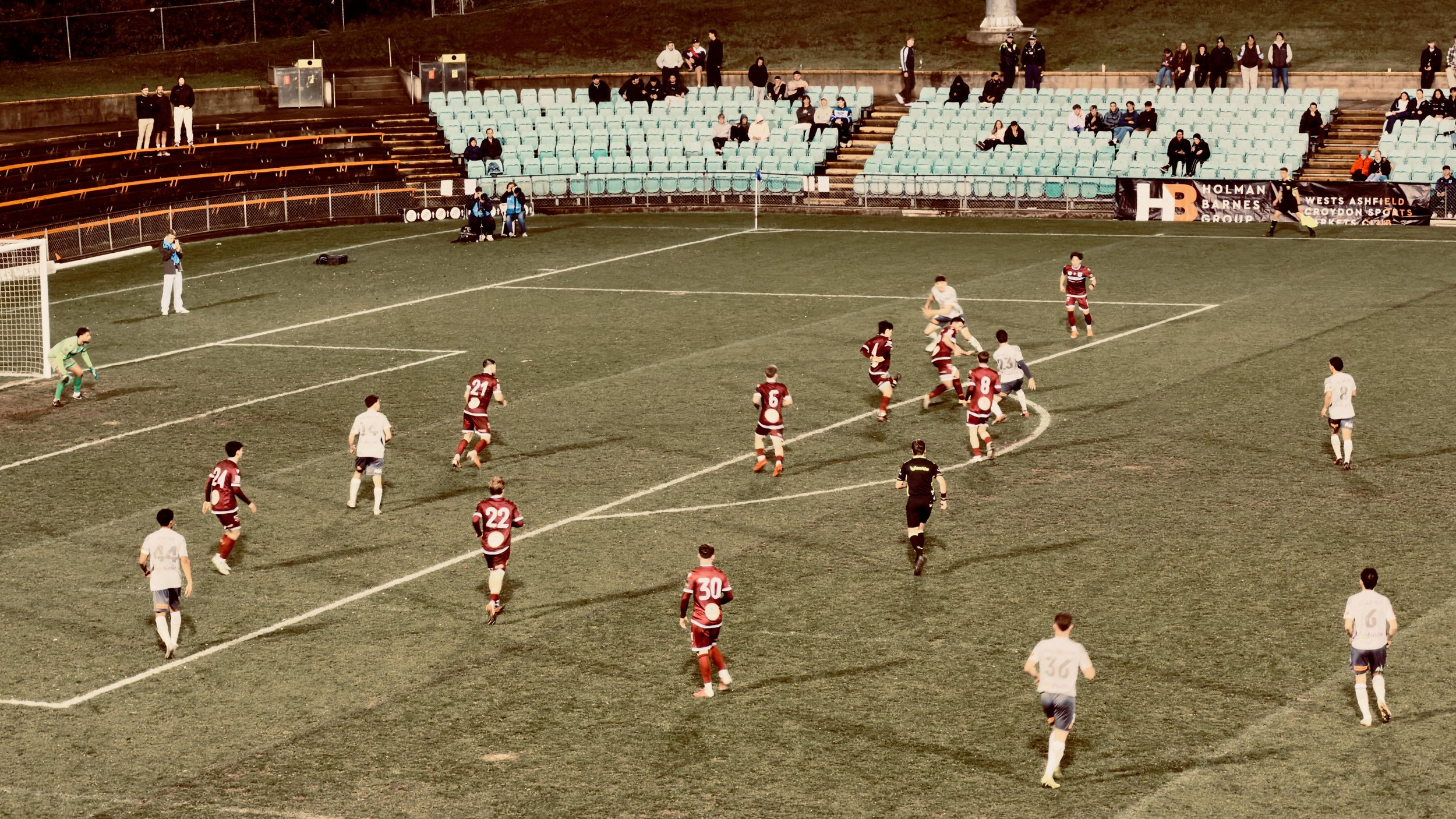
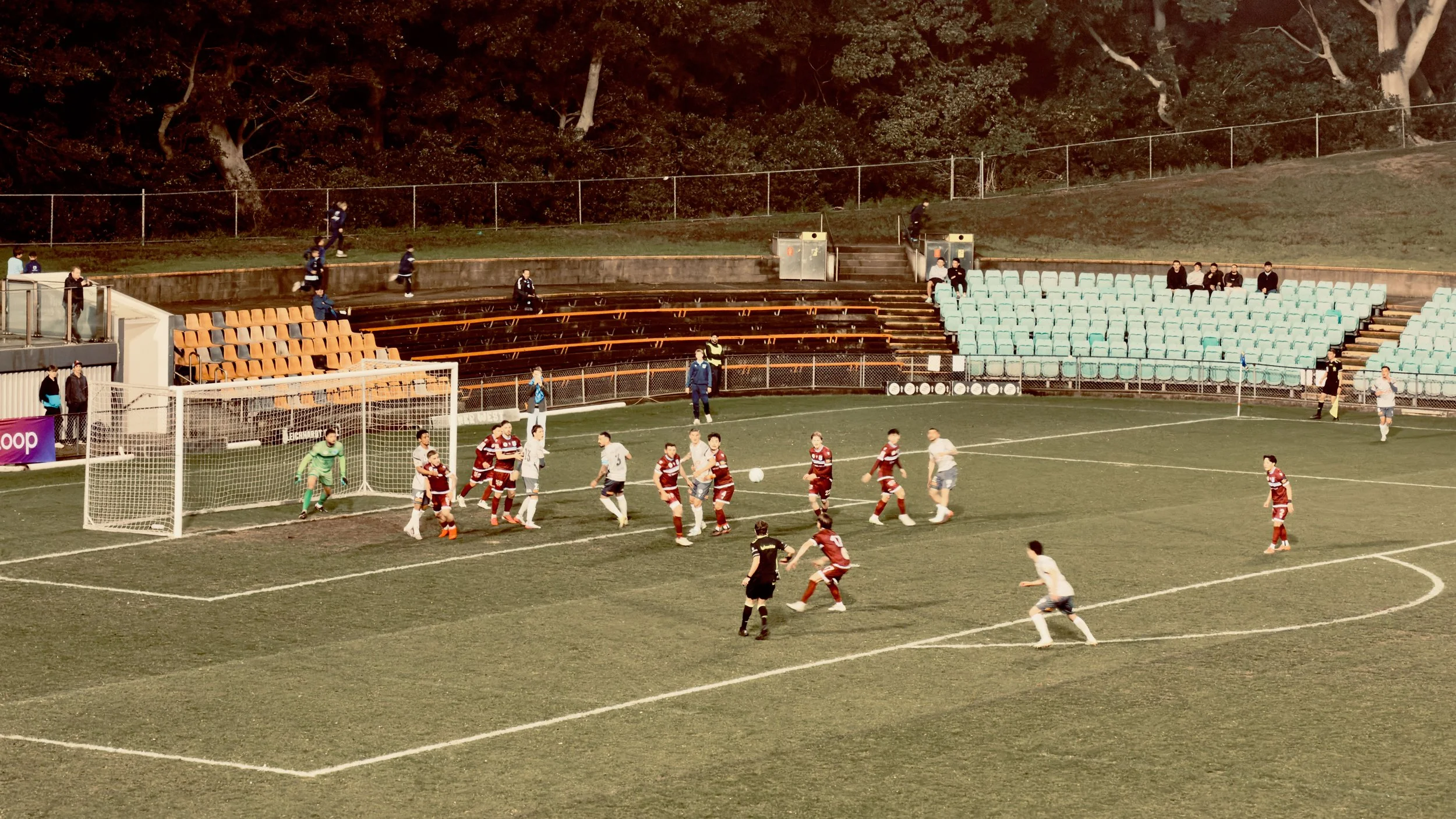
Melbourne Victory looked like the professional side. They were more composed on the ball, while APIA did not always have the same polish in the final pass or touch. What APIA did have was a willingness to throw themselves at almost everything.
Melbourne found ways through, but there always seemed to be a goalkeeper, a defender or one last desperate challenge waiting for them. It was scrappy at times, but that seemed to come from the desperation on both sides to win. Melbourne might have looked the more settled team, but they still had to actually score.
At halftime, APIA recognised members of its 2018 side, presenting special jerseys in acknowledgement of that team’s historic run to the Australia Cup quarter-finals. Now the current side had reached the same stage.
The second half followed much the same pattern, except now the possibility of an upset seemed harder to ignore. Then APIA put the ball in the net. For a few seconds, none of the other distinctions mattered.
I cheered.
So did almost everybody in front of me. The place erupted, only for the goal to be ruled out for offside. The celebration disappeared almost as quickly as it had arrived.
The longer the score stayed at nil-nil, the more the crowd seemed to believe there might actually be something here. I found myself watching them almost as much as the football. Being high at the back of the grandstand made that easy. I could see the benches below me and the reactions across much of the stand. One minute people were on their feet expecting something to happen. The next there would be a collective groan as a pass went astray or an attack disappeared.
At one stage a ball was kicked surprisingly deep into the grandstand. Someone sent it back towards the field, where it bounced off the concrete and hit the Melbourne coach cleanly in the back. The reaction was immediate: laughter and applause.
The game was becoming increasingly niggly. There were fouls, arguments, delays and warnings from the officials. The referee at one point travelled a considerable distance to show a yellow card towards the APIA bench. The fourth official seemed to be having regular conversations with both technical areas.
Then Melbourne scored early in extra time. After more than 90 minutes of APIA keeping them out, they had finally found a way through. That changed the last part of the night completely.
Now every delay mattered. Every player who stayed down seemed to provoke the crowd. Every substitution took too long. Every challenge looked worse. Melbourne’s goalkeeper was hurried along more than once, and the frustration around the ground kept building. Whether every injury was genuine or every delay deliberate was impossible to know from my seat. The APIA crowd had already reached its verdict.
The final few minutes seemed to last far longer than a few minutes should. APIA ran at everything. They threw players forward and attacked with the desperation of a team that knew the opportunity was disappearing. Sometimes that desperation worked against them. A pass would miss, possession would be lost and Melbourne would settle things again.
Then APIA would come again. I just wanted them to score.
They did not. Melbourne Victory won 1–0 after extra time and will now play Sydney FC.
I would have loved to see APIA equalise, but after such a difficult, absorbing game there was also something satisfying about it being settled by a proper goal. Melbourne had finally found a way through and won cleanly.
The crowd was less philosophical. As everyone started leaving, the officials came from the field and a couple of supporters near them launched into an angry assessment of the evening. Most of what was being yelled could not really be defended, but plenty of people around them laughed, applauded or encouraged it.
I had arrived wearing the right colour because I had decided the underdog deserved my support. By the time I left, I no longer needed the reason.