I had been meaning to get to The Village Green for a few weeks.
There had been other opportunities, including a women’s game and another men’s match, but each had collided with something else. This time Manly United were playing there on a Saturday afternoon, and I finally could fit it into my schedule.
Getting there helped. The Village Green sits inside the University of New South Wales campus, only a short walk from the light rail. From Central, the journey is simple, and the approach to the ground does not really feel like arriving at a football stadium.
It is more like walking into a university. A broad path runs between buildings and trees, with people moving in different directions, and then, just off to one side, there is a football pitch.
For an NPL match, temporary fencing had been put around it. A makeshift entrance directed everyone through the same point, where I paid $15 and went inside.
I had arrived early enough to catch most of the second half of the under-20s game before the senior match. I was not paying especially close attention. I had a drink, sorted through my bag, did a few things on my phone and watched the sunset while two teams I had no attachment to played out a 0–0 draw that was considerably more entertaining than the score suggested.
There were already perhaps a hundred people around the ground, and they were surprisingly vocal. Most appeared to be supporting UNSW, although there were clearly some away supporters as well.
There was no real public-address system announcing names or explaining what was happening. The game simply took place in front of us, which gave me time to look at the ground itself.
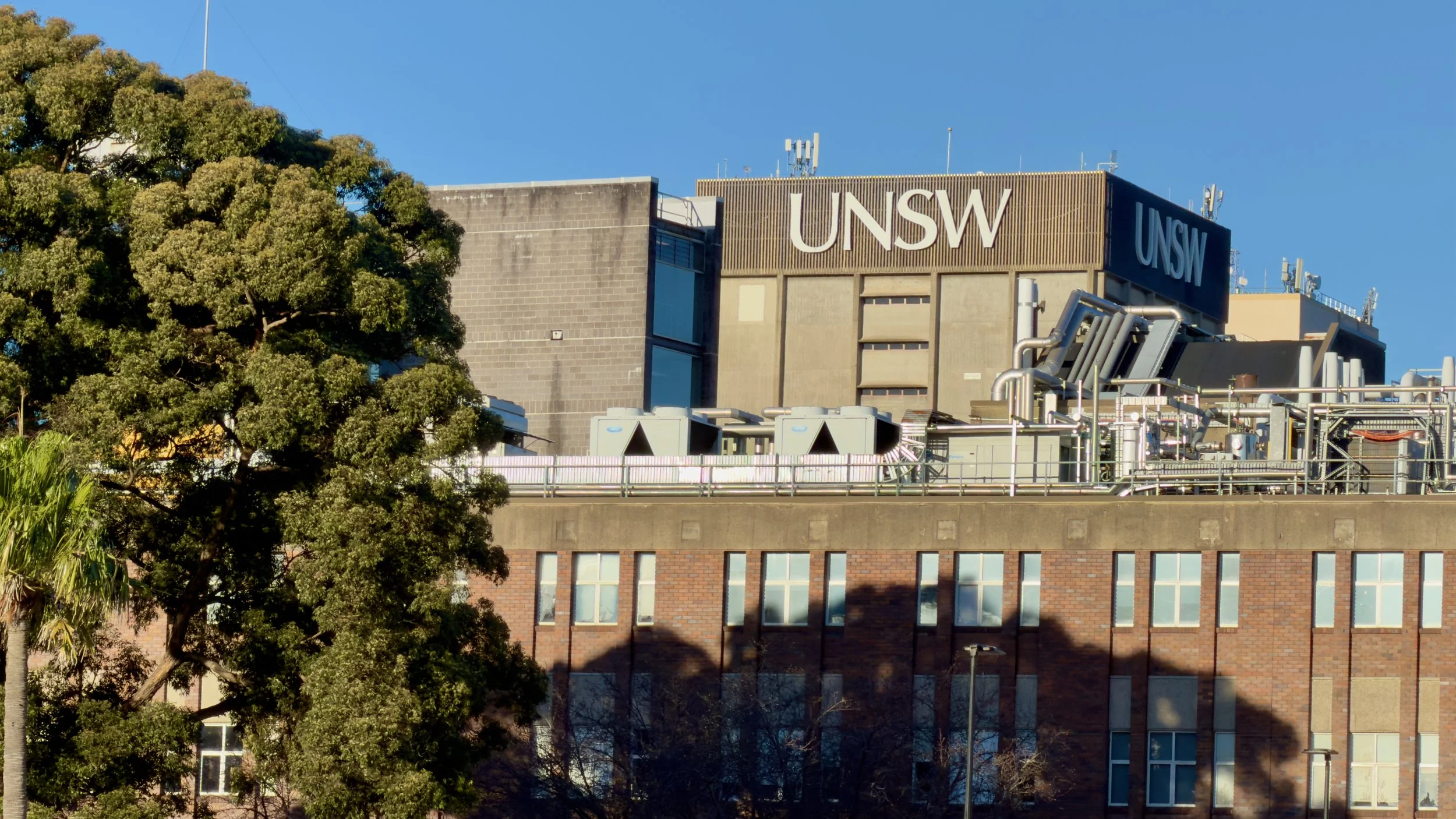
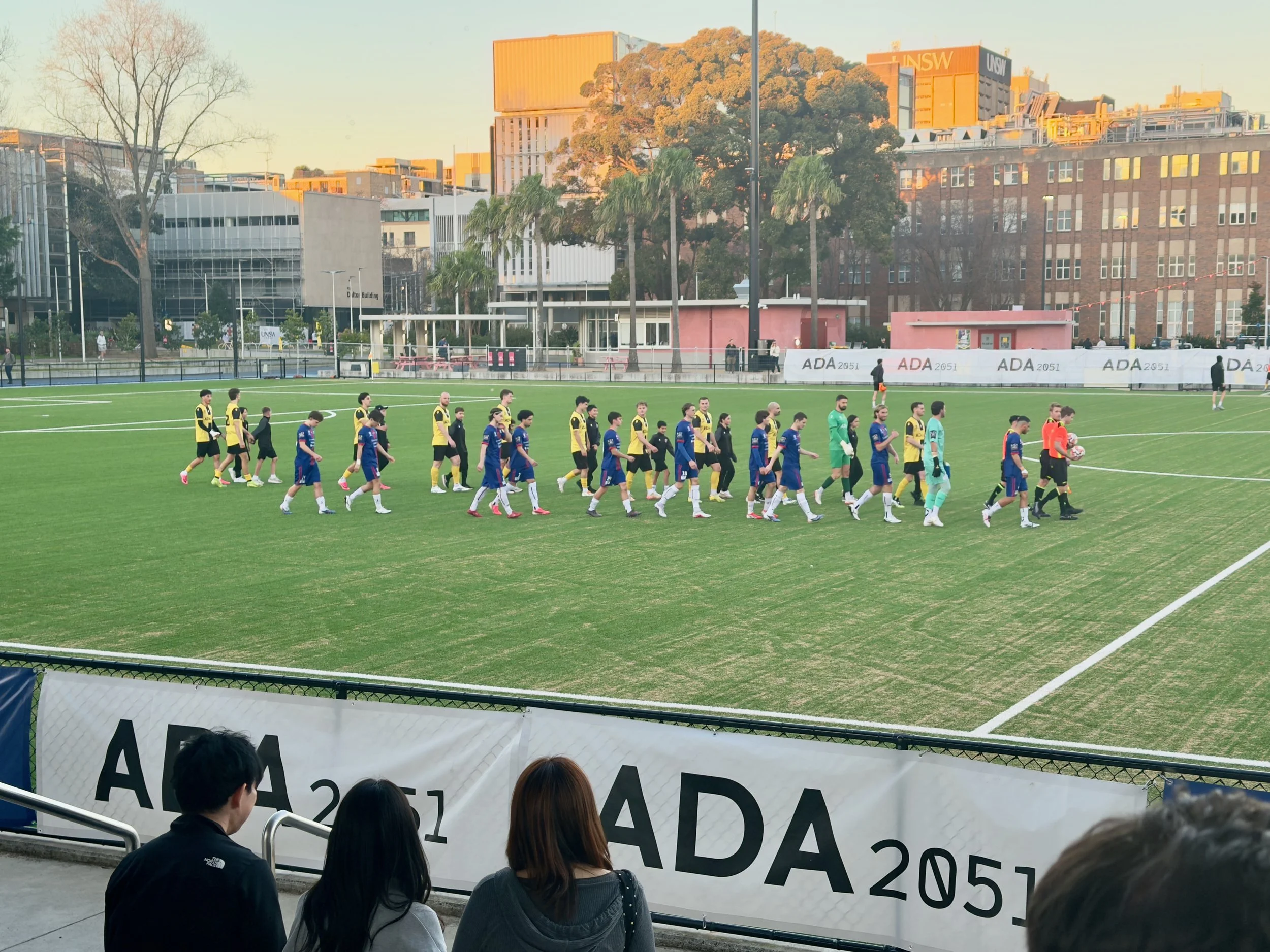
The Village Green is surrounded by university buildings of different ages and styles. Some are modern, some much older, and none of them seem particularly interested in creating the impression that this is a football precinct. The pitch just sits among them.
The grass was in excellent condition. Watching the under-20s was enough to see that the ball rolled cleanly. That was probably the first moment I realised I liked the place.
The stand helped. It is not really a traditional grandstand. It covers only part of one side of the field and is only four or five rows deep, built into a gentle concrete slope.
There are generous gaps between the rows, enough knee room for people to move past without everyone having to rearrange themselves, and the rise is sufficient that even with someone sitting directly in front of you, the view remains clear. There are no poles in the way, and even from the first row I could see comfortably over the fence.
It was simple, modern enough and extremely easy to sit in. Nothing seemed particularly grand, but almost everything worked.
The canteen was tiny. When I arrived, there was not much more than drinks, chips, biscuits, lollies and possibly ice creams, although hot food appeared later once the senior game was underway. I had already eaten lunch, so a drink and a cookie were enough.
The clubhouse itself was modest, with a gym directly above it. The toilets were another reminder that this was not really a suburban community ground. They were proper university-standard unisex facilities, much better than I am used to finding at many small football venues.
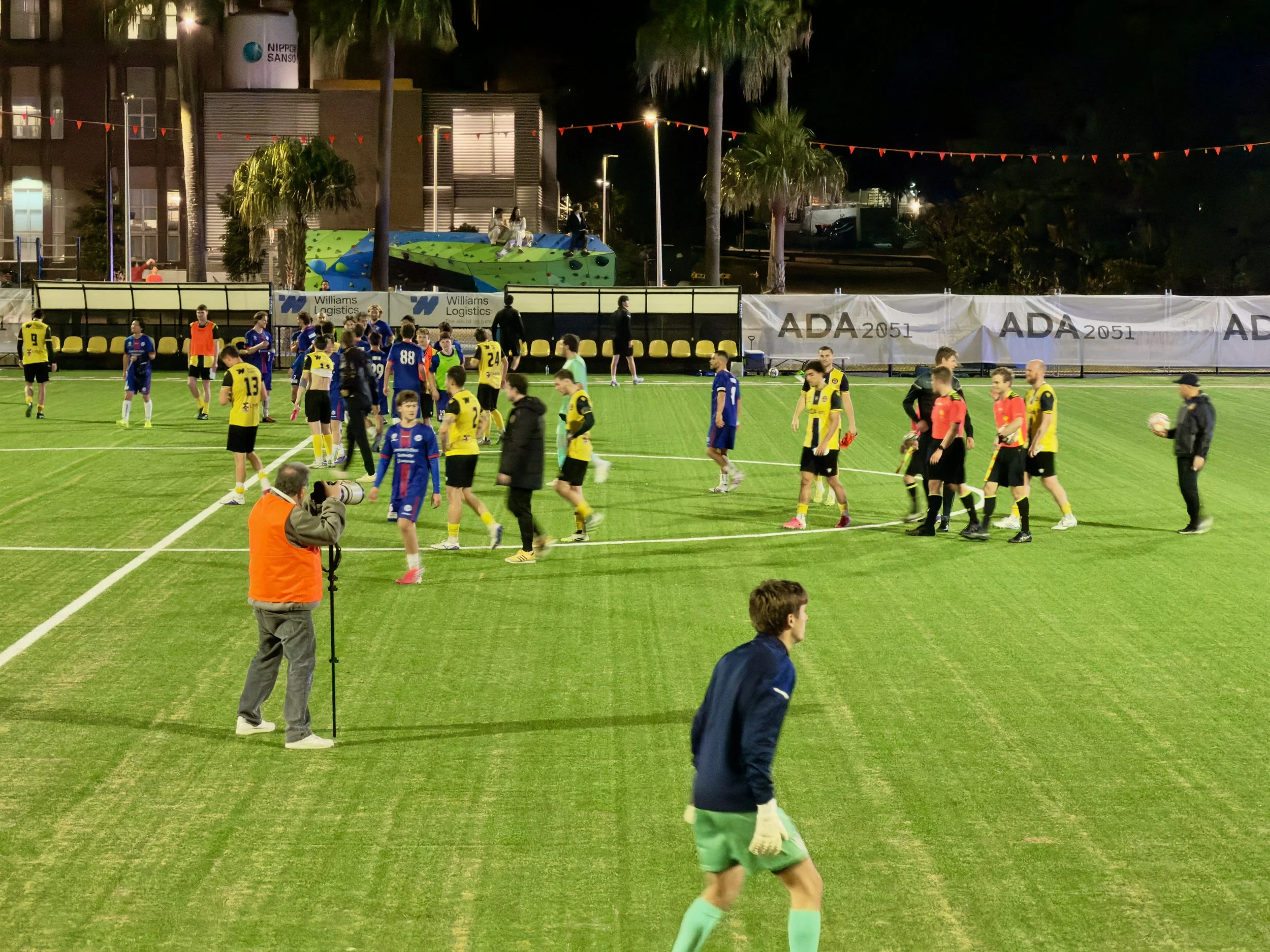
The media setup was equally simple. Rather than sitting in a dedicated box, the people covering the game were positioned along the back of the stand, only metres from where I was sitting.
That combination was becoming interesting. The football infrastructure was basic in places, but it sat inside a much larger university facility that was anything but makeshift.
The football did not take over the university.
Outside the temporary fencing, people were still walking through campus. Basketball courts nearby were busy. Children rode bikes through parts of the precinct. Buildings that had looked quiet in the afternoon began to light up as the sun disappeared.
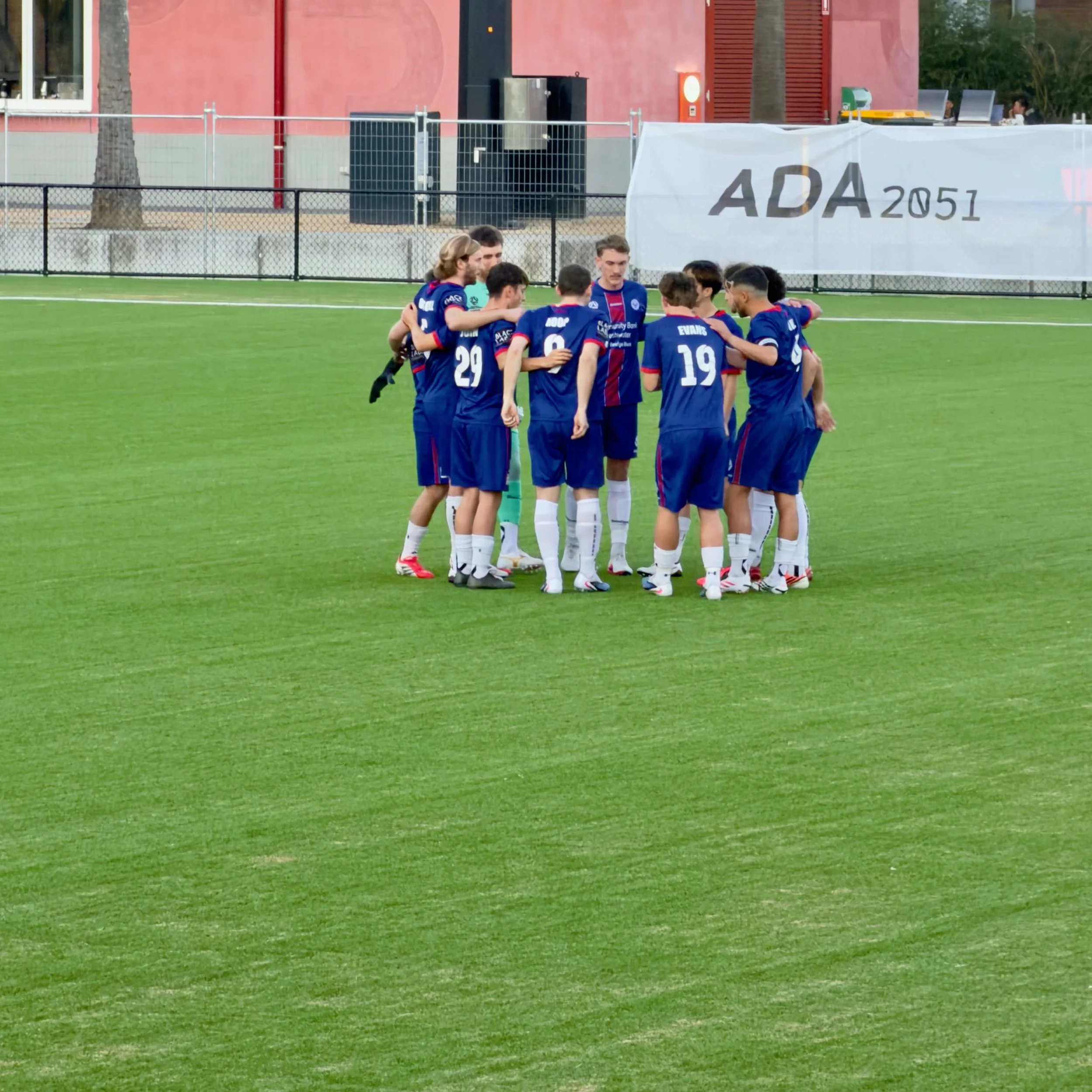
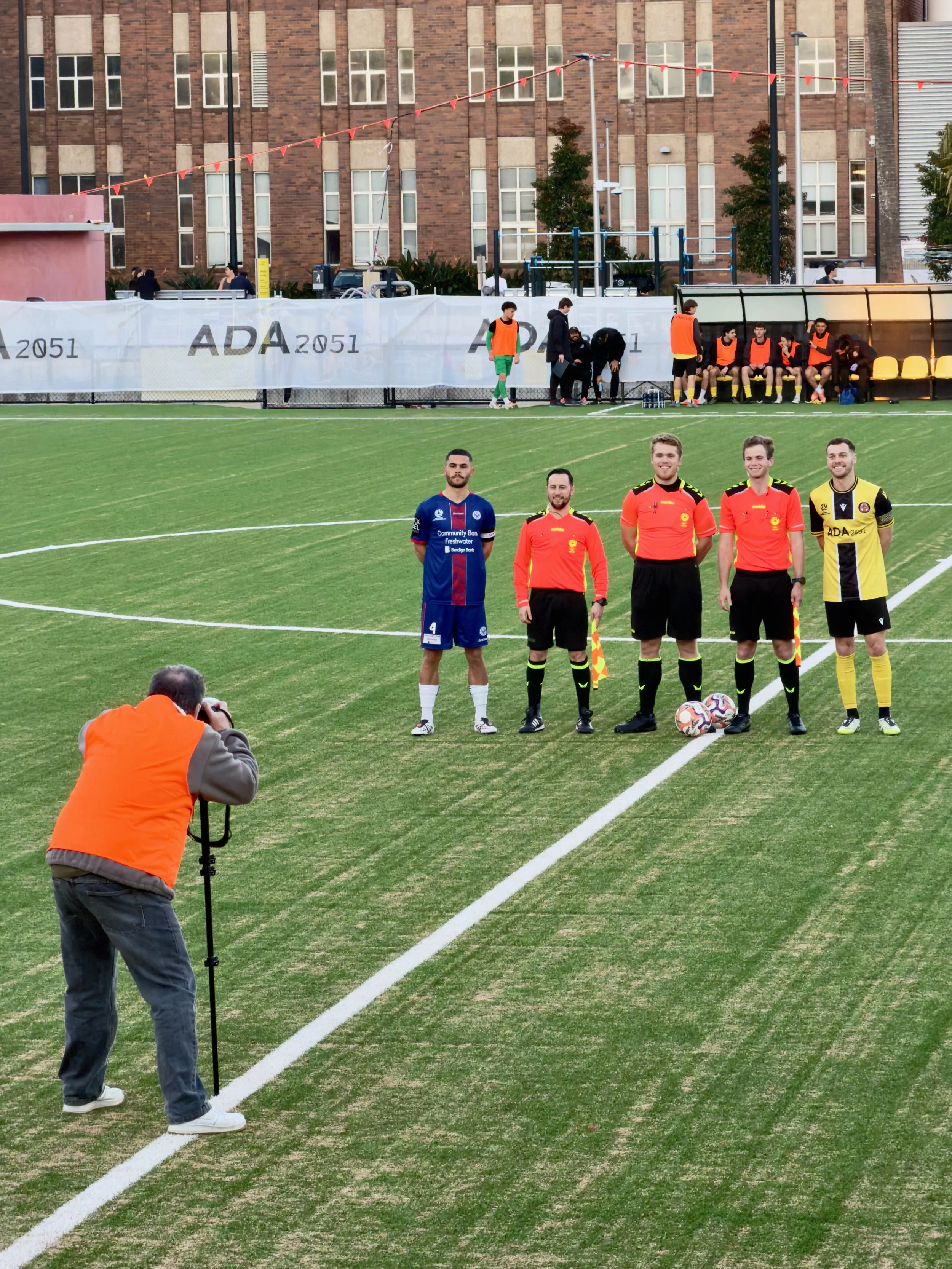
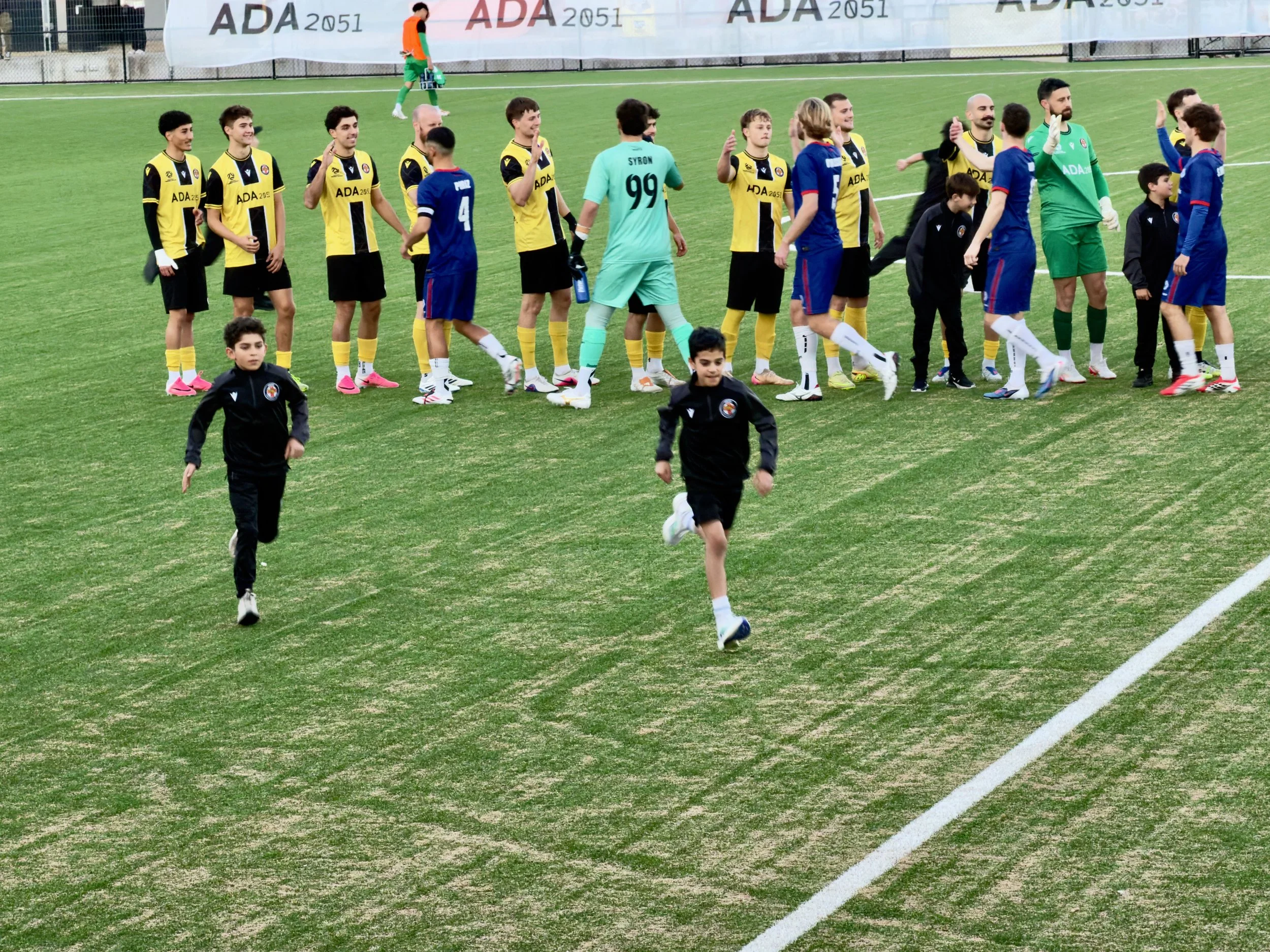
By the time the senior teams came out, the crowd had grown substantially. Quite a few people from the under-20s match had left, then many more arrived for the first-grade game.
There were Manly supporters scattered through the stand and around the ground, identifiable by shirts, scarves and the direction of their cheering, but the home support was clearly larger.
It was also a slightly different crowd from some of the other NPL matches I have attended. There were noticeably fewer children. At some grounds, junior players seem to be everywhere, running around before the game, gathering in groups at halftime or appearing in club colours around the fence. Here there were only a handful.
Some children accompanied the teams onto the field before kickoff, then seemed to disappear. I never worked out where they went.
The crowd itself felt older and more restrained. That did not mean quiet. There was plenty of cheering, applause and the usual complaints when decisions went against the home side, but the overall atmosphere remained calm.
UNSW started the match strongly and looked dangerous when they moved quickly forward. Manly were under pressure early, but they gradually settled and became more composed in possession.
The result mattered. Manly were sitting on the edge of the finals positions with one round remaining, while UNSW still had their own reasons to believe they could force their way into contention. I was not there as a neutral. I wanted Manly to win.
They scored first in the opening half and went into the break 1–0 ahead.
As darkness arrived, the temperature changed quickly. I had turned up in a T-shirt after what had felt like a spring day, but the surrounding buildings took away the remaining sun early and a breeze moved through the gaps between them.
The jumper went on. Then the jacket.
I regretted bringing only a baseball cap rather than a beanie.
The breeze eased after sunset, which helped, and by then the university had taken on a different appearance. Pathway lights were on. Buildings were illuminated. The basketball courts remained active.
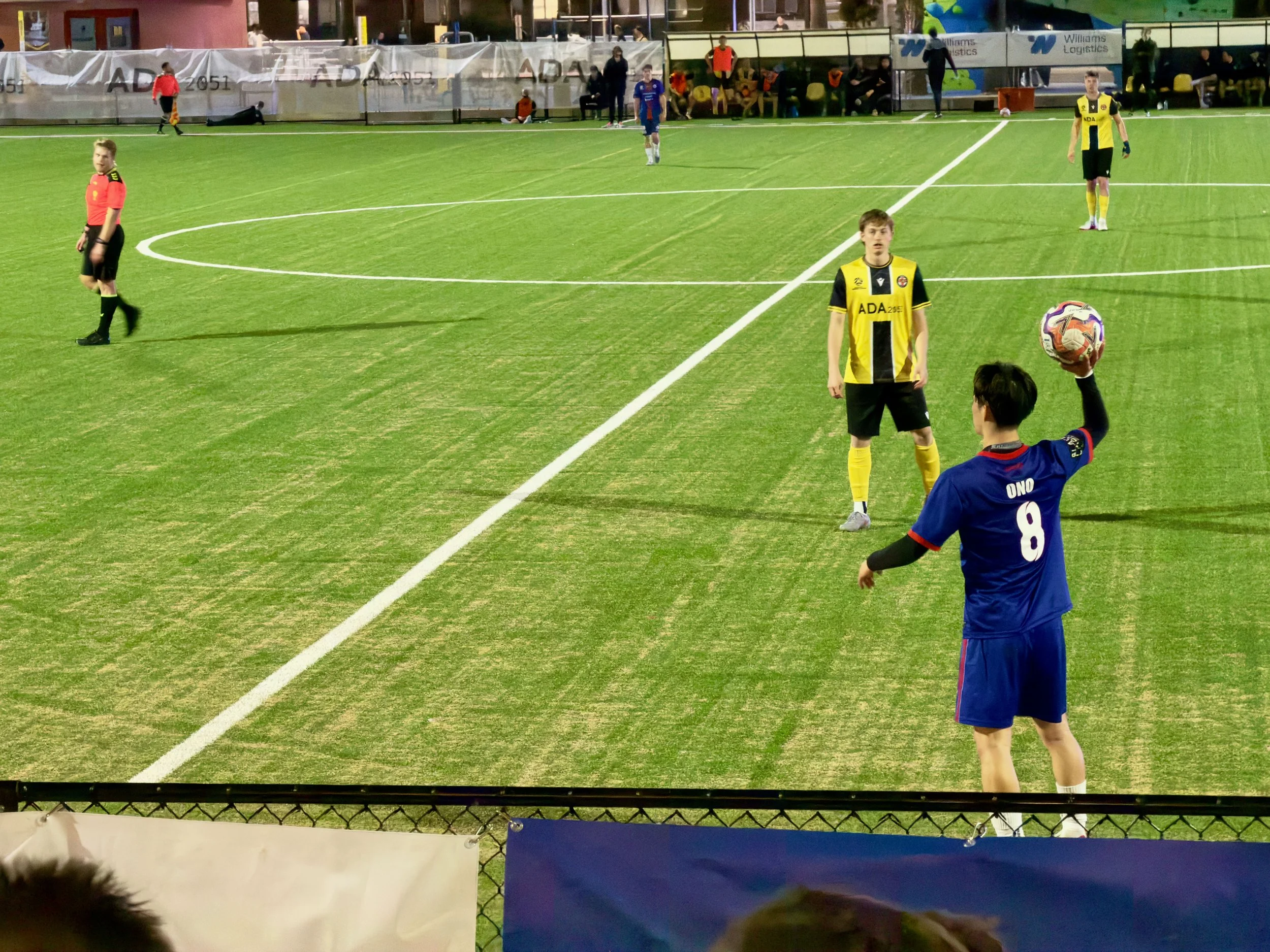
The football floodlights, by comparison, were fairly ordinary. Some parts of the pitch were noticeably darker than I was used to at other NPL grounds.
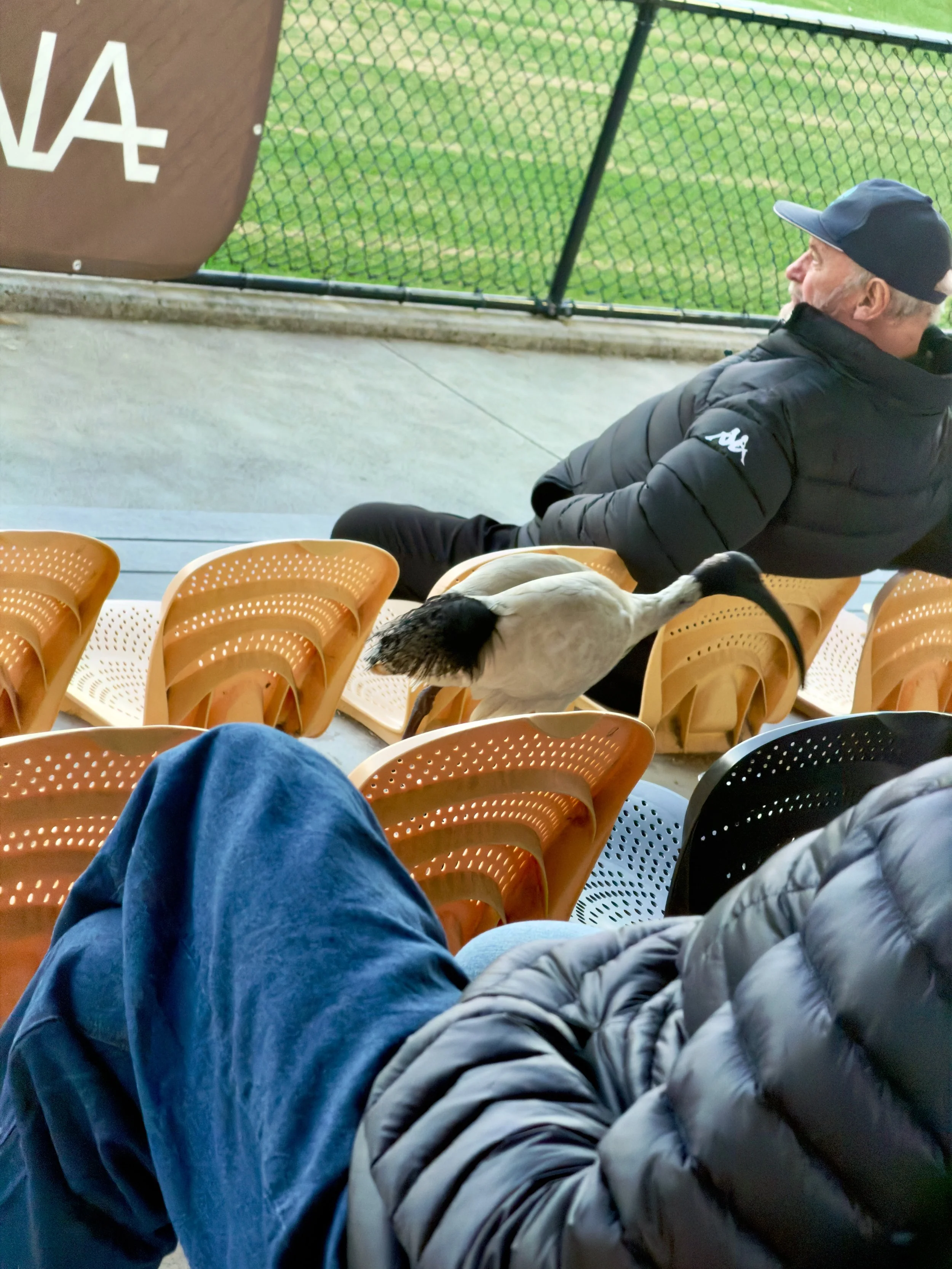
At some point during the first half, an ibis wandered into the stand.
It did not hover cautiously at the edge waiting for everyone to leave. It walked between the rows of spectators looking for food. People tried to shoo it away. It was unimpressed.
For perhaps five or ten minutes it wandered around, finding scraps, occasionally startling someone who had not realised there was an ibis only a few metres behind them. Eventually it flew off.
I have seen plenty of birds enter sporting grounds when crowds disappear. I am not sure I have ever seen one behave as though hundreds of football spectators were simply another normal feature of its environment. On a university campus, perhaps they are.
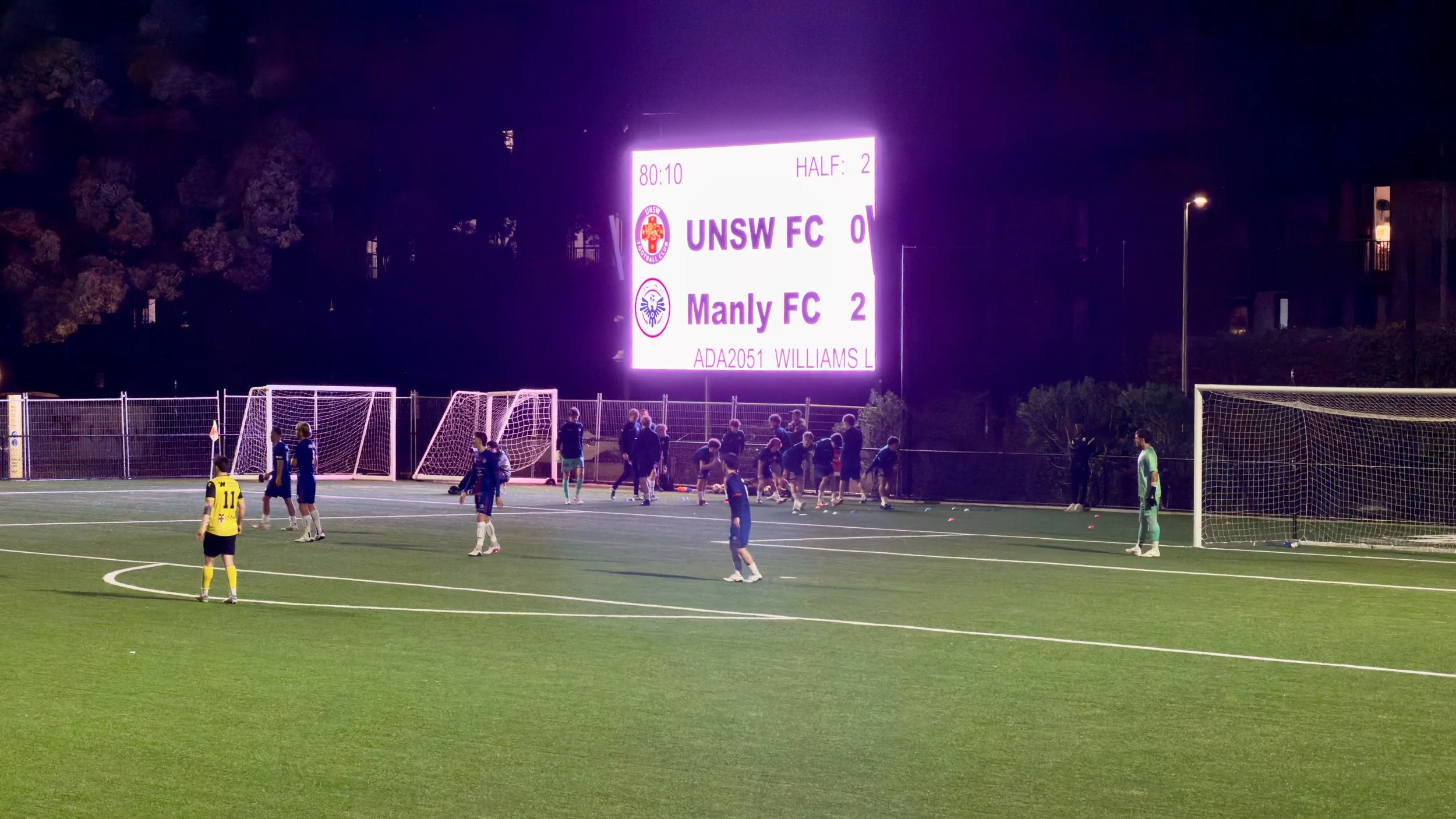
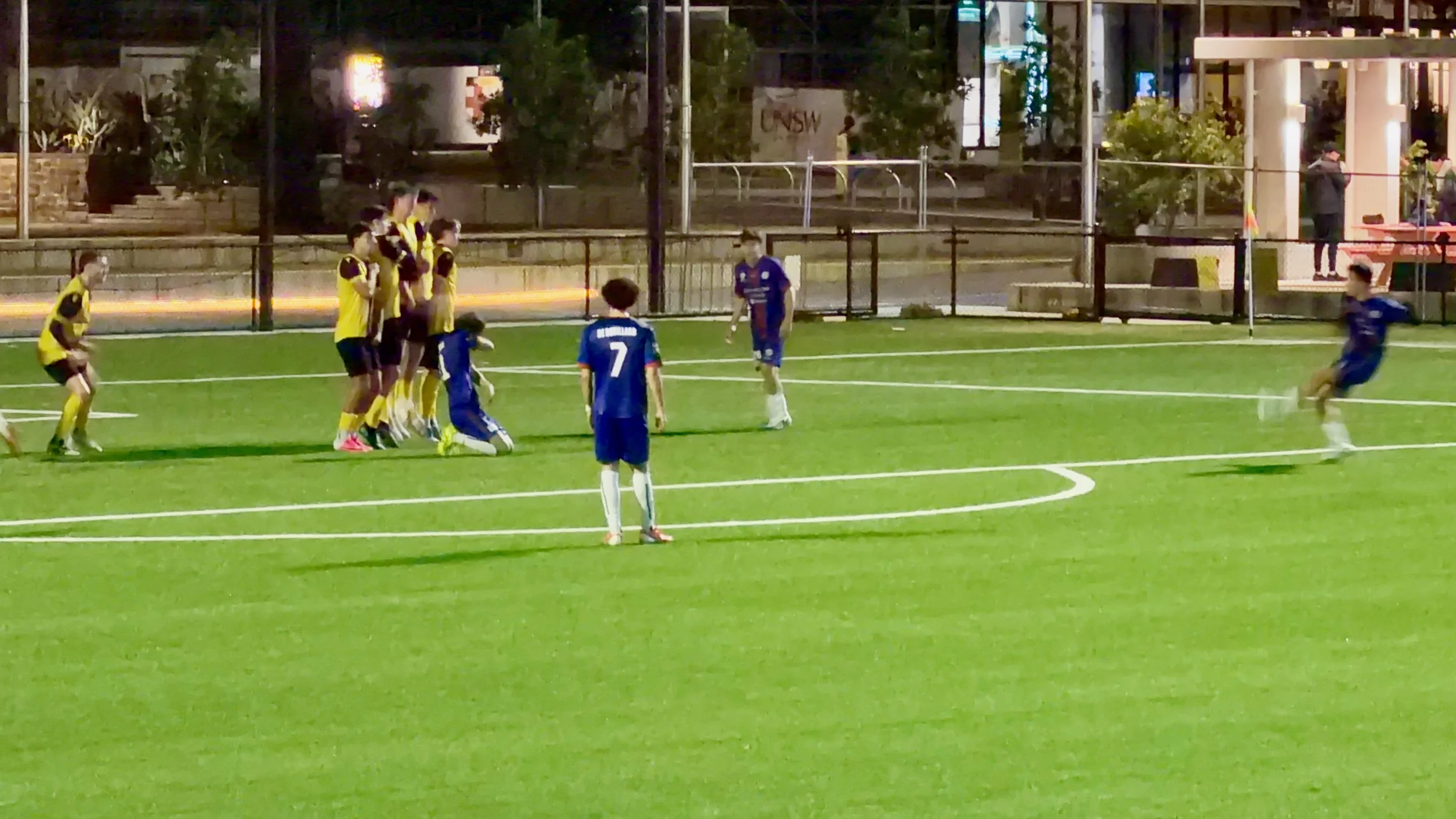
Manly's second goal came late in the match from a Kakeru Ono free kick. From where I was sitting I could not properly see the exact path of the ball, although it appeared to take a deflection before finding the net.
At 2–0, the urgency began to disappear. UNSW still pushed forward when they could, and there were moments when their quick attacks lifted the home crowd, but the final few minutes gradually wound down rather than building towards some dramatic finish.
That was fine with me.
Manly had the win I wanted, and somewhere during the evening I had already made another decision. I wanted to come back.
Part of that is practical. The light rail makes The Village Green one of the easier away grounds for me to reach. But that is not really why. I liked the way the place worked without trying very hard to look like a football stadium.
For a few hours, temporary fencing had turned part of a university campus into an NPL ground. People paid at the gate. Supporters filled the little stand. Cameras appeared along the back row. Players ran under floodlights and a result mattered enough to affect what would happen in the final round of the season.
A few metres beyond the fence, people played basketball, walked between buildings and continued with their Saturday night. Even the ibis seemed to understand the arrangement.
The football had its space.
It just never needed the whole place.