I had not originally planned to be at the SCG for this game. My Sunday plan had been to go next door to Allianz Stadium for the Sydney Roosters’ NRLW match. Both Moore Park grounds were hosting double-headers, with the women playing first and the men later in the day. The Roosters game was also the cheaper choice because I had no intention of staying for the men’s match.
By Friday, I had changed my mind. The Sydney Swans women were playing their first home game of the season against Essendon, and for the first time the AFLW and AFL teams were sharing an SCG double-header. After the week the club had just had, I also felt like turning up and supporting the women was the better place for me to be, so I bought the ticket for both games.
There was one immediate difference from a normal Swans afternoon. The gates did not open until midday, only half an hour before the 12:30 start. That left me standing on Driver Avenue with some unexpected entertainment. The Roosters game next door was supporting the emergency services, and a collection of displays had been set up outside Allianz Stadium, including police horses and dogs, boats, SES vehicles and some impressively specialised emergency trucks. None of it had anything to do with the game I was waiting to see, but it gave me something to wander around and look at while the SCG remained closed.
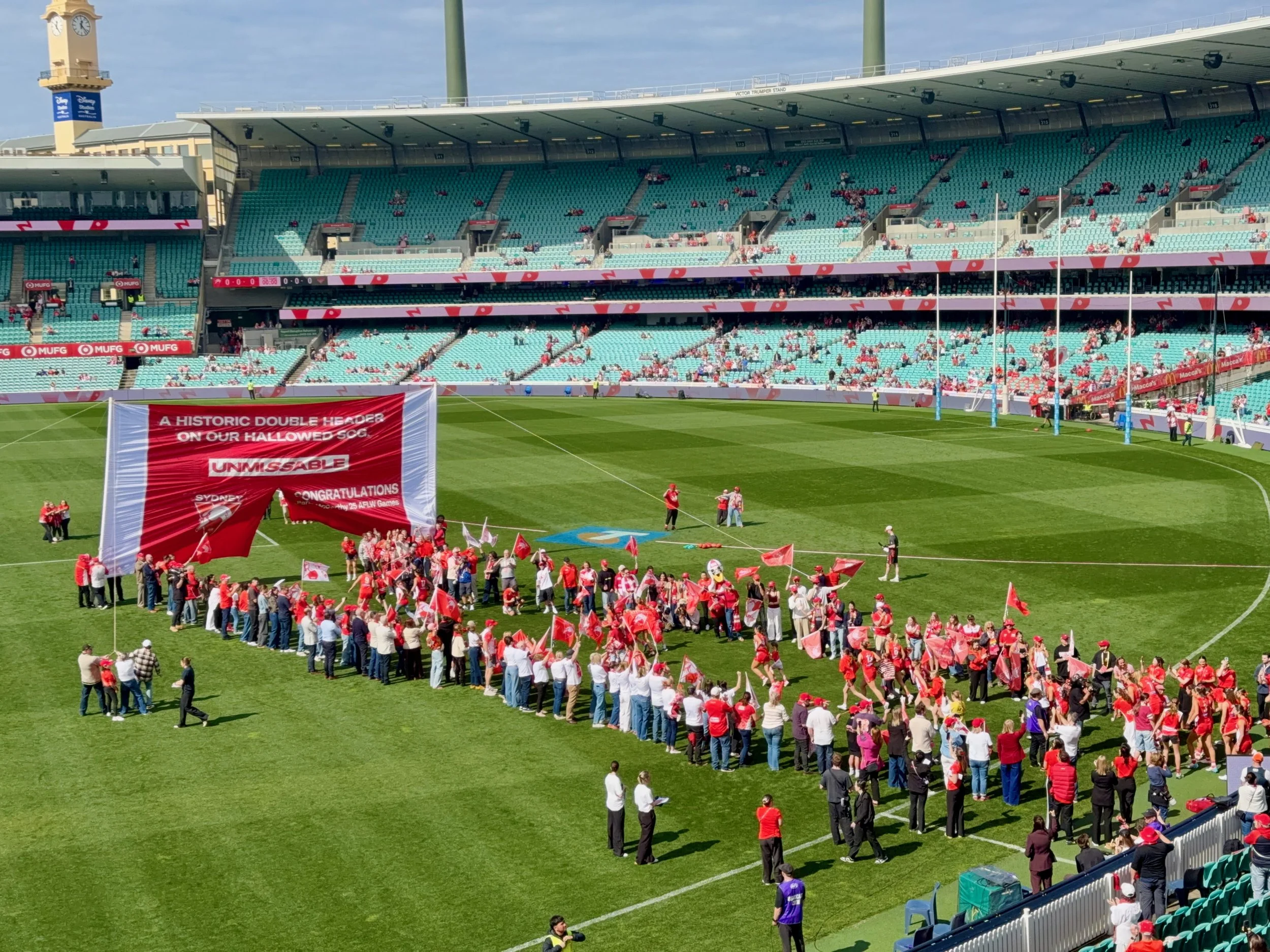
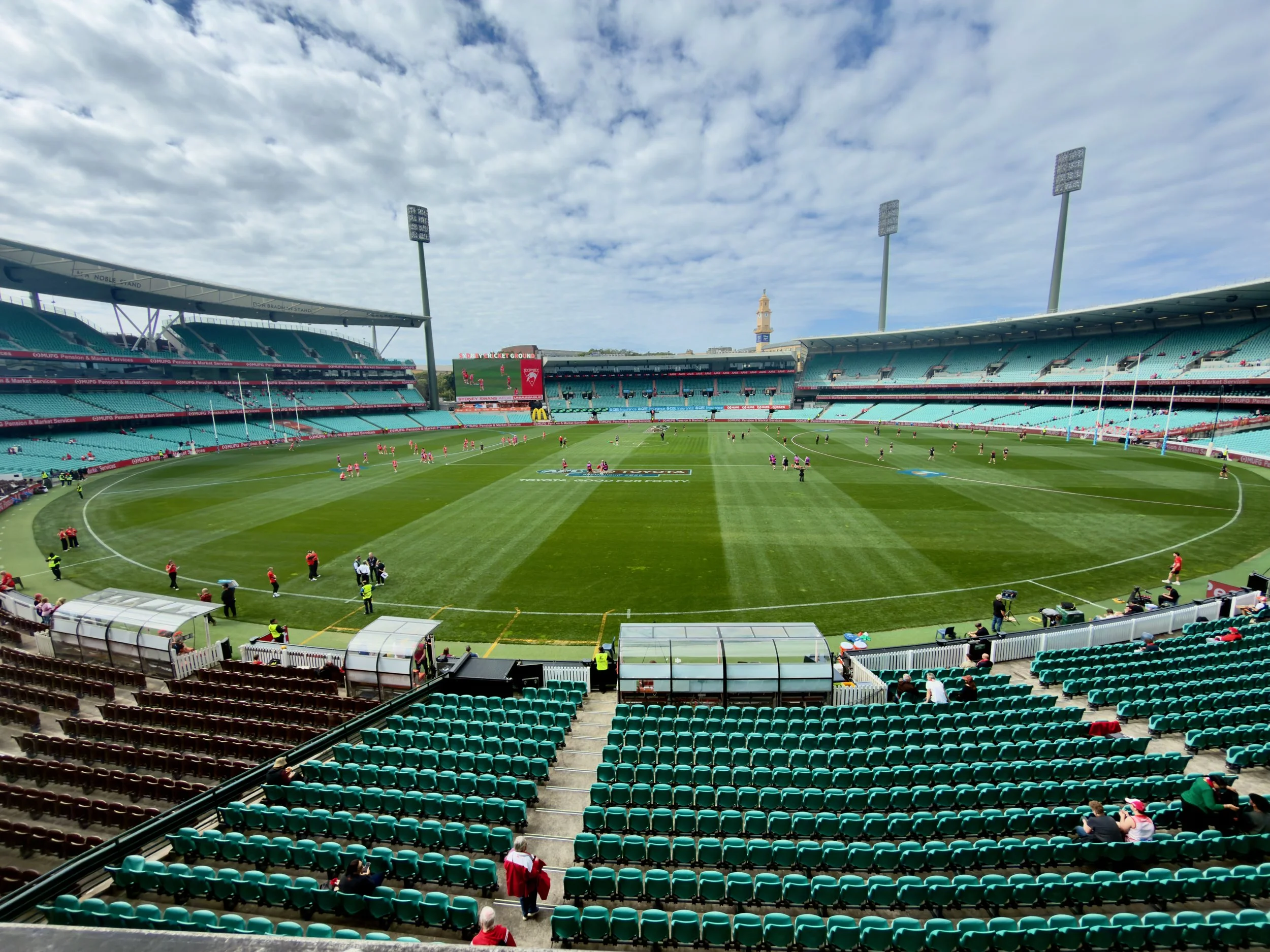
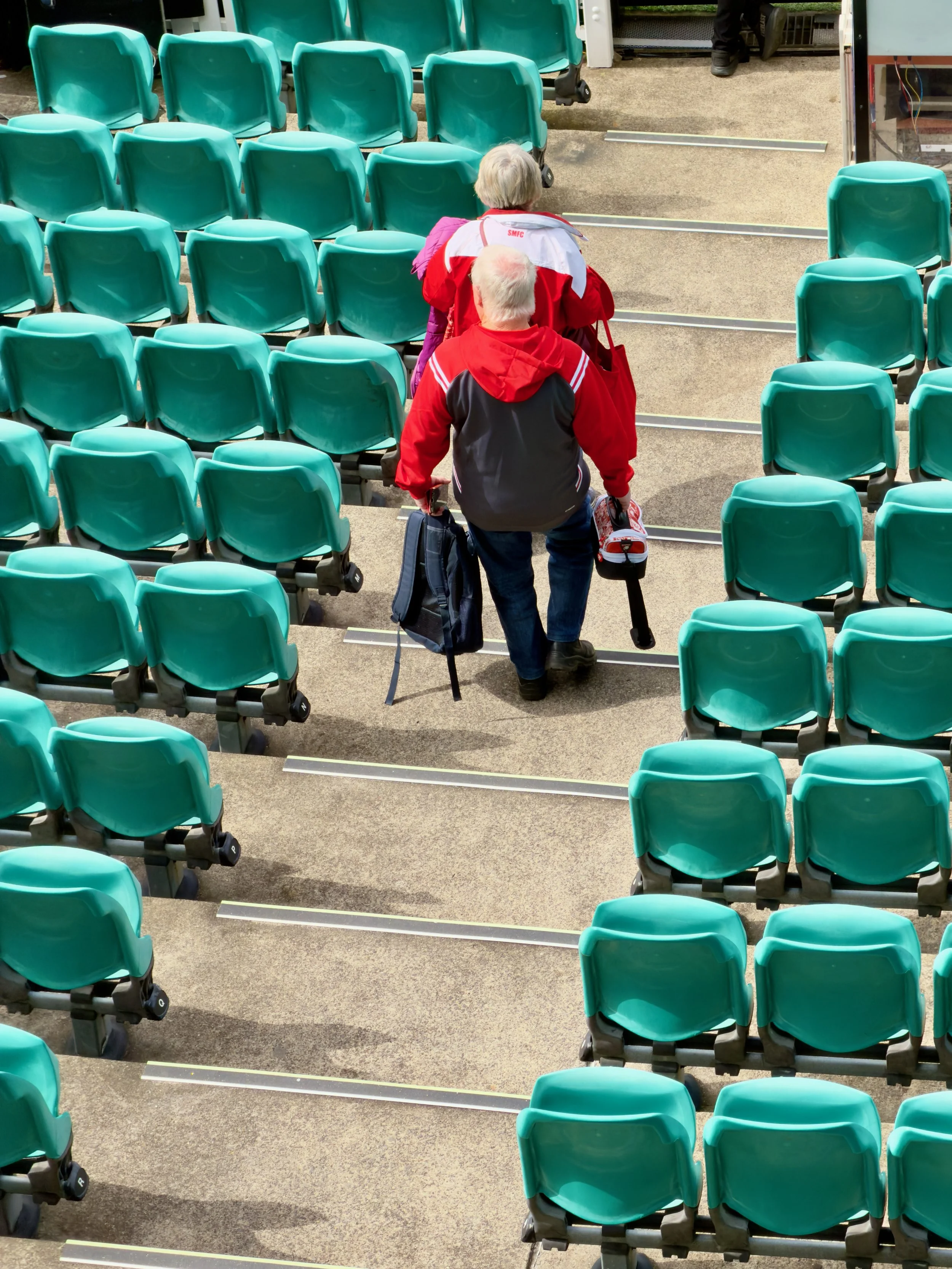
When we eventually went inside, the first surprise was how little a record crowd looked like a record crowd. There were 16,672 people there, the largest home attendance the Swans women had ever played in front of, but because the whole SCG was open for the later game those people were spread everywhere. My part of the ground was particularly sparse. Across several bays that could have held hundreds of people, there might only have been a few dozen. Other areas, particularly the members and general membership sections, were much more densely populated, but from where I sat the applause initially seemed to disappear into the empty seats around us.
The weather was similarly deceptive. A lunchtime start under sunshine had seemed like T-shirt conditions, and that was how I arrived. Sitting higher in the stand, though, there was enough cool wind coming through that the jacket came out fairly quickly.
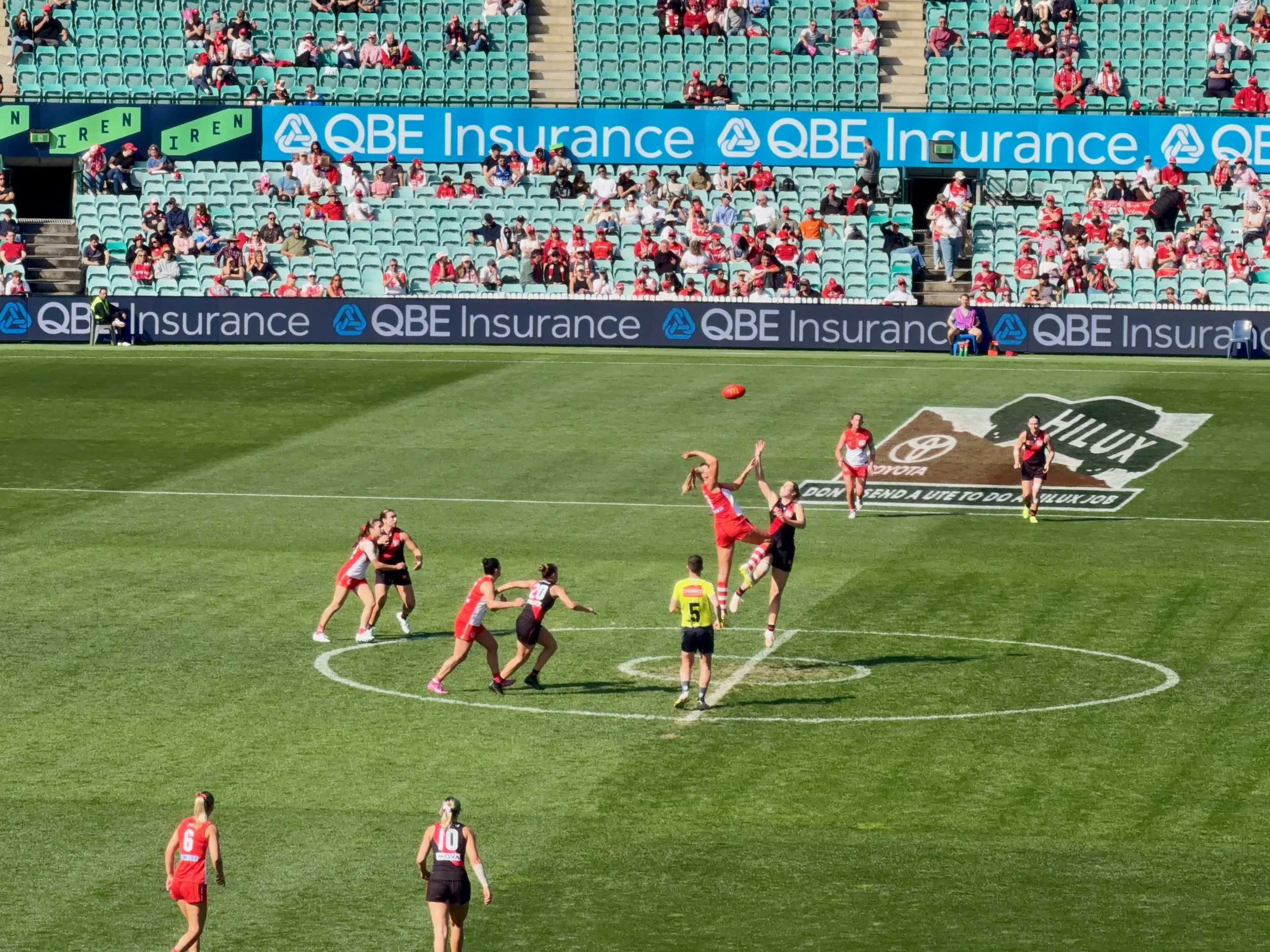
The first half was scrappy and congested, with Sydney and Essendon staying close and neither side finding much room. The scoring came slowly and there was some niggle as well. It was physical, competitive football, and neither side was giving the other much freedom.
I have now seen enough AFLW to notice that its rhythm feels slightly different. The kicks generally do not travel as far, so moving the ball from one end of the ground to the other can take more steps, with more short kicking and handballing. Combined with the shorter quarters, it can feel almost like an express version of AFL, with a little more urgency about getting on with it. I like that.
The game changed after halftime. Sydney kicked several goals quickly early in the third quarter and suddenly there was space where there had been very little of it before. The football opened up and, almost at the same time, so did the crowd. Those scattered pockets of Swans supporters began making considerably more noise, and the applause that had seemed to disappear earlier now travelled. There were still plenty of empty seats between us, but there was no longer any difficulty hearing that the crowd was there.
By then I was also noticing how complete the whole event felt. There were the player introductions, sponsors, music, announcements and all the other machinery surrounding a Swans game. Nothing about it felt temporary or as though the ground was simply being occupied until later in the afternoon.
In one respect, I actually preferred the presentation. The ground announcer seemed much more involved with the players, with interviews at different stages and players being brought into the presentation in a way that felt directed towards those of us sitting in the ground. That happens around the men’s games too, but often the interviews seem designed primarily for television. Here I felt as though we were part of the intended audience.
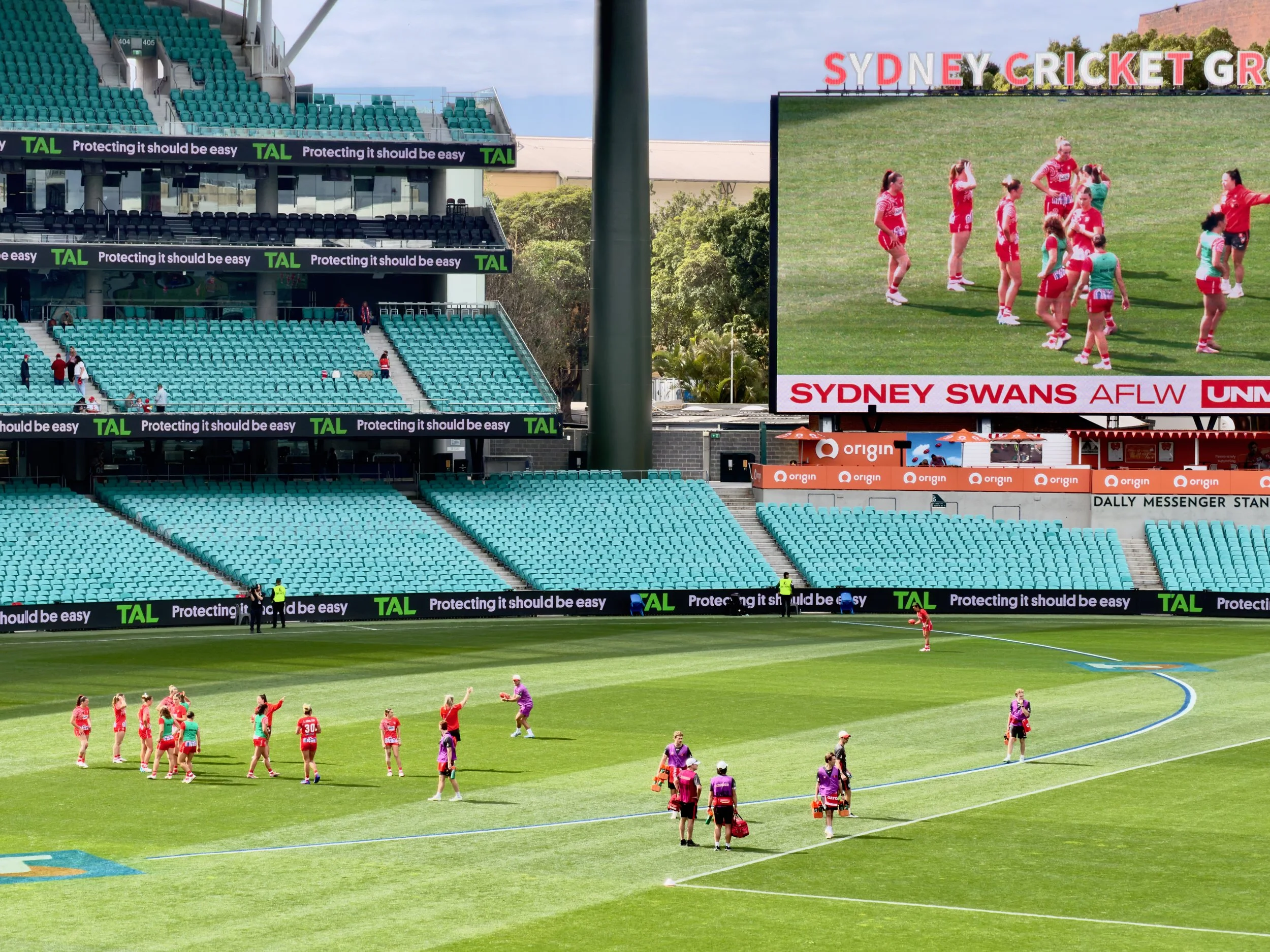
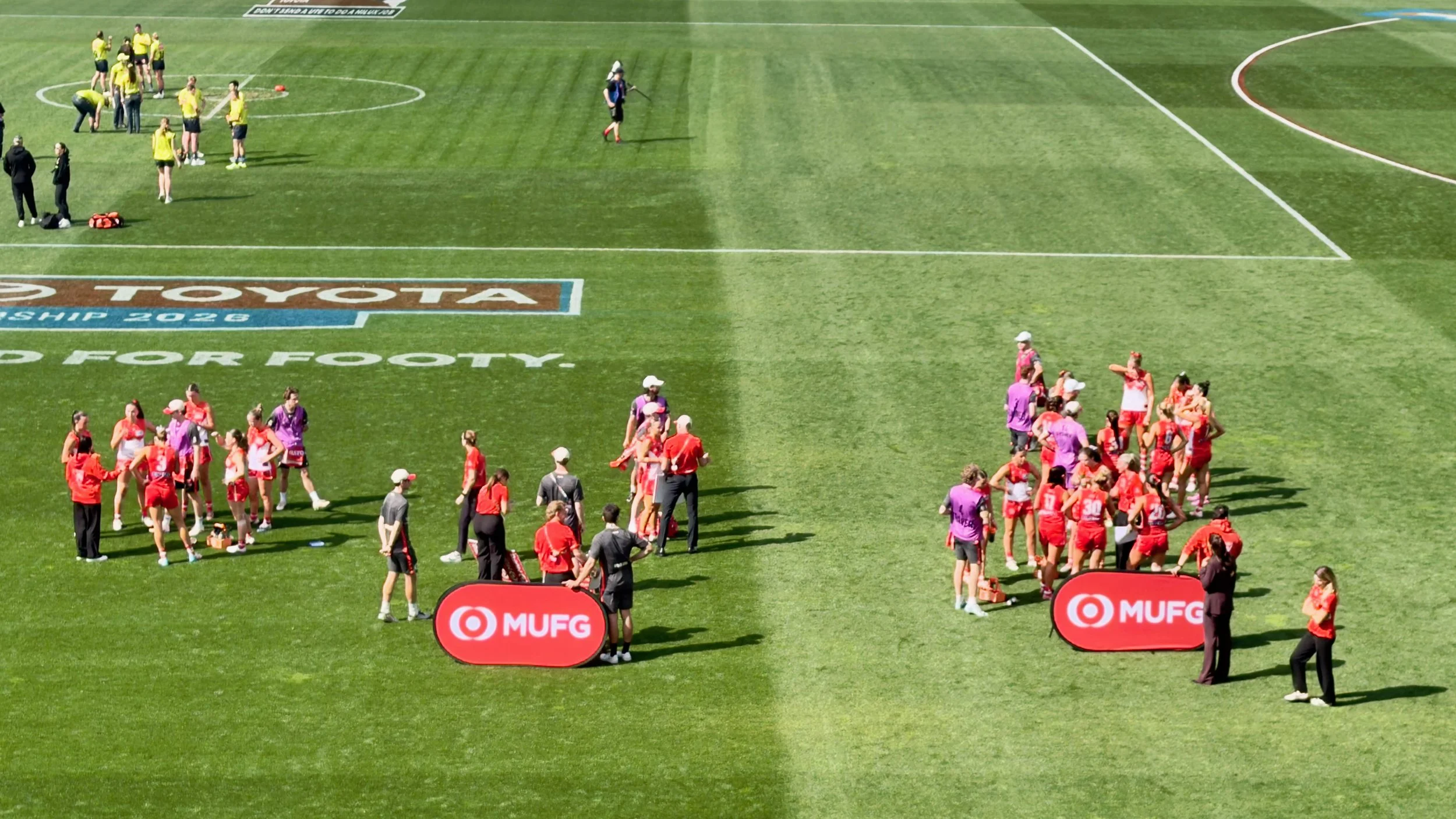
At halftime, young girls played football on the SCG. I saw some of it, although I cannot claim to have studied it closely. With a day that had begun around midday and was likely to keep me at the SCG until well after seven, practicality won. I went looking for food and bought a meat pie, something I rarely do at the ground.
By the final quarter, Sydney had enough of a lead that the tension had eased. Essendon kept competing, but the difficult, congested game of the first half had become something much more comfortable to watch.
There had been discussion beforehand about what might happen once the AFLW game finished. Because one ticket covered both games, there had been suggestions online that people might attend the women’s match and then deliberately leave before the men played. I wondered whether I would actually see it, but I did not.
People certainly left after the game, but there was nothing from where I was sitting that looked like a mass walkout. Nor was there any way of knowing why somebody walking out of the SCG was leaving. They may have come specifically for the women. They may have had somewhere else to be. They may have been making a point. From a seat in the stand, those things look exactly the same.
I stayed.
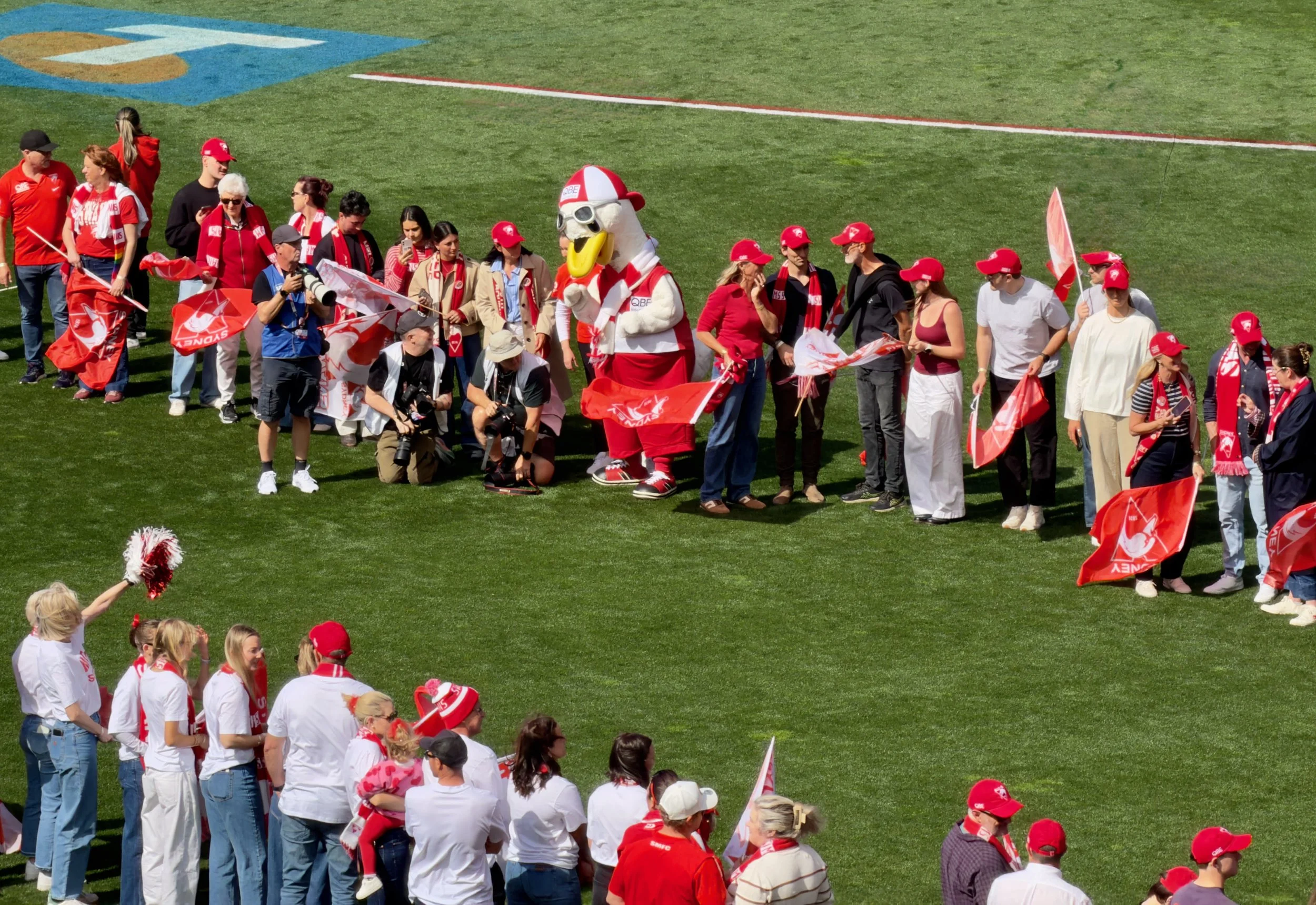
Before the players disappeared, they began a lap of the ground. That part was familiar. Swans players acknowledge supporters around the boundary after games, but the women seemed to linger a little more in places, stopping for particular groups, giving high-fives, hugs and having short conversations. Some of those people appeared to be family or friends.
If I stay at a Swans game long enough, I usually know what happens next. Eventually the players disappear inside and, sometime afterwards, the club song comes from the rooms.
The women stayed on the field.
They gathered into a circle on the SCG, one player leading them, and sang it there. I do not know whether that is what they normally do. Perhaps it is. Perhaps sharing the ground and facilities with the men changed the usual routine. I never found out, and it did not really matter.
I had come because, for various reasons, I thought this was a day when turning up for the Swans women mattered. By the time they stood together singing on the grass, that reason felt much less important.
I was simply glad I had come to watch them play.