One More Time
My Uber driver had no idea what drifting was.
I tried to explain it as we travelled from Sydney Motorsport Park back to the train station. The cars are not really racing each other, at least not in the conventional sense. They travel around a corner sideways, usually in pairs, with one trying to stay as close as possible to the other. There is smoke, noise and a lot of controlled movement that looks as though it should be uncontrolled.
He still seemed unsure.
I had known what drifting looked like before attending, mostly from films such as The Fast and the Furious: Tokyo Drift and its appearances in motoring programs. It was recognisable enough, but it had never interested me greatly. I enjoy motorsport and usually appreciate events built around skill, yet drifting had somehow failed to connect with either of those interests.
I had initially disregarded the World Time Attack Challenge for that reason. Then Friday evening arrived, I had nothing else planned, and the International Drifting Cup finals were taking place under lights at Eastern Creek. That was enough to take me there.
I arrived around six, about an hour before I expected the main competition to begin. This gave me time to walk through the paddock before finding somewhere to watch.
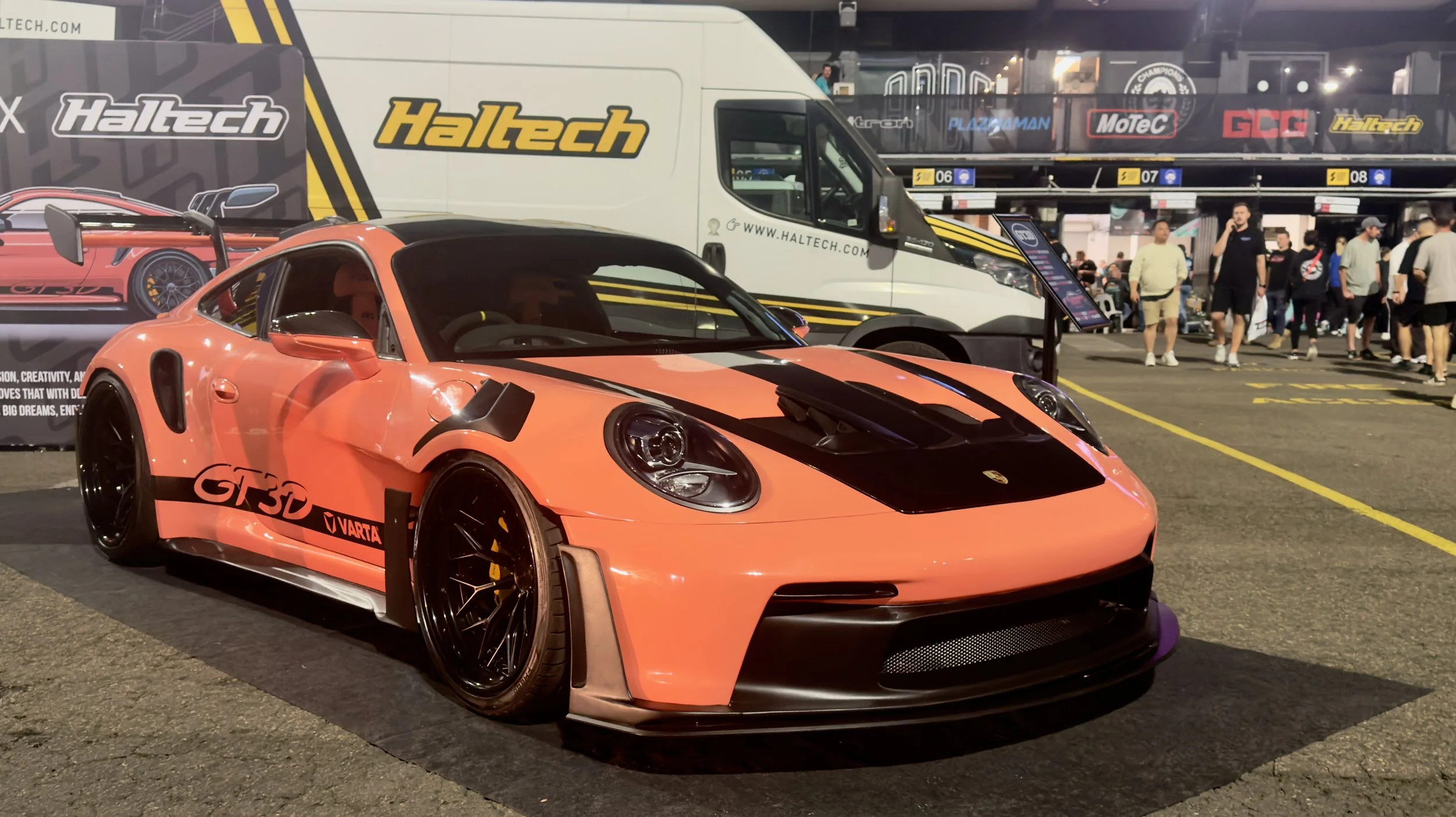
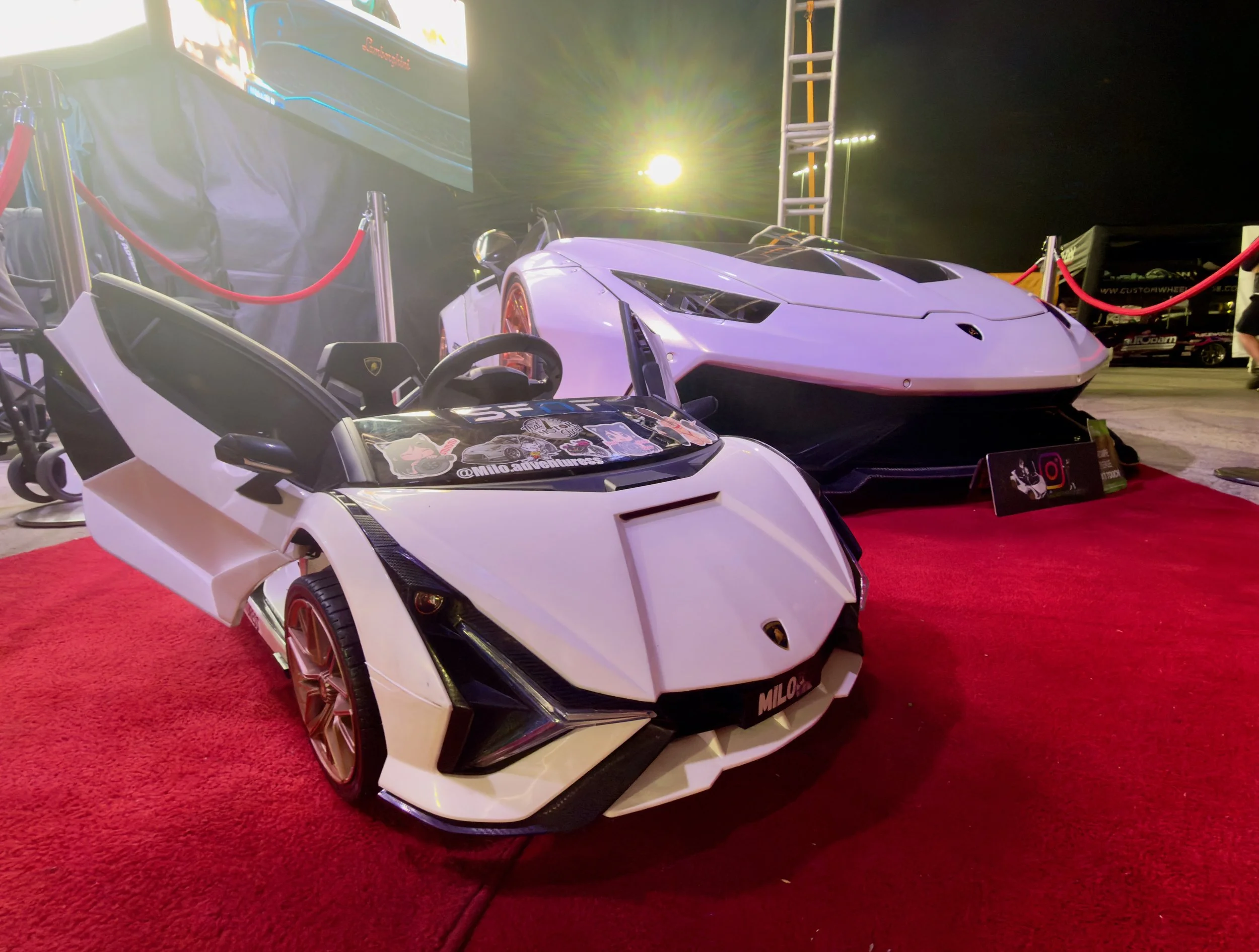
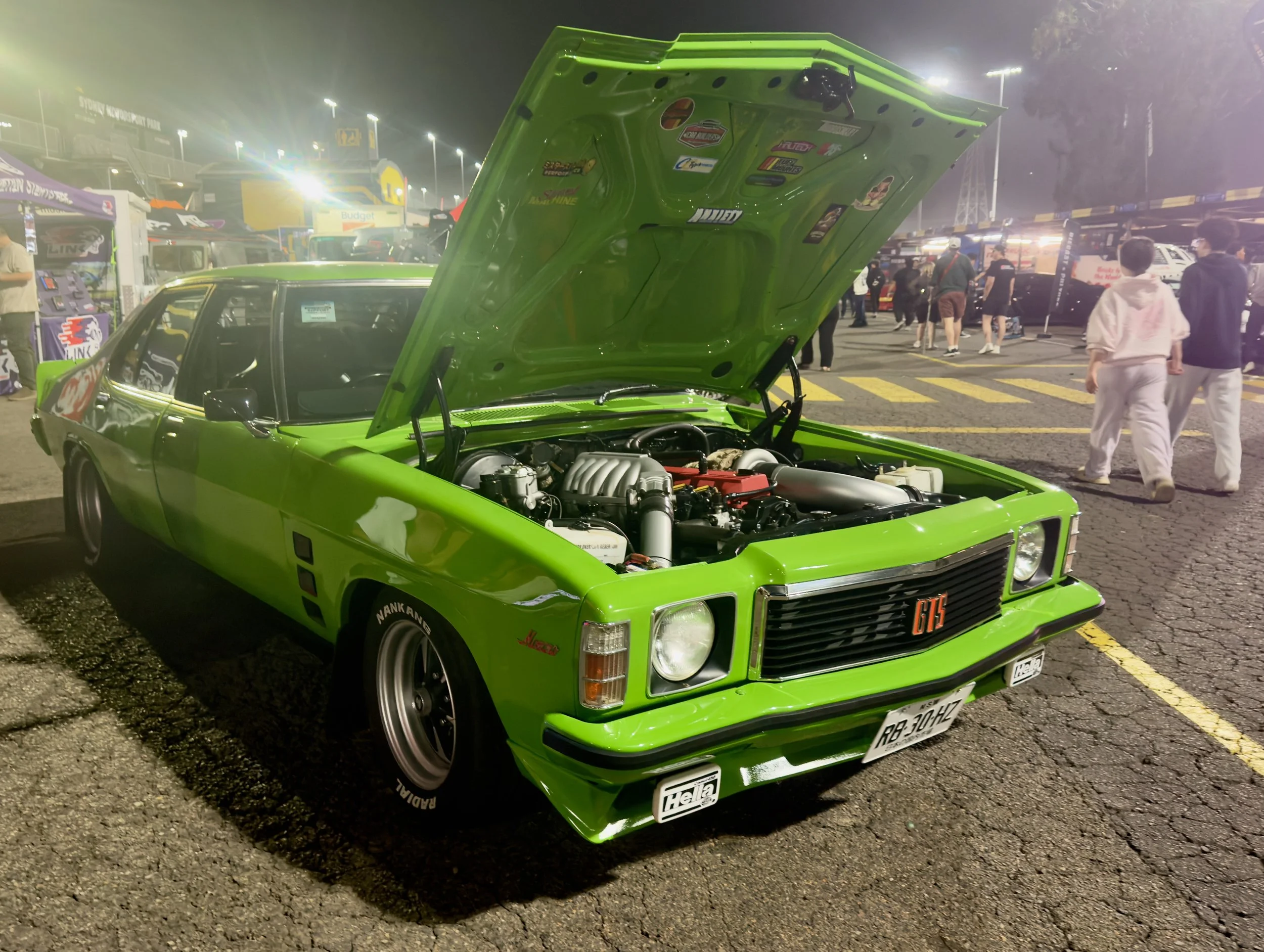
There was plenty to see. Competition cars sat among show cars, demonstration vehicles and other machines that were harder to categorise. Some looked finished and polished. Others had panels removed and people working around them. There were old Datsuns, Subarus, Porsches, Lamborghinis and heavily modified cars whose original form had become difficult to identify.
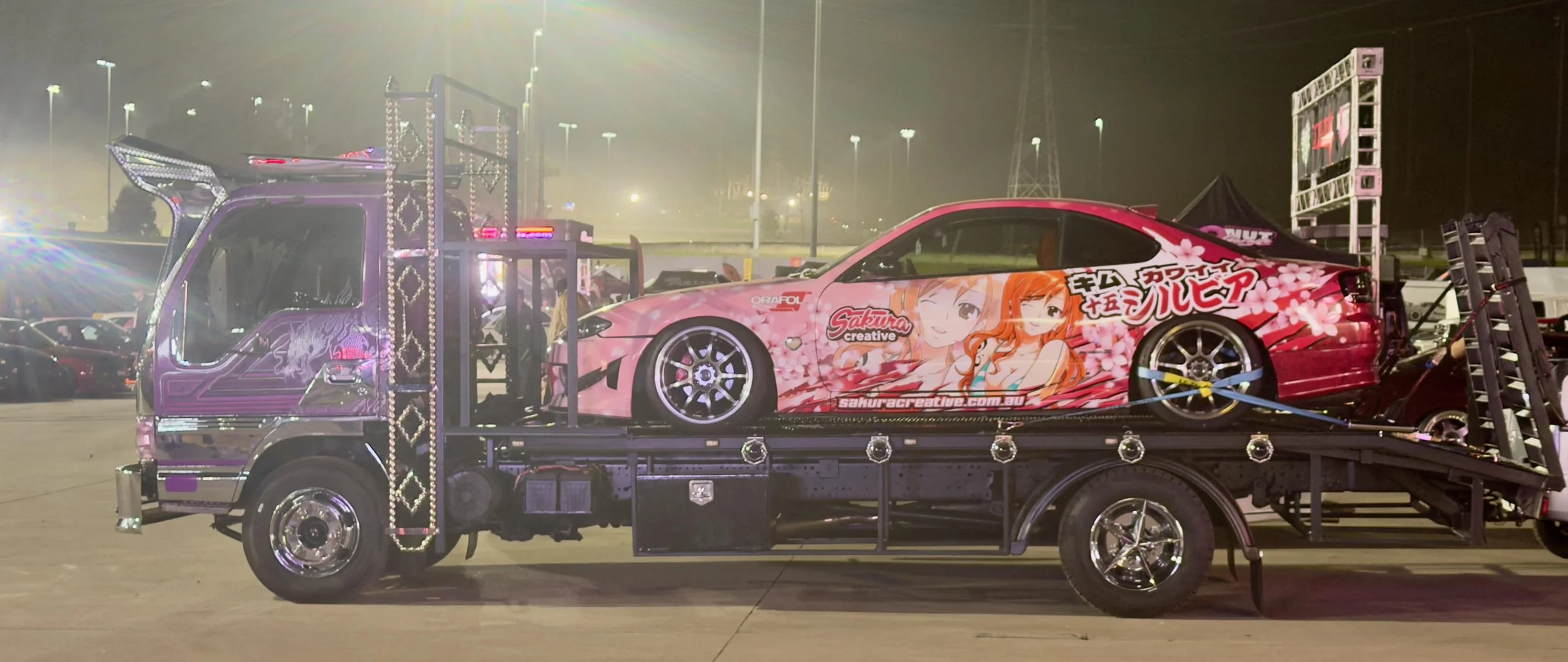
There were also small Japanese kei cars and trucks that looked unlikely candidates for anything involving speed. I found myself wondering what sort of engine someone might squeeze into one and what would need to be changed before it could drift.
The variety was more interesting than I had expected. Large cars sat beside small ones, older bodies beside newer ones, and familiar road cars beside vehicles that barely resembled anything intended for ordinary roads. Almost every shape and age of car seemed capable of becoming something else once enough work had been done to it.
I was also looking for dinner. My loose plan was to wander through the pits, pass the food trucks, get something to eat and then settle in for the competition. With the event expected to continue until about ten, eating first seemed sensible.
From the rooftop of the main building, I could see part of the track and watch the television coverage playing nearby. Cars were already running by then. I stayed there for a while, watching the screen and trying to understand where the main spectator area was. It was not immediately obvious.
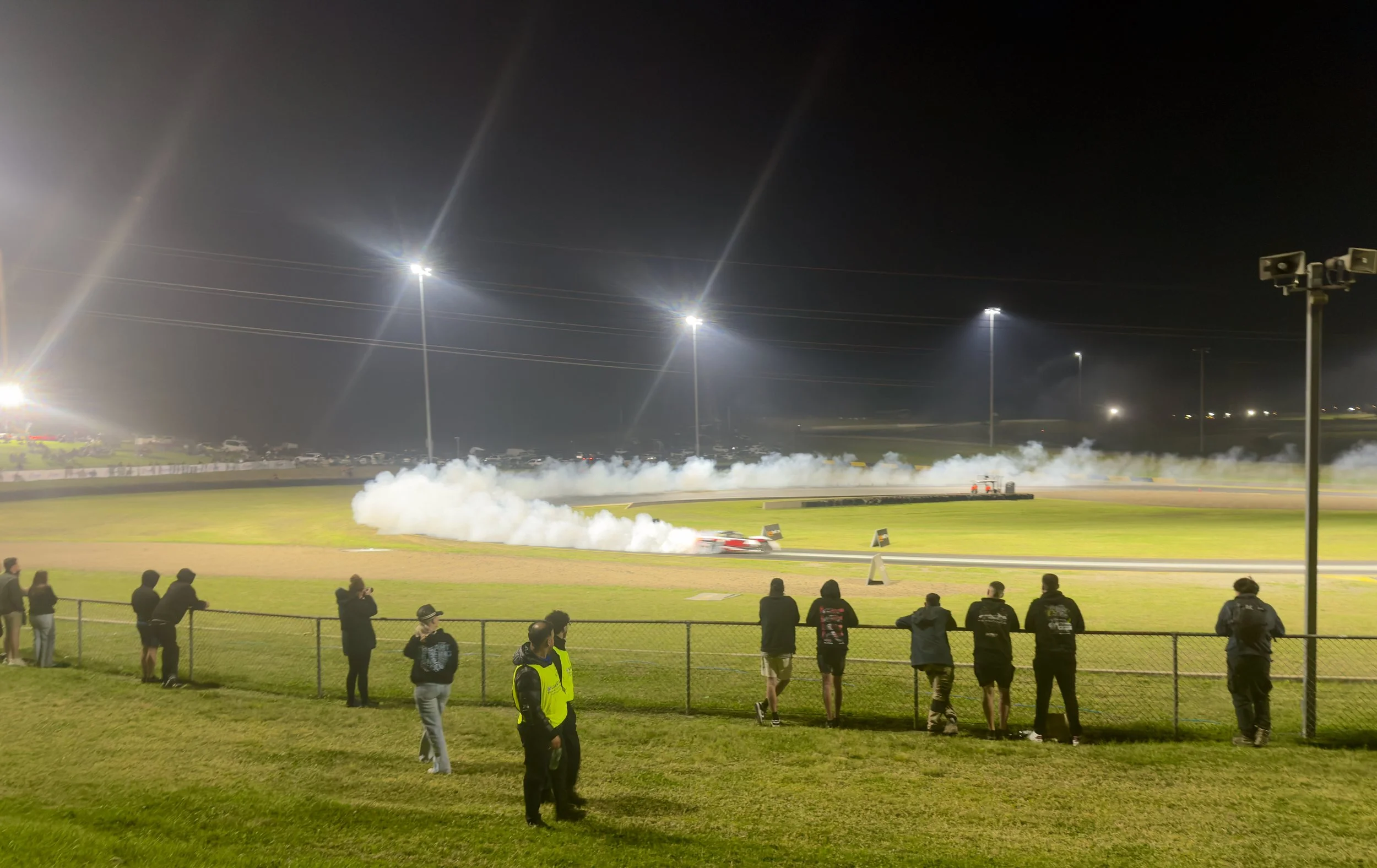
The drifting used only one section of Sydney Motorsport Park rather than the entire circuit. A short sequence of corners led into the large bend before the main straight, giving the cars enough room to build speed, turn sideways and fill the final part of the course with smoke.
The proper view was from a grassy hill overlooking those corners. Reaching it required a surprisingly long walk from the pits, perhaps close to a kilometre. By the time I arrived, probably around 7.20 or 7.30, I had missed some of the early battles.
I had also made a practical decision without quite realising it. Once I had walked that far and found a place on the grass, I was unlikely to return to the pits.
There were chairs, blankets, gazebos and small camps spread along the hill. Some setups were extensive enough to suggest that the people using them had been there for much of the day, although I could not know that for certain.
The crowd was substantial without being uncomfortable. There was room to move and space to sit without feeling squeezed against the people around me. Families mixed with couples and groups of friends across a broad range of ages.
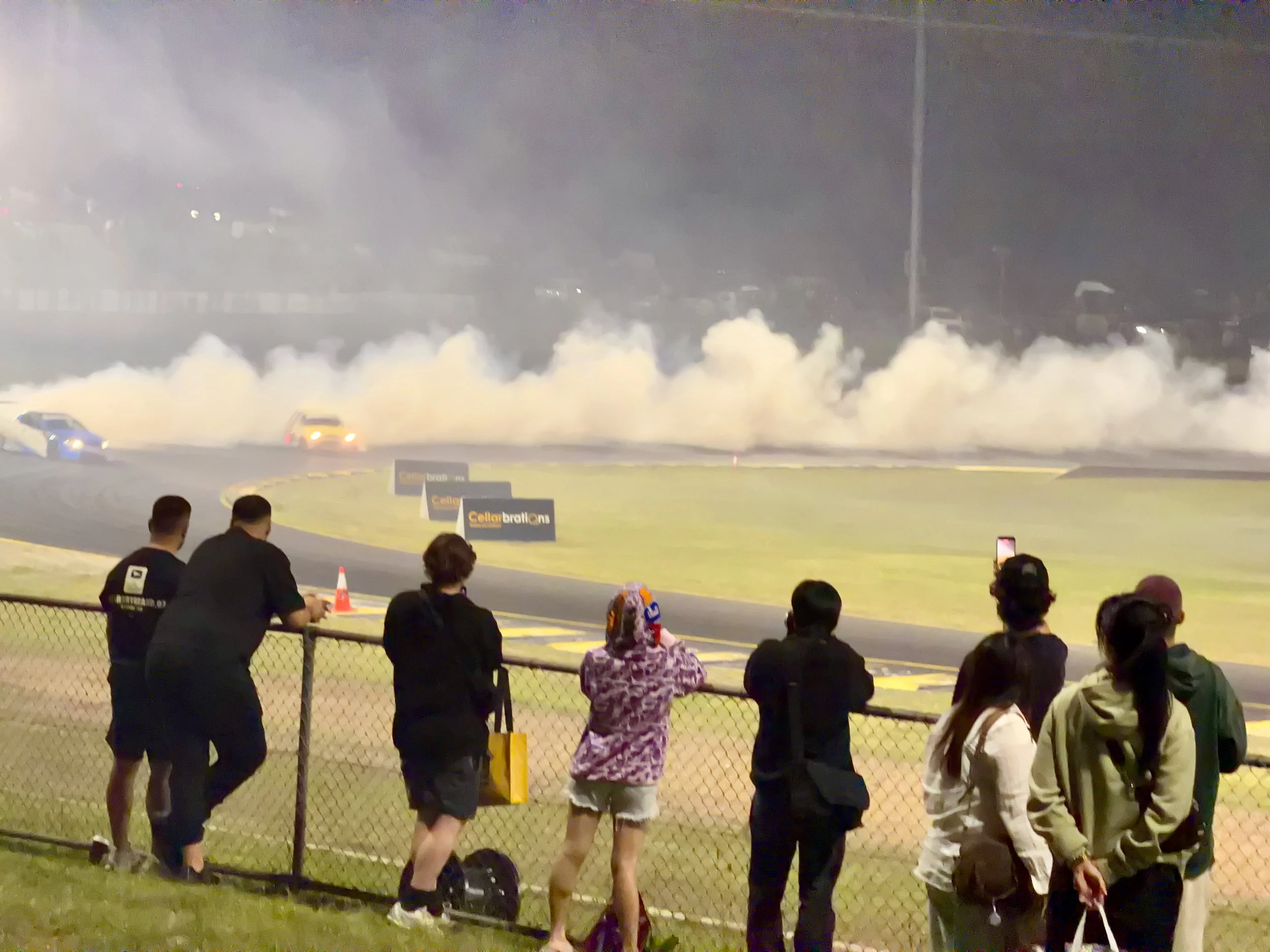
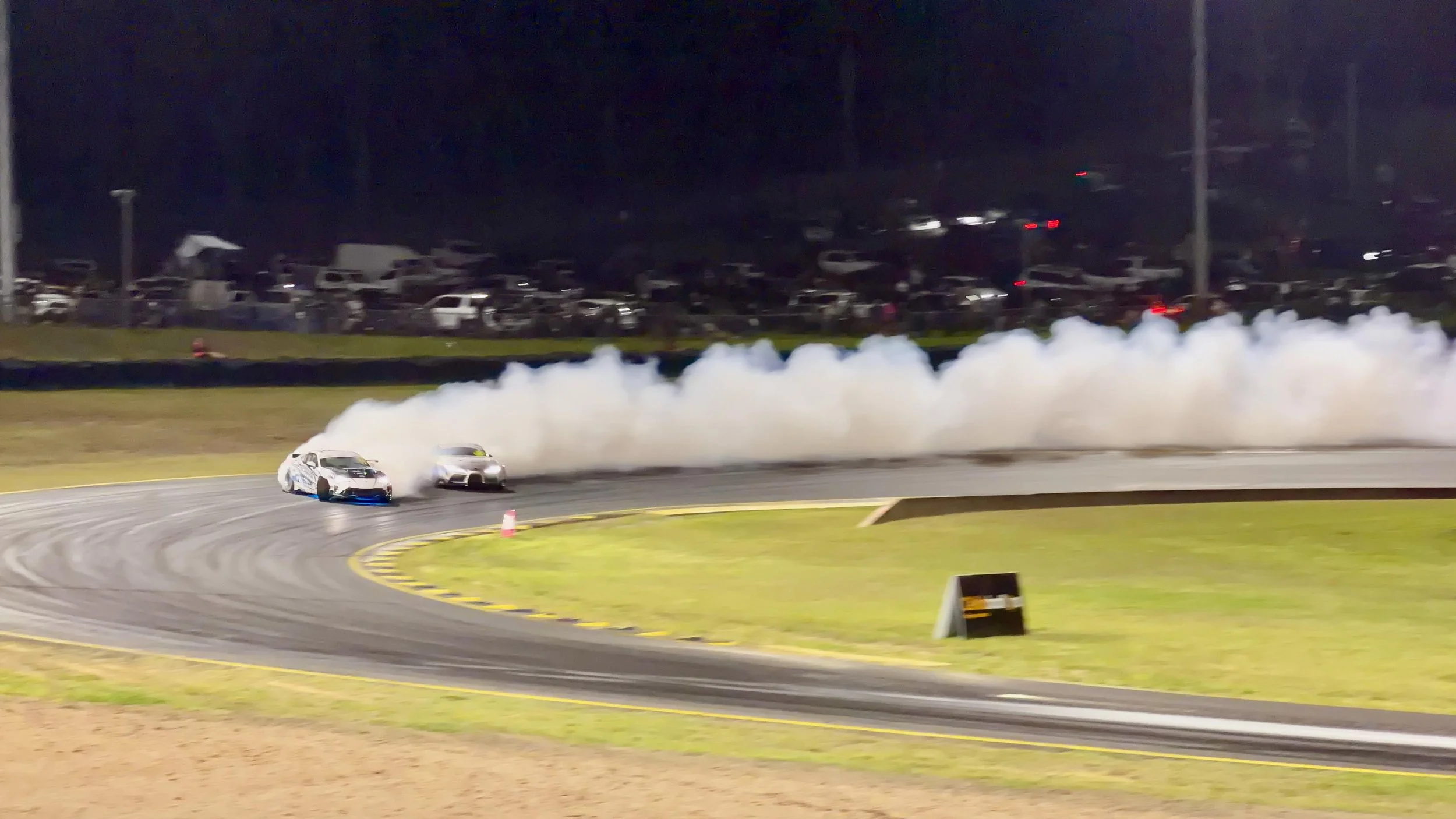
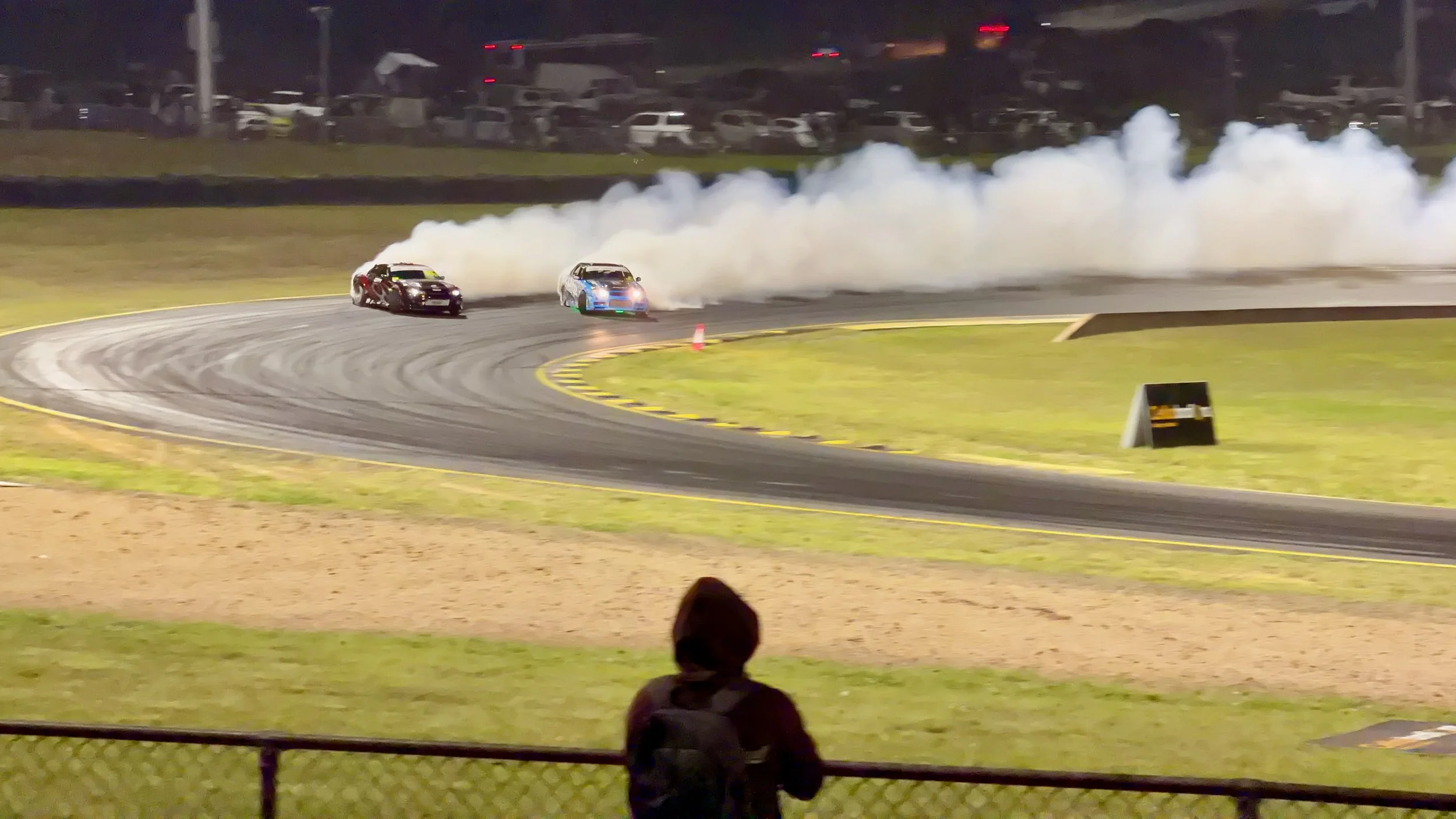
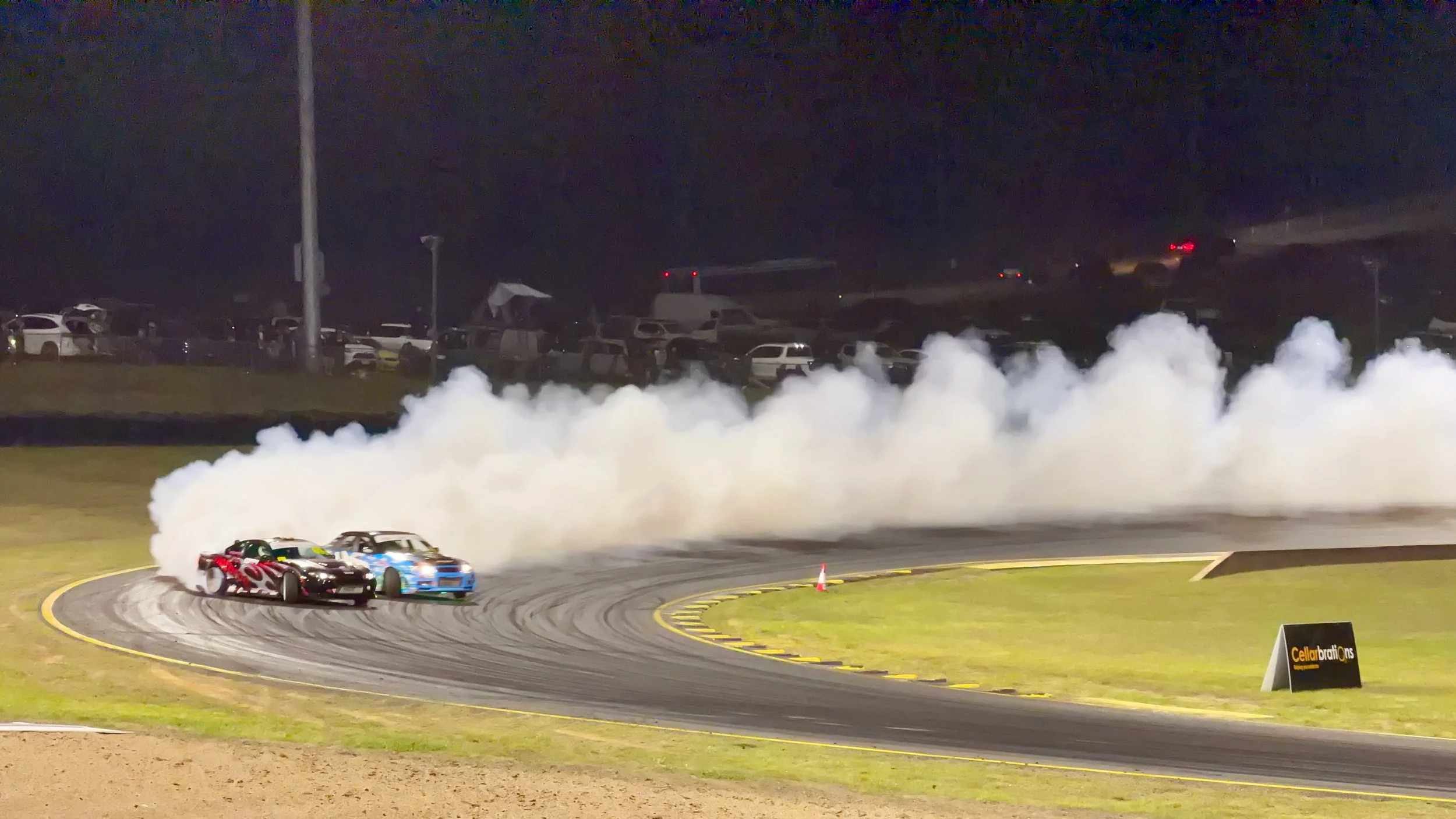
The drifting itself arrived in intense bursts. Two cars would enter the course close together, already beginning to turn sideways. The lead car established the line while the chase car tried to remain near it without making contact. They swept through the corners with their engines at full noise and their rear tyres producing clouds that hung over the track.
When it worked, it was spectacular.
The sound was enormous. These were cars tuned close to the limits of what their engines and drivetrains could withstand, repeatedly accelerating, braking and changing direction while the drivers balanced the throttle, steering and handbrake. Even without understanding the finer details, the control involved was obvious.
Then there was the smoke. With little wind, it did not disappear quickly. It stayed above the circuit, carrying the smell of burnt rubber across the hill and sometimes making it difficult to see the far side of the track. Headlights appeared through it before the cars themselves became clear, adding another layer to an already theatrical image.
That image is what I will remember: two cars travelling around the corner together, close enough to appear connected, both sideways and almost hidden inside the smoke they were creating.
The competition was more difficult to follow.
Each pairing involved two runs, with the cars exchanging the lead and chase positions. Judges assessed what happened, although the commentary did not explain every part of the scoring. Sometimes the result seemed clear. A car might leave the track, fall too far behind or suffer a mechanical problem. Other battles were close enough that I had little idea who had won.
The commentators were excellent. They explained the results, identified mistakes and continued talking through almost every interruption. Their commentary appeared designed partly for the television broadcast, which meant people on the hill could hear references to pictures and replays we could not see.
When the judges could not separate a pair, they called for “one more time.” Both cars returned and repeated the battle, although occasionally even that did not appear to make the decision much clearer.
The brief runs were separated by longer periods of waiting than I had anticipated. Broken-down cars had to be removed and debris collected from the circuit. One vehicle left a long trail of oil across the track, producing a delay of perhaps fifteen or twenty minutes while the surface was cleaned.
The commentators kept filling the silence, but the cars themselves might appear for only a few seconds before disappearing again. Drifting offered a concentration of noise and movement followed by stretches in which very little happened.
I lay back on the grass several times and used my bag as a pillow. I could still see parts of the track without sitting up. On one occasion, I closed my eyes for about ten minutes.
I was comfortable. I was also bored.
It was an unusual way for me to watch motorsport. At cricket I might settle onto a grassy bank for several hours, knowing the event will unfold slowly. Here, the activity was explosive but fleeting. The sport kept moving between its most spectacular form and complete inactivity.
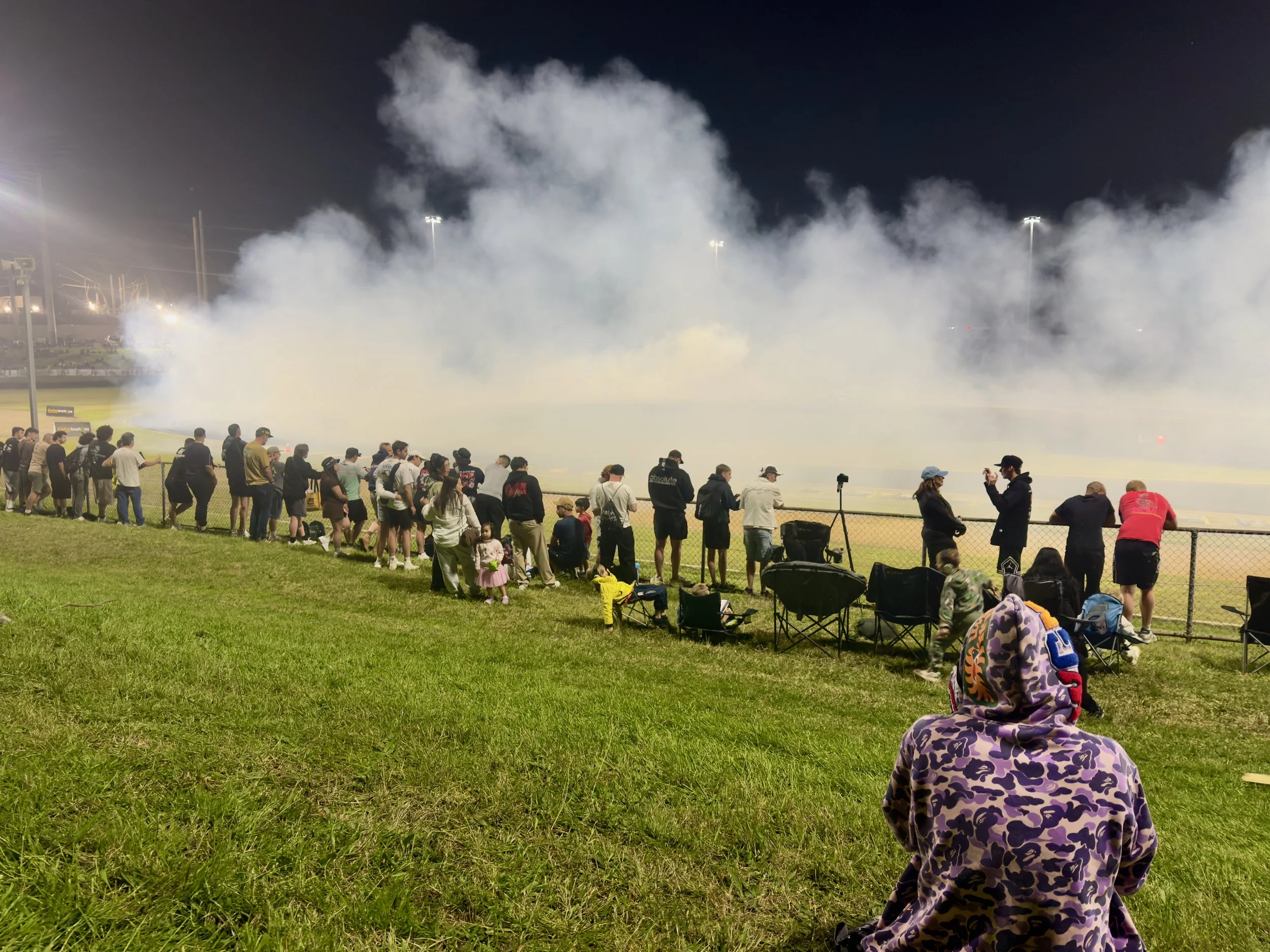
The warmth of the day had lasted into the evening, and I had arrived wearing a T-shirt. As the temperature dropped, jackets appeared around the hill. I put mine on and stayed where I was.
By then I understood more about drifting than when I arrived. I could appreciate the difference between the lead and chase cars, the difficulty of staying close without contact, and the skill required to keep a powerful car balanced while its tyres were spinning.
The paddock had interested me in a different way. The modified cars, unusual engine swaps and open pits offered almost limitless detail for someone interested in machinery. If the hill had been closer, I might have returned there and spent more time examining the cars, occasionally watching the competition on one of the screens.
Instead, I remained on the grass until the racing finished shortly before ten.
I was glad I had come. Drifting was no longer simply something I had seen in films or during brief segments on television. I had experienced the noise at full volume, smelt the tyres and watched the smoke stay suspended above the circuit. It still had not grabbed me.
If drifting appears as part of another motorsport event, I will happily watch it and may spend more time examining the cars beforehand. But I cannot imagine travelling specifically to another drifting competition.
Near the end, another pair entered the final corner. Their engines rose above the commentary as both cars turned sideways, one following closely behind the other. Smoke spread across the track until only their lights and outlines remained.
For those few seconds, drifting looked exactly as it had always promised it would.