the better end
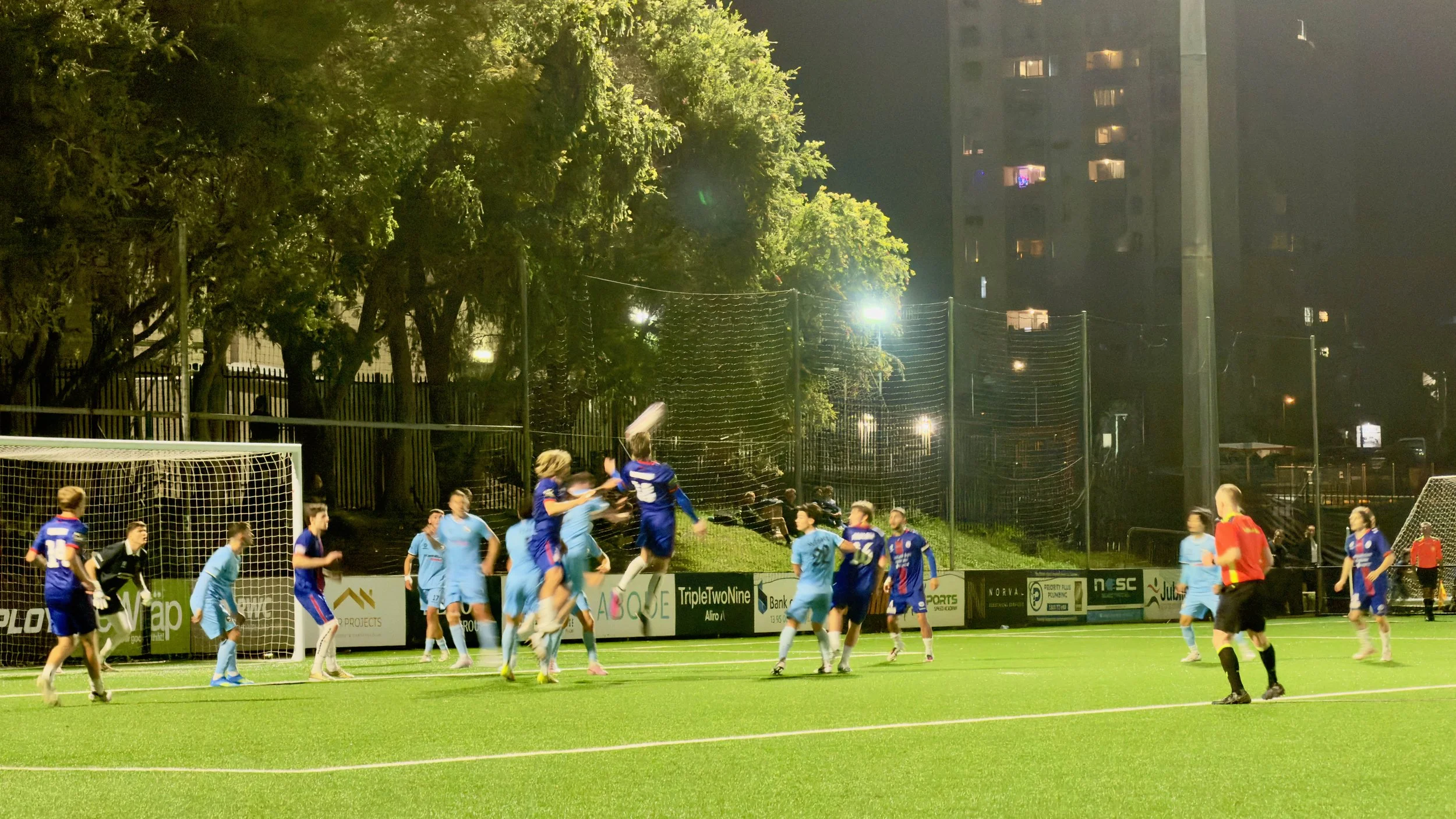
I noticed the game because it was on a Wednesday.
It was also a final, and possibly Manly United’s last game of the season. A midweek final was an extra chance to see them, and Miranda was easy enough to reach from work. Getting home to Hornsby afterwards was the problem. Even if the game finished on time, I would be looking at a late trip and a school-night arrival well after midnight.
So I booked a cheap room in Hurstville instead. It was a practical solution: a short Uber after the game, then an easy train into work the next morning. It also made the trip feel slightly more deliberate. I was not just fitting in a game and trying to escape afterwards. I was staying on this side of Sydney for the night.
Walking from Miranda station, Seymour Shaw Park announces itself. The floodlights sit above the low buildings and side streets around the shopping centre, bright enough to make the ground seem closer than it is. I still had to walk around the block to find the entrance, but the lights had already done their work. There was something happening there.
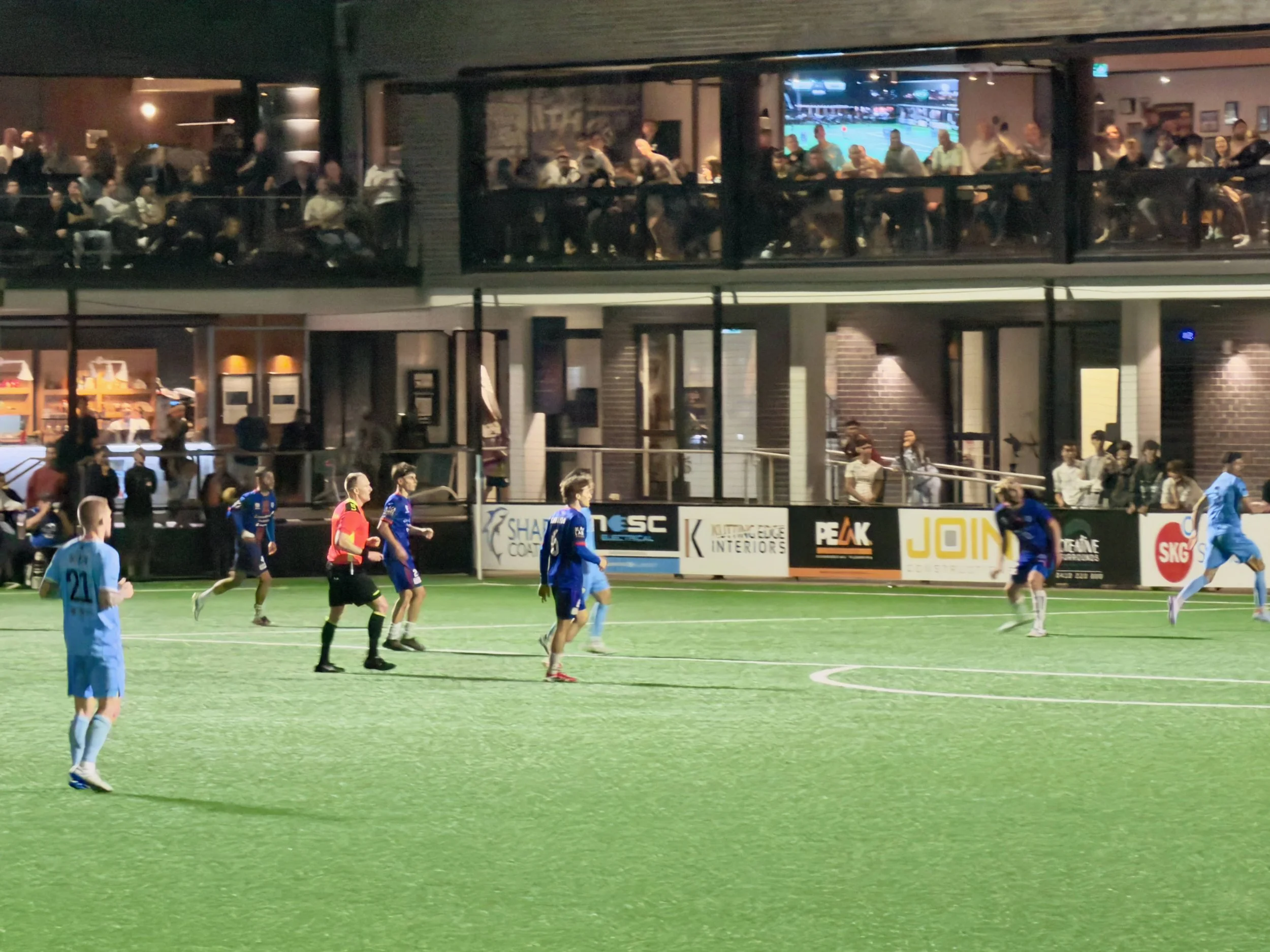
A short queue had formed at the gate. I arrived about 15 or 20 minutes before kick-off, paid $15, and found the ground already busy. Players were warming up under the lights. The grandstand was filling. The food and bar area were packed enough that I abandoned my vague plan to get something and kept walking.
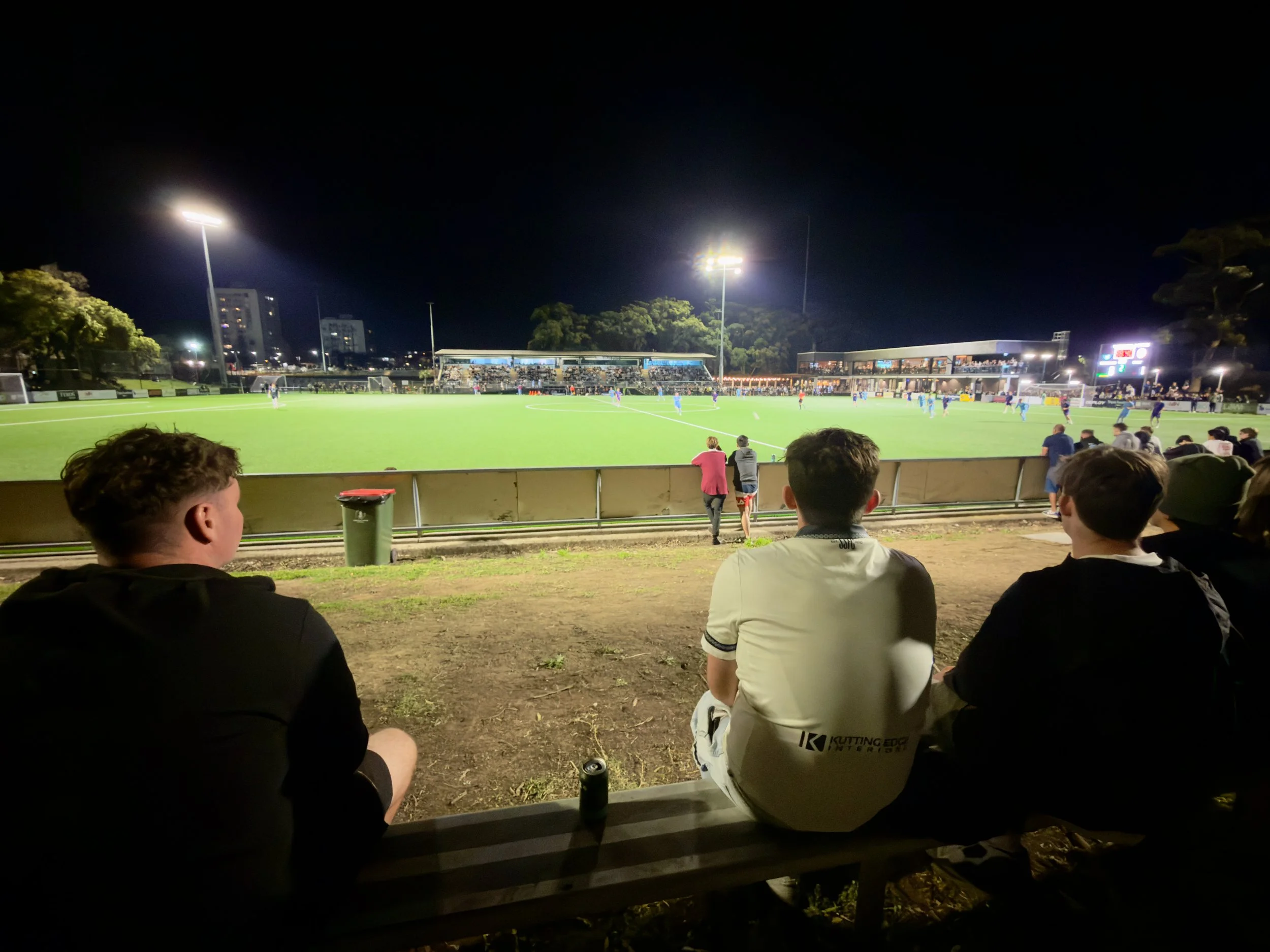
It was a warm night for the start of September, with the leftover heat of a 26-degree day still in the air. Winter had not disappeared, exactly, but it had been pushed into the background. The grandstand looked pleasant enough, but I preferred the open seating along the far side: a few rows of benches on a grass embankment, trees behind them and the sky still open above.
I found a seat near halfway and expected that to settle the question of where I would watch from.
It did not.
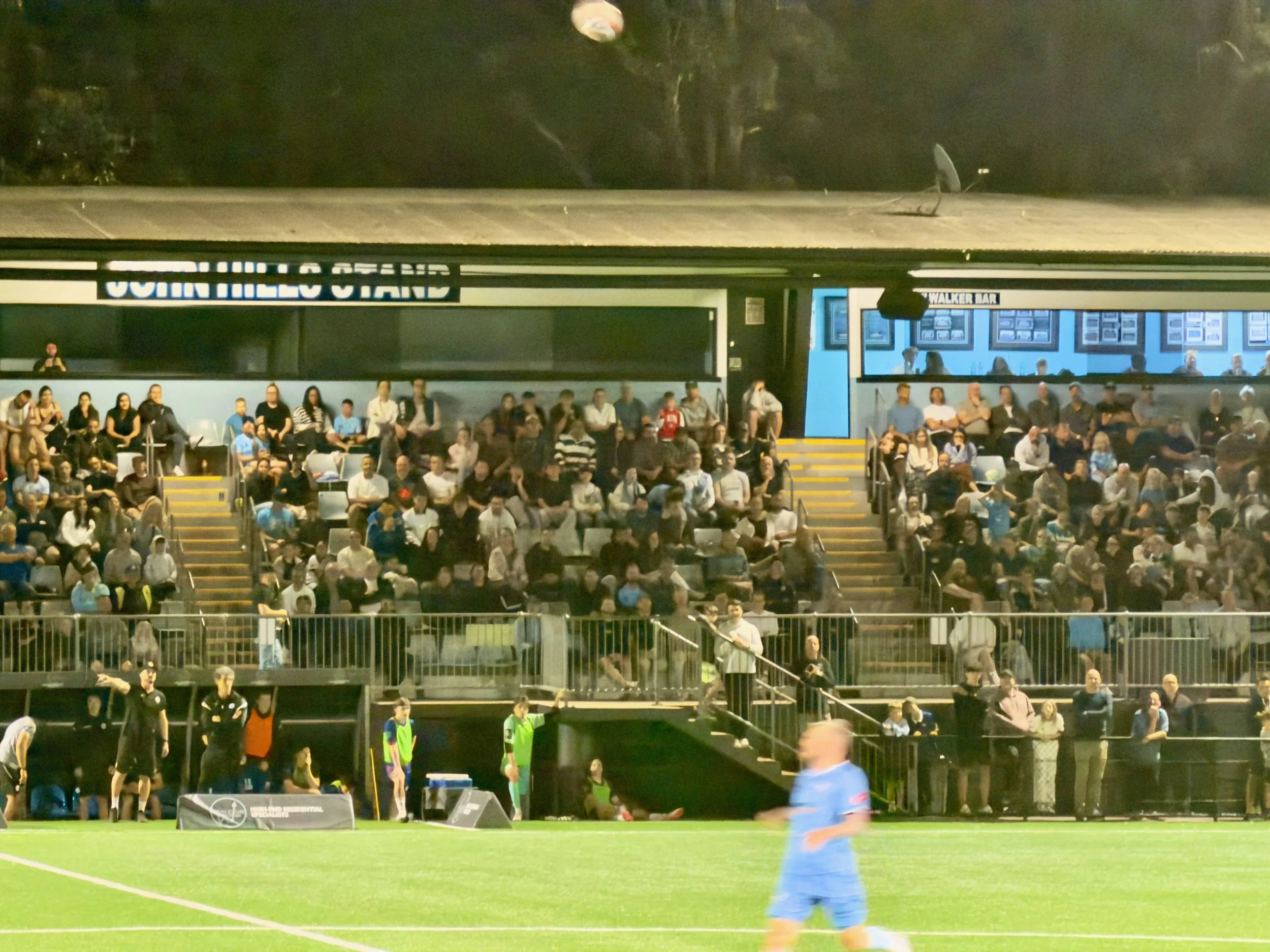
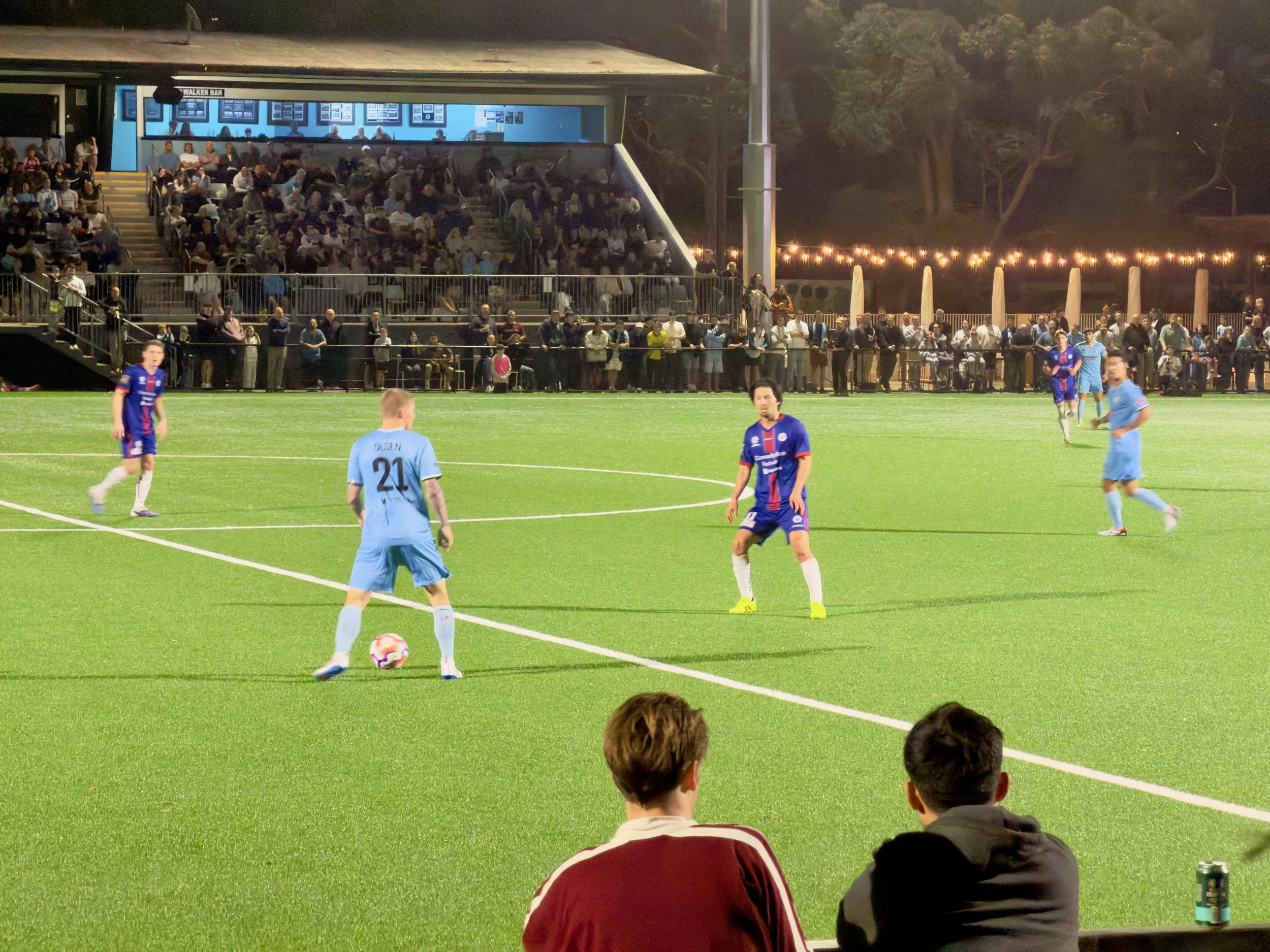
The crowd kept arriving. It had the sort of sound that makes a ground feel busier than it may be on paper: constant conversation, people greeting each other, calls across the embankment, the noise growing without anyone seeming to be organising it. Sutherland had home support in the obvious sense. When Manly did something good, there was little response. When Sutherland attacked, the whole place seemed to lean in.
What I kept noticing, though, was how little of that support was visible in the usual way.
At most football grounds, club colours do much of the early work. You can see where people belong before they speak. Here there was very little merchandise and not much obvious Sharks kit. Most people were dressed for an ordinary warm Wednesday night. Yet this was not a detached crowd that had turned up because a final happened to be on nearby. There was plenty of football talk around me. People knew the players, argued about decisions and reacted loudly throughout the match.
The lack of visible allegiance made the allegiance itself more noticeable.
Manly were under pressure early. Their usual goalkeeper was absent, replaced by someone who looked much younger. The home crowd noticed immediately. Every time the ball came near him, people behind the goal found another reason to make noise. “Wanker” was the chant they returned to most often.
Sutherland kept attacking. Manly blocked shots, cleared the ball when they could and occasionally broke forward quickly enough to threaten at the other end.
Manly scored after the break. The ground did not quiet so much as tighten. Sutherland still attacked, earned corners and kept producing moments that made the crowd rise or groan, but the noise had changed. There was more urgency in it now.
Then, in the 90th minute, Sutherland found an equaliser off yet another corner.
That part was loud. But the more unusual thing had been happening well before it. People had begun moving around the ground.
Seymour Shaw makes this possible in a way many grounds do not. There are places to watch from all four sides: the grandstand, the small area behind one goal near the club building, the open seating along the far touchline, and another grassy bank behind the opposite end. People were not fixed in one place for the night.
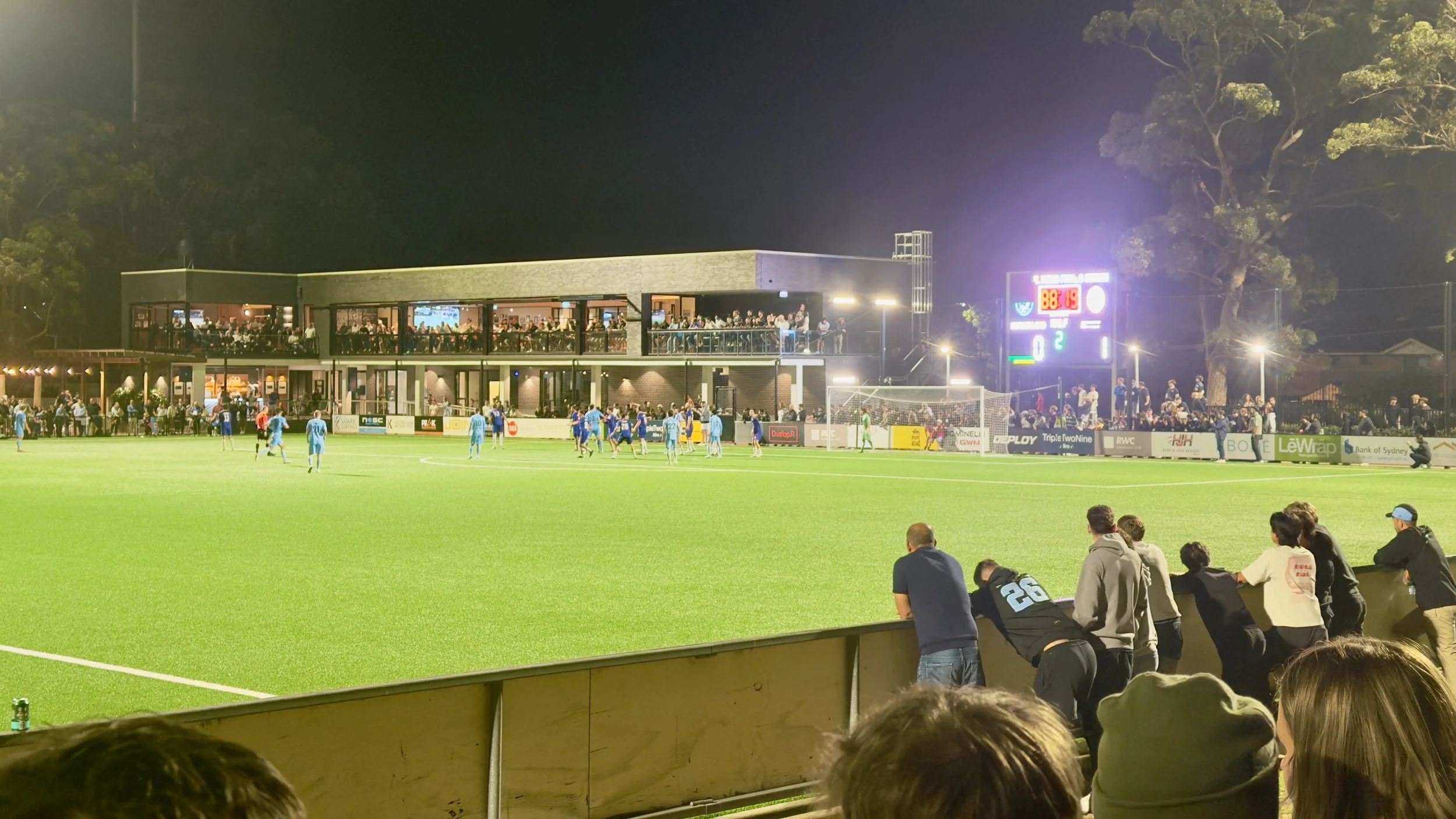
Some gradually drifted towards the end where Sutherland were attacking. Others moved much more quickly. When a corner or a dangerous passage of play began to develop, a group would hurry around the edge of the ground to claim a space behind the goal. A section that had been open earlier would gradually fill, then empty again when the direction of play changed.
Extra time followed the same pattern. Sutherland pushed. Manly held on, then had their own moments. The game had gone on long enough that I had been sitting for more than two hours, and by the break before the second half of extra time I began to think penalties were coming.
The crowd had already started to shift away from the end I thought would be used. I left my seat and went down to the fence.
It was a strategic decision. I wanted to be close if the shootout came, but standing up was welcome and so was a different view after more than two hours in the same seat. There was room at the fence and no reason not to take it.
The shootout came. Sutherland missed their second penalty. Later, another shot struck the post but bounced in, keeping them alive. Manly made all five of theirs, which was enough to win the shootout 5–4.
I was happy, obviously. Manly had won the shootout, and I headed out towards the Uber to Hurstville.
All night, the Sutherland crowd had kept finding the better end of the ground. Before I left work, I had chosen mine: Hurstville for the night.