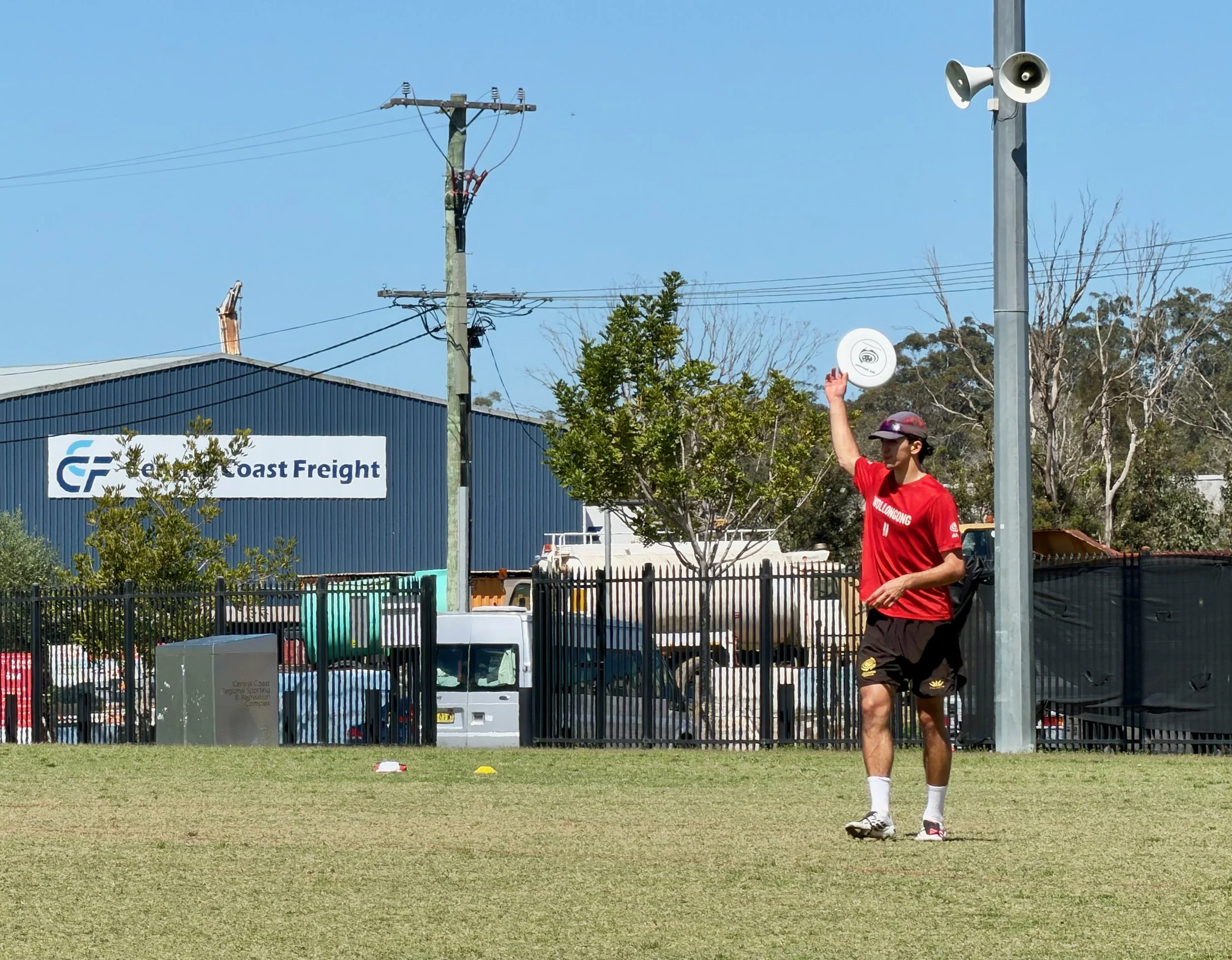

I was supposed to be somewhere else.
I had followed the Roosters women all season and they had made the NRLW grand final. I wanted to go, but there was no ticket just for the women's game. The option was the whole grand final day, including the men's match, at a price I couldn't justify, and by the time it mattered there were no tickets left anyway.
So I went to Tuggerah to watch Ultimate Frisbee instead.
The NSW Mixed Ultimate Championships had been running across the weekend at the Central Coast Regional Sporting Complex. I had never watched Ultimate live before and, despite having ridden past the grounds plenty of times, had never actually been inside them either. There were fields spread across a large section of the complex, games happening simultaneously and teams moving between them throughout the day.
At first, Ultimate seemed reasonably straightforward. Throw the disc. Catch the disc. Do not let it hit the ground or go out. Work your way towards the end zone and catch it there for a point.
That understanding lasted about five minutes.
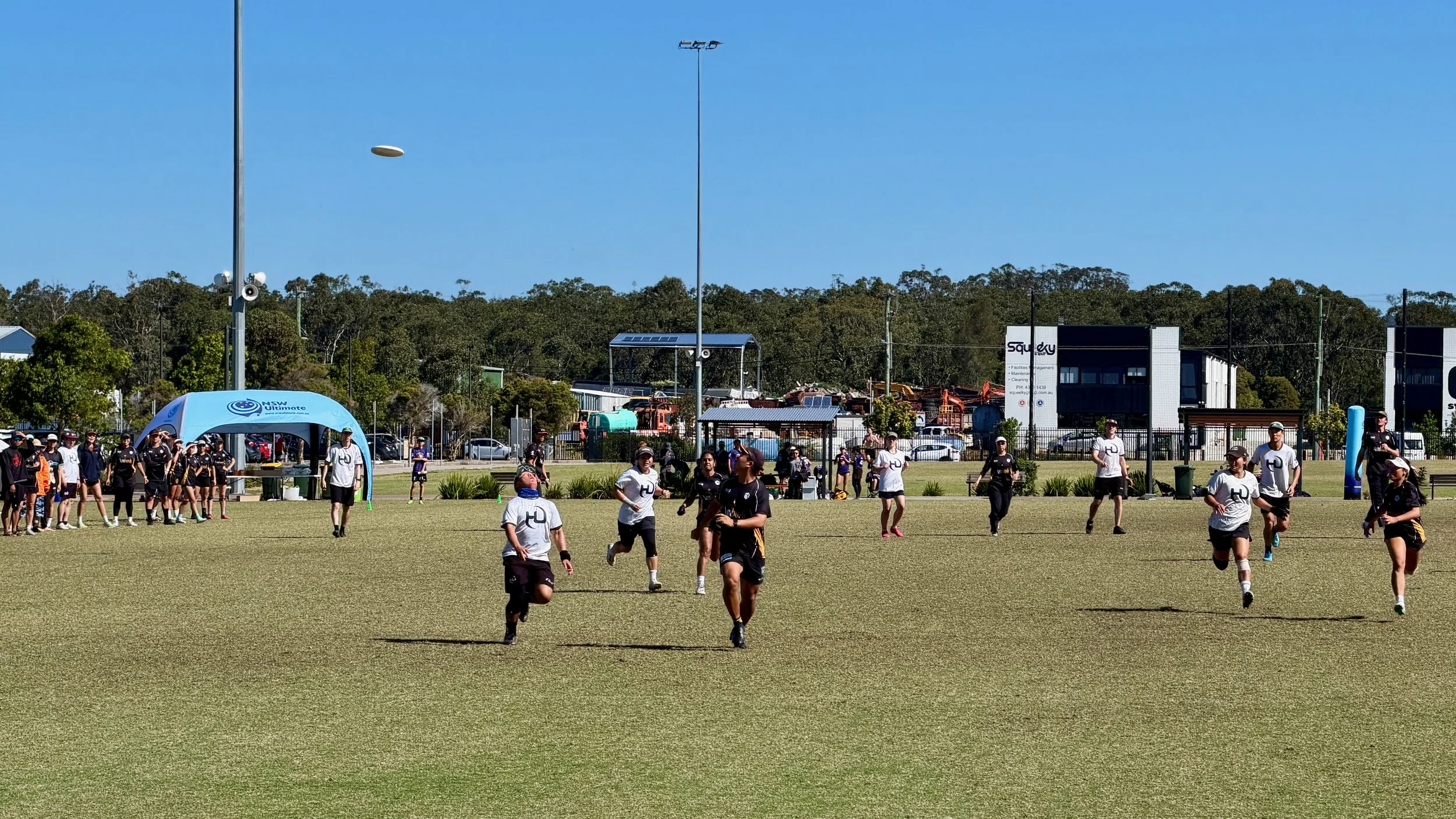
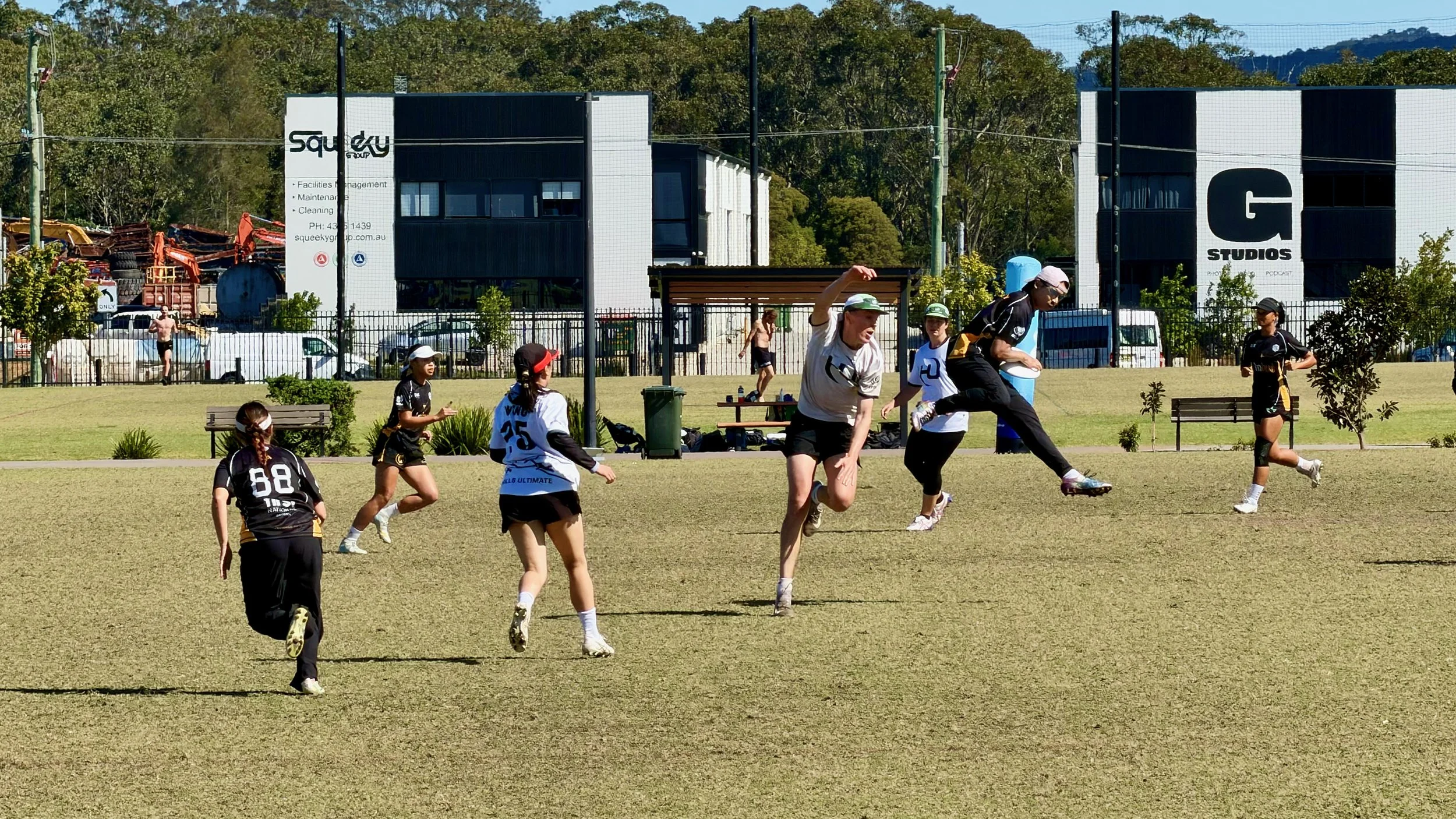
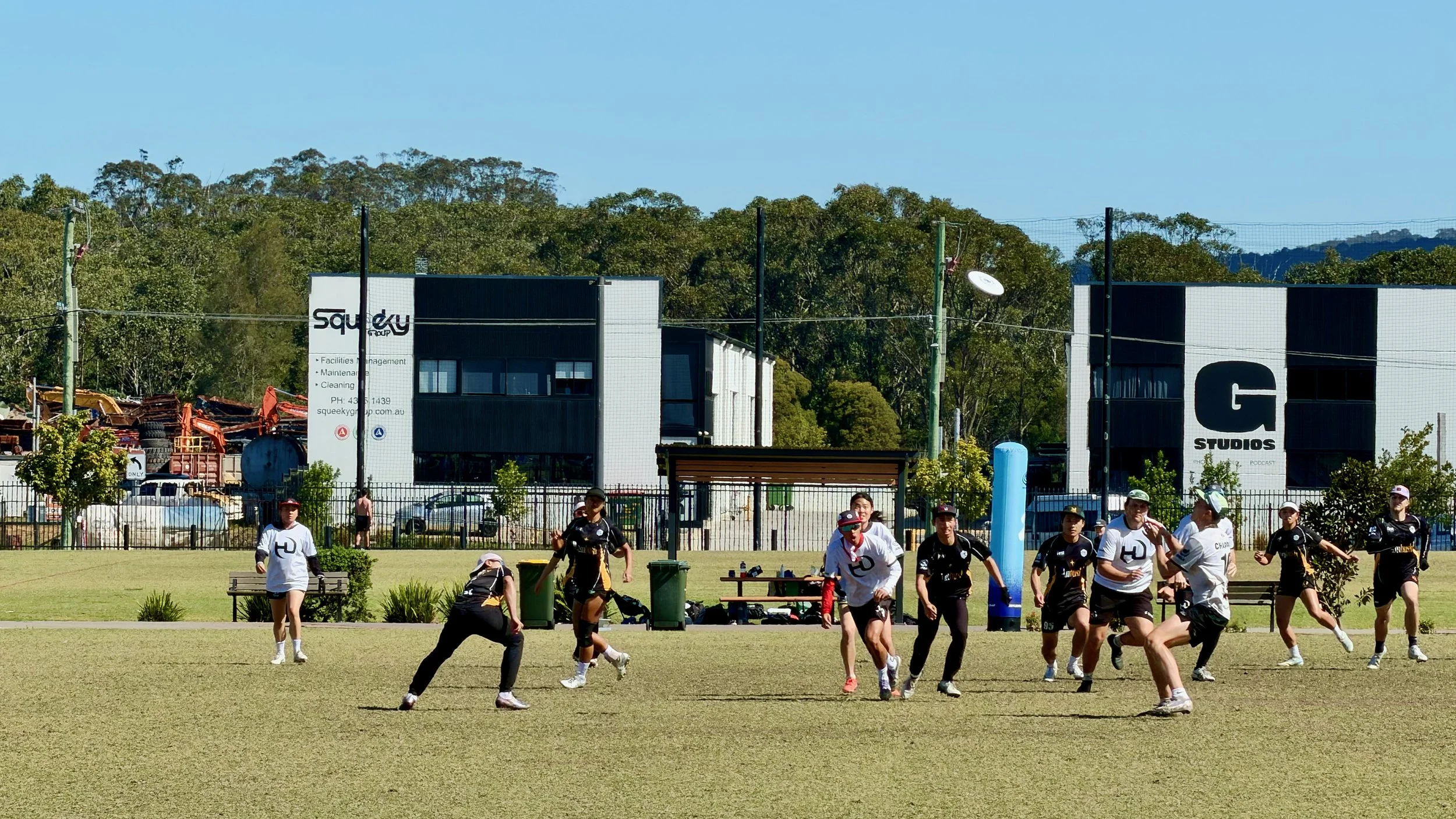
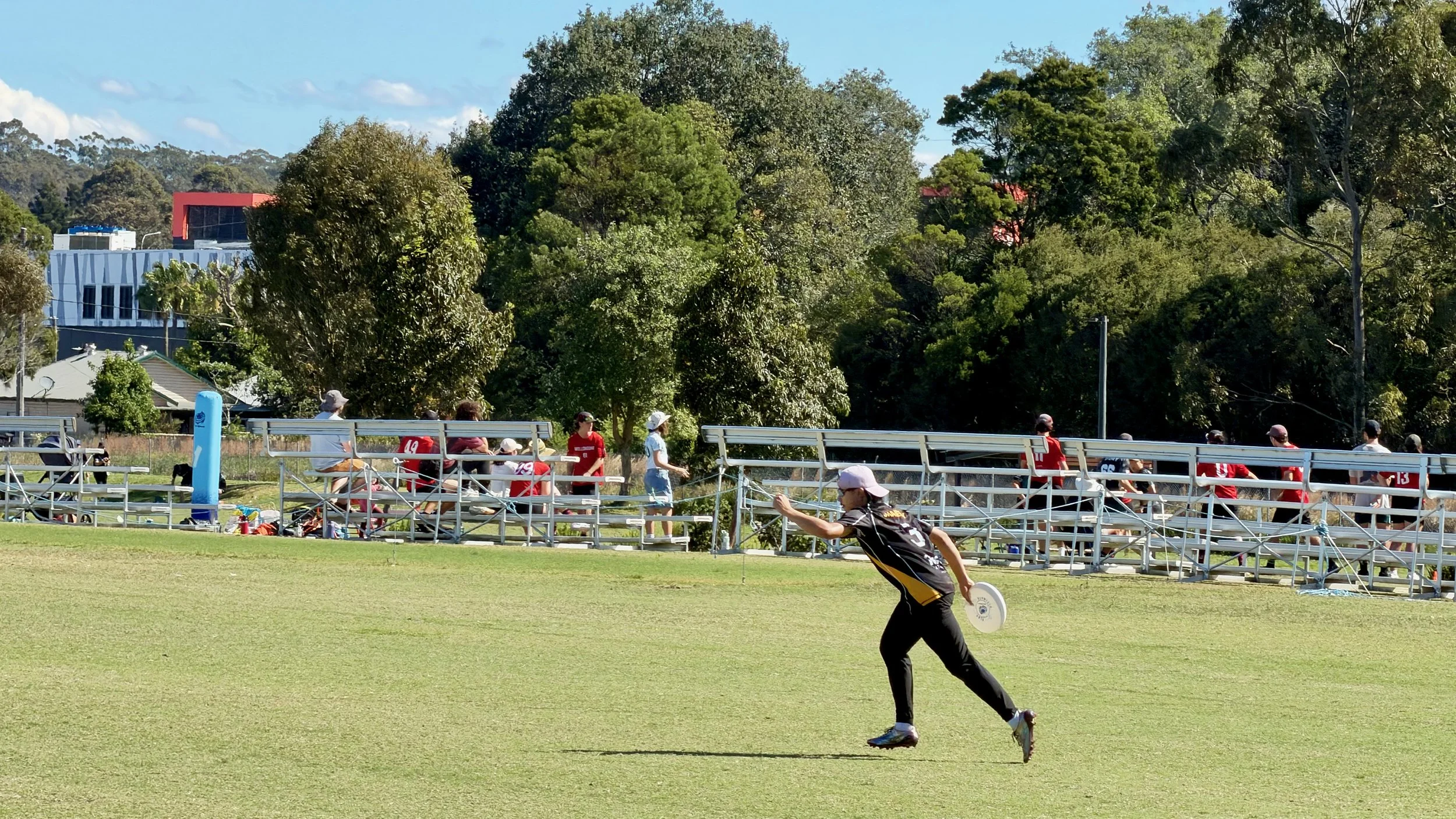
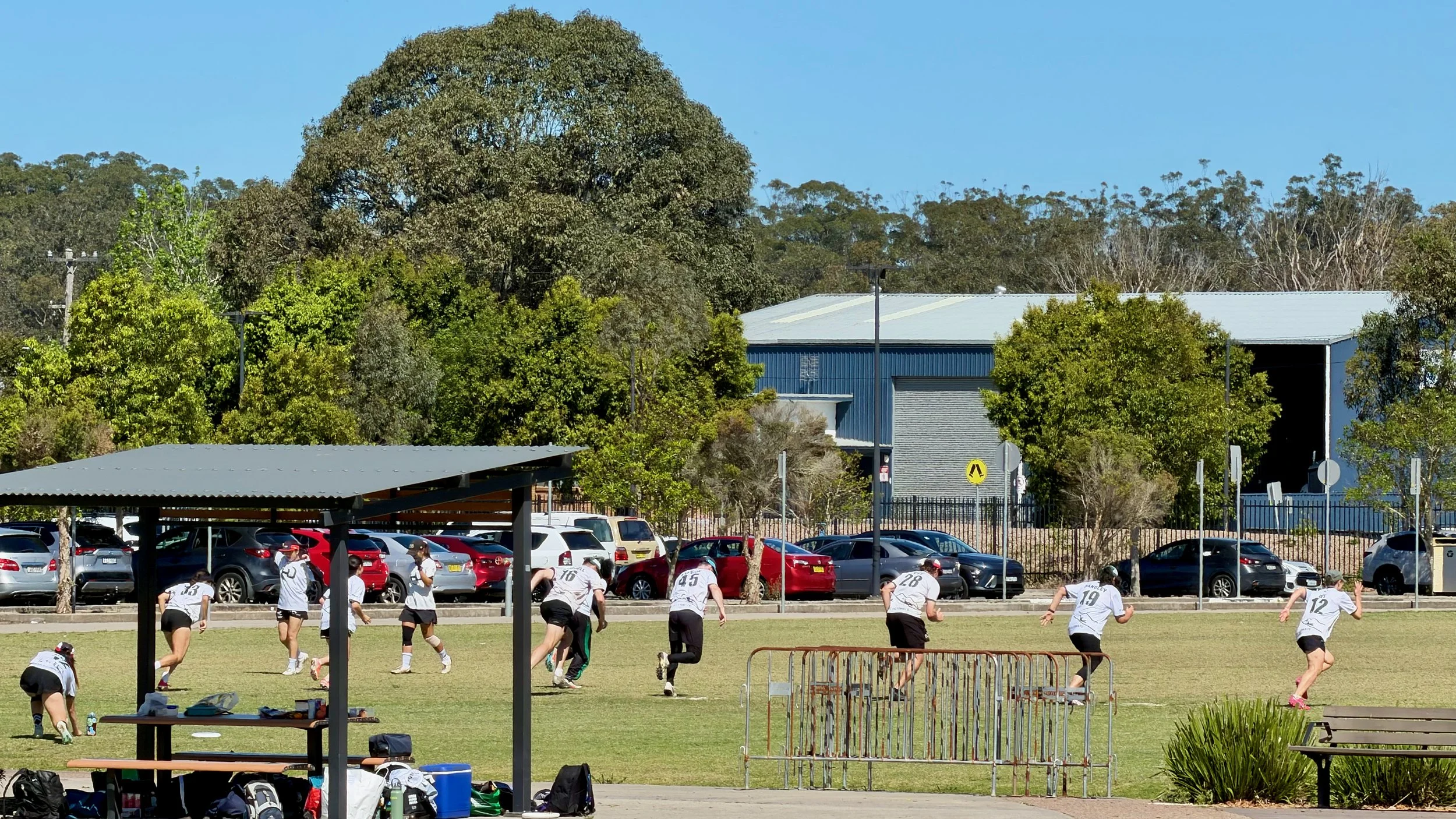
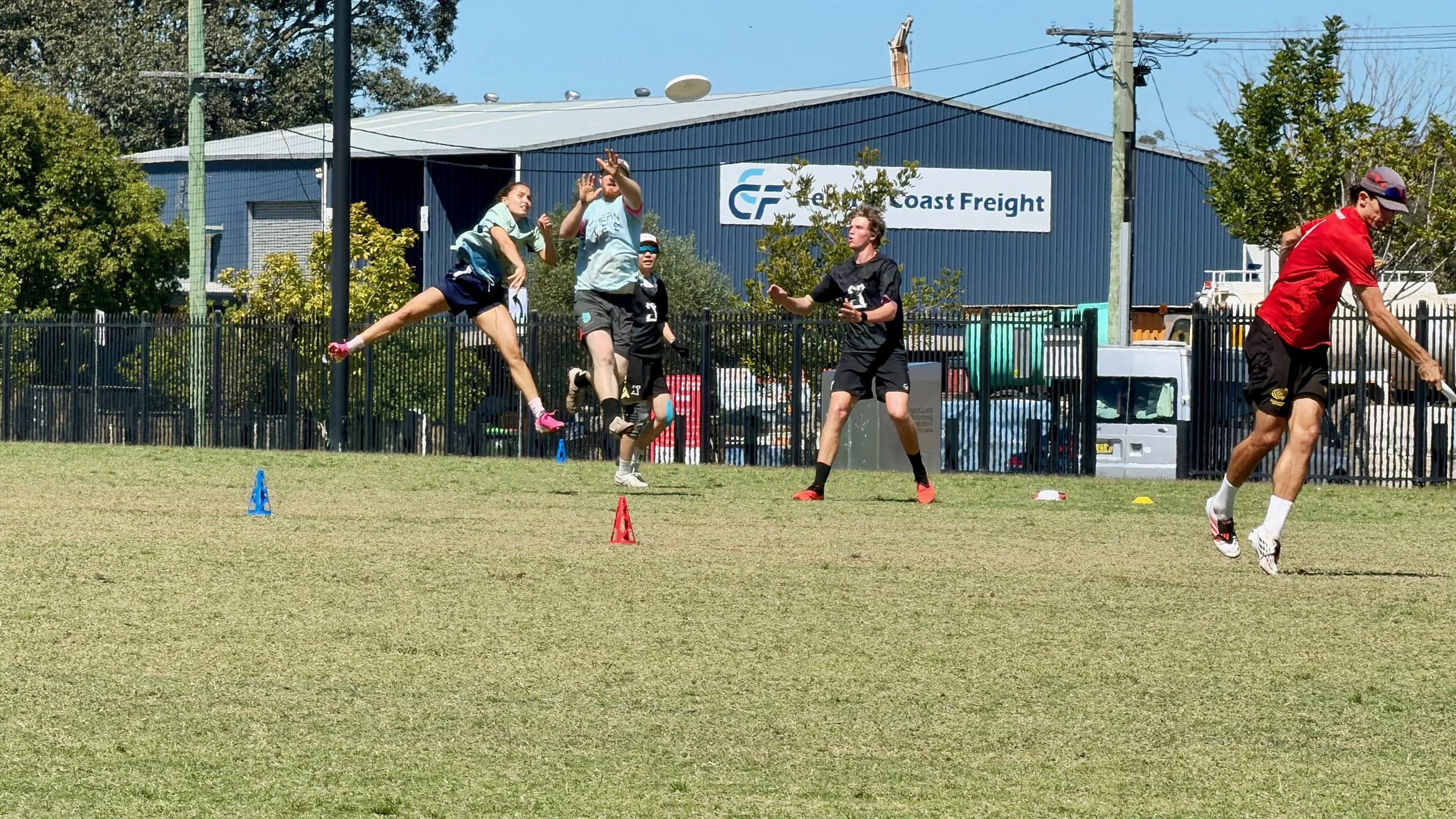
The first thing that complicated it was the speed. When Ultimate is moving, it really moves. Players sprint into space, change direction, throw short passes, launch long ones, jump, dive and contest catches. A turnover can reverse the direction of the entire field almost instantly. For a sport whose casual version involves throwing a Frisbee around a park, the competitive version demanded much more running and physical effort than I had expected.
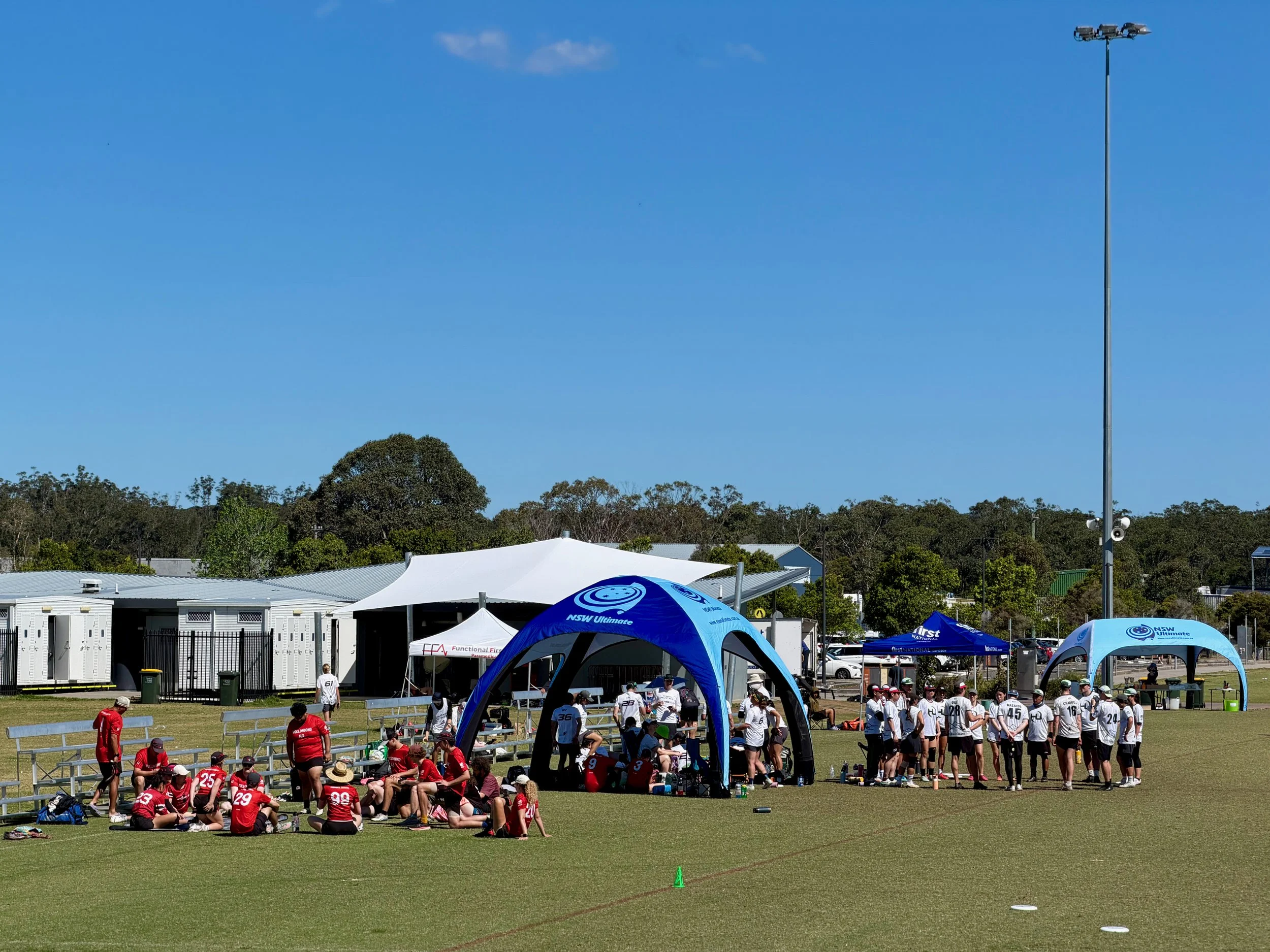
Then a point would finish and almost everything stopped. Players walked off, others walked on, teams talked, people drank water and reorganised. Thirty seconds became a minute. Sometimes longer. Then somebody would finally send the disc sailing downfield and everyone would explode into motion again.
For much of the morning I kept coming back to the same thought. Ultimate seemed to be taking its time to rush.
The contrast made the game harder to follow at first. Whole groups of players could change after a point. I would begin recognising people and then much of the seven on the field was different. Later, after watching how much ground they covered during a point, the changes started making more sense. The pauses were long, but the periods between them were anything but leisurely.
The same thing happened with turnovers. My instinct was that losing possession should create urgency for the other team: pick the disc up and go before the defence can reorganise. Sometimes that happened, and a quick restart could suddenly have everyone running in the opposite direction.
Other times somebody reached the disc and waited.
Early in the day I found that strange. By the fourth game, I was watching the players away from the disc and beginning to understand what the pause might be buying them. If everyone was still scattered from the previous play, immediately starting again did not necessarily seem useful. Waiting allowed players to move, positions to form and space to appear.
That was probably the biggest change in how I watched the sport. I started the day watching the disc. By the end, much of the interesting part was happening somewhere else.
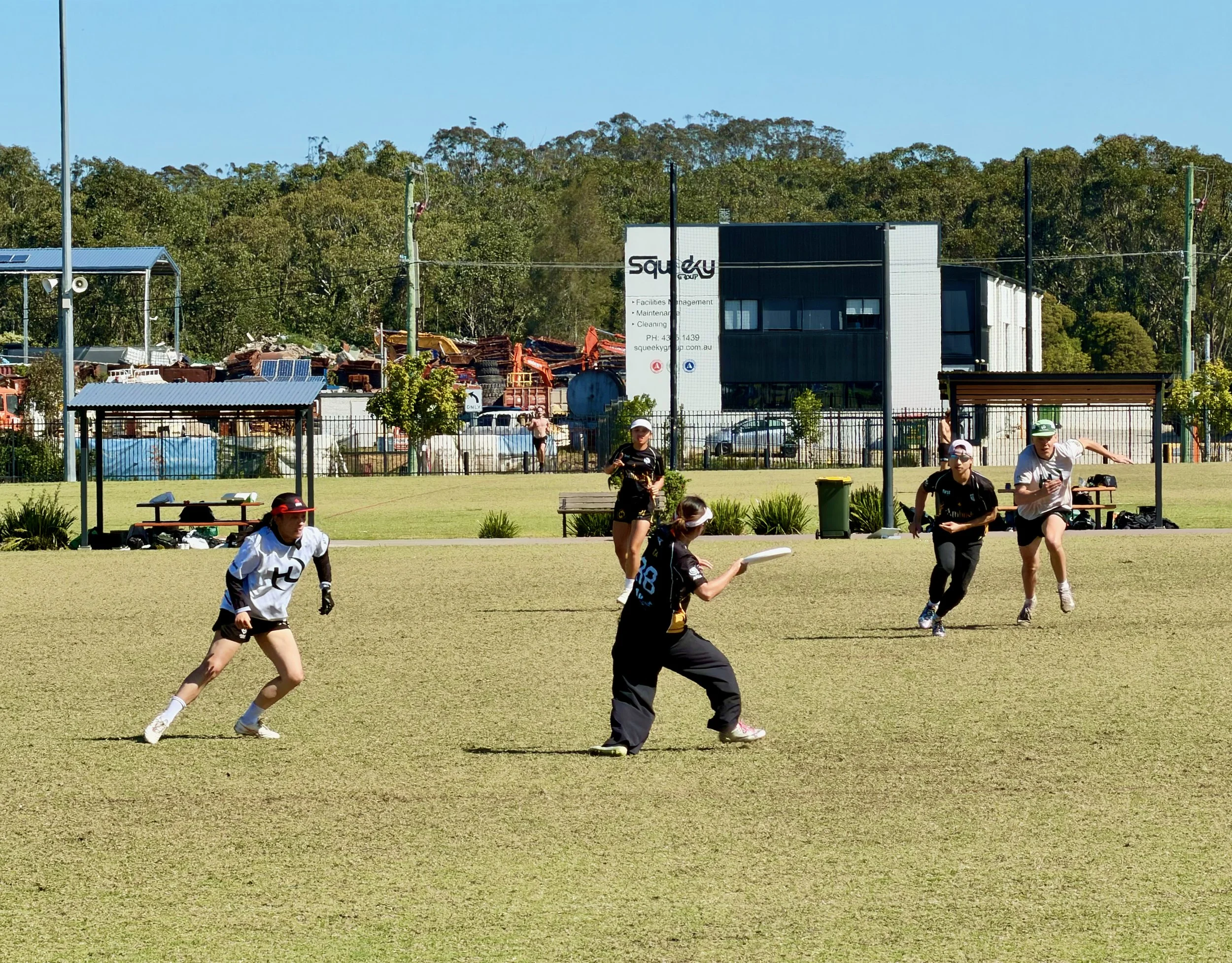
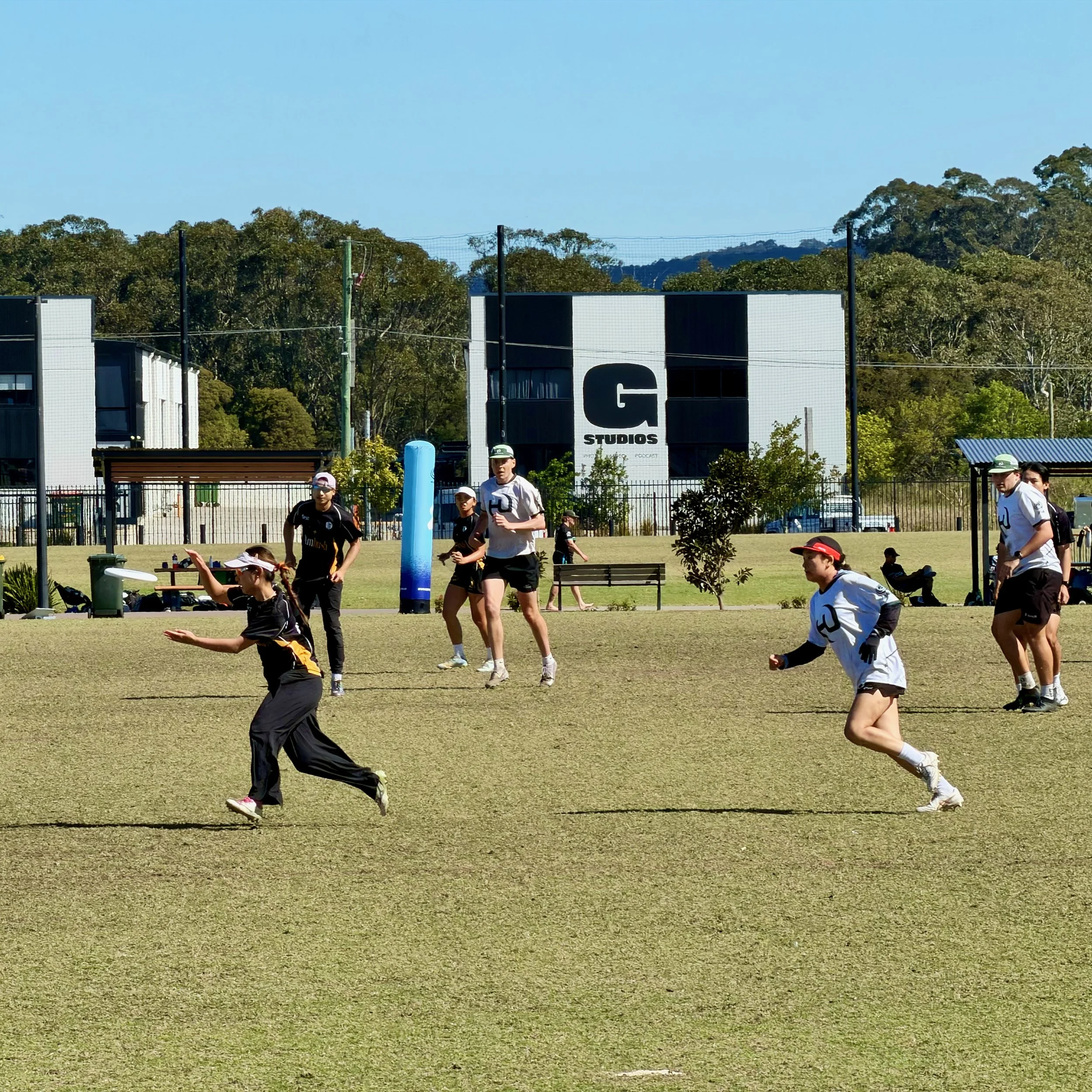
A player who had been behind the disc could cross through the play and suddenly become the furthest person forward. One runner moved into a space while another cleared it. Sometimes somebody standing still appeared to be doing as much useful work as someone sprinting, simply by occupying an area or taking away a route.
Near the end zone, even the obvious solution could become a problem. Filling the scoring area with attacking players did not necessarily make scoring easier. Sometimes the better option seemed to be pulling people away from it, moving backwards and recreating enough space for somebody to run into.
None of this was especially mysterious once I started seeing it. It was familiar from plenty of other sports. The ball, puck or disc attracts the eye, but much of the game is being constructed by people who do not have it.
Ultimate made that particularly noticeable because the disc itself is so hard not to watch. It hangs, curves, rises and drops, and sometimes remains in the air long enough for an entire contest to develop underneath it.
The wind made that more obvious as the day went on. The morning had already been hot, the sort of bright spring day that felt much closer to summer. Later a breeze arrived and initially felt like relief. By the afternoon it was strong enough to become part of the game.
Throws travelled differently depending on direction and height. Some were kept low and hard. Others were sent on longer curves, apparently using the breeze rather than simply fighting it. Occasionally the disc seemed to have ideas of its own.
The weather had gone from being something I felt as a spectator to something I could see the players calculating.
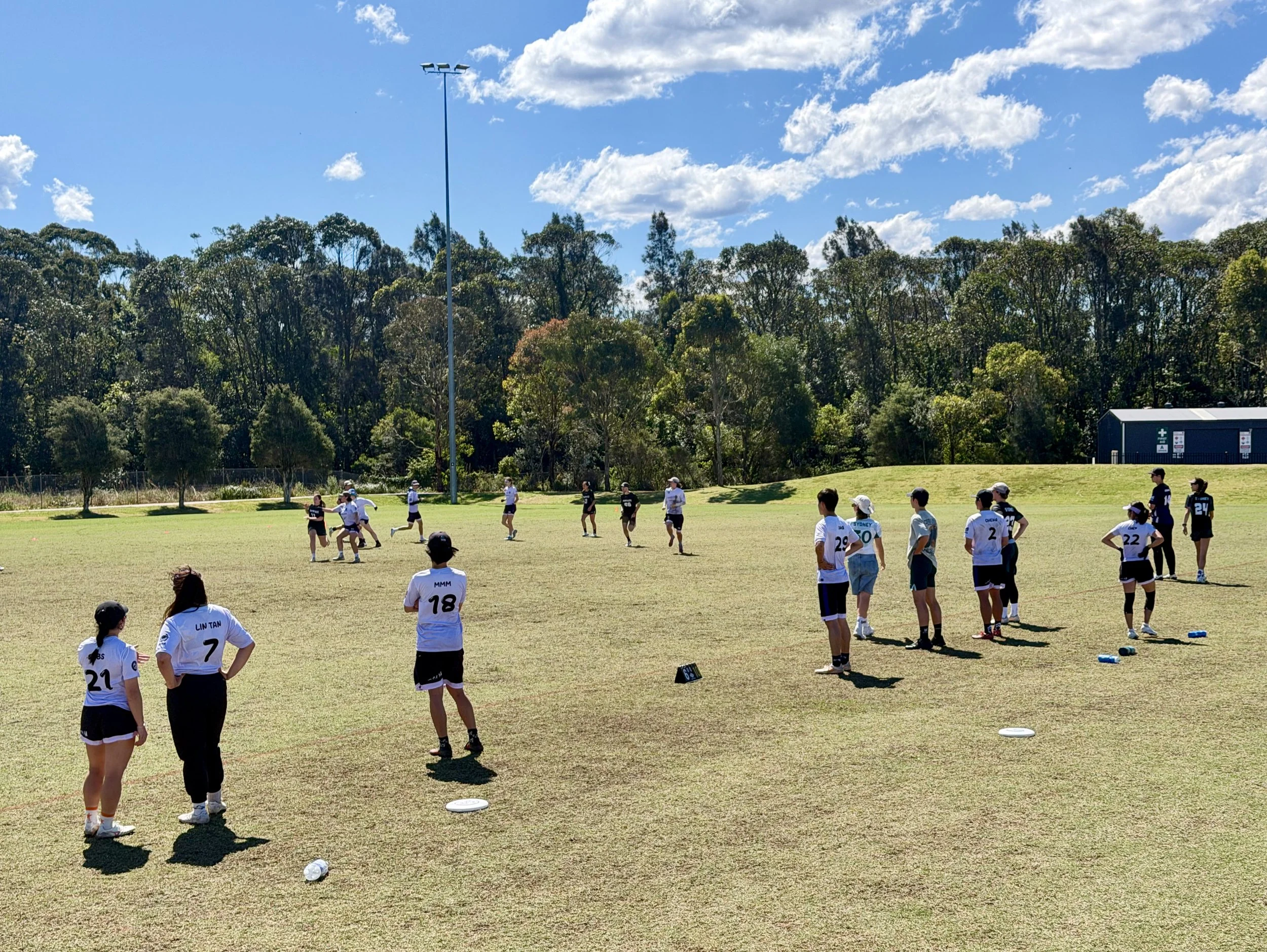
My attention gradually moved beyond the field as well. The players not among the seven on the grass stayed along the sideline, and as the disc travelled from one end to the other many of them moved with it.
Fifteen or more people could migrate along the boundary together, following the play like a tide. Sometimes it was just noise. Sometimes they were celebrating a catch or defensive effort. Sometimes they were calling instructions. When a point finished, players returning to the sideline were often met with clapping and encouragement, particularly after a big leap, a diving effort or a long run to complete a score.
For an event with so many competitors, there were remarkably few people who seemed to be there purely to watch. At times during the morning I felt almost like the only independent spectator. More family members and friends appeared later, but at individual games the obvious spectators could often be counted on one hand.
It created a curious contrast. There were games everywhere, hundreds of people across the complex and constant movement between fields, yet an individual game could still feel surprisingly small.
There was more to watch on the boundary than substitutes. Ultimate is self-officiated, so when something contentious happened there was no referee arriving to make the decision for everyone. The players involved discussed it.
I saw that several times. There were disagreements, but nothing I saw became particularly hostile. Sometimes the conversation extended beyond the incident itself. A captain might talk to a player afterwards. Opposing players or captains might continue discussing what had happened once the point was over.
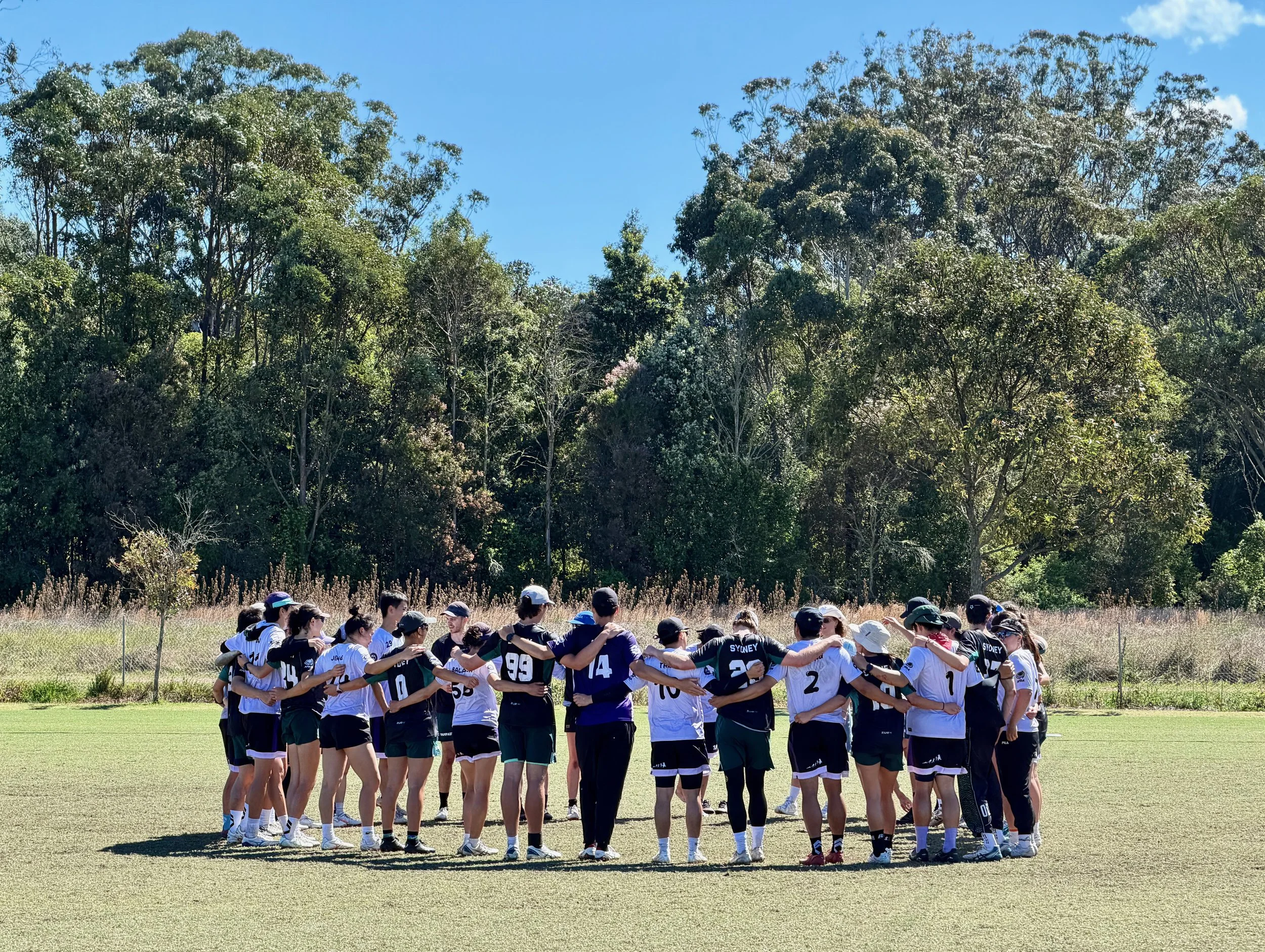
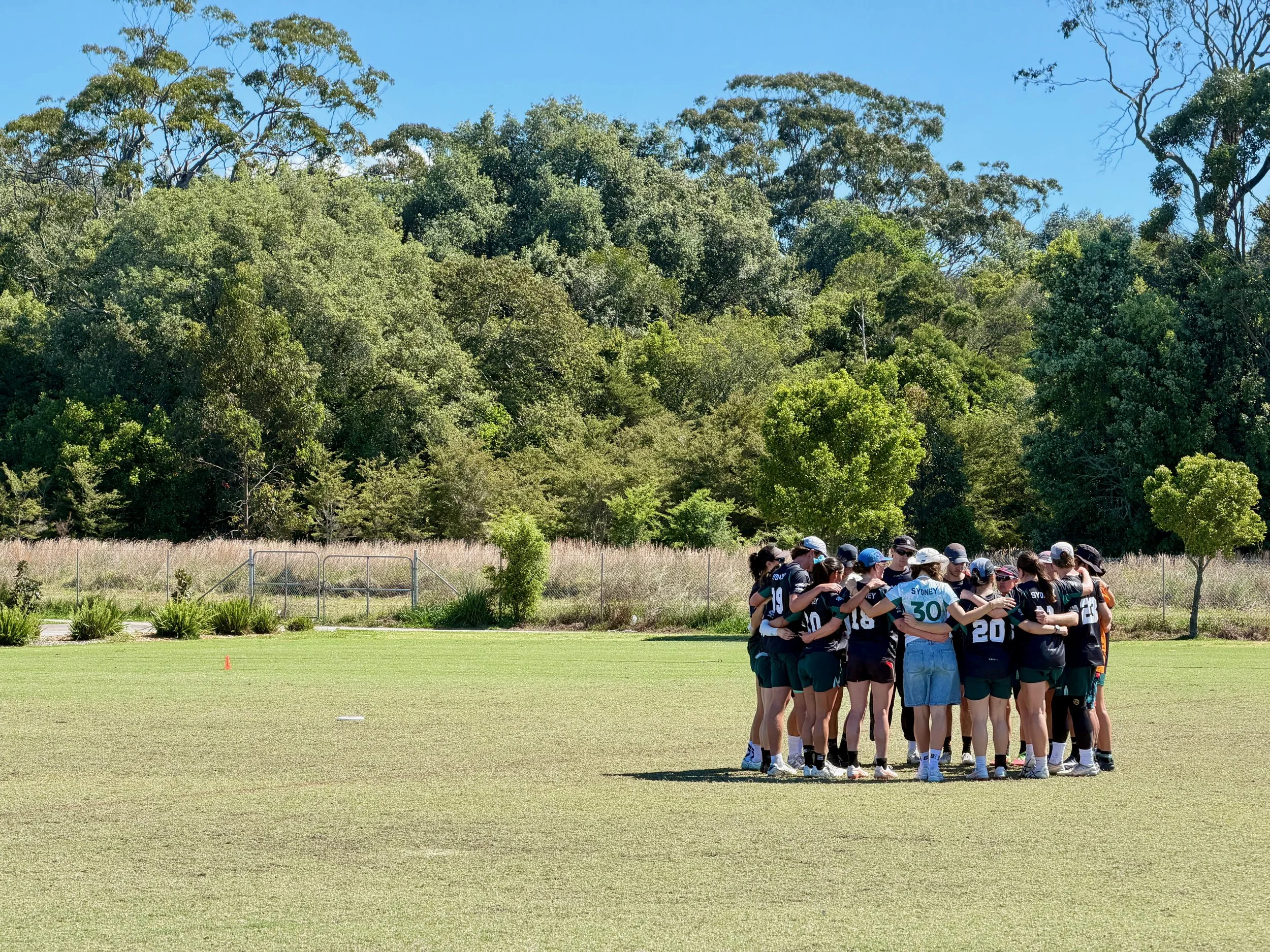
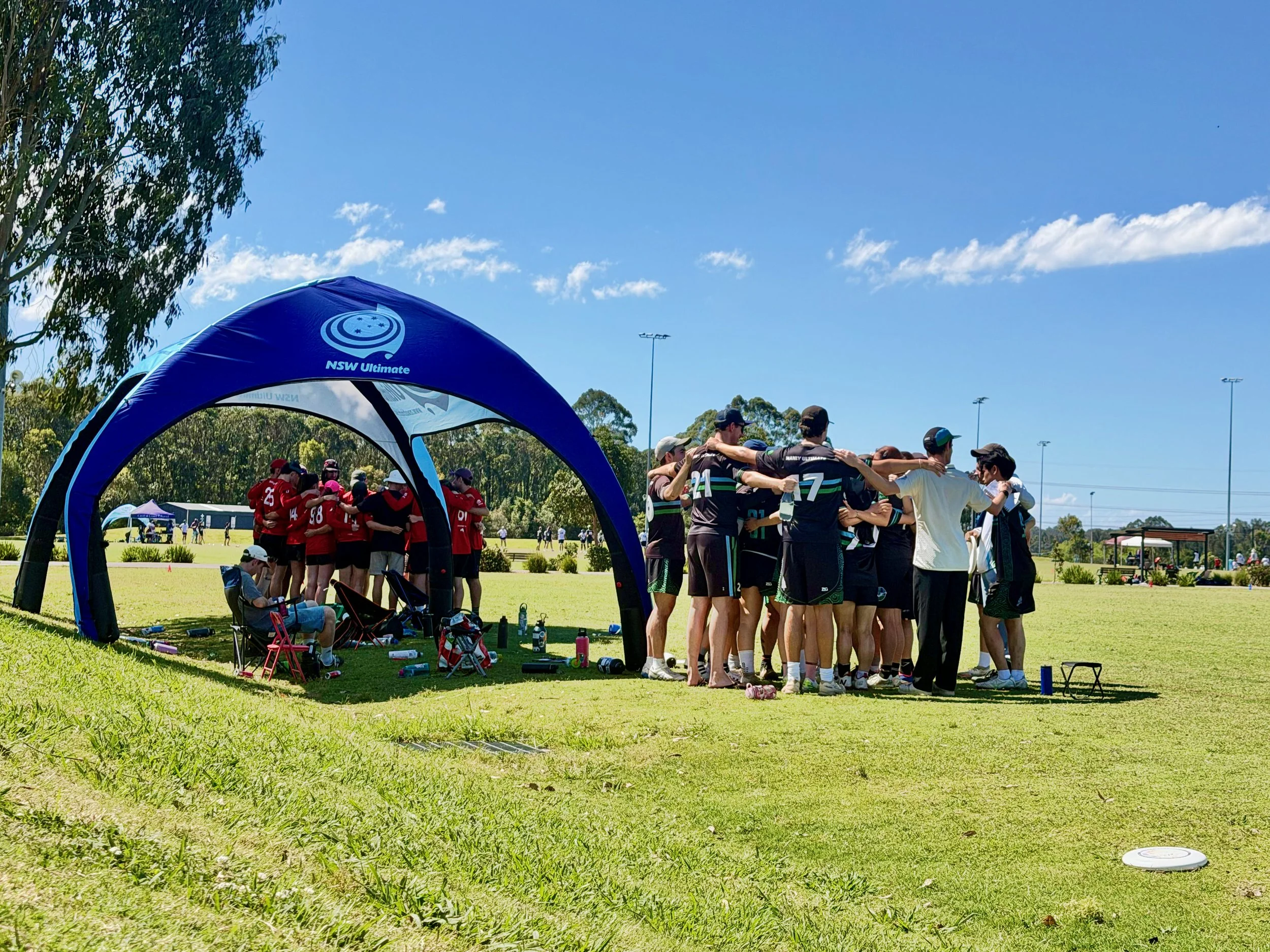
At some games, both teams also came together afterwards in one large circle. Players, coaches and support staff gathered, spoke and sometimes finished with a chant or acknowledgement. I did not understand every part of what I was watching, but by then I had learned that following the disc alone left quite a lot of Ultimate unseen.
The Division Two final was the last game of the day, and it showed me a less controlled version of what I had been watching.
Earlier matches had sometimes looked controlled. Passes were crisp, attacking movements appeared organised and teams could work their way downfield without too many interruptions. The final was different. Turnovers came repeatedly. Passes were dropped, catches were spoiled, interceptions were attempted, and possession moved back and forth.
Calling it scrappy would make it sound worse than it was. Much of it was exciting precisely because neither side seemed able to keep control for very long.
The game was 8-7 around the 70-minute mark and eventually finished 10-8 near the end of the allotted time, nowhere near the nominal race to 15.
Even after four games, time remained one of the parts I understood least. There were soft caps, hard caps, time-outs and adjusted targets. Games could begin as a race to 15 and then become something else once the clock intervened. During the final I found myself checking the score, checking the time and then checking both again a few minutes later, still not entirely certain what combination would actually finish the game.
That felt appropriate. I had arrived thinking the disc would be the difficult part to follow.
By the afternoon I was watching the runners before the throw, the people clearing space, the players deciding whether to restart immediately or wait, the sideline moving up and down the field, the wind changing the flight of the disc and the conversations continuing after disputed calls.
The more I understood, the less I watched the thing that had brought me there.
Except for the clock.
I was still watching that.