
A week after seeing futsal live for the first time, I was back at Dee Why PCYC.
This time it was UTS Northside against Sydney All Stars, with the junior men, women and men again running one after another through the afternoon and into the evening. I had enjoyed the first visit enough to come back quickly, particularly with Sydney FC about to take up more of the calendar.
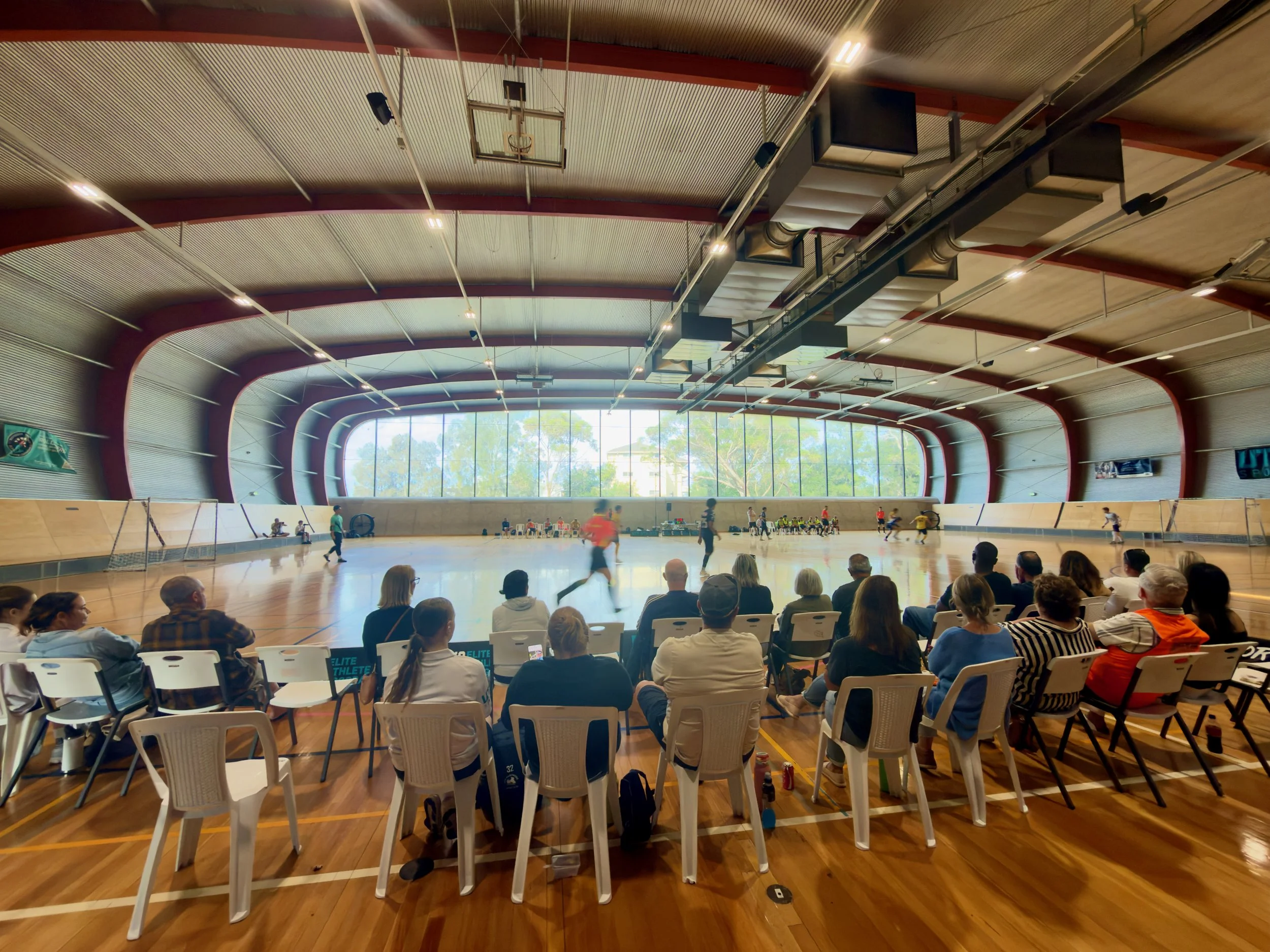
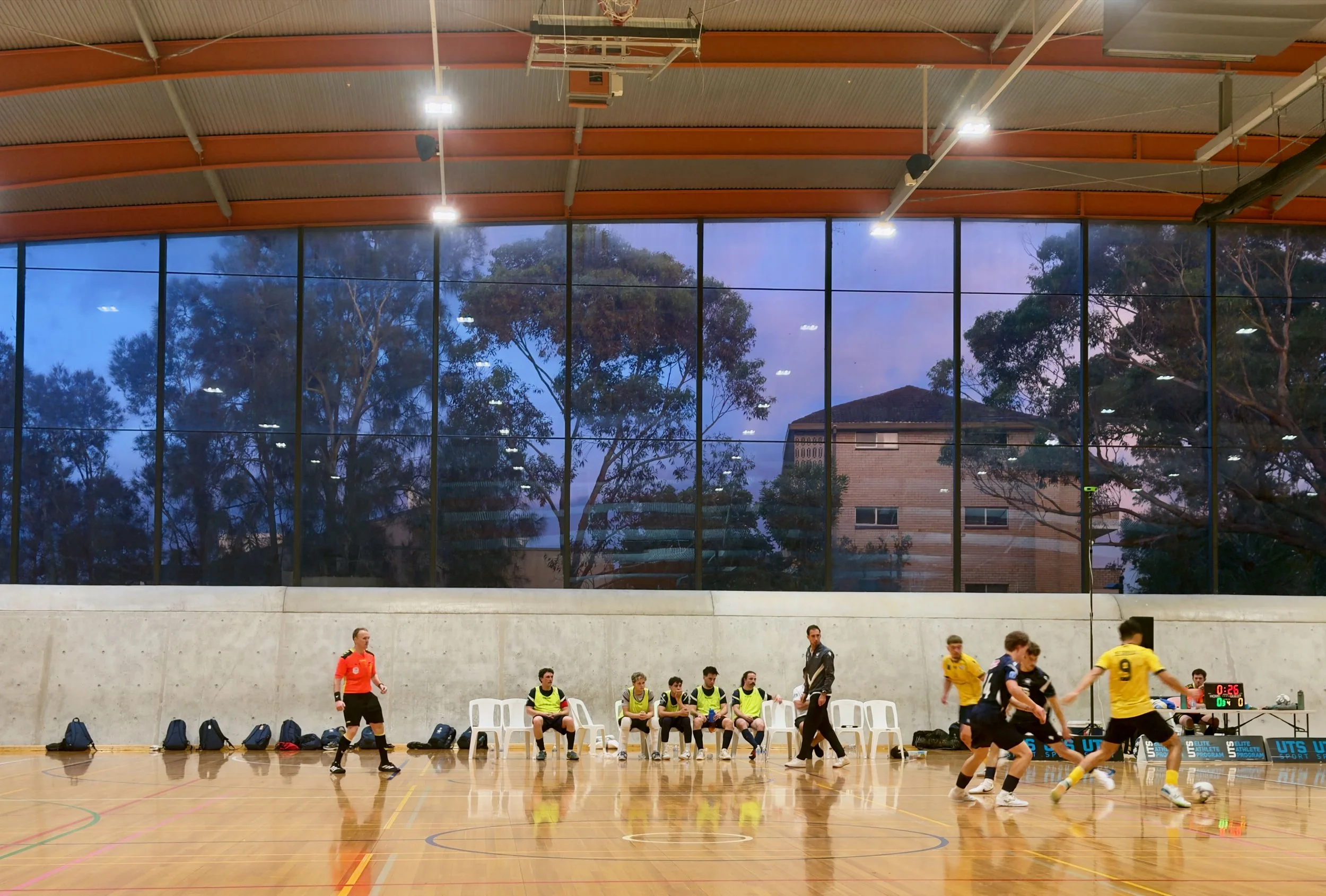
The second visit felt familiar almost immediately. The same bright hall, the court running lengthways between the basketball markings, and many of the same sorts of people staying around between games. Some even looked familiar from the previous week. The numbers stayed fairly consistent from the junior men through the women's game and into the men's, giving the afternoon the feeling of one long club session rather than three separate fixtures. Even the referees appeared to be doing all three.
The women won 4-0 fairly comfortably. The men's game was different. Sydney All Stars arrived unbeaten and on top of the competition, and UTS spent long stretches defending.
The first thing I noticed more clearly this time was the floor.
That sounds obvious in an indoor sport, but basketball players tend to hit the court because something has gone wrong. They have been bumped, tripped, lost balance or committed themselves to a play they could not quite finish. In futsal, going to ground often looks far more deliberate.
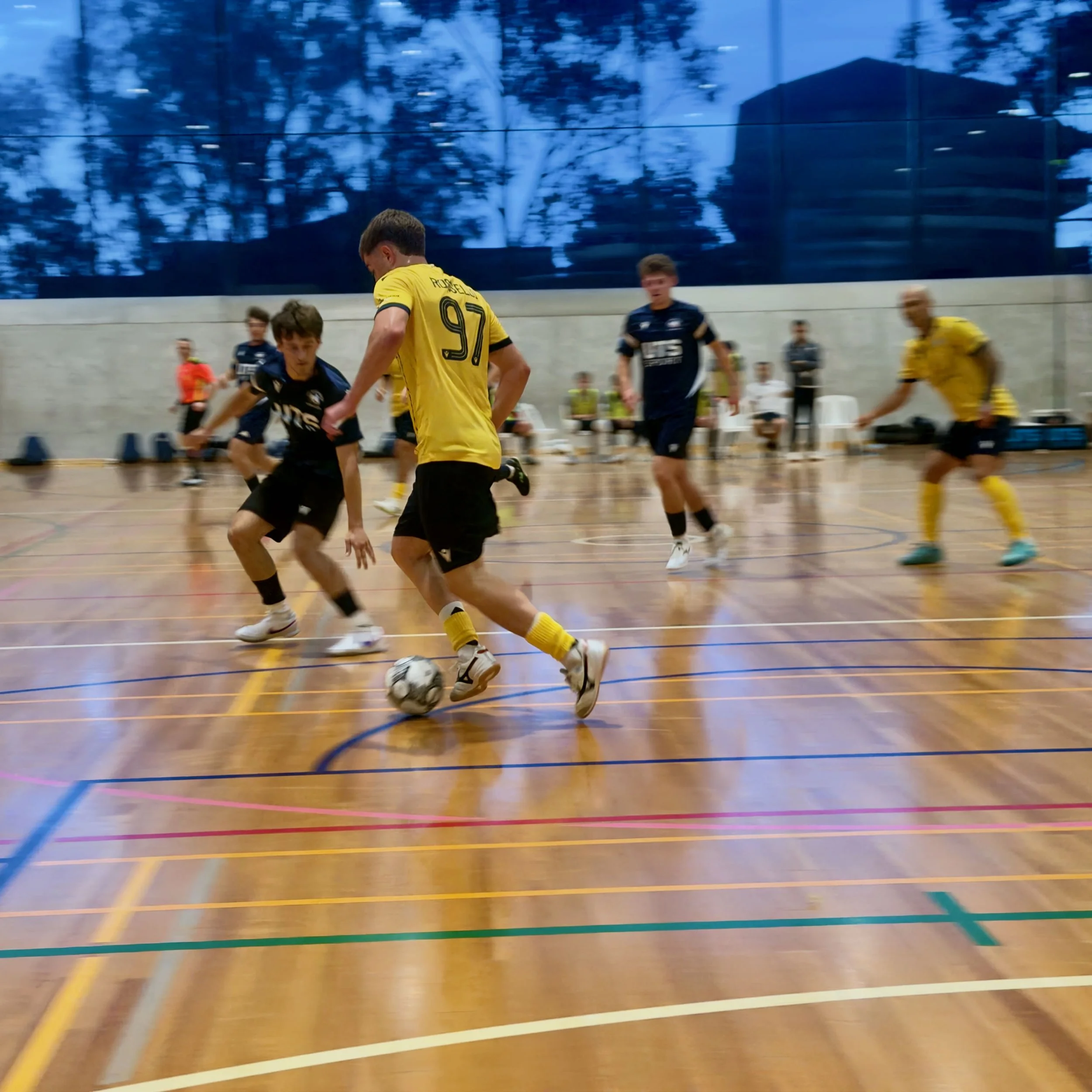
Players slide to block, stretch for the ball and throw themselves across passing lanes. Even the way they fall seems practised. Rather than simply landing wherever gravity sends them, they often turn onto a hip, shorts or jersey and let the clothing take some of the friction rather than bare skin.
I recognised something in it from playing volleyball years ago. I liked playing in the back court and had a reputation for diving around after anything that looked remotely recoverable, so using the floor as part of the game felt familiar even if the movements were different. Futsal has its own version of that. The floor is not just something underneath the players. At times it becomes another thing they use.
The edges of the court stood out too.
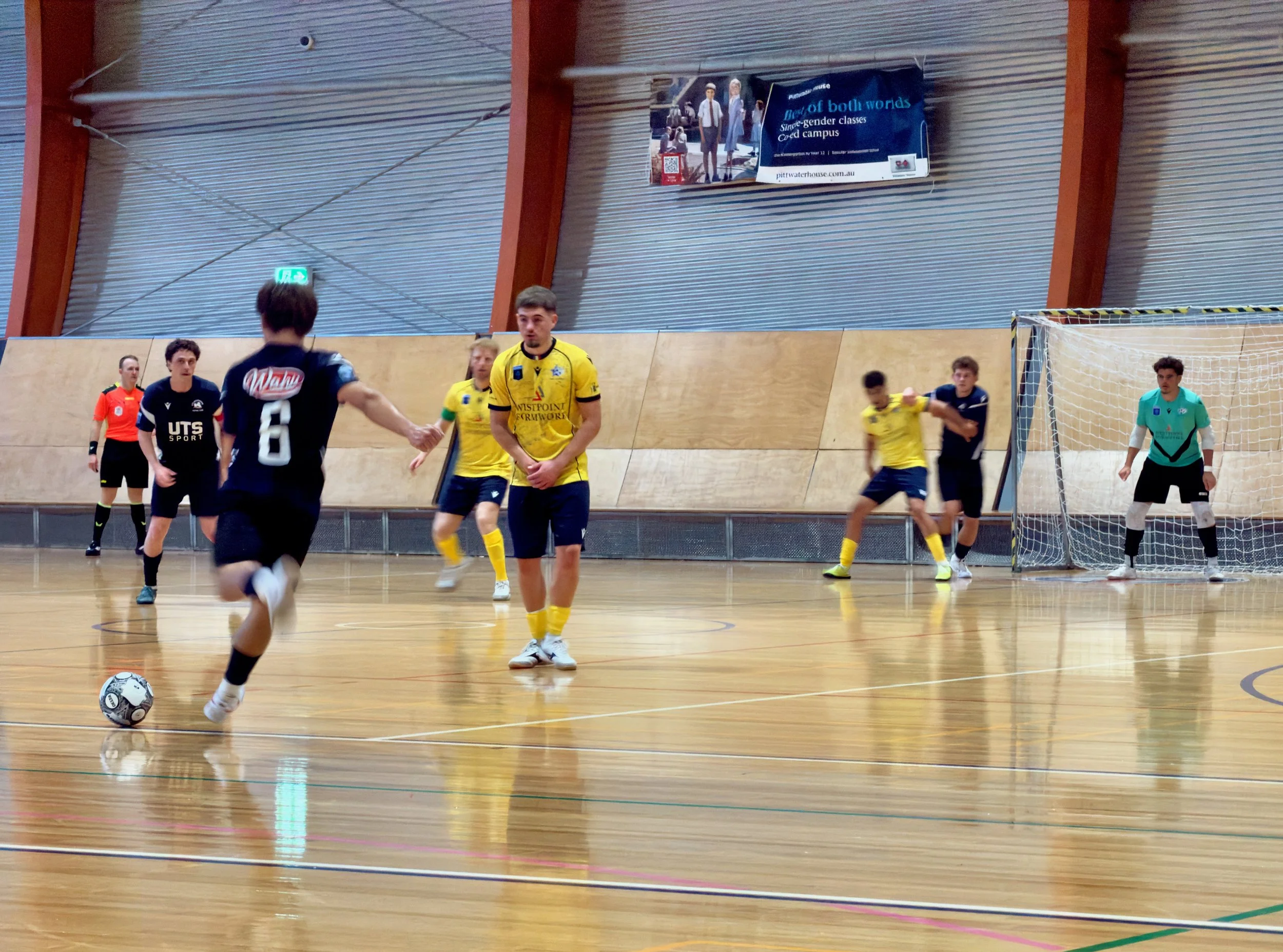
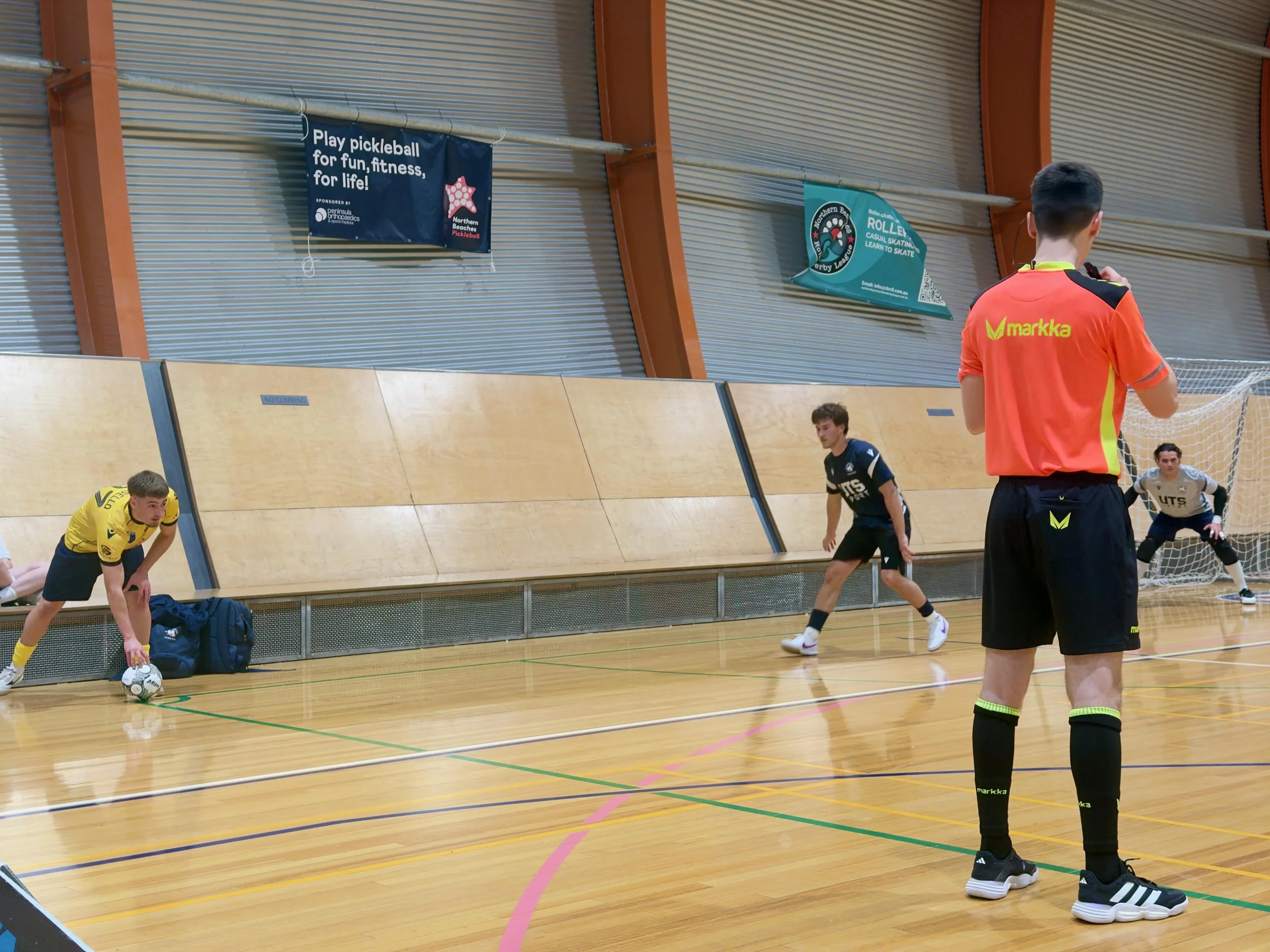
In most sports I watch, the boundary is somewhere players eventually reach and try not to cross. In futsal, players seemed happy to begin there. Again and again they would receive the ball with a foot almost on the paint, stand right against the edge and then work back towards the middle. The line was not something to avoid so much as something to play with.
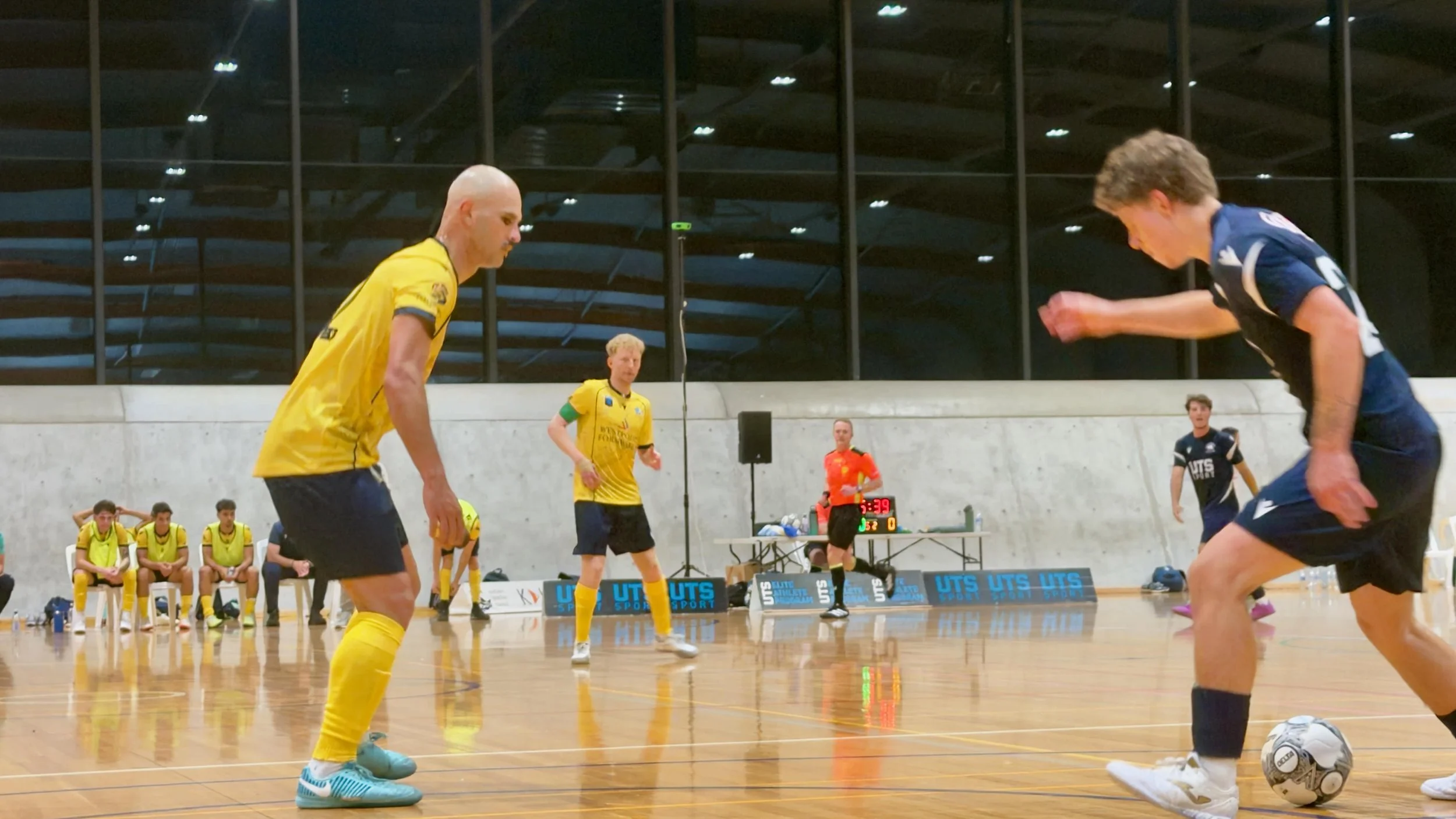
That led into another detail I had not really noticed the previous week. Players regularly put the sole of a foot directly on top of the ball, stop it completely and then roll it forwards, backwards or sideways before deciding what comes next. On the smaller court, those tiny movements seemed to matter more. A touch or a roll of the ball could change an angle almost immediately.
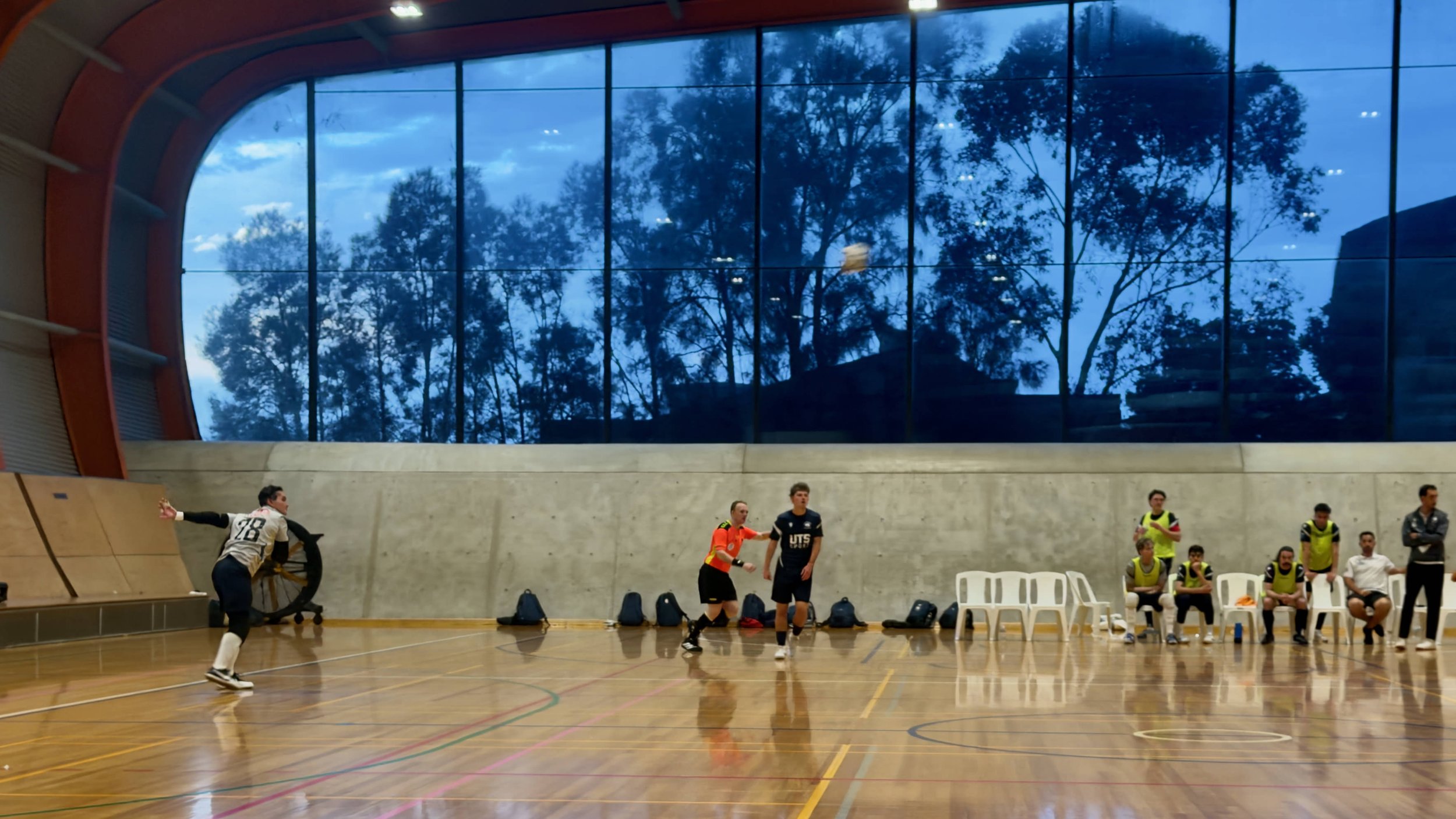
Sydney All Stars added another layer in the men's game by regularly using their goalkeeper as an extra outfield player. He was not simply stepping a metre or two outside the area to distribute the ball. At times he carried it towards halfway and became, effectively, another attacker.
Whenever possession changed, it created a strange little second game. UTS players immediately looked towards the open goal, while the All Stars goalkeeper had to decide whether to recover his position or trust the attack. A few times UTS tried the quick long shot or throw before he could get back. None of them came off, but the possibility was enough to keep drawing my attention.
It also helped explain why Sydney could apply so much pressure without necessarily scoring. There were periods when UTS seemed to spend minute after minute defending, with shots blocked, passes cut out and the goalkeeper repeatedly involved. Both keepers stood out, but the UTS goalkeeper in particular seemed to be having one of those games where almost everything arriving at him was being dealt with.
The longer it continued at 0-0, the more improbable it started to feel.
With less than two minutes remaining, Sydney finally found a way through. The UTS goalkeeper came out to meet a ball and an All Stars player managed to get his head to it first. It was hardly a dramatic header. The ball seemed almost to lose interest after being touched, dropping beyond the keeper and slowly finding its way into the open goal.
After everything UTS had stopped, that was the one that beat them.
Outside, meanwhile, Sydney had decided to put on its own show. The afternoon had started warm and bright, but somewhere near the beginning of the men's game storm warnings began appearing on phones. Beyond the big windows at Dee Why PCYC, the sky darkened quickly and lightning appeared while the temperature dropped. Inside, under the lights, the game simply kept going.
By the time we left, the warm spring afternoon had become rain and enough chill to make my decision to wear only a shirt seem optimistic. Earlier, I had been hoping for a coffee during the afternoon, but the small cafe appeared to have closed before I arrived.
I do not think futsal is about to become one of the sports that dominates my calendar, but I would like to see what it looks like at a much higher level, whether that eventually means an international event or simply finding more of it to watch.
For now, two Saturdays have been enough to change the way I see the game.
The first visit showed me how fast it was.
The second showed me where to look.