The result didn’t matter to me
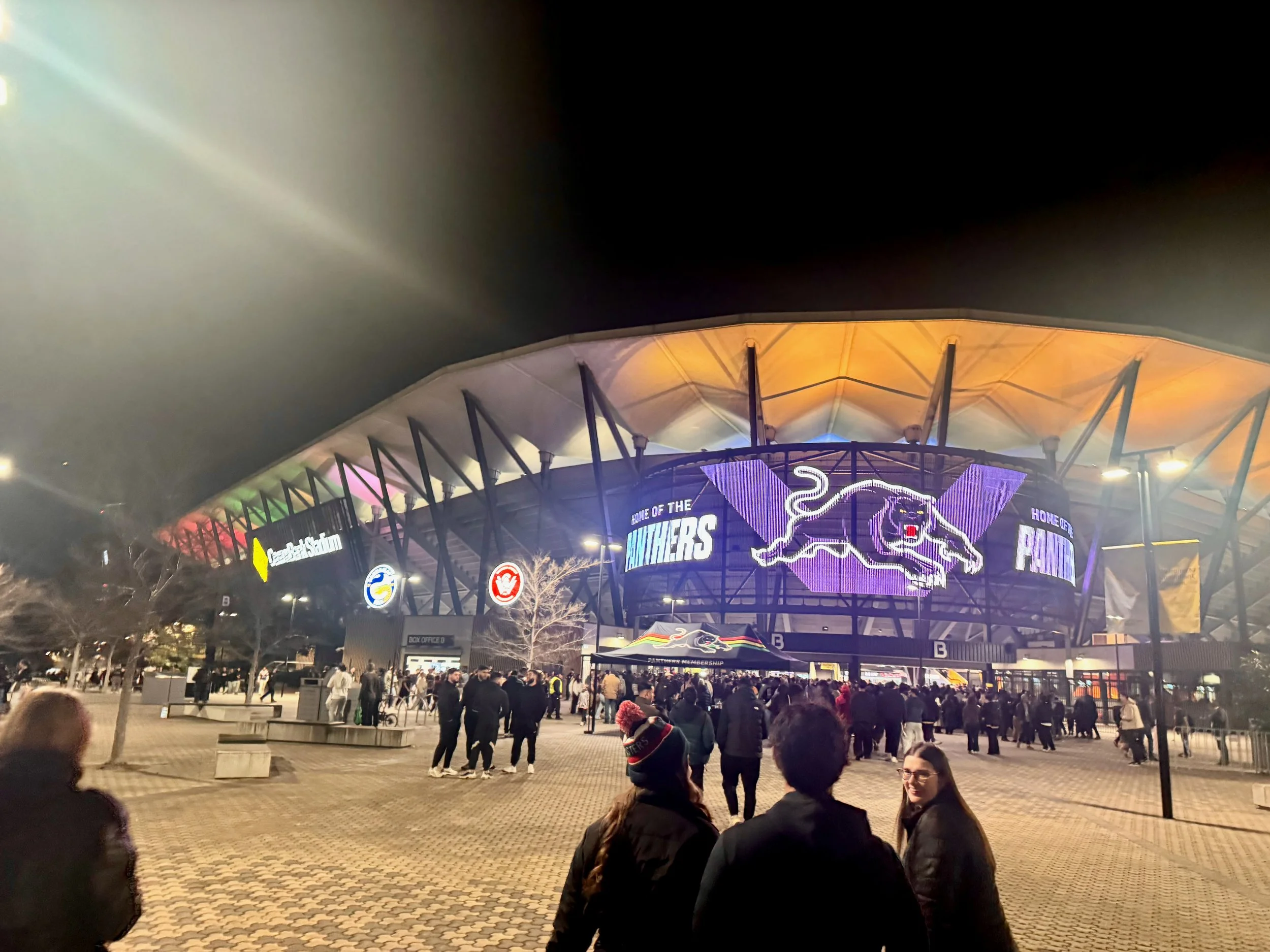
Earlier in the week, one of my colleagues and I had been talking about the Sydney Roosters playing the Penrith Panthers at CommBank Stadium. He is a committed Roosters supporter and a member, although this was an away game rather than one of his usual nights at Allianz Stadium.
The more we talked about it, the more obvious the opportunity became. Penrith and the Roosters were level at the top of the competition, and the winner would finish the round in first place. A regular-season game on a Thursday night was also considerably more achievable than attending a final.
I bought a ticket and told my colleague I was going. His surprise quickly became a realisation that perhaps he should go too. I had somehow persuaded a Roosters member to attend a Roosters game he had not originally planned to attend.
We did not end up sitting together, but exchanged messages throughout the game. This was my second visit to CommBank Stadium in the space of a few weeks to watch a match in which my own team was not involved. Penrith are probably my second team, so I wanted them to win, but not enough for their defeat to ruin the evening. More than anything, I wanted the game to live up to what it promised. It did.
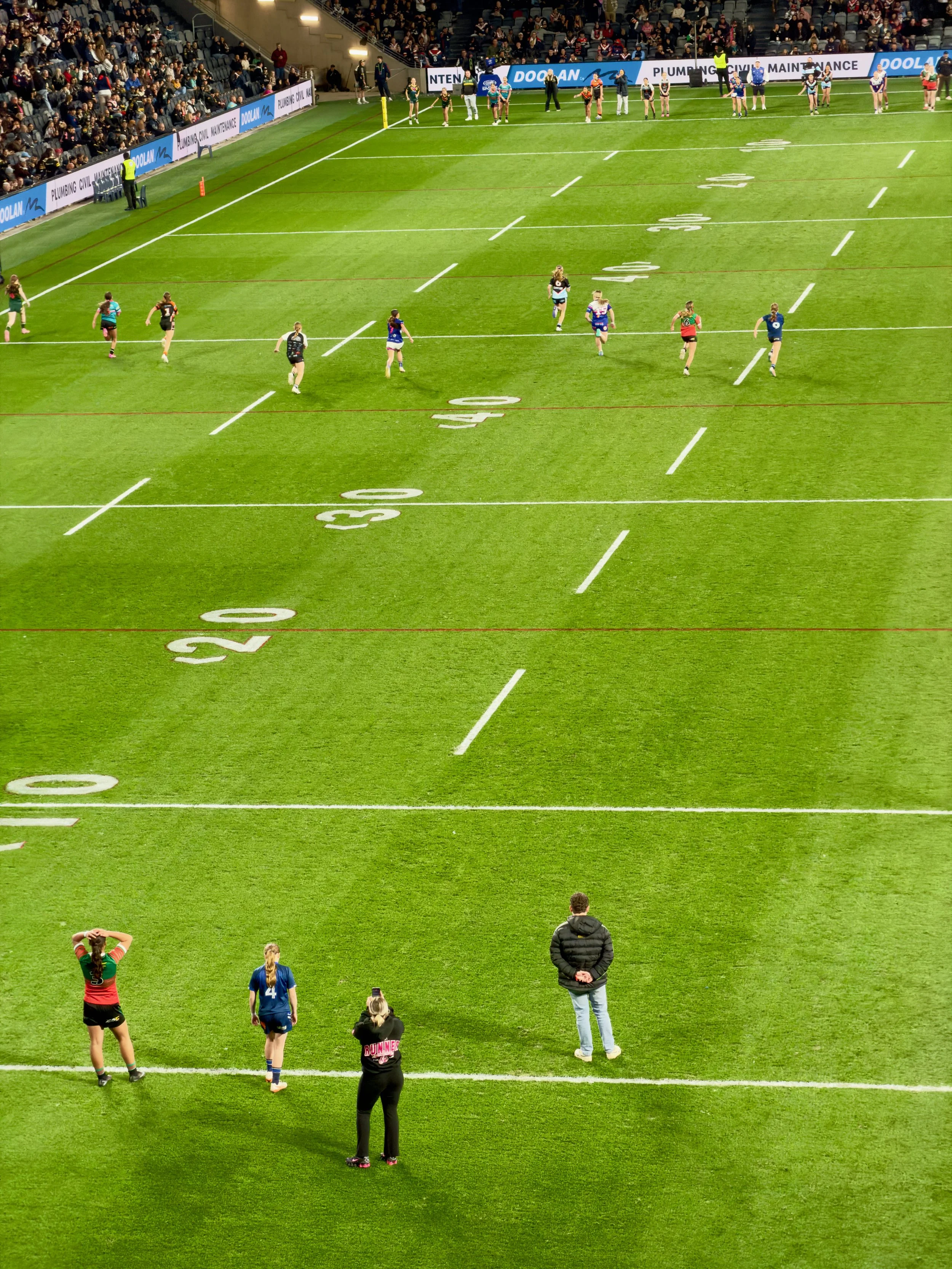
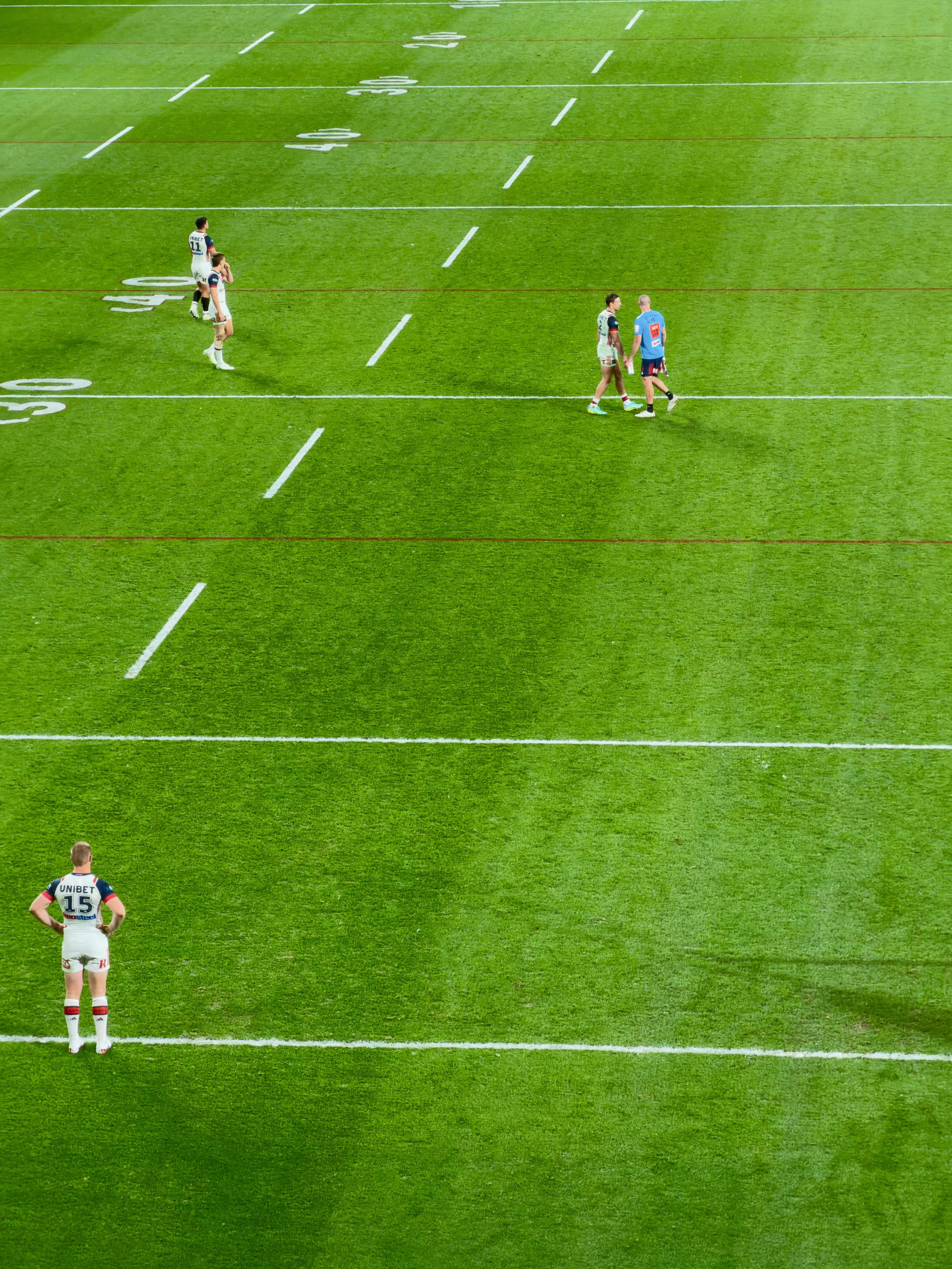
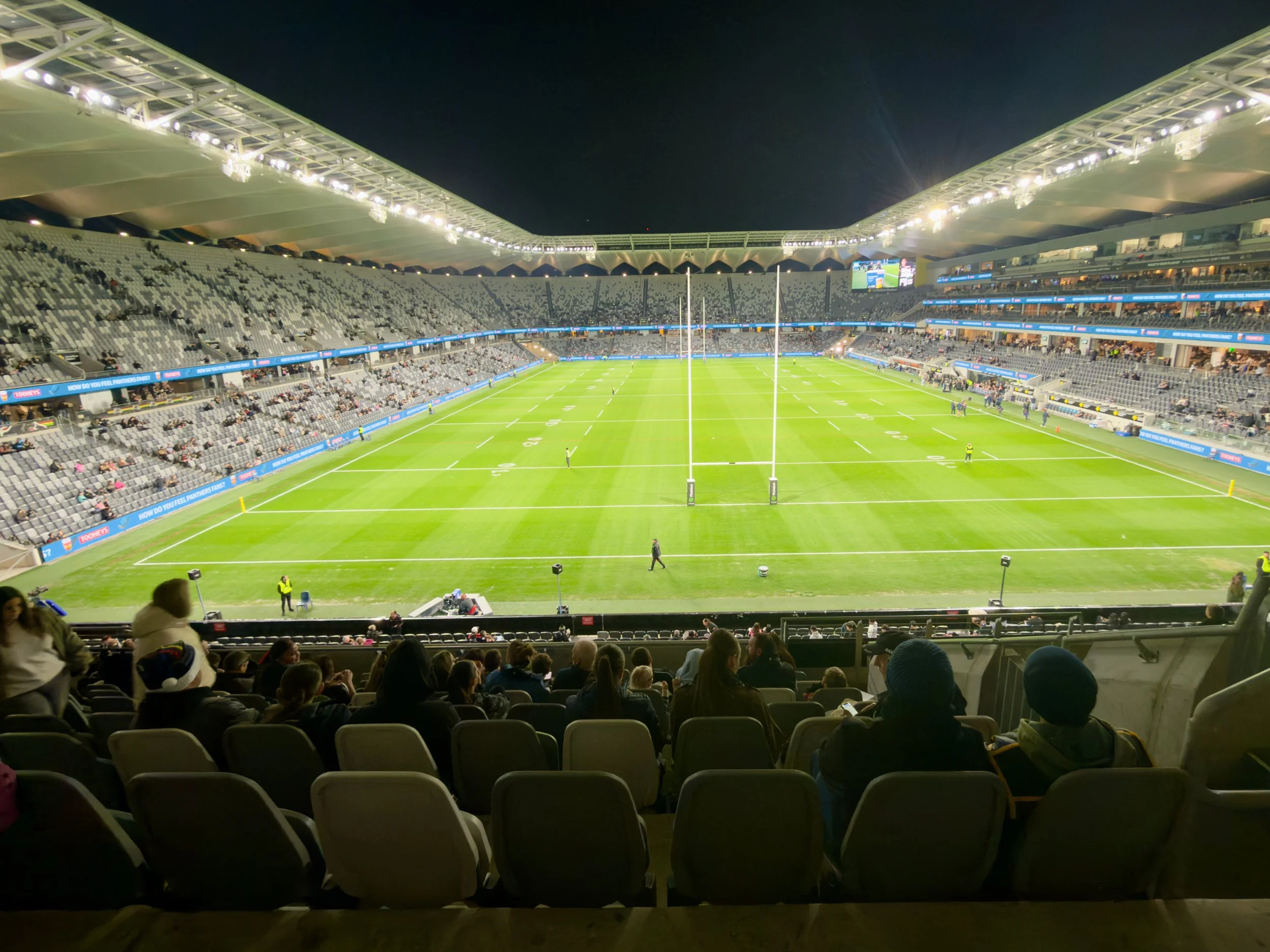
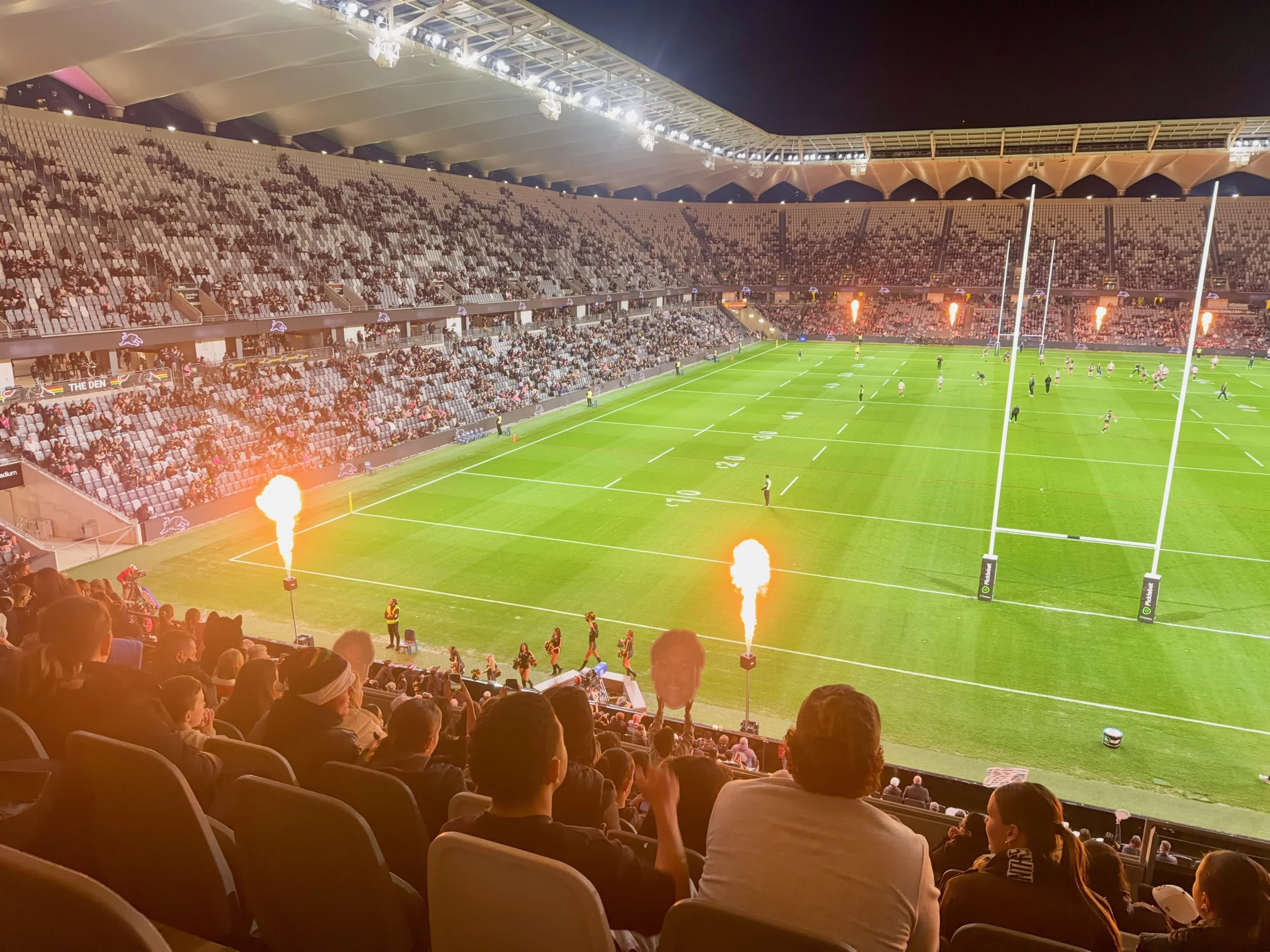
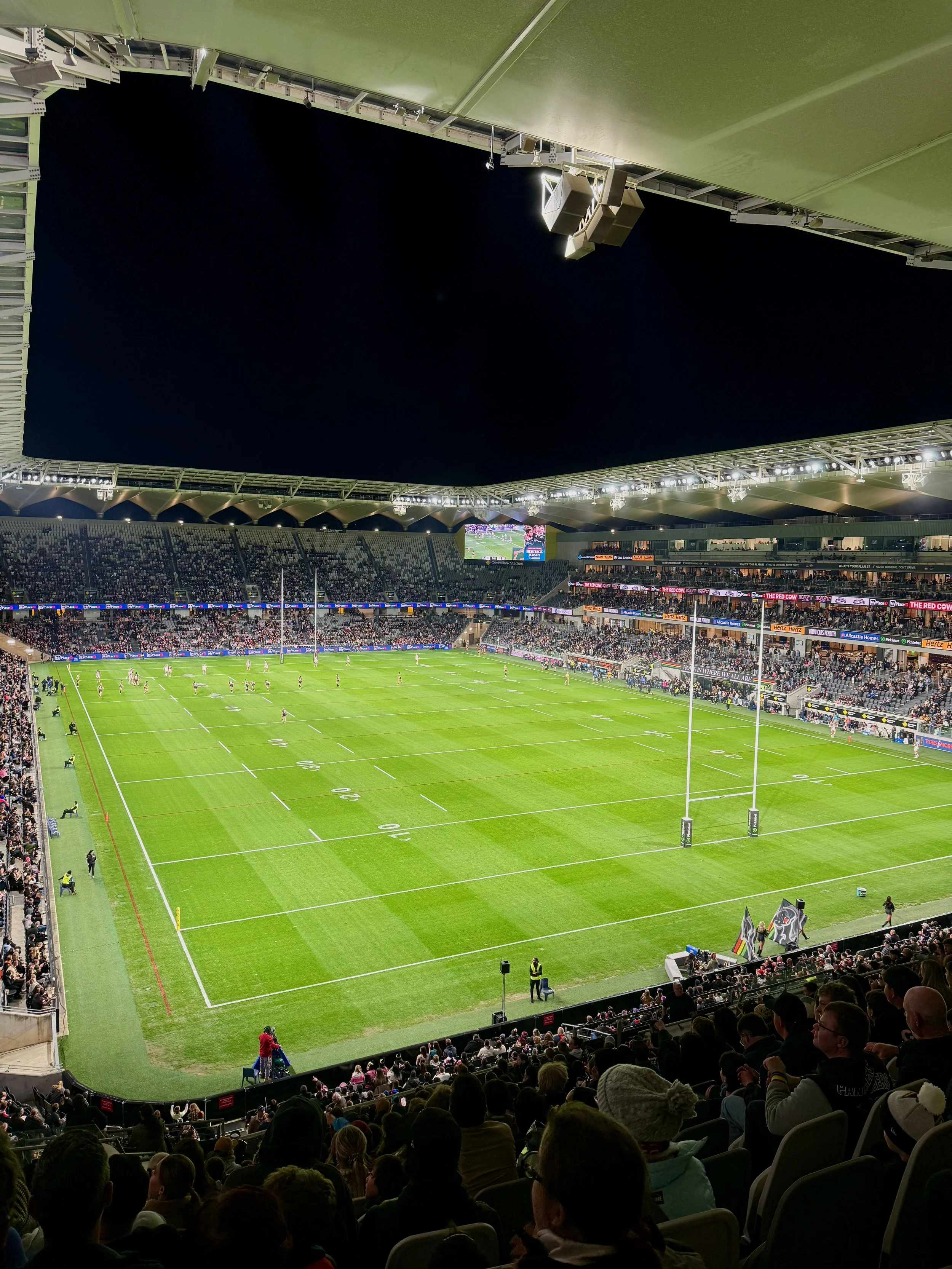
I had bought one of the cheapest tickets available, giving me general admission access high behind the goalposts. Seats at the ends of a rectangular field are often treated as inferior, with their price reflecting the assumption that everyone would rather sit on the sideline. From high behind the posts, however, I had a central view straight along the length of the field.
There is an obvious risk. When the play is at the opposite end, it is a long way away. At CommBank Stadium, a large screen on either side fills some of that gap. You can glance across to follow the live coverage, and the important moments are replayed from angles unavailable from your seat.
What I could see for myself made the position worthwhile. From the end, the sideways movement of the defensive line became much clearer. I could see how far the wingers ran to cover a break or close down a long pass. Penrith repeatedly shifted the ball towards the edges, only for the Roosters’ defence to slide across and remove the space that had appeared to be there.
Much of the game was played within 20 metres of one try line or the other, including long periods directly in front of me. Two of the three tries were scored in front of me, but some of the most compelling passages ended without a try at all.
The Roosters kept turning Penrith away. There were repeated sets near the line, breakaways that threatened without quite escaping, last-ditch attacks near halftime and full-time, and passages in which structure gave way and the ball was passed around more freely. At other times, the teams simply ran hard at one another.
Looking back, some of those periods might sound uneventful. Sitting there, they did not feel boring. The pressure came from waiting to see whether the defensive line would finally break.
Penrith may be capable of playing better than they did, but their performance did not feel like an off night in isolation. The Roosters kept moving forward, closing the space and refusing to let them play comfortably. On the night, they had been the better team, and the result moved them above Penrith into first place.
My colleague rang me afterwards, elated by what he had seen. We agreed that it had been a wonderful game, although his excitement was inseparable from the Roosters moving into first place. I had wanted Penrith to win, but not strongly enough to be disappointed when they did not. Being slightly removed from the result had allowed me to enjoy almost everything.
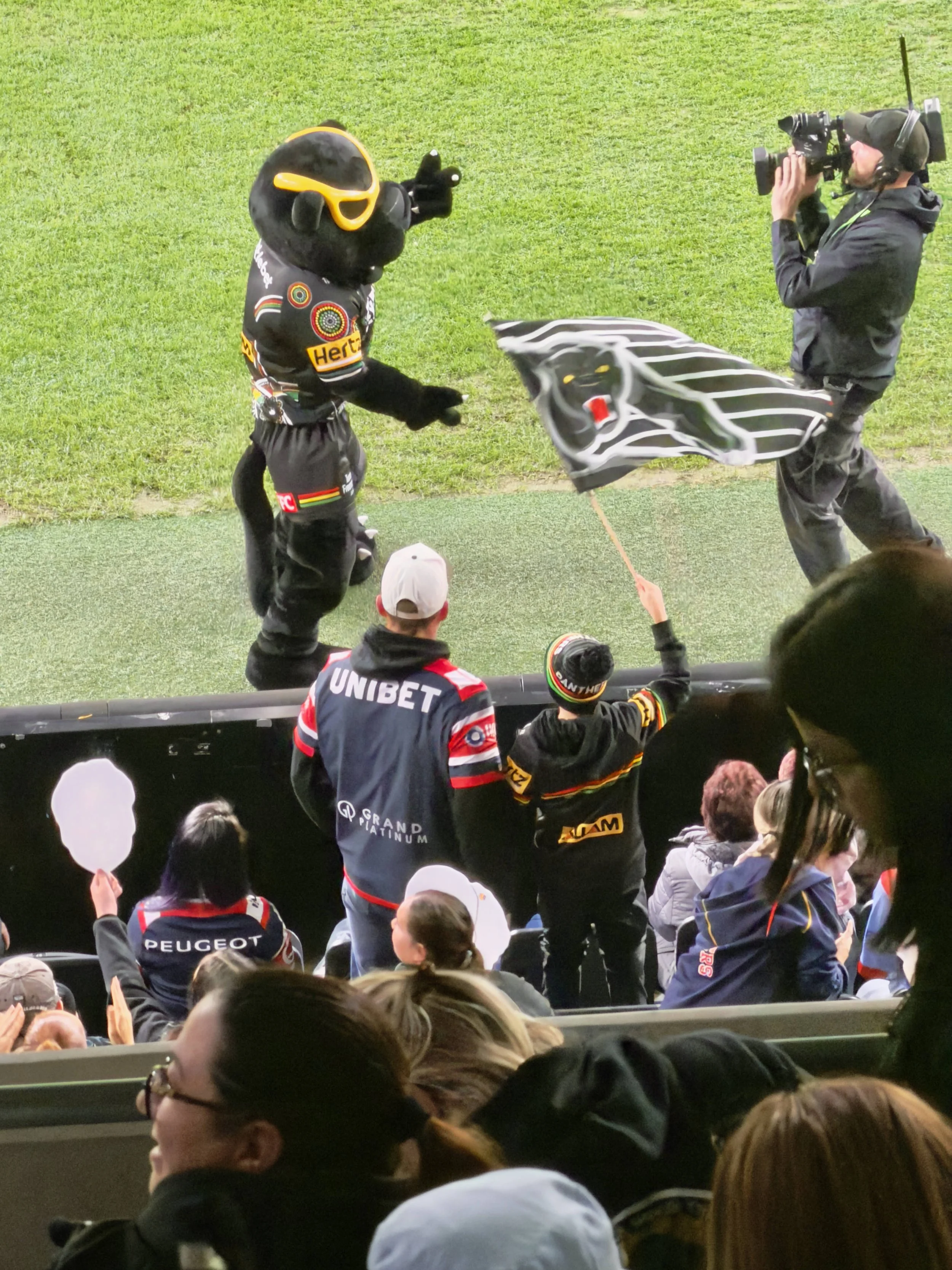
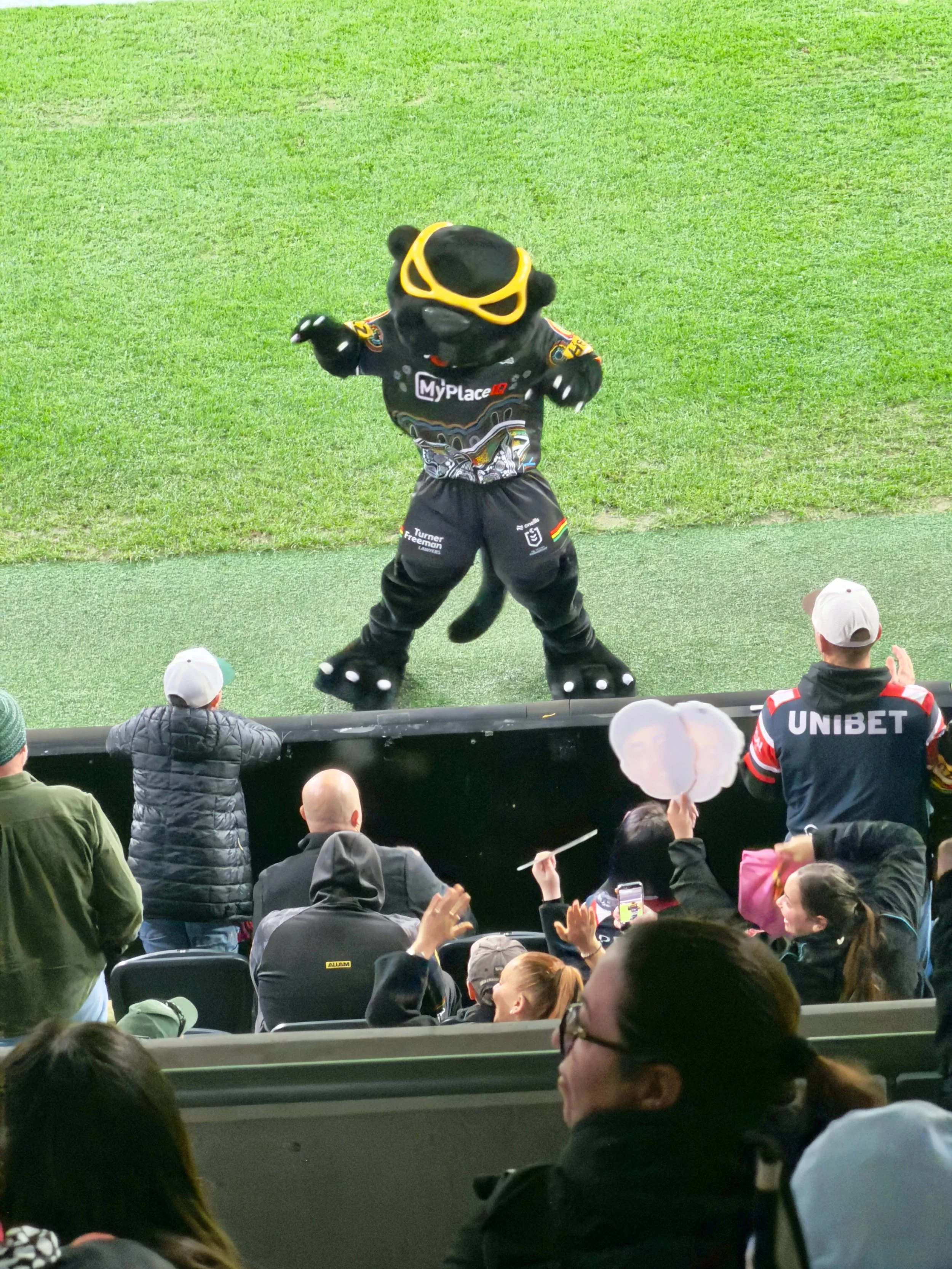
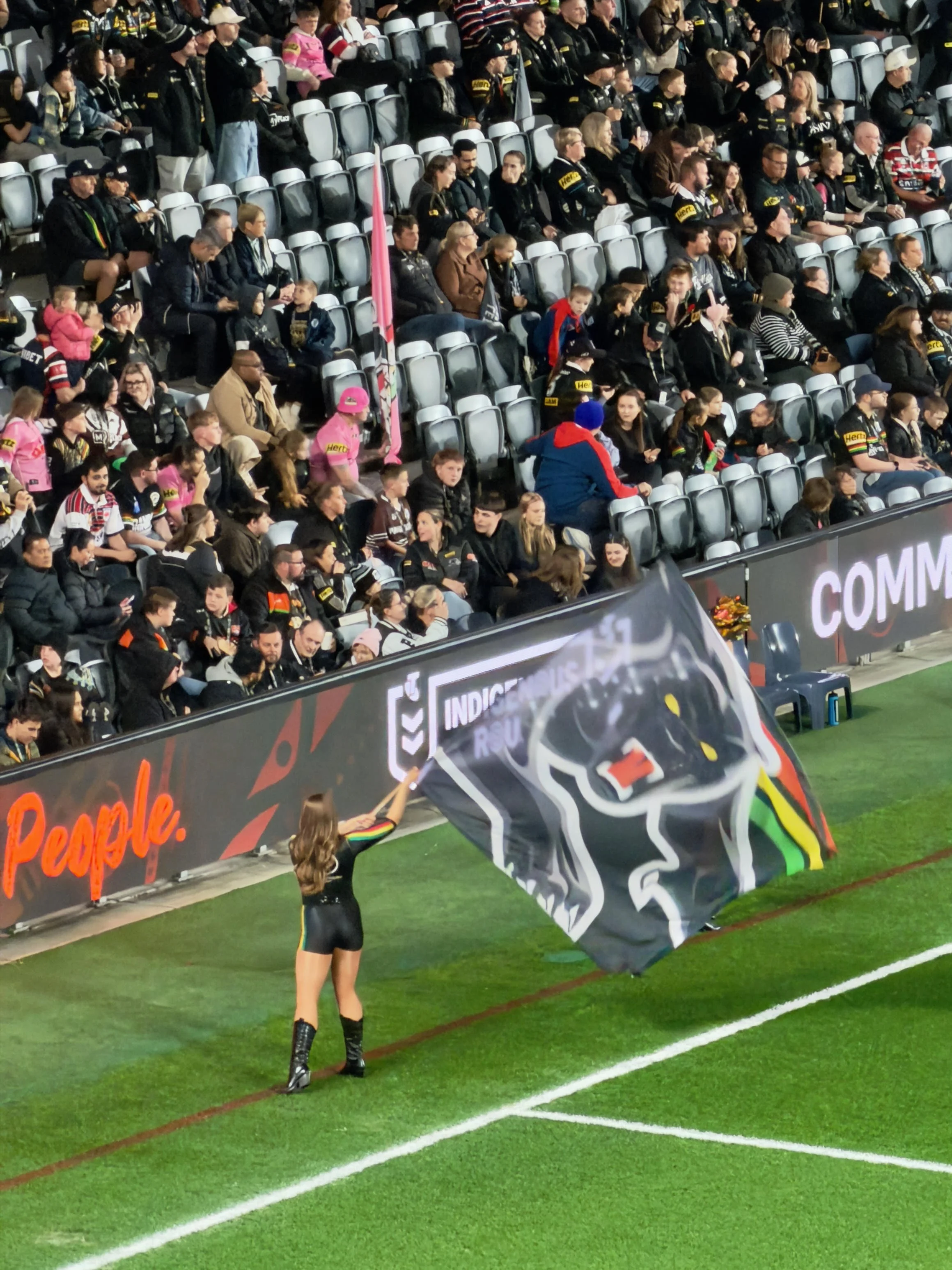
The contest in the stands was more evenly balanced than I had expected. It was a Penrith home game and their supporters were the majority around me, but the Roosters had brought enough people to make themselves heard. A Penrith chant could be answered from the away sections. A decision that brought cheers from one part of the stadium produced boos from another.
There were also people wearing Canterbury and Newcastle jerseys. I had no way of knowing why they were there, but their presence reminded me that I was not the only person attending without displaying an allegiance to either team.
Having two substantial groups of supporters gave the evening another contest. It did not require insults or hostility. One group cheered, the other answered. Each saw the same incident and reached the conclusion most favourable to its own team.
The bunker gave everyone plenty of opportunities to practise. Several decisions went to review, including disallowed tries and captains’ challenges. Some seemed to take three or four minutes, although they felt longer, and the final 15 minutes of the match occupied considerably more than 15 minutes in the rest of the world.
One passage became particularly complicated. A possible infringement was checked well before the ball eventually reached a player who appeared to score. Once the earlier play was cleared, the try itself still had to be considered, only for the replay to show that the player had stepped on the sideline. After several minutes and multiple angles, the answer was that it had not been a try for an entirely different reason.
The delays interrupted the football, but they also pulled the crowd into the process. We could hear what the referee wanted checked and watch many of the same replays being examined by the bunker. By the second or third angle, everyone had made up their mind. Naturally, thousands of people looking at the same evidence had reached opposite conclusions.
That would have been far more frustrating at a ground where the screens were difficult to see or the sound system left most of the crowd unsure what was happening. CommBank Stadium could not make the reviews shorter, but it allowed us to follow them. The interruption became another piece of the theatre rather than simply empty time.

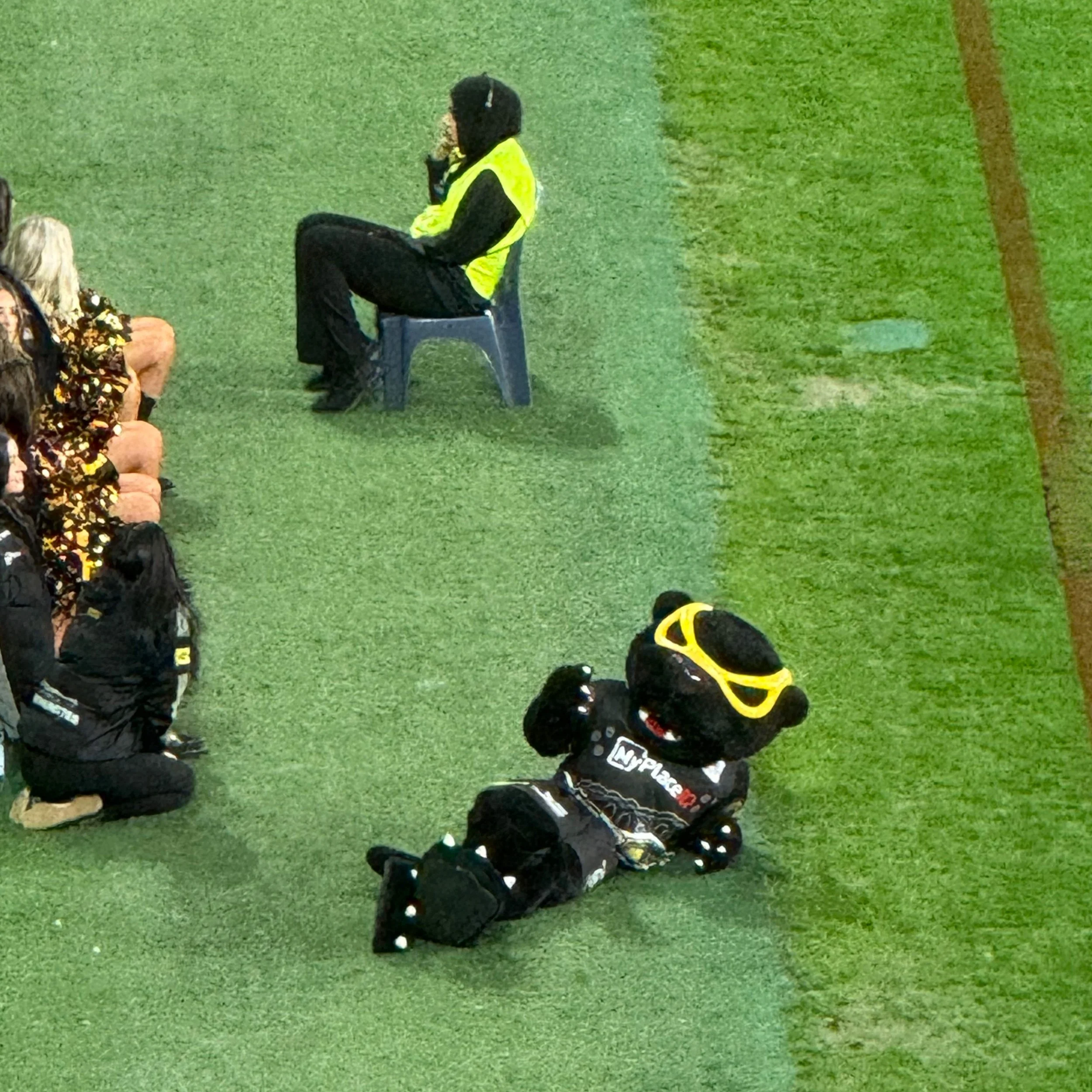
The stadium was good at filling the other gaps too. When a bit of push and shove broke out between the players, “Bad Boys” came over the speakers almost as soon as they had been separated. After the next confrontation, the choice was AC/DC’s “Hells Bells”. The announcer occasionally tried to lift the crowd, with varying degrees of success, but he rarely needed to. The music, screens and lighting usually did the work more naturally.
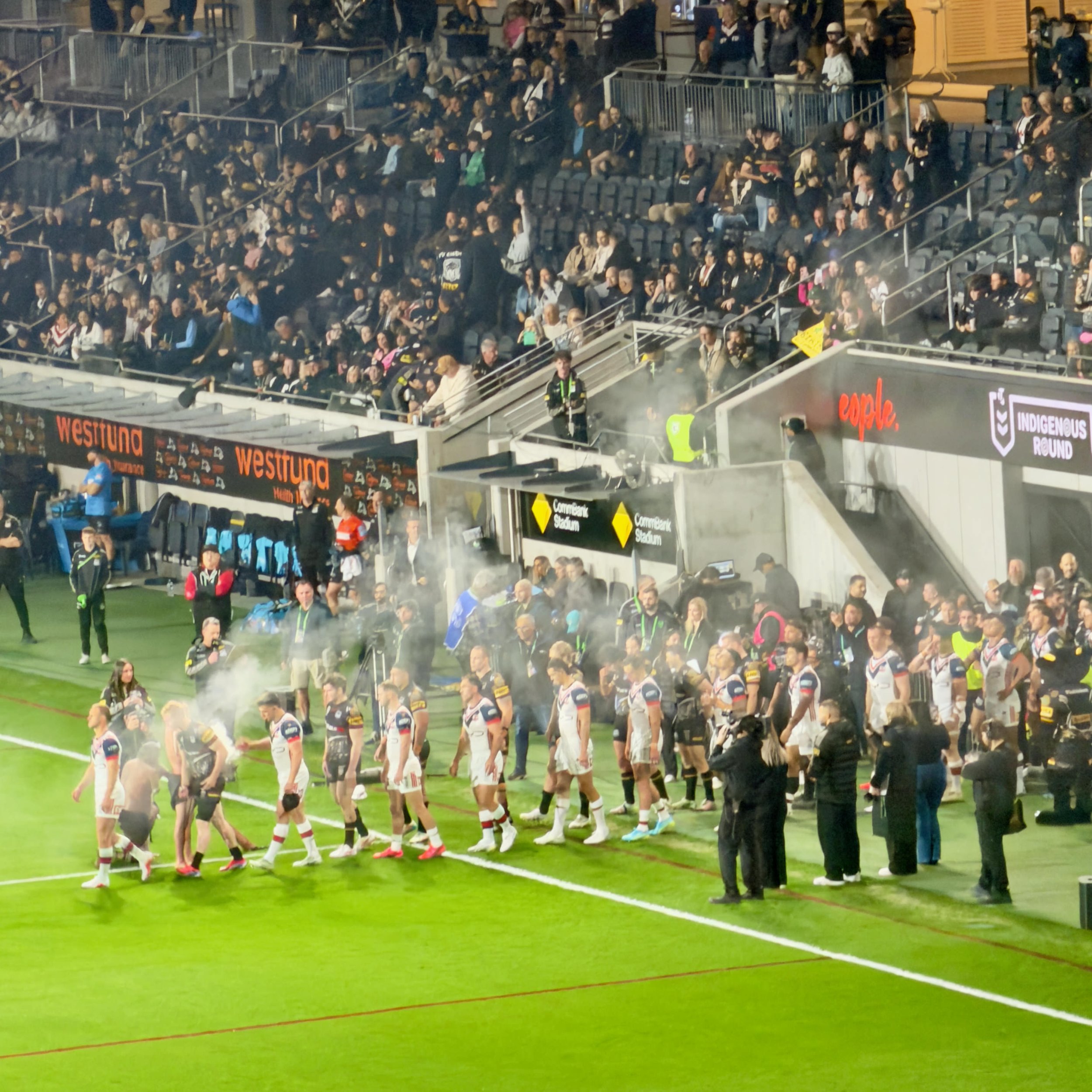
Before the game, the stadium darkened for the Indigenous Round ceremony, leaving the dancers illuminated in the centre of the field. The focused lighting, live singing and quality of the sound turned the middle of the field into its own stage. It was another part of the evening that depended upon being in a venue capable of presenting it properly.
The best catch of the night may not have happened on the field. A man in my row stood to leave and brushed past one of his friends, who was holding a meat pie in his left hand. The pie fell, complete with sauce on top, only for him to catch it cleanly with his right hand. Nothing spilled.
We locked eyes. There was nothing to discuss. In a stadium containing some of the best rugby league players in the country, I had just witnessed an exceptional piece of hand-eye coordination a few seats away. He accepted my congratulations with a laugh and returned to his pie.
By the time I left, I was not thinking only about how good this particular game had been. I was thinking about why I had chosen it and why the choice had worked.
Perhaps there is a recipe for the kind of game I will seek out again. On this night, it was two evenly matched teams with something meaningful at stake, supporters capable of answering one another, and a venue that helped the crowd follow and enjoy the contest. A personal connection helped too, even if it was only a colleague supporting one team while I leaned slightly towards the other. So did caring about the contest without caring too much about the result.
Now I intend to choose some future games more deliberately, particularly towards the end of a season. It might be first against second or two teams competing for the final place in the top eight. I am curious to see whether the same approach works beyond rugby league.
My own team does not always need to be involved. Sometimes, if the teams are evenly matched and the consequences belong to both of them, that is reason enough to buy a ticket.