I was back at Allianz Stadium on a school night to watch another English club play an Australian A-Leagues team. This time it was Chelsea FC Women against the A-Leagues All Stars Women, and before I arrived, I had already chosen my side. I knew almost nothing about Chelsea. I knew the name, of course, but I had never watched them play and could not have named a single player. My decision to support the All Stars was therefore uncomplicated. They were the Australian team, or at least the closest thing to one, so I was supporting them.
The distinction mattered. This was not the Matildas. The All Stars had been assembled from clubs across the A-Leagues Women, months before the domestic season was due to begin. Calling a team “All Stars” suggests that the best available players have been brought together, but to me it can also sound like a polished way of saying that enough people were asked until a team emerged. They had not played a season together, trained together for years or developed the shared identity of a national side. Still, they were representing Australian football, and that was enough for me.
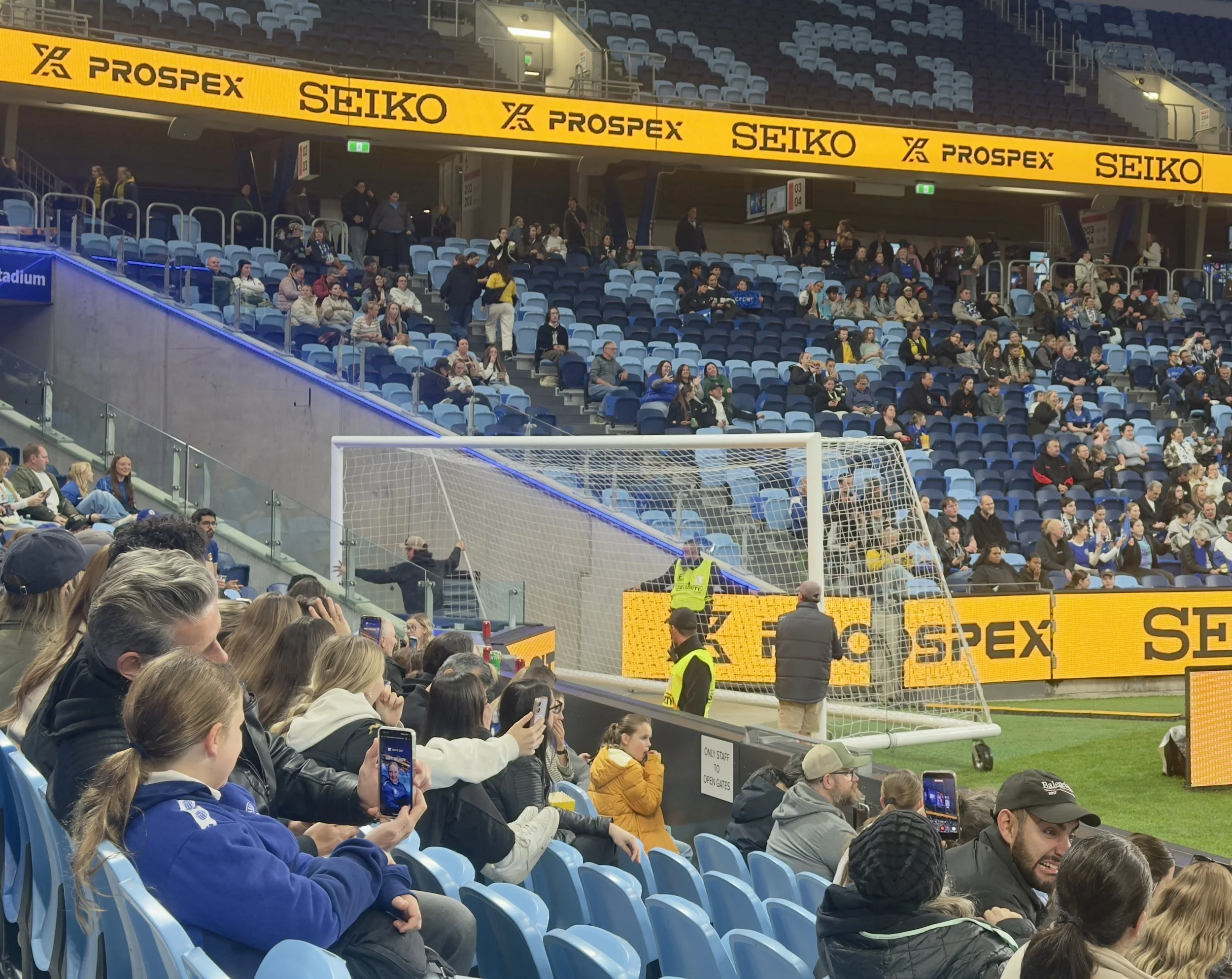
Walking towards Allianz, however, it was immediately obvious that plenty of Australians had made a different choice. Chelsea blue was everywhere. It appeared on shirts, scarves, caps and flags, while the Australian support was visible only in occasional flashes of yellow. I was wearing a yellow Wallabies cap, and elsewhere I noticed Matildas scarves, caps and beanies. We seemed to be using whatever Australian sporting clothing we owned to declare which side we had chosen.
The All Stars themselves were not much help. They warmed up on the pitch and eventually played in a fairly plain white kit. It made sense because they were not a national team, but it also left the small Australian contingent looking more Australian than the players we were supporting. My seat was six rows from the fence, close enough to watch Chelsea finish their preparations immediately in front of me. It was chilly without being properly cold, and there was no noticeable wind. Around me, though, the blue continued to gather.
Shortly before the game started, a family arrived, and the father took the seat beside me. Almost as soon as he spoke, I asked him the question that had begun to feel unexpectedly important. “Who are you here to support?” I was surrounded by Chelsea supporters and needed to know whether I had found another Australian. Fortunately, I had.
It was his first time seeing an English club. He had previously been to a Matildas match, but this was his first opportunity to watch a club from that level of European football. My own first experience had come only a couple of weeks earlier, when I watched Tottenham Hotspur play at the same stadium, so neither of us could claim much expertise. “I think you’ll notice they’re at a different level,” I told him. It did not take long for both of us to notice.
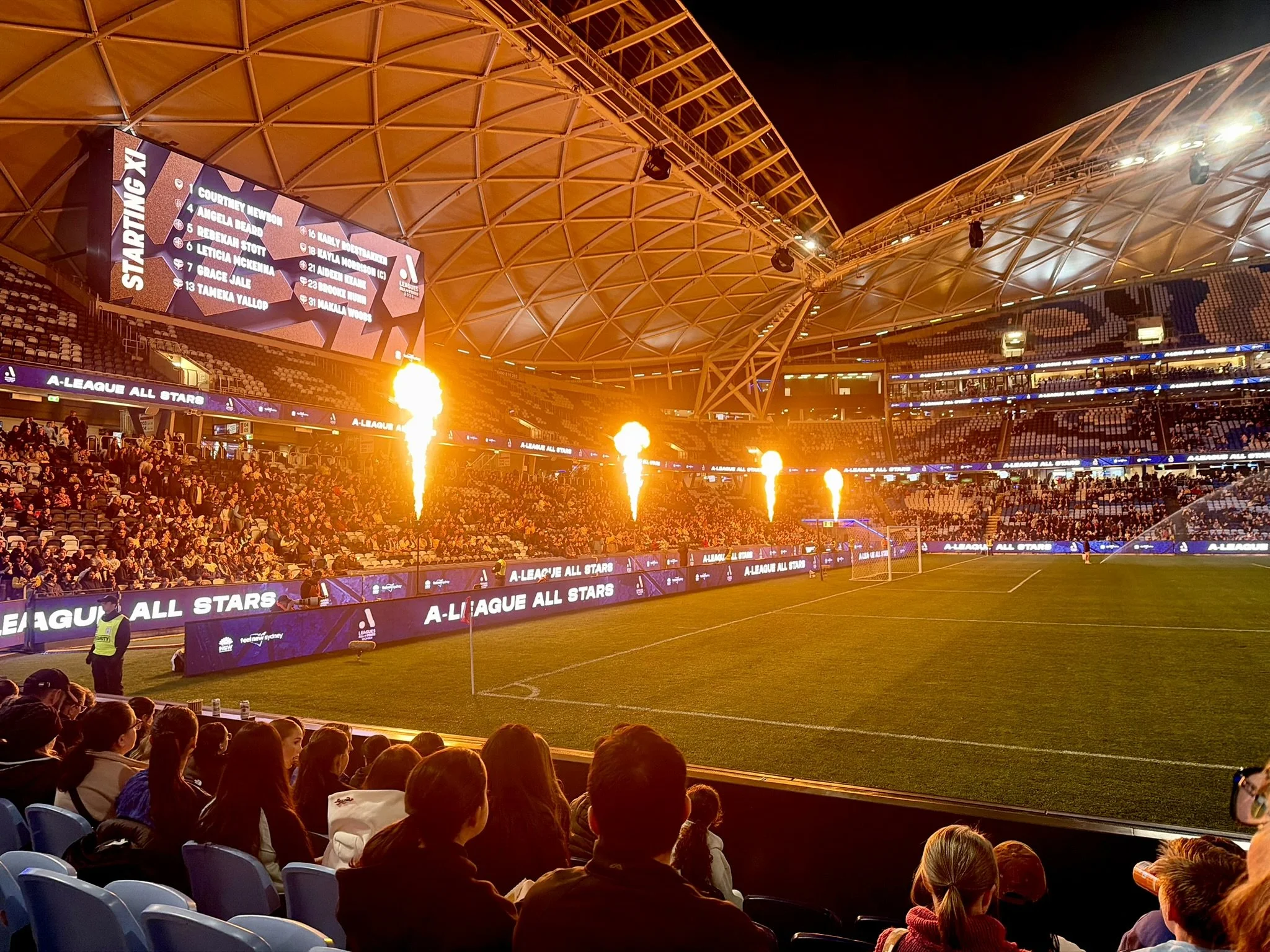
Before the match, the two teams had been presented very differently. The Australian players appeared as a list of names on the screen and received polite applause. Chelsea were introduced through a polished highlights package filled with goals, victories and celebrations. Their players then appeared individually, each with a photograph, number and position. Every Chelsea player seemed to receive a louder response than the Australian team had managed collectively. A few attracted enormous roars. I did not know who they were, but thousands of people around me clearly did.
That answered one of the questions I had been considering while looking around the stadium. Were these people simply Chelsea supporters who had come because the club happened to be visiting, or did they specifically follow Chelsea Women? For at least part of the crowd, the answer was obvious. These were not people applauding an unfamiliar group of players wearing a famous badge. They knew the team and had their favourites.
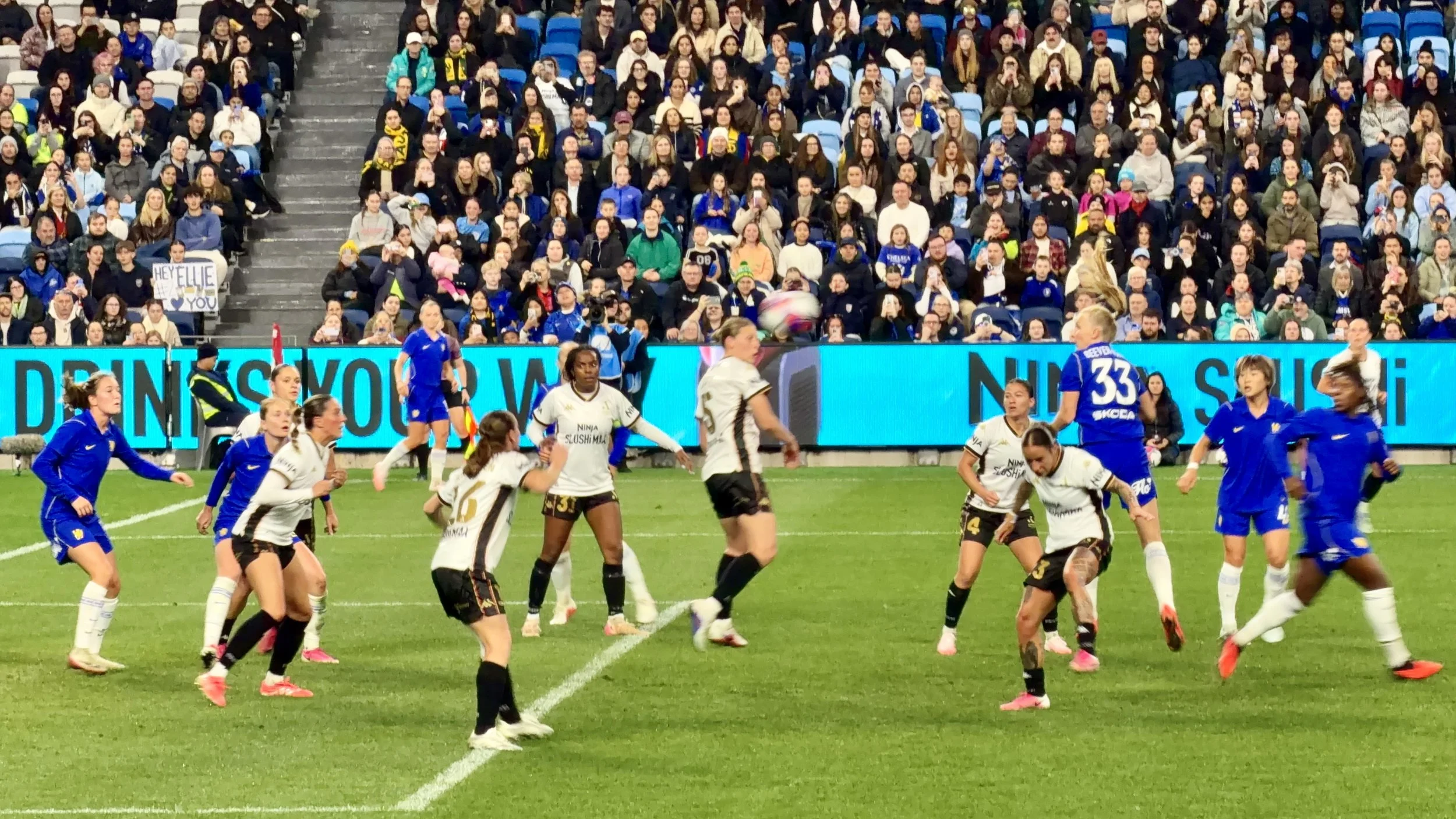
Chelsea scored after eight minutes. Four minutes later, they scored again. At 2–0 after twelve minutes, there was little mystery about which was the better side. Chelsea were faster, more precise and better organised. Their positioning looked deliberate in a way that only comes from preparation and familiarity. The All Stars had talented players, but they looked like talented players who had been placed together. Chelsea looked like a team.
The comparison was not especially fair. The A-Leagues Women season was still months away, its schedule not yet announced, while Chelsea were preparing for a competition that would begin much sooner. One side was using the match as part of its pre-season preparation. The other had been gathered during its off-season and asked to face one of the strongest clubs in England. That did not make the difference any less striking from my seat.
It also did not make the game dull. The Australian defence became increasingly desperate and increasingly entertaining. At times, it felt as though almost every player on the field had crowded into the Australian penalty area. The All Stars blocked, scrambled and cleared the ball in whichever direction would take it furthest from danger. Sometimes there was no attempt to find a teammate. The immediate job was simply to survive, force Chelsea to begin again and hope that eventually they might make a mistake.
The father beside me and I began to appreciate each escape. We commented on good saves, tried to work out what had happened during crowded passages of play and admired the Australians’ willingness to keep throwing themselves into Chelsea’s path. Chelsea’s goalkeeper sometimes stood near the halfway line, which said plenty about where the game was being played. It also created the possibility that made every Australian counterattack exciting. If the All Stars could steal the ball and break through Chelsea’s first line, there was suddenly a great deal of open space ahead of them.
They managed it a few times. A long pass would escape Chelsea’s pressure, or an Australian player would begin running into the space behind the defence. The attacks did not often produce a shot, but they gave the small pockets of Australian support a reason to lift. When almost all of a match is being played near your own goal, simply reaching the other end can feel like a minor victory.
Chelsea scored once more in the second half to win 3–0. All three goals were excellent, and each was followed by another roar from the blue crowd. Yet the support was not hostile or dismissive. Chelsea supporters applauded Australian saves and good passages of play, while the All Stars received credit for continuing to resist. Perhaps that friendliness was not surprising. Many of the Chelsea supporters around me were also Australian. They were supporting the visiting club, but the A-Leagues All Stars were not foreigners playing in their country.
We were outnumbered, but we were not unwelcome.
If another group of European clubs returns next year, I will probably attend again. I enjoyed seeing the difference in quality from close range, and I enjoyed watching the All Stars find ways to resist it. Given the same choice, I would probably support the Australian side again.