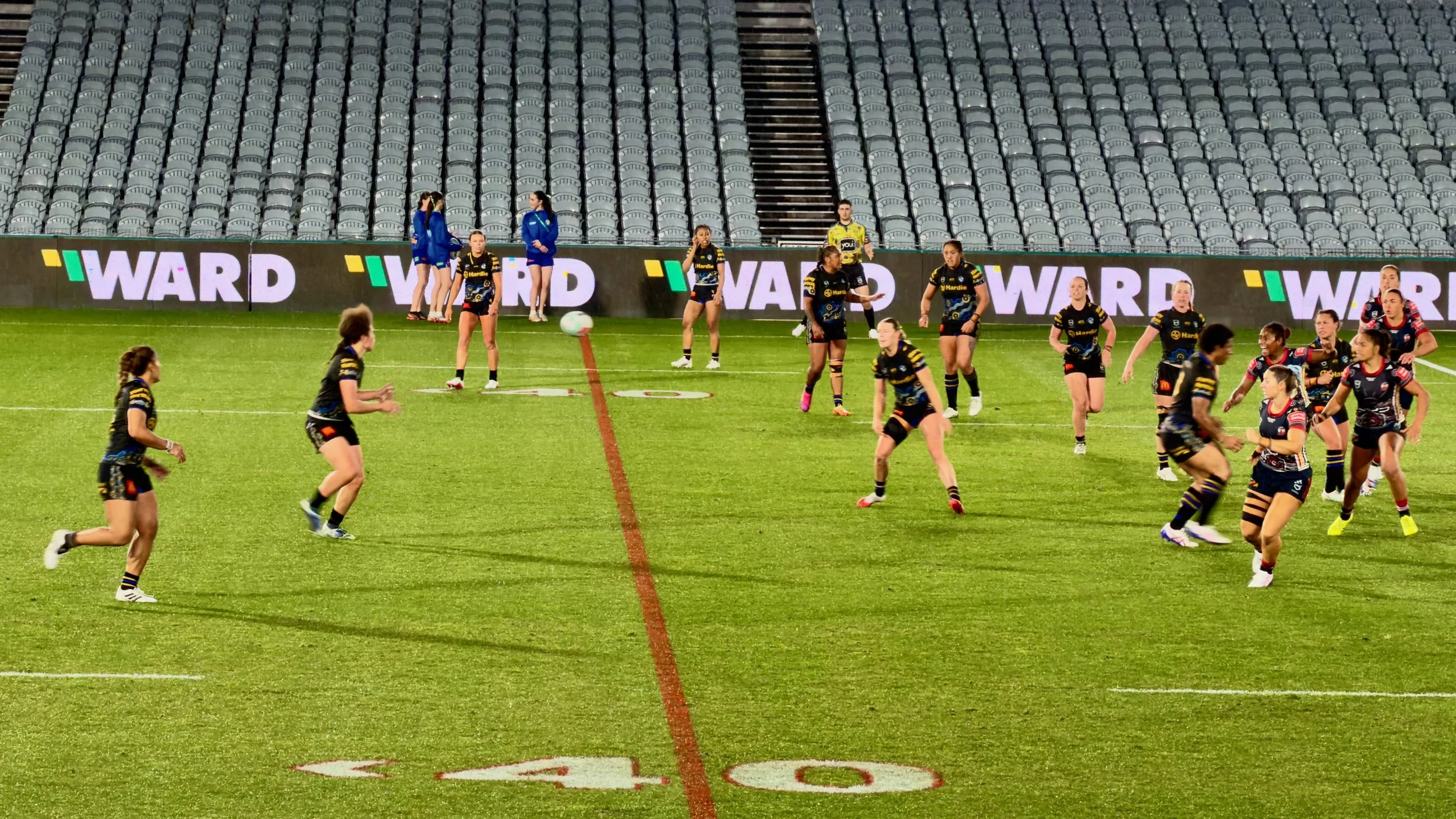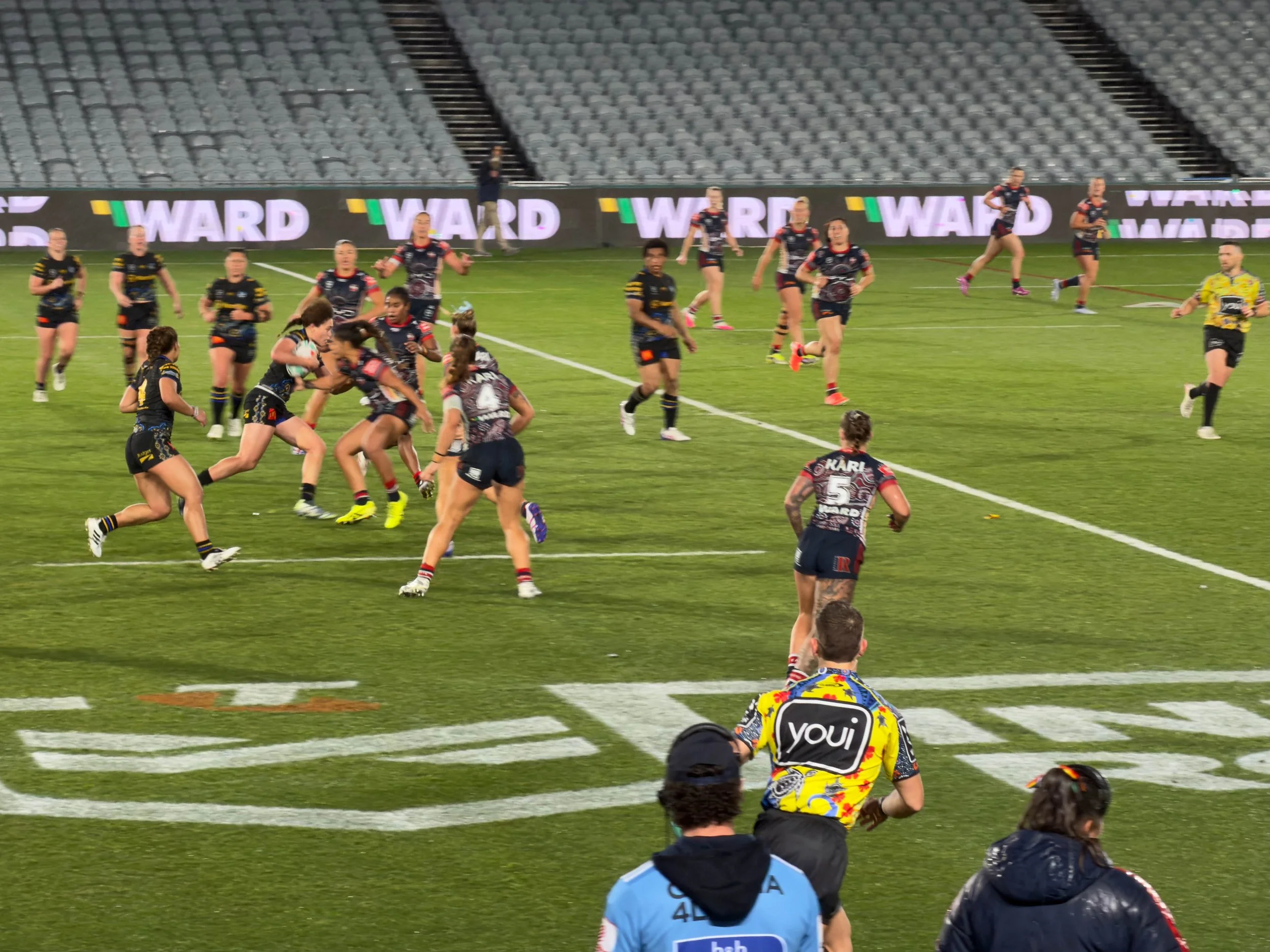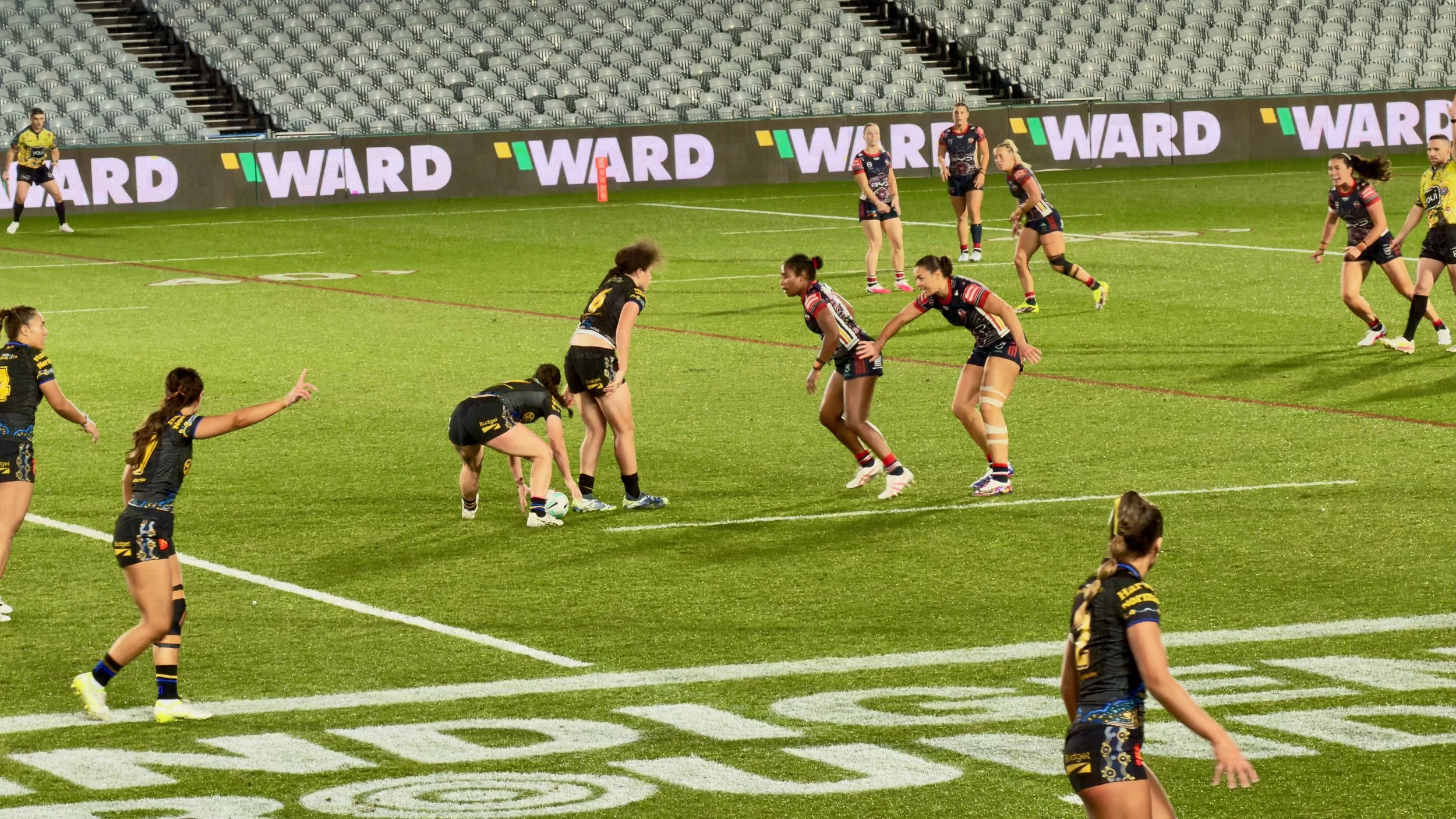
Learning how to be here
I came to Gosford for two fairly practical reasons. The first was geography. Polytec Stadium sounds, at least from Sydney, like somewhere you have to make a deliberate trip to reach, but from Hornsby it really isn't. Get the train timing right and I can be there in a little over an hour, which is comparable with getting to plenty of sporting venues elsewhere in Sydney. The intercity train is comfortable, the walk from Gosford station is easy, and suddenly the Central Coast feels considerably closer than it looks on a map.
The second reason was that I had finally needed to choose an NRLW team. Manly Warringah don't have one, which created a problem I had eventually solved by settling on the Sydney Roosters. So this became my first NRLW game, on a wet Sunday evening in Gosford, and my first Roosters game as something approaching a supporter.
The ticket cost $10. A standard return train trip from Hornsby to Gosford is $14.92, so the game itself is cheaper than the normal cost of getting there.
It started raining on the walk from the station. At first it was only sprinkling, but within about ten minutes it had settled into proper rain, never particularly heavy but persistent enough that there was no pretending it would disappear. By the time I reached the stadium, there was a queue stretching perhaps 150 or 200 metres from the entrance.
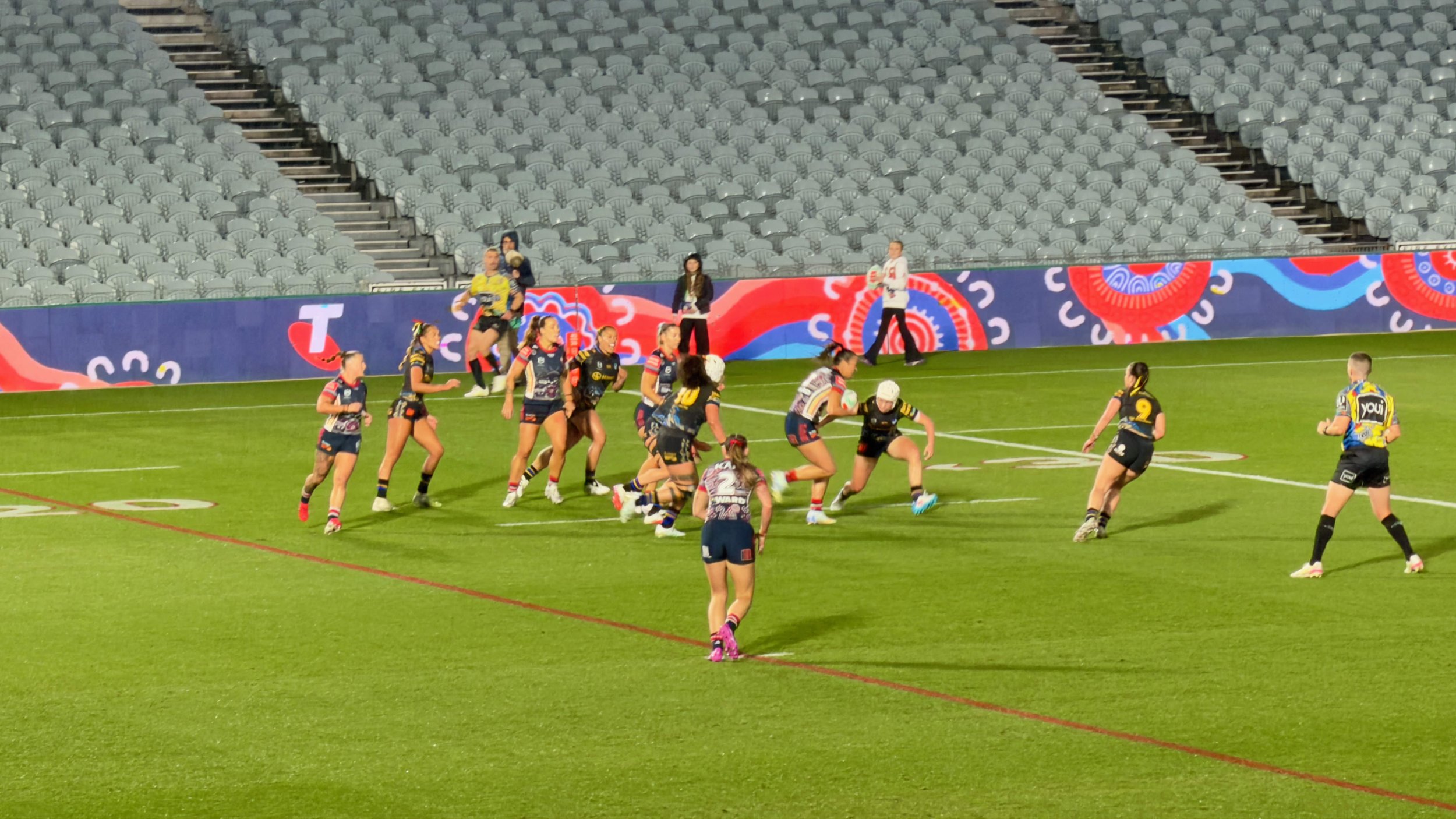
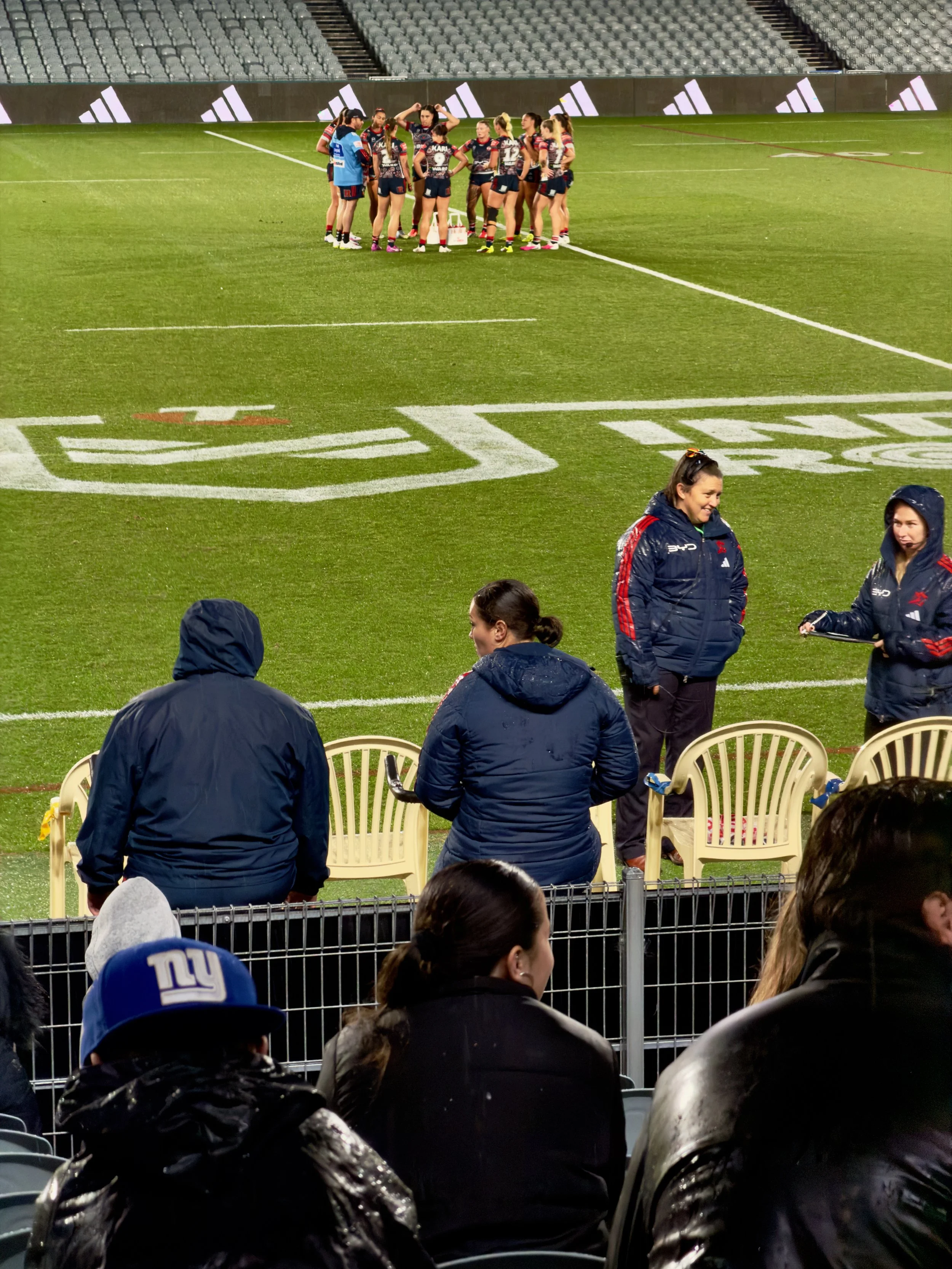
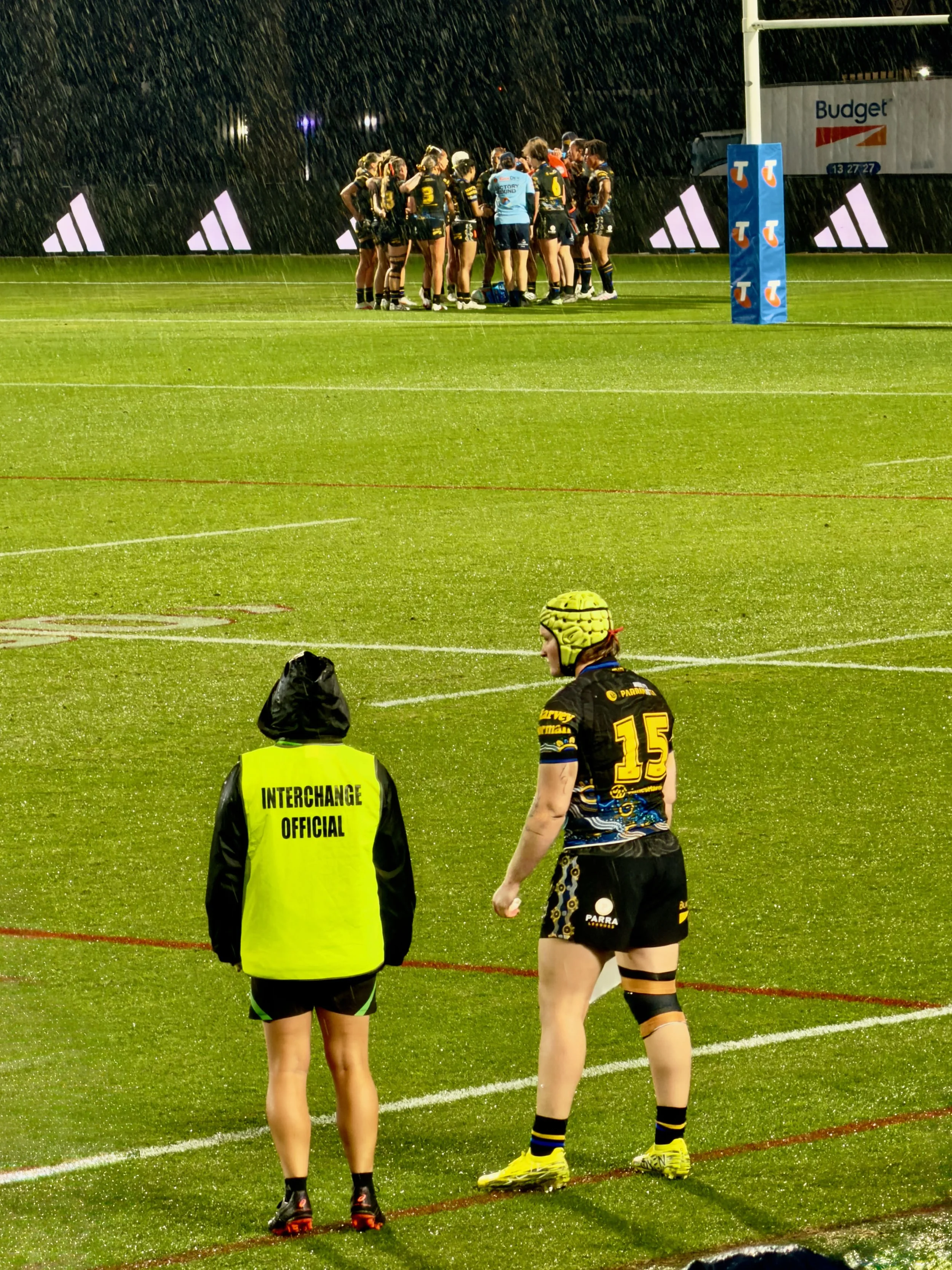
I had arrived about 25 minutes before kick-off, which should have been plenty of time, and initially I was frustrated. It didn't look like a crowd large enough to create that sort of line. Then I started watching what was happening at the gate.
There were people familiar with the routine. Bag open before reaching security, ticket already on the phone, scan it, walk through, keep moving. Then there were people for whom none of this appeared automatic. Bags were still closed when they reached security. Tickets were somewhere in emails, somewhere on phones, perhaps somewhere else entirely. I stood behind three young women who spent what felt like five minutes trying to find theirs before the woman at the gate eventually said, “Can you just step aside, sort it out and let these other people through?”
It wasn't only the tickets. The same pattern continued once people were inside. Some stopped immediately after the entrance while attendants kept asking them to move on. One staircase filled while two others nearby remained almost unused. People stopped in aisles while deciding where to sit, or took the first seats in a row rather than moving further along. None of those things mattered much on their own, but together they made part of the crowd feel unusually unfamiliar with the routines of being in a stadium.
Apparently, I was in the experienced camp, and the rain gave me another reason to feel that way. There were people in waterproof jackets and people in cheap plastic ponchos, which remain one of the least glamorous but most effective inventions in live sport. Then there were cotton hoodies, Ugg boots and jackets that might have been useful against a cold evening but had very little chance against a couple of hours of steady rain.
I had brought a lined, heavy-duty canvas blanket with a hood attachment, which meant I could sit there with my backpack still on and stay almost completely covered. This is the sort of thing that happens when someone who spends time hiking and travelling by public transport starts attending a ridiculous number of sporting events.
I was also thinking ahead to getting home. My blanket would need to be hung up and that was about it. My clothes and backpack would still be dry. Around me were people who looked destined for wet clothes, wet shoes, perhaps a wet car seat and a load of washing. Maybe none of that bothered them. Apparently it bothered me enough to spend part of a rugby league game thinking about laundry.
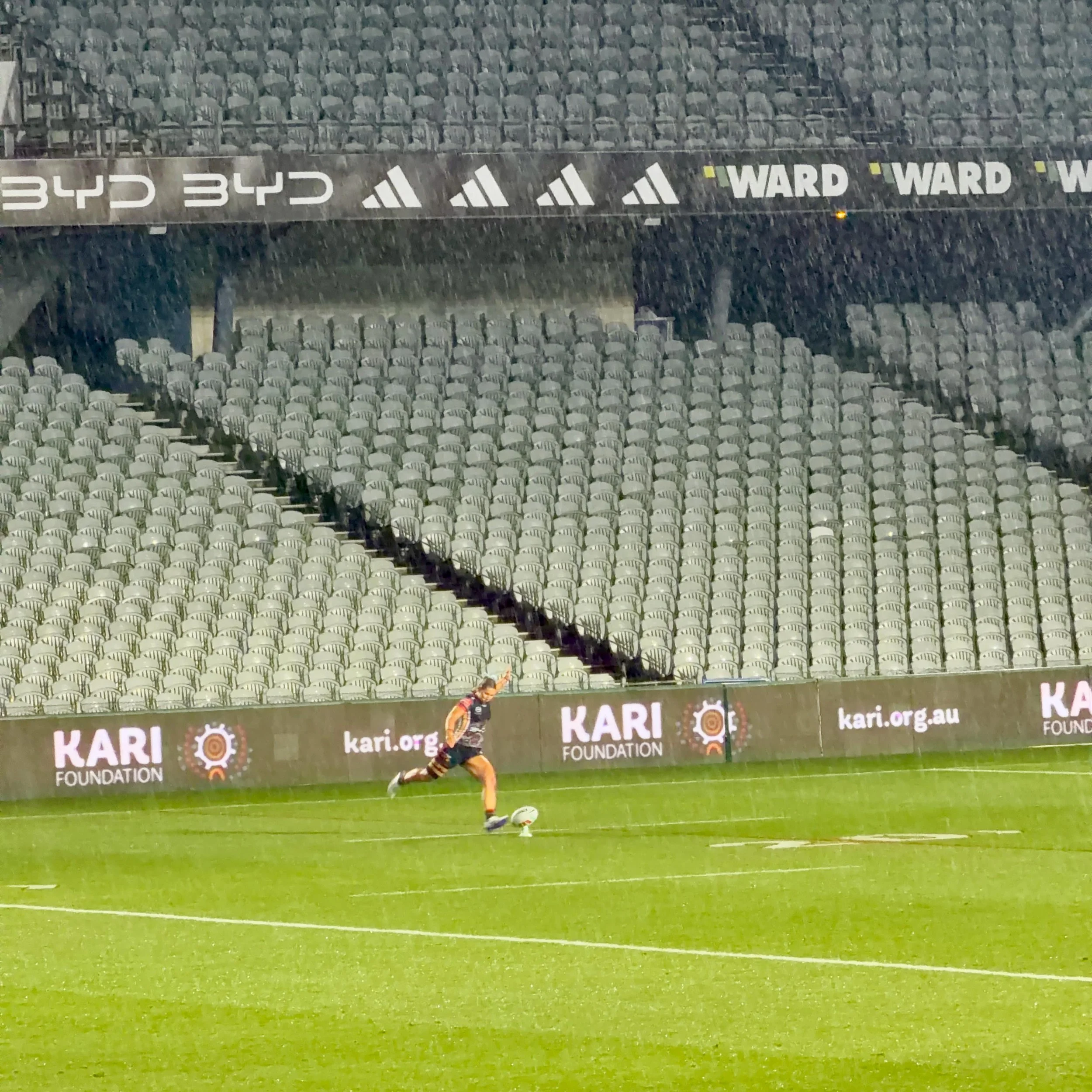
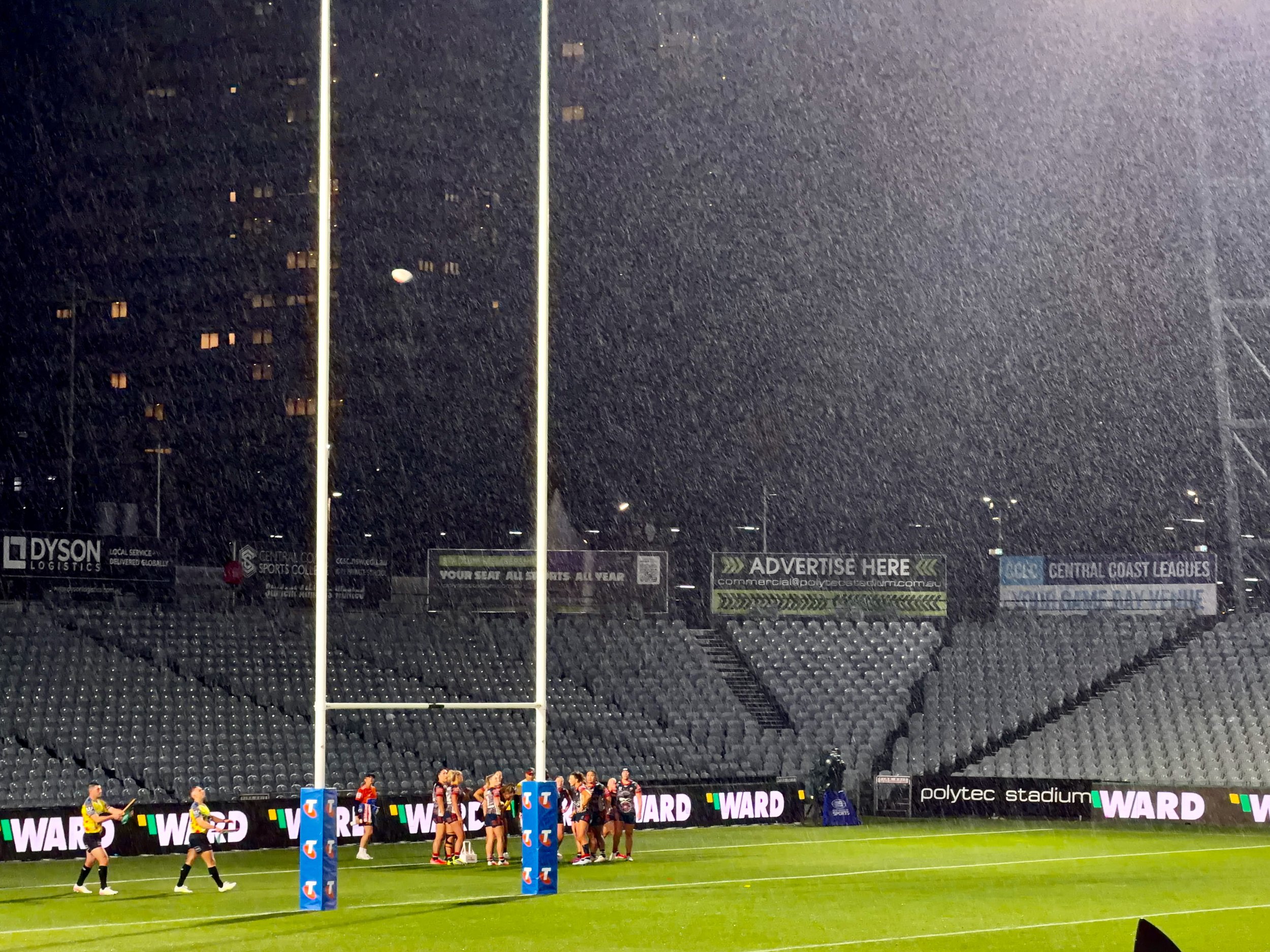
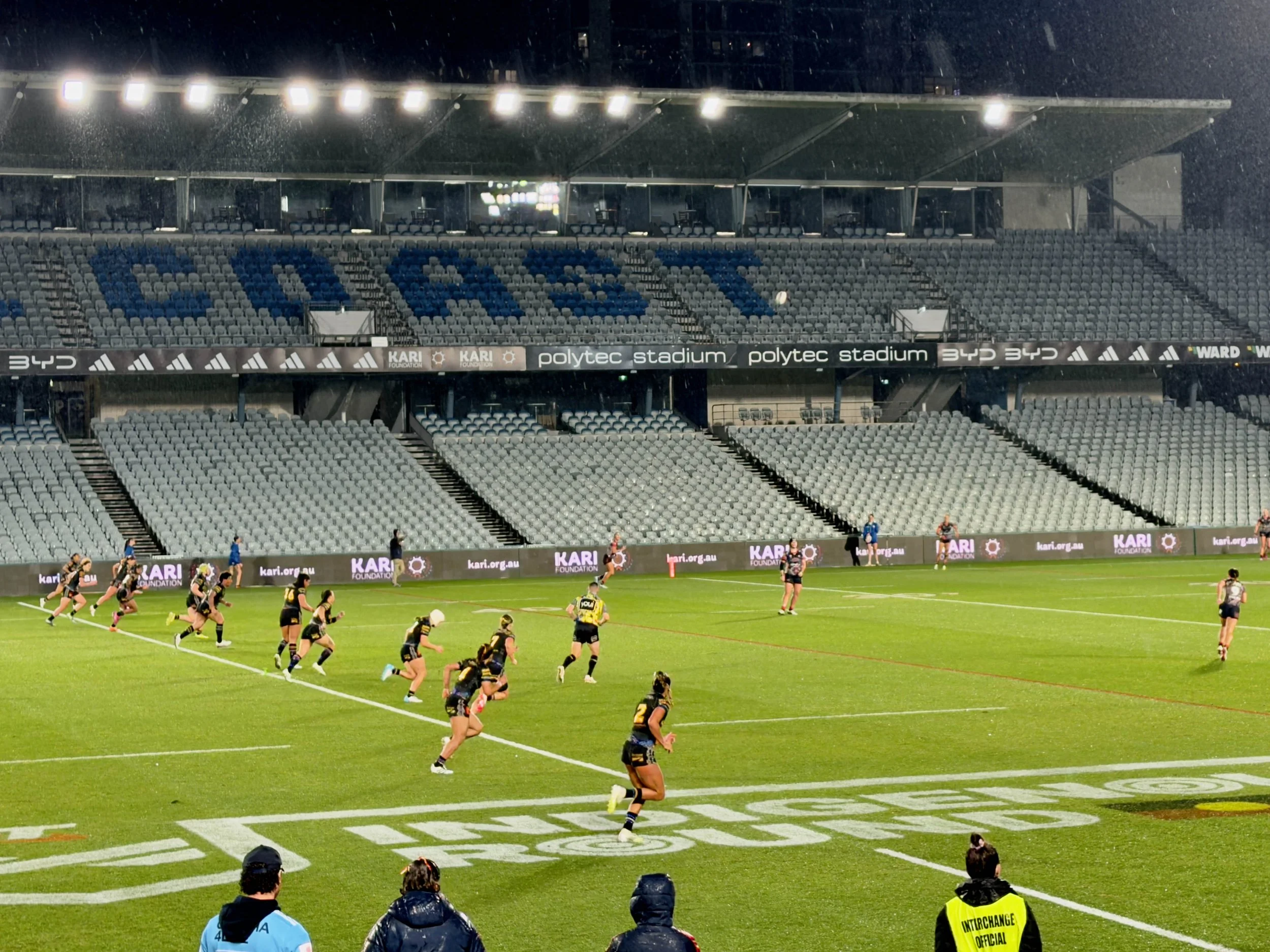
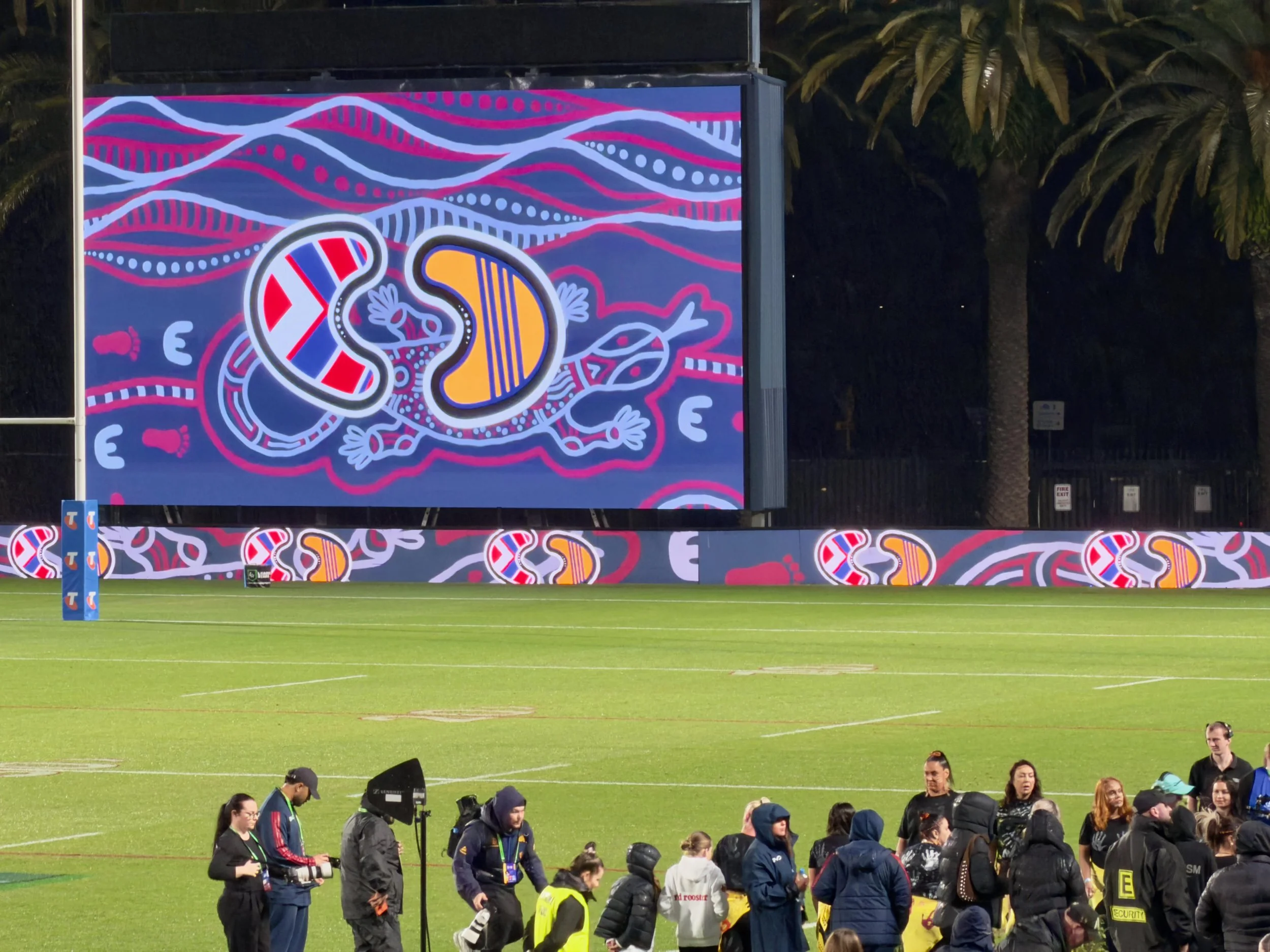
It was Indigenous Round, visible in the jerseys and in the music and performance around the game. Once play started, I was mostly trying to work out what NRLW felt like from the stands.
I know rugby league, so the temptation was to spend the night comparing it with the men's competition and making a list of differences. There are differences. The pace is different, and more than once the Roosters sent the ball high into the wet night and I found myself watching Parramatta underneath it already expecting trouble.
Through the middle, though, the physicality was one of the first things that struck me. There was nothing tentative about the contact. The forwards carried hard and met each other just as hard.
There was more neutral clothing than I am used to seeing at an NRL game. Some Roosters gear, some Parramatta gear, but plenty of people who did not seem particularly interested in declaring themselves for either side. At first that seemed to fit with what I had noticed at the entrance. Perhaps there really were a lot of people here who were new to attending live sport.
The Roosters had won all five of their previous games. Parramatta had lost all five. By full-time it was 46–6, with the Roosters scoring nine tries. The result was about as one-sided as those records suggested it might be, but I wasn't sitting there detached from it. I clapped and cheered every Roosters try and found myself oohing and aahing at the game in exactly the same way I would watching Manly Warringah.
That surprised me a little. I had chosen the Roosters because Manly didn't give me an NRLW team to support, which had felt like a practical decision. Somewhere during those nine tries, it had started to feel less administrative.
Four or five young girls near me turned themselves into a very effective little Roosters cheer squad, clapping and chanting, “Let's go Roosters, let's go,” over and over. Somewhere else was a man who seemed to know the name of every Roosters player, calling each of them on as they received the ball.
The girls kept chanting. The man kept calling names. I kept cheering Roosters tries. They already had an established relationship with this team. Mine was only beginning, but it was beginning in the same eighty minutes.
By full-time, I still could not tell how much of the night belonged to NRLW, how much belonged to Gosford and how much belonged simply to this particular crowd. I did know that the Roosters no longer felt like a team I had selected only because Manly did not have an NRLW side. I had enjoyed watching them, reacted to them instinctively, and wanted to see them again.
They have more games at Allianz, and that feels like the obvious next step. Another NRLW game, in a stadium I know much better, should tell me more about which differences were really part of the competition and which belonged to this one wet Sunday night in Gosford. More importantly, it gives me another chance to watch a team that is starting to feel like mine.