

The Wind Won
The game seemed to start at Carlton.
Jubilee Stadium was still a short walk away, but by the time I stepped off the train there was already enough sky blue around me to make the direction obvious. Carlton is not a grand arrival point. It is a small Sydney station beside a small strip of shops, with the suburb folding back into ordinary residential streets almost immediately.
For this game, though, it had become part of the venue.
People in Sydney FC gear came off the train and gathered themselves into a loose procession. No one had to announce where we were going. The match was down the road, the lights were waiting somewhere ahead, and the cup semi-final had quietly spilled out of the timetable and into the suburb.
It was my first visit to Jubilee Stadium. I had asked someone beforehand what it was like and received the kind of response that lowered expectations without quite insulting the place. So I arrived ready for another average suburban ground.
Instead, I liked it almost immediately.
The entry was smooth, the Apple Wallet ticket worked cleanly, and the ground had the tidy confidence of a suburban venue that knows how to handle a bigger night. It was not Allianz Stadium, and it was not pretending to be. There were proper gates, clear movement to the seats, a small merchandise stand, a few places for drinks and food, and a grandstand that felt comfortable without feeling distant.
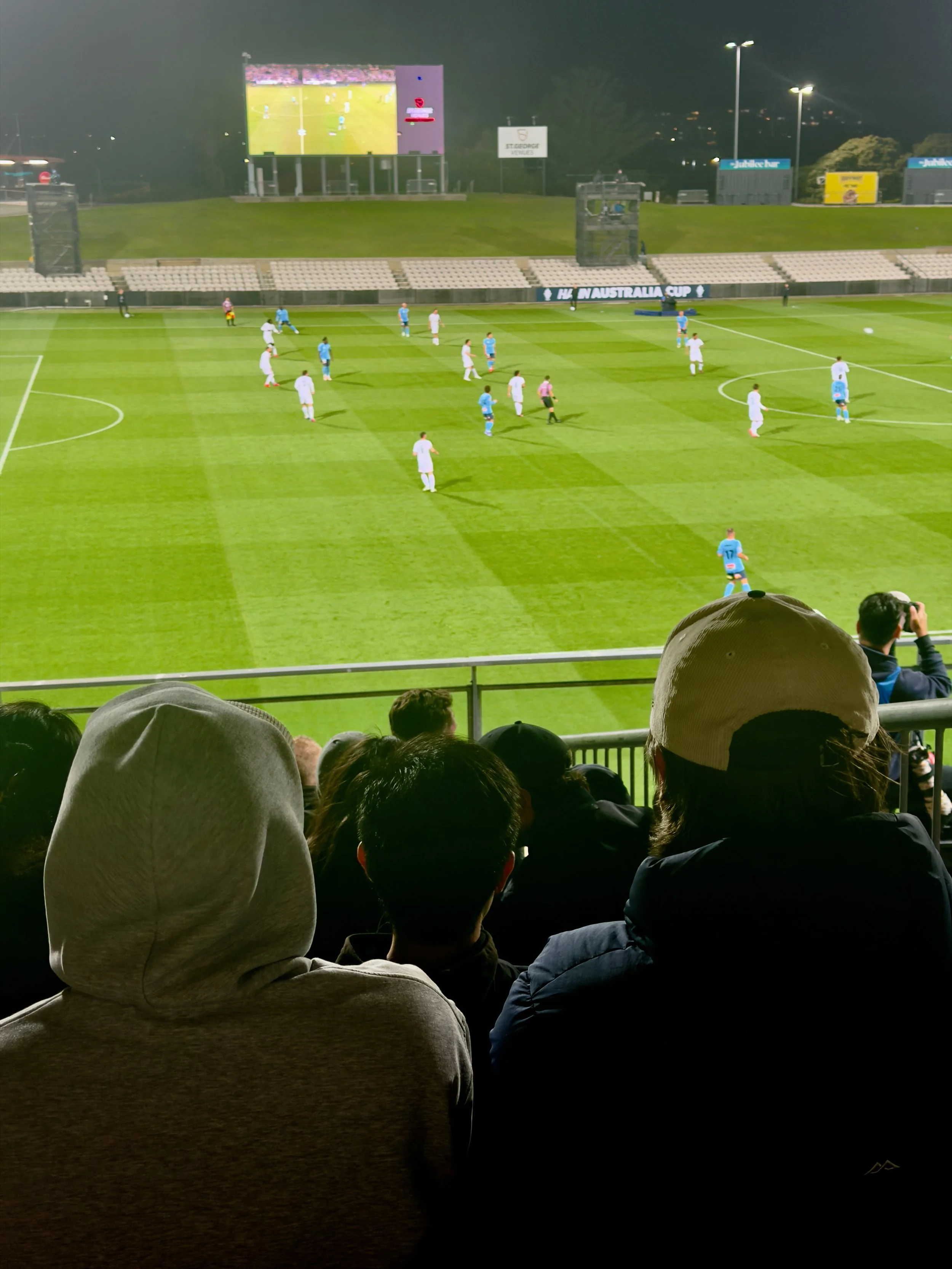
Only the western grandstand was open, but it filled steadily before kick-off. Sydney shirts and scarves were everywhere. Melbourne Victory supporters were around somewhere, because the occasional cheer gave them away, but they were not easy to see from where I sat.
The Sydney fans with the drums had already started.
So had the wind.
At first it was just part of the evening. The day had been warm, but by the time I sat down the cold was cutting through the grandstand. It was the sort of wind that made people pull themselves in a little tighter. Then the game began, and the wind stopped being background. It had direction and force. Long balls did not travel the way they should. Clearances climbed, hung, curved, and seemed to come down in the wrong place. At times players missed the ball by enough that it looked less like misjudgement than betrayal.
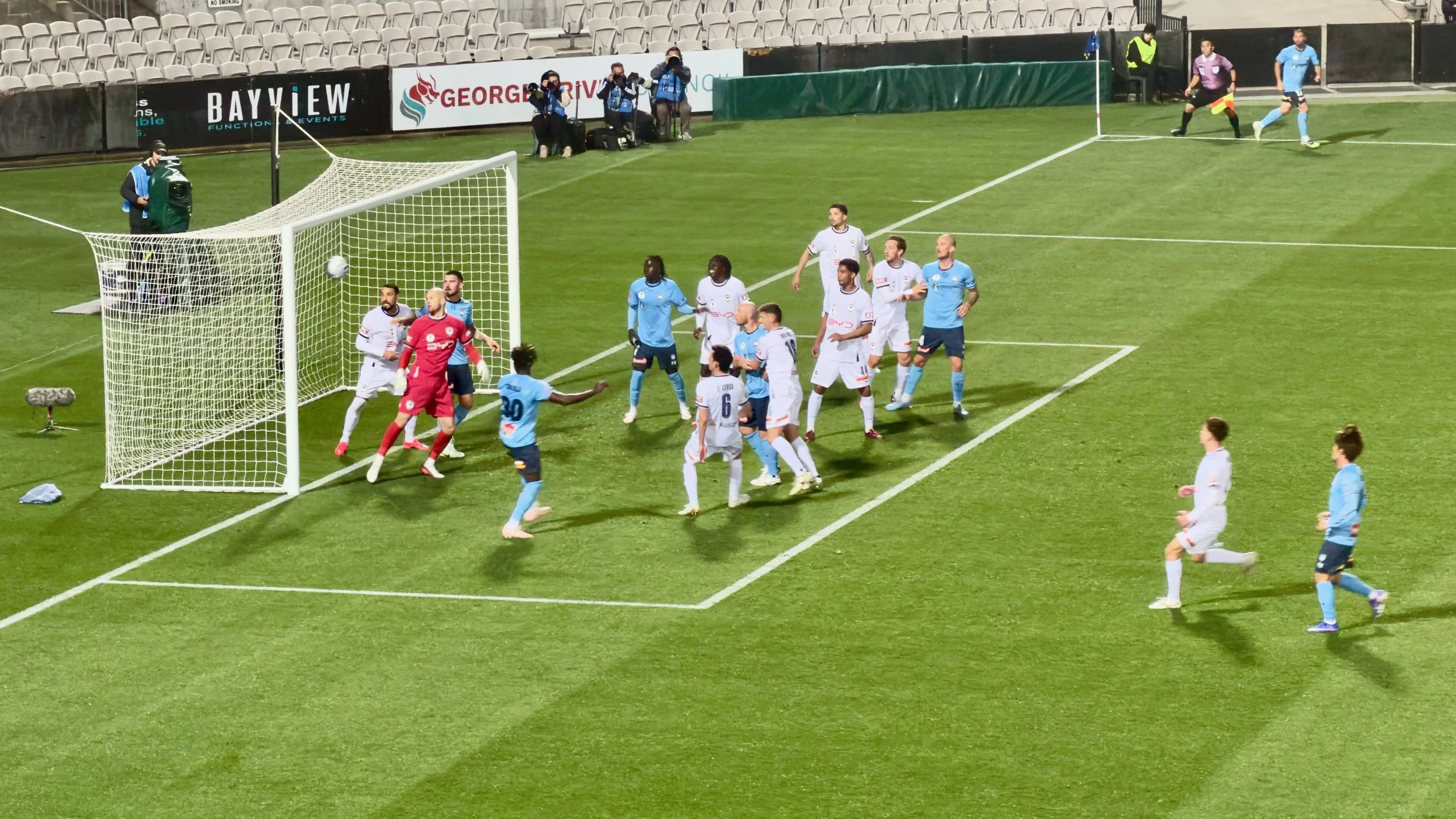
Melbourne scored early, much earlier than the home crowd was ready to accept. The noise did not disappear, but it changed. There was that small collective pause that follows a goal no one has prepared for.
Sydney then spent much of the first half pushing towards the Melbourne goal with the wind behind them. The ball kept coming back. The first half kept offering the shape of an equaliser without ever producing one.
Then came the penalty appeal.
From where I was sitting, it looked clear in real time. On the replays, it looked clearer. A Sydney player had been taken out in the box, the sort of challenge that seemed to make everyone around me reach the same conclusion at once. The referee did not give it. The decision stayed ungiven, and Jubilee became colder and louder.
The crowd carried that moment with them. It was not just one missed decision disappearing into the normal noise of a football match. It became the thing that coloured what followed. Every later call had to pass through it. Every Melbourne delay, every challenge, every goalkeeper touch seemed to arrive with the old decision still attached.
The Victory goalkeeper became a particular target. Some of the songs from the Sydney supporters with the drums are probably best left inside the stadium, where they belonged, but they were not ambiguous. The crowd was cold, Sydney were behind, the referee had already lost them, and the goalkeeper had become the nearest available symbol of everything annoying about the night.
For all that, the game still had Sydney in it. That is one of football’s more irritating talents. It can let you feel wronged without giving you any evidence that your team has done quite enough to escape.
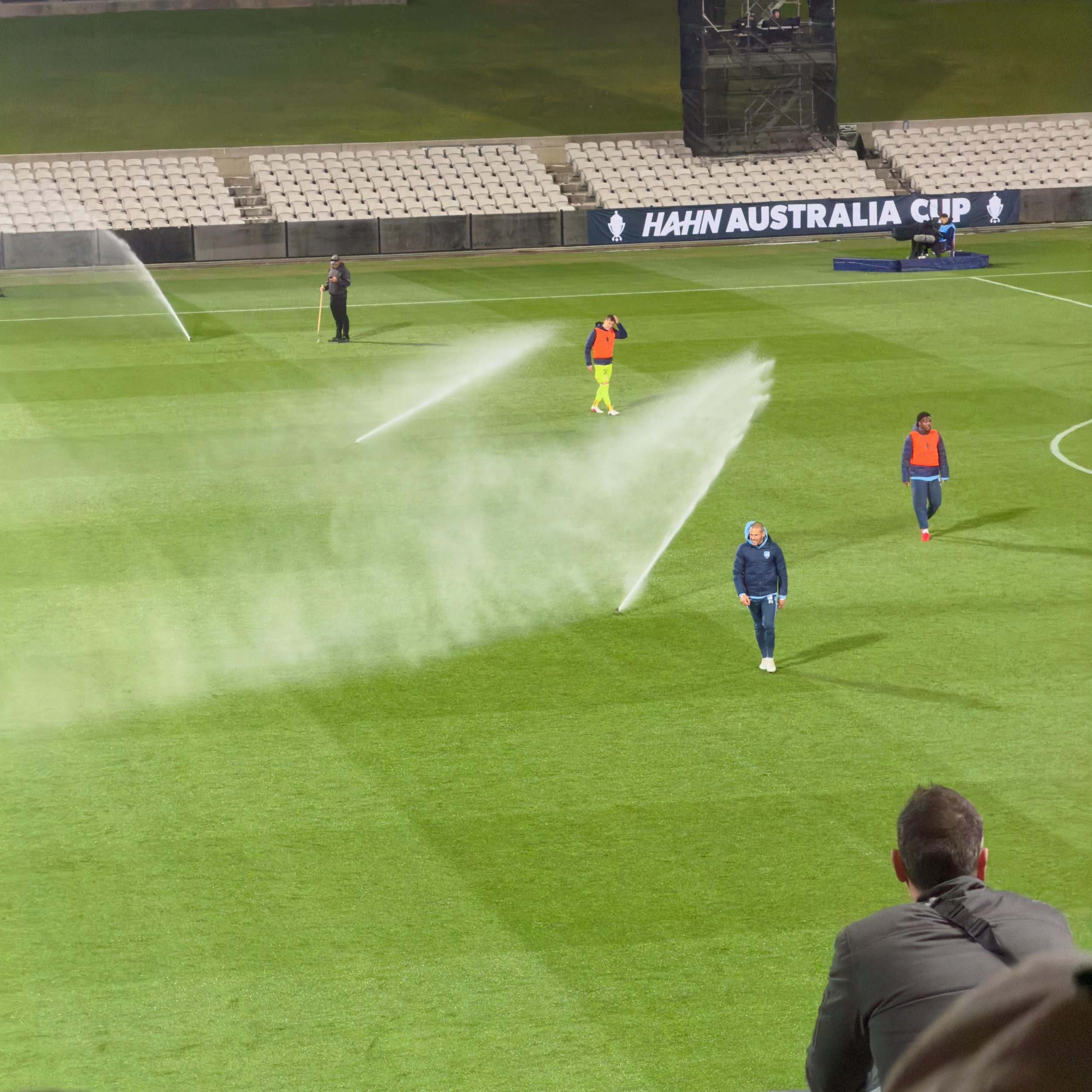
At half-time, even the sprinklers made the point. They came on near one end of the ground and the water did not fall where it was aimed. It blew sideways in sheets, carrying well beyond the penalty area and towards halfway, as if the ground staff had briefly turned on a weather demonstration.
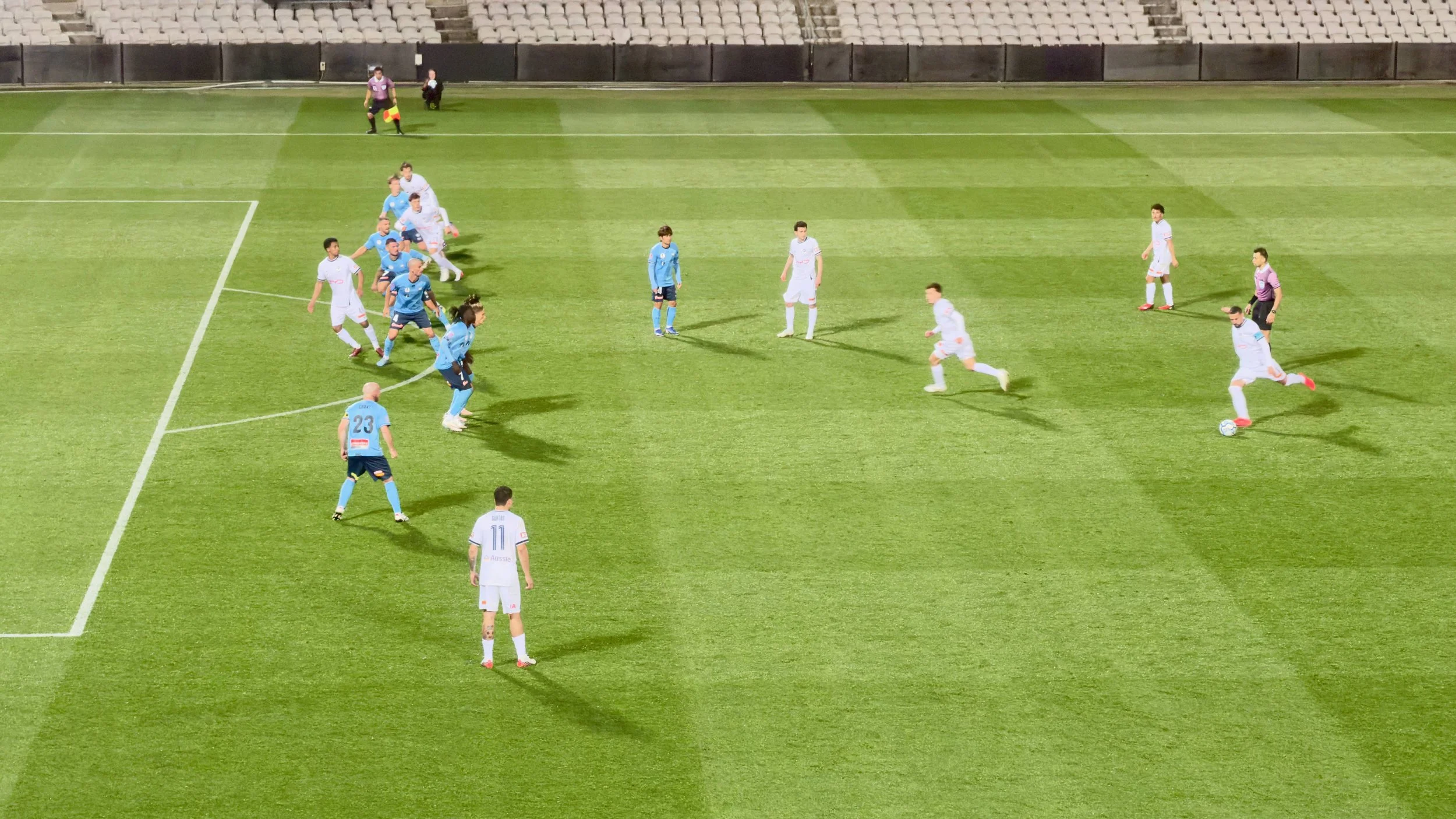
The second half made the wind’s influence harder to ignore. Now Melbourne had it behind them. Sydney had to clear into it, and the ball often seemed to refuse the assignment. Kicks rose and stopped. Passes held up. Anything in the air became a small negotiation with the weather.
Melbourne’s second goal came in that part of the night, and from my seat it simply registered as the thing Sydney could not afford. Later, it was clear enough that it had gone in off a Sydney player, which felt grimly suitable. It was not a night where the ball was especially interested in helping anyone look composed.
Sydney still had moments after that, but the ground had shifted. Around the 70-minute mark, people began leaving. By 80 minutes, more followed. Not in a dramatic flood, just the practical early movements of people who had done the arithmetic: school night, cold wind, long trip home, two goals down.
The drums kept going.
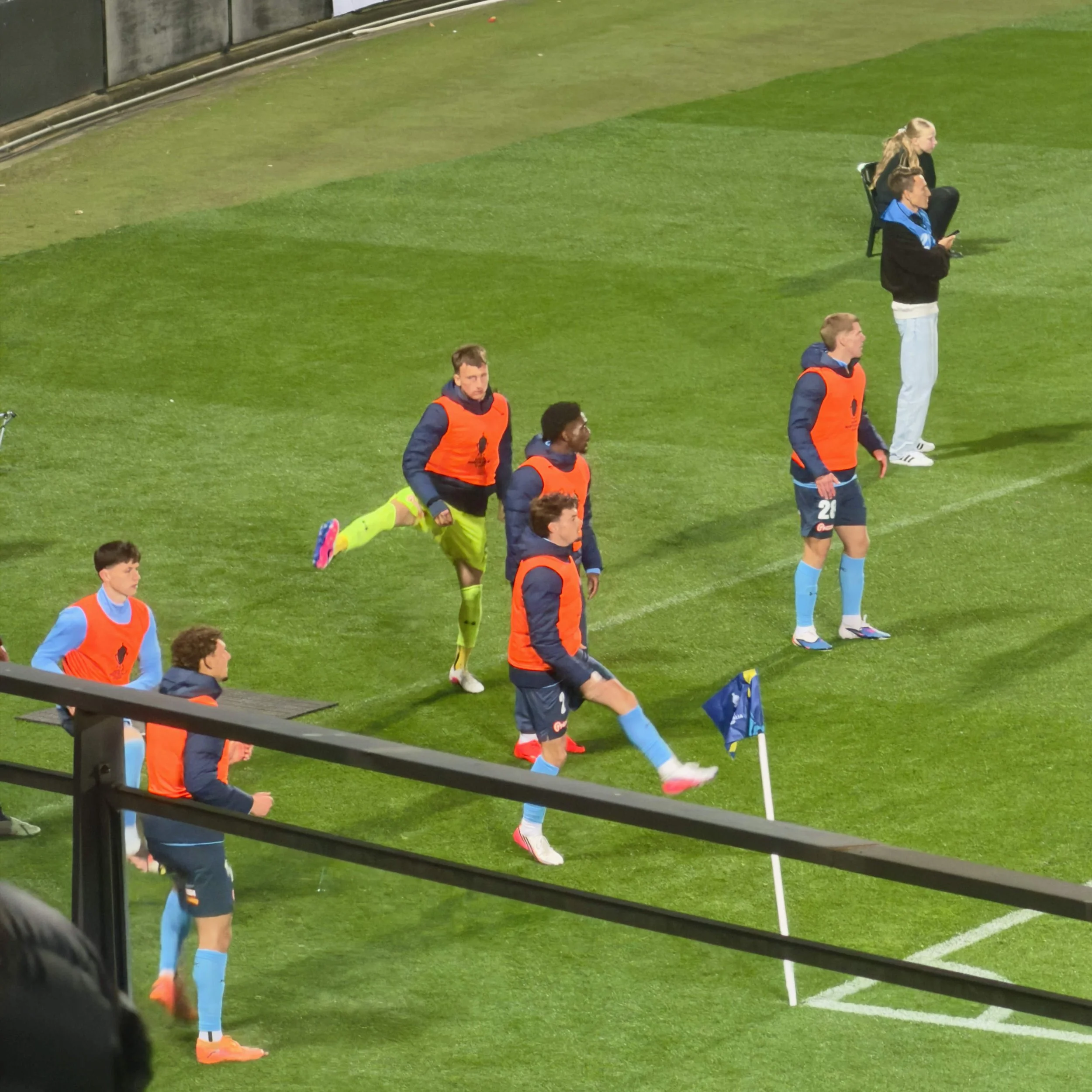
Even as the match became more frustrating, that group did not seem ready to accept the game as finished. They sang through disappointment, through half-time, through the second half, and through the growing knowledge that Sydney were probably not going to the Australia Cup final. There are worse ways to spend a Wednesday night than ruining your voice for a team that has given you very little back.
When the final whistle came, the reaction was not just disappointment. It was release. There was a sigh in it, and then the boos arrived. The referees left to a crowd that had been storing up its opinion since the first half.
I had paid for a ticket, skipped dinner, travelled across Sydney, sat in the cold, and watched my team lose 2-0 in a game that never quite became enjoyable football.
Put like that, it does sound a little ridiculous.
But that is not quite how the night felt by the time I was home. I was frustrated, certainly. Sydney had looked disjointed. The missed penalty still felt important. The wind made the game awkward and unsatisfying. As a first Sydney FC outing before the league season, it was hardly reassuring.
Still, I was glad I had gone.
Partly because Jubilee surprised me. I had expected a modest suburban ground and found one I would happily return to. It was easy enough to reach, close to the train, comfortable to sit in, and open in a way that made the football feel near. By the end of the night, despite the result, I was already wondering whether I could get back for another match.
That may be the strangest part of attending sport. The game can fail you without the outing failing. You can come home cold, irritated and hungry, while still feeling that the night had been worth making room for.
Sydney lost. Melbourne advanced. The crowd blamed the referee, booed the goalkeeper, and sang anyway.
But the thing I will remember most is the wind. It moved through the grandstand, bent the ball, changed the game, sharpened the crowd, and made the whole night feel slightly out of human control.
Everyone else was just trying to play through it.