Twenty Metres to the Right
Nine games in, I think I have finally settled into an Ice Dogs routine. That routine changed almost immediately.
For the previous four games I’d sat in exactly the same seat. It had become my seat. There was nothing wrong with it, and it was available again tonight.
I walked straight past it.
There wasn’t any great reason. I just wanted to see the game from somewhere else. I moved across behind the Ice Dogs’ bench, a section that generally attracts members and the more regular supporters, and settled into a seat about halfway down the stand.
The Metro was shut again, so it was the now familiar bus to Macquarie. I arrived ridiculously early, one of the first through the doors, and found myself sitting in the stands finishing the previous Ground Level article while players drifted onto the ice for warm-up.
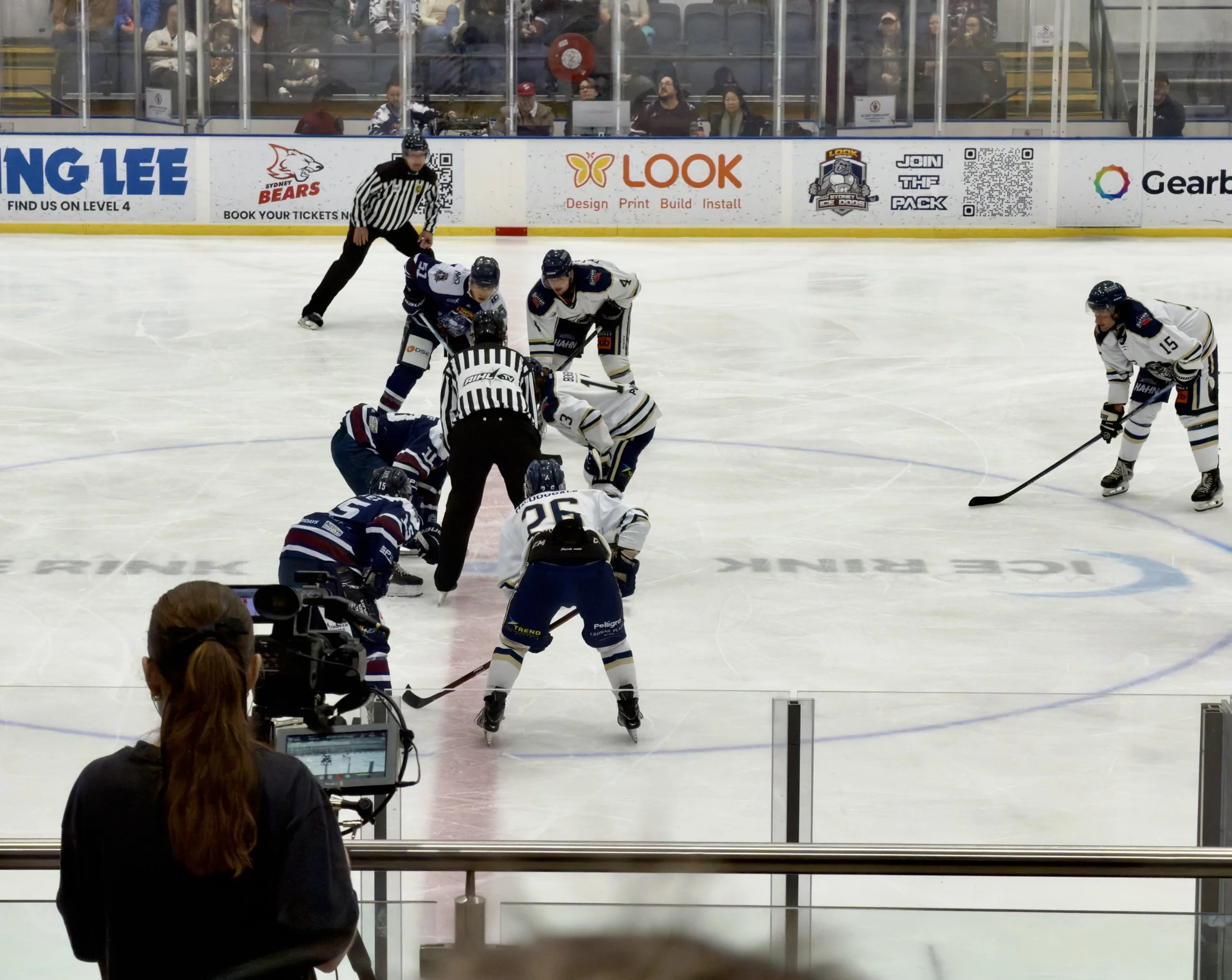
In the new seat. The ice looked much the same. Everything around it looked different. The first thing I noticed was the crowd.
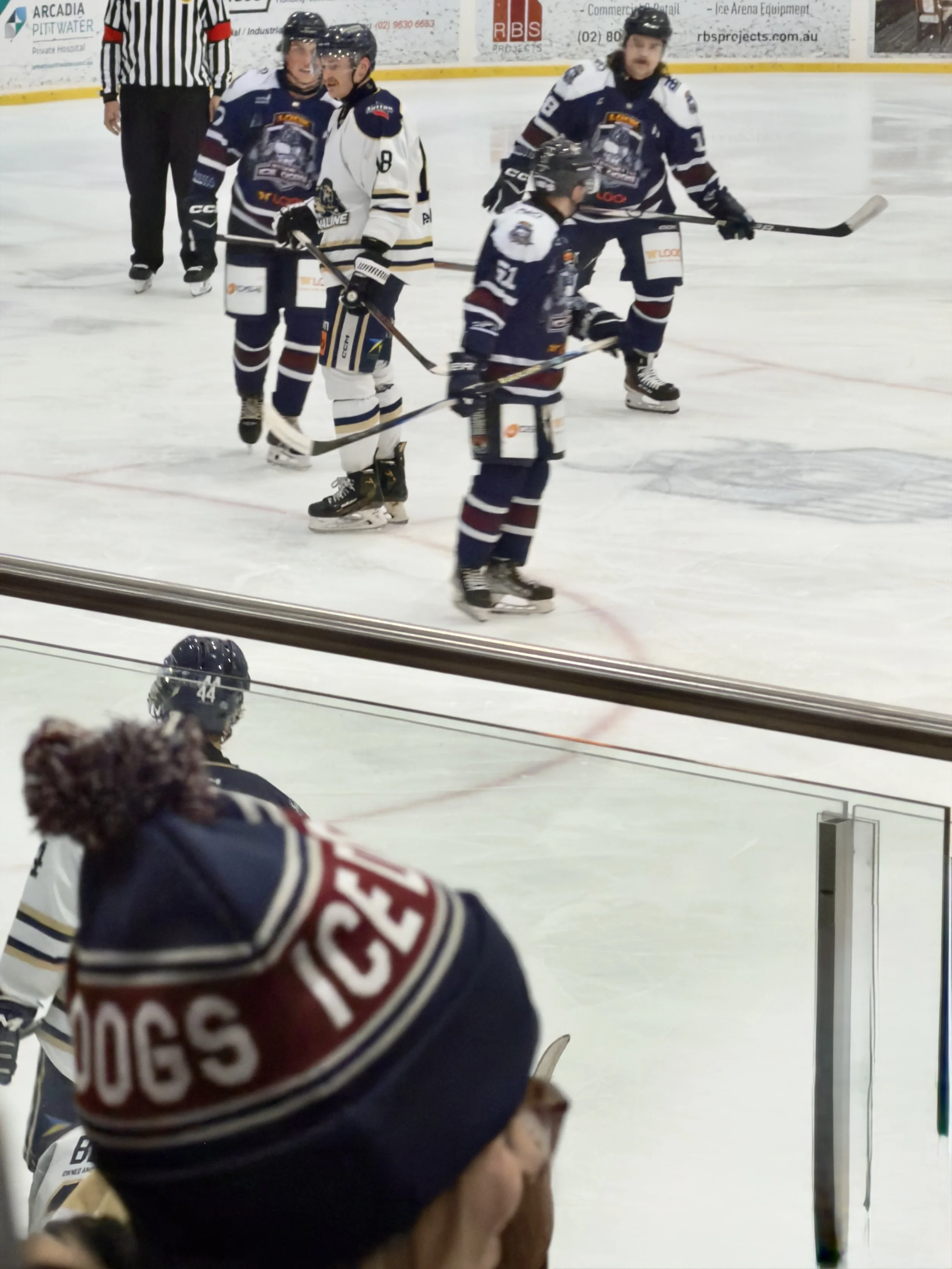
Not the size of it, although it was a healthy Sunday night turnout. More the people themselves. There were families everywhere, grandparents with grandchildren, younger couples and groups of friends. What really stood out, though, was what everyone wore.
The newer supporters generally seemed to have the scarves, beanies and T-shirts. The people I was beginning to think of as regulars almost all wore jerseys. Many had players’ names across the back. Then there were the hoodies and the bomber jackets. I hadn’t even seen the bomber jackets for sale, so I don’t know whether they were old merchandise, members’ gear or something else entirely. Whatever the answer, they seemed to tell a story.
The longer people had been coming, the more history they wore. I realised I wasn’t really recognising faces anymore. I was recognising jerseys.
Sunday crowds are becoming familiar too. Saturday nights still feel a little louder. A little rowdier. Sundays feel different. More families. More regulars. A little less alcohol and a little more quiet confidence. The crowd still cheers every goal, but it’s a different atmosphere.
I’m changing too. A few games ago I would clap politely. Now I’m joining the barking whenever the chants start. It happens almost without thinking. Somewhere along the way I’d stopped feeling like I was watching an Ice Dogs game and started feeling like I was part of the crowd watching one.
That didn’t make me a diehard. It just made the evening feel more natural.
The game itself never really settled. We desperately needed a win after losing to the Central Coast Rhinos the night before. Adelaide sat at the bottom of the ladder, so this was a game we probably should have won, but recent form suggested nothing was guaranteed.
We scored first. Then another. The scoreboard looked comfortable enough, but it didn’t quite match how the game felt.
Adelaide generated plenty of shots. Some missed altogether, others were comfortably handled by our goalie, who again showed why he’s one of the better goalkeepers in the league. At the other end we created far fewer opportunities than I remember seeing earlier in the season. That has become one of the things I now find myself watching.
Earlier in the year the Ice Dogs regularly pushed towards fifty shots on goal. Lately it’s often been somewhere in the thirties. The conversion rate is still good, but we’ve also lost our two highest goalscorers to international commitments. Adelaide, on the other hand, has strengthened.
The result is a different style of hockey. Not worse. Just different. We don’t overwhelm teams with chances in the same way anymore.
Instead, every opportunity seems to matter a little more. The penalties reinforced that.
Adelaide spent plenty of time putting themselves under pressure. Every time they lost a player to the penalty box, the Ice Dogs looked dangerous and generally made them pay.
Then Adelaide ended up with two players in the box at the same time. Three skaters against five. The whole rink sensed what should happen next.
Every pass was greeted with another murmur. Every shot drew another groan or cheer. It should have been a quick goal. Instead it took around a minute and a half.
The relief when it finally came probably said more than the celebration.
There were other little things I found myself noticing too.
For the second game in a row, sticks were breaking. Two snapped completely while another appeared damaged badly enough that its owner immediately headed for the bench to swap it out. It’s funny what starts catching your attention once you’ve watched enough hockey.
The biggest moment came late in the game.
Adelaide fired a shot that hit one post, skated across the face of goal, struck the other post and bounced back out.
Adelaide immediately believed it had crossed the line. Play didn’t stop.
Within seconds the Ice Dogs were attacking at the other end and scored.
Everything stopped then. Players gathered. Coaches argued.
The replay appeared on the big screen more than once and, even after watching it, I still couldn’t honestly say whether the puck had crossed the line or not. It was that close.
What I did notice was how differently the two teams reacted.
Adelaide kept arguing.
The Ice Dogs didn’t.
The dogs spoke to the officials when spoken to, but otherwise stayed out of it and got themselves ready to play again. Whether that was coaching, discipline or simply experience, it struck me as the better approach.
The thing I wonder about ice hockey, conflict is expected and to a degree celebrated by the crowd. The crowd has a casual approach when it occurs, with other sports the crowd becomes intensely observant and even shocked. I am now curious does a certain type of crowd get attracted to ice hockey or does ice hockey generate the energy a crowd absorbs.
The closing minutes seemed to take forever.
Every stoppage stretched the game a little longer. Every whistle seemed to bring another discussion. Ten minutes of hockey somehow became twenty minutes.
Eventually the siren sounded. The Ice Dogs had won 5–3.
Walking back towards the station, I wasn’t really thinking about the score.
I was thinking about everything else.
Changing seats had changed what I’d noticed. Not just the supporters. Not just the hockey. The whole experience.
I found myself wondering where I’d sit next time. Not because I’d found a better view.
Because I was curious what else I hadn’t noticed yet.