Why are you here
Yesterday, I arrived at the Sydney Olympic Park Aquatic Centre fifteen minutes before the first game and walked straight through the doors.
Today, I arrived forty-five minutes early and joined a queue stretching close to one hundred metres.
There were police near the entrance, ticket checks, bag inspections and a crowd already pressing towards the doors. The general admission seating that had been almost completely empty when I arrived the day before was already filling. The venue was buzzing before the first ball had been thrown.
There was no wristband this time, which was strangely disappointing. More importantly, the café was closed. No coffee. Finals day had begun badly.
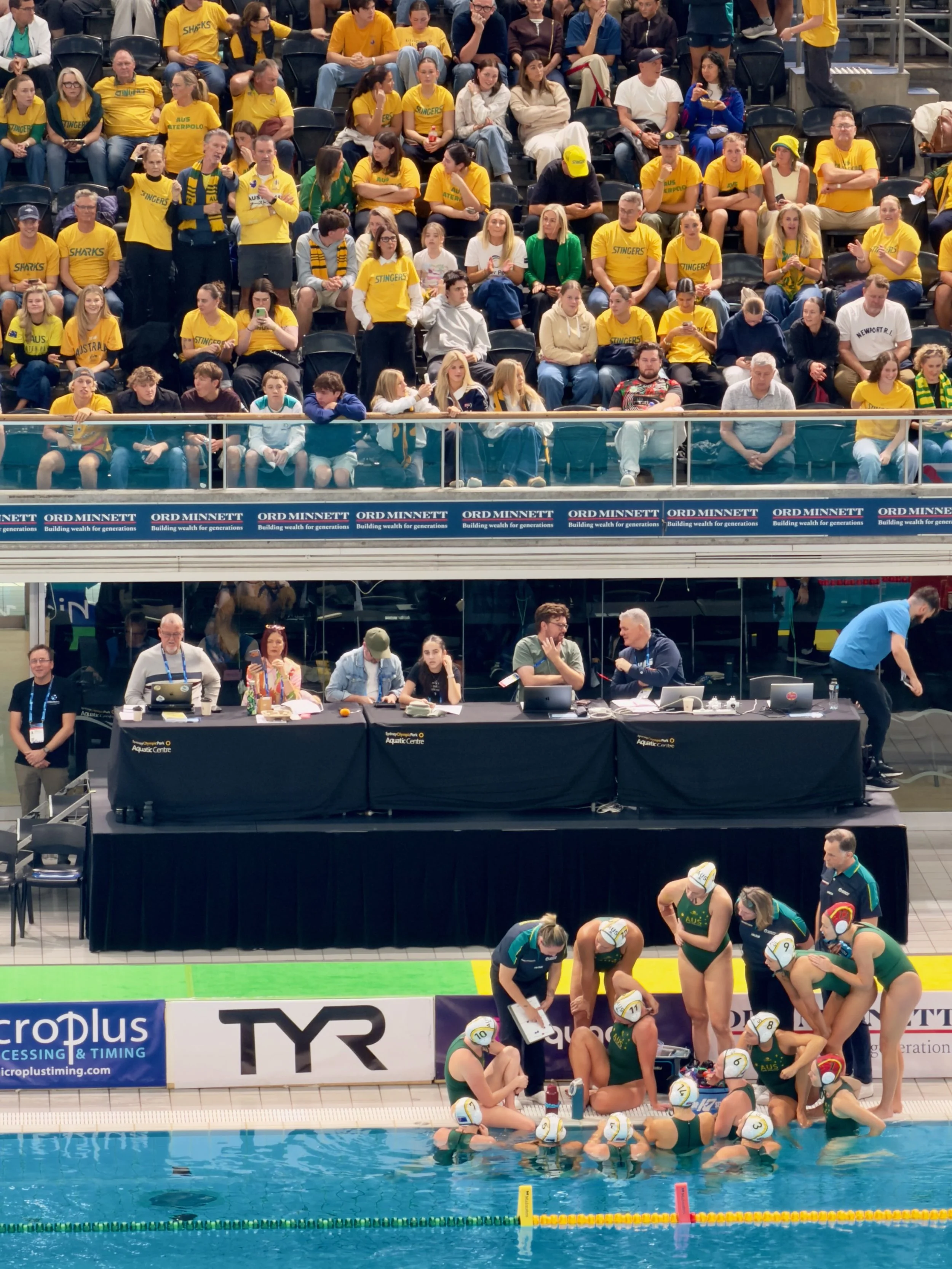
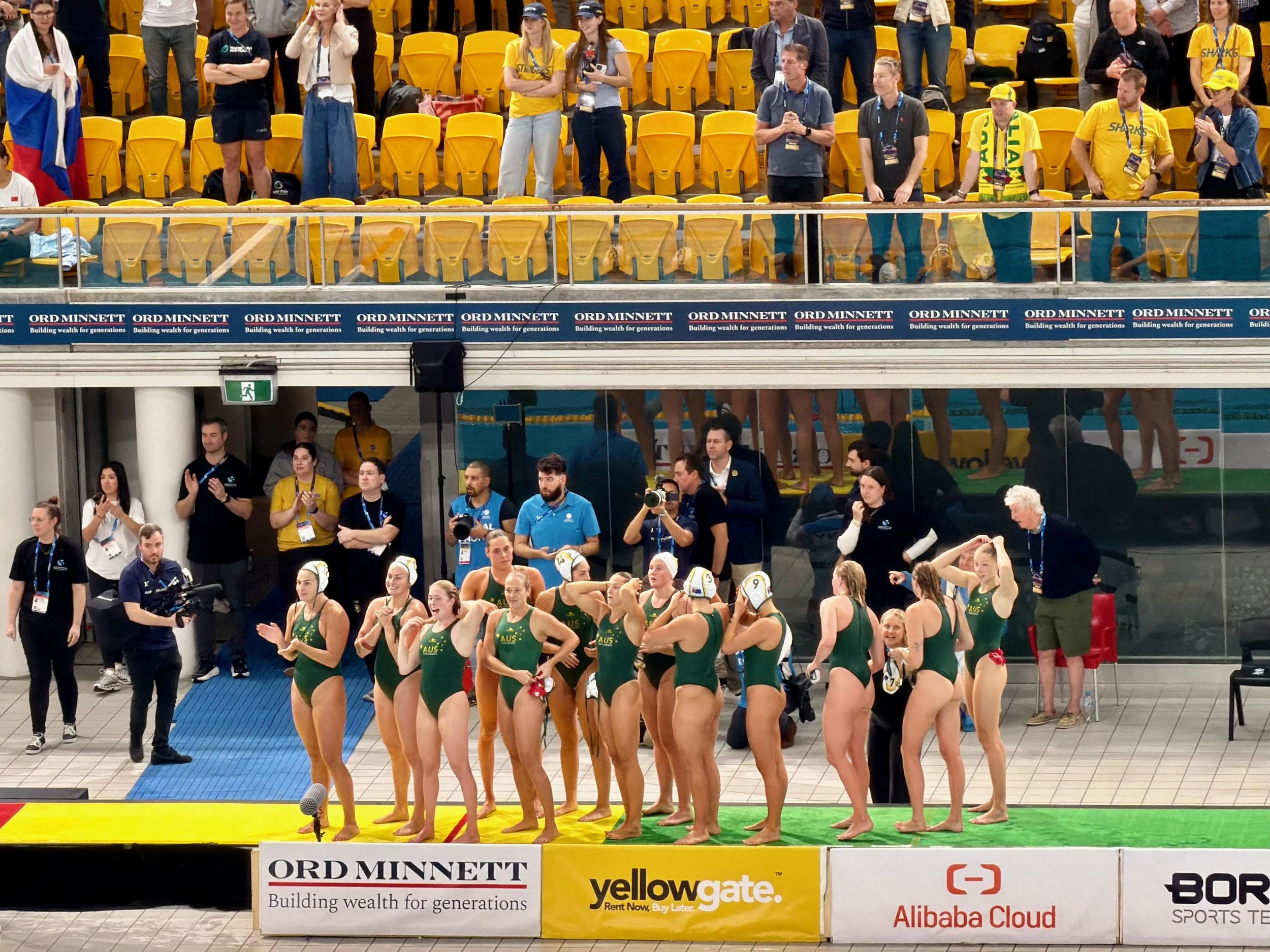
The Australian women were playing for bronze in the opening match, and the crowd had arrived ready for them. Their introductions were greeted with huge applause. The national anthem was sung loudly from the stands, something that had not really happened the day before, and every Australian goal produced a genuine roar.
A small but committed group of Russian supporters had also arrived with voices prepared. They sang, chanted and made an impressive amount of noise for a group of perhaps twenty or thirty people. At times they could be heard clearly around the venue. At other times they were completely drowned out by the Australians.
It was the first sign that people were experiencing the day in different ways. There was the match in the pool, the score on the board and the tournament medals at stake. Around it were several different crowds, each watching the same game for different reasons.
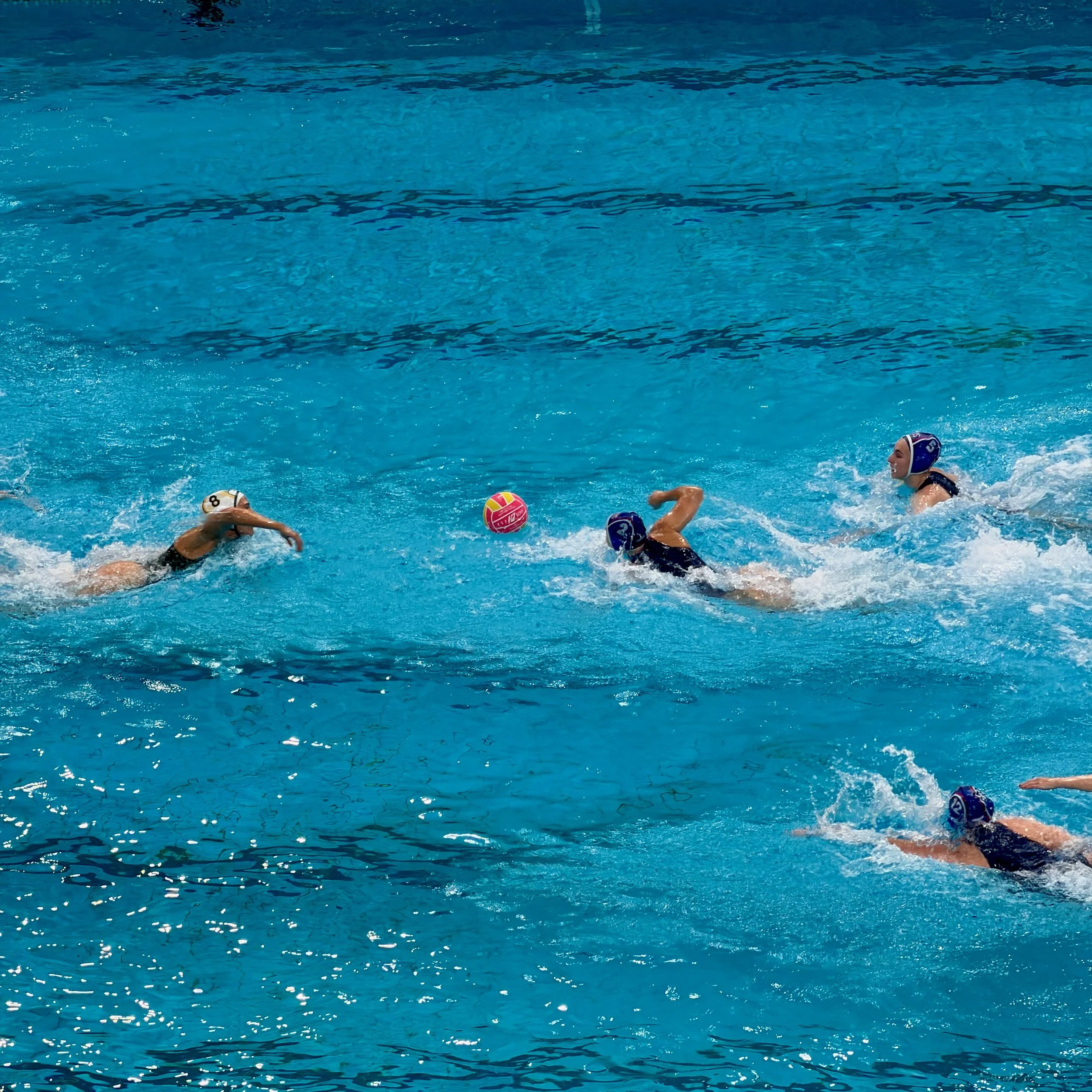
I was watching differently too. When Australia was not playing, I had spent most of the weekend applauding good water polo. A sharp goal from either team deserved recognition. So did a goalkeeper stretching across the cage to make a save. I had no strong preference and was happy to enjoy whatever happened. When Australia played, that generosity disappeared almost immediately. Australian goals were celebrated. Opposition goals were mostly ignored. A great Russian save was still a great save, but it no longer felt like something worth applauding. Supporting a team changes the way you watch. It changes what you notice, what you forgive and what you choose not to acknowledge. It can turn a routine refereeing decision into an injustice and a minor mistake by an official into a personal offence.
At one point, an Australian attack was delayed because the officials returning the balls to the pool had a rare moment of inaccuracy. They had been remarkably precise across the weekend, repeatedly throwing replacement balls over long distances to exactly where they were required. They were probably current or former players themselves. Nobody makes that many accurate throws by accident. This time, the first throw struck the goal. The second missed badly. A third was required. The crowd booed. The mistake itself was insignificant, but it interrupted an Australian possession. By then, I understood the reaction.
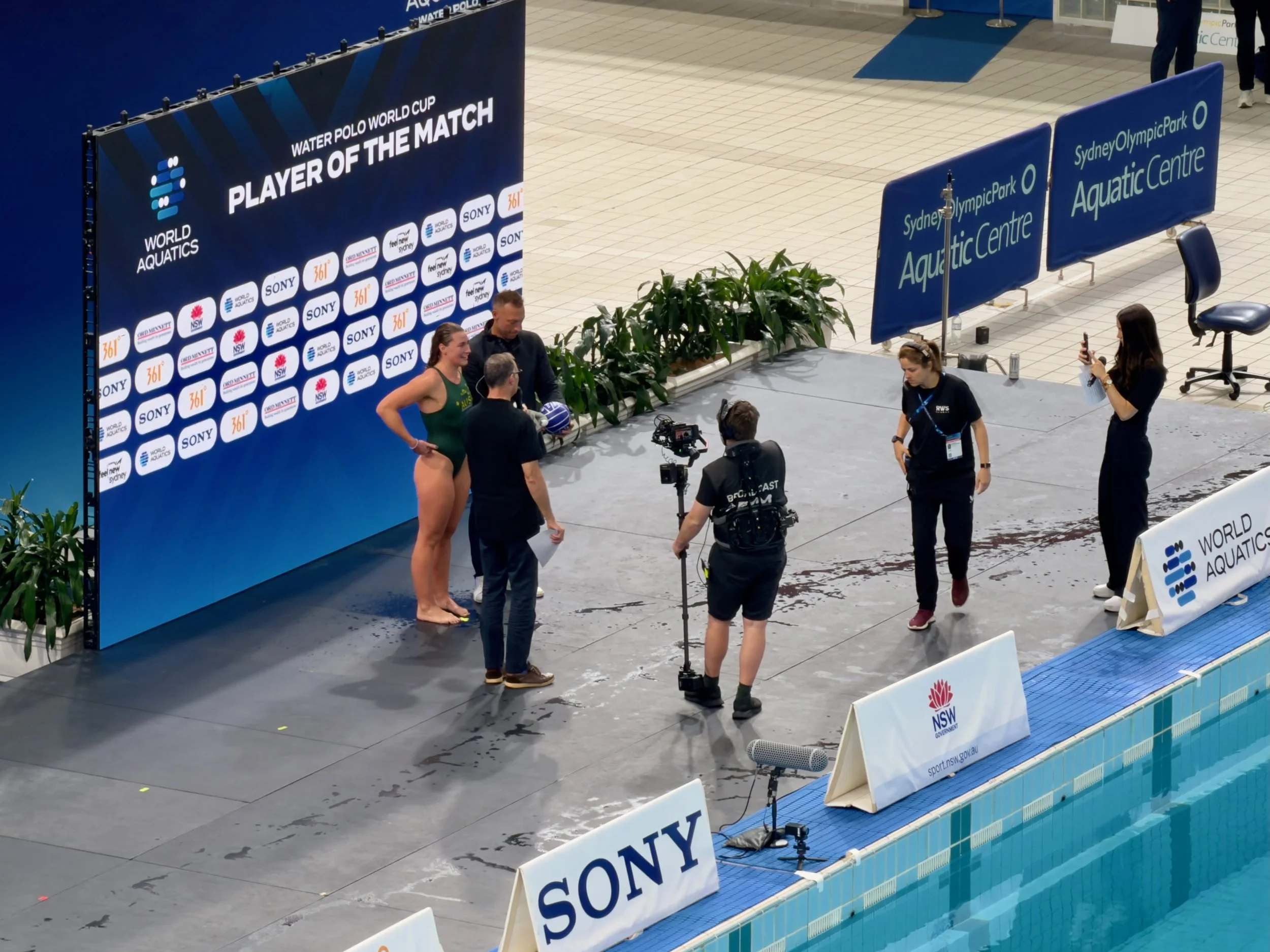
Australia controlled the final seconds, held the ball rather than forcing another attack and secured the bronze medal. The players acknowledged the crowd afterwards, clearly aware that this had not felt like an ordinary tournament match. One later spoke about having played in front of larger crowds elsewhere but suggested that nothing compared with receiving that kind of support at home. It was the sort of comment athletes are expected to make, but this one felt believable.
The venue had changed since the previous day. The crowd engagement was a little more ambitious, although it remained relaxed rather than forced. There was singing, organised cheering, Olympic gold medallists being acknowledged and children being encouraged to run around the concourse. AC/DC appeared regularly whenever Australia played. Families created their own entertainment. I noticed several groups in which different family members had chosen different teams. A child might support one country, a parent another. Suddenly a match between two neutral teams carried family bragging rights. Goals became opportunities to turn around and make sure everyone else had noticed.
The Americans had their own supporters for the women’s gold medal match against Spain. They appeared in force, filled part of the venue with chanting and then seemed to dissolve again once their team had finished. Spain had support too, and the match deserved it. Spain repeatedly fought their way back into the contest, but the United States played well enough to win.
The crowd around each game seemed to form and reform. Some people were there all day. Others arrived for one match and disappeared soon afterwards. Vacant seats were quickly filled by someone else. At times it was difficult to know whether people had left the venue or simply moved to another section. I sat in almost exactly the same place for most of both days, which made the movement around me more obvious. Perhaps a third of the people in the nearby rows changed at some point. One person told me they had only moved seats. Another had arrived specifically for the Australian men’s bronze medal match.
That game brought the day’s major disappointment. Australia did not play to its potential and lost heavily. Their finishing was poor, the game became increasingly frustrating, and the coach received a yellow card. The crowd grew agitated with some decisions, although my limited understanding of the sport made it difficult to know which complaints were justified and which belonged to the normal emotional rhythm of supporting a team.
The Australian men’s defeat also changed the venue. Some people left. Many stayed. The most obvious reason for attending had disappeared. The Australian men would not win a medal. Yet a sizeable crowd remained for the two international gold medal matches that followed.
Around me were shirts, jackets and caps belonging to water polo clubs from across New South Wales and possibly further afield. There were families with teenage boys who appeared to know far more about the players and the tournament than I did. Some wore Australian clothing that looked less like merchandise and more like official team kit. There appeared to be another event taking place around the visible event. Perhaps there had been junior matches earlier in the day, before the gates opened. Perhaps there were development programs, coaching sessions or club gatherings elsewhere. I never confirmed it. What was clear was that many people had arrived with connections extending beyond the matches in front of them. They knew players. They recognised coaches. They exchanged gear.
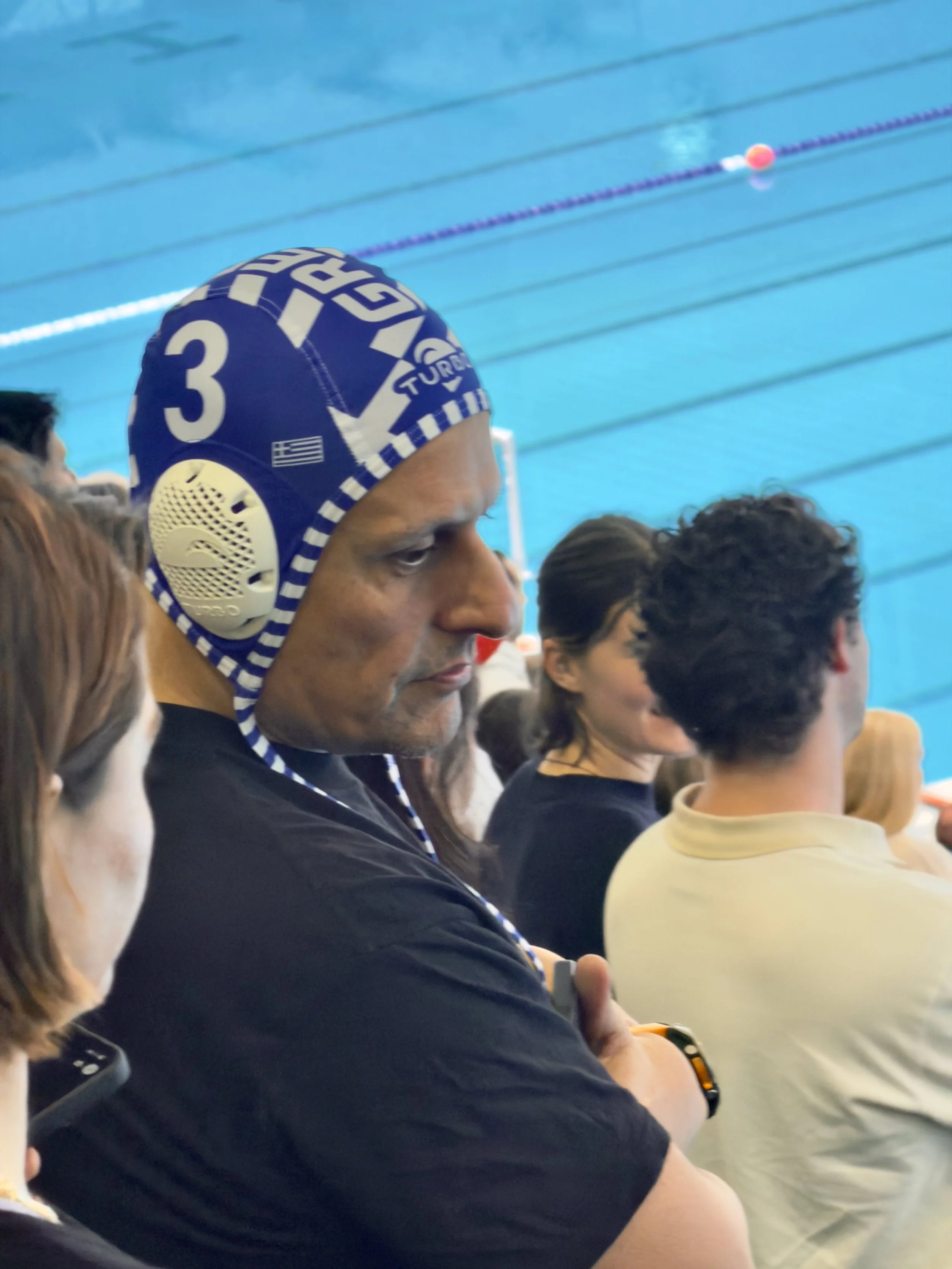
One young supporter wore a Greek player shirt. His family explained that the shirt had come from a Greek player after an exchange involving Australian kit. It was a small story, almost lost between games, but it suggested relationships were being built away from the stands.
The World Cup was more than a tournament. It was also a gathering.
There were players and parents, coaches and club members, former Olympians and future hopefuls. Some people watched with the intensity of experts. Others reacted only to the obvious moments, the goals, saves and exclusions that required no detailed knowledge. I belonged firmly to the second group.
The type of cheering changed during the international finals. Earlier in the weekend, much of the crowd seemed to understand the sport instinctively. Reactions came before I had fully processed what had happened. By the final night, there were more supporters driven primarily by national identity. They made noise for the obvious successes and were less likely to complain about technical details they may not have understood.
They had simply arrived through another door.
One spectator had watched the Australian women win Olympic gold at Sydney 2000 and had remained interested in water polo ever since. He did not play the sport. He had no child competing. Twenty-six years later, a memory had been strong enough to bring him back to the same precinct to watch another international tournament.
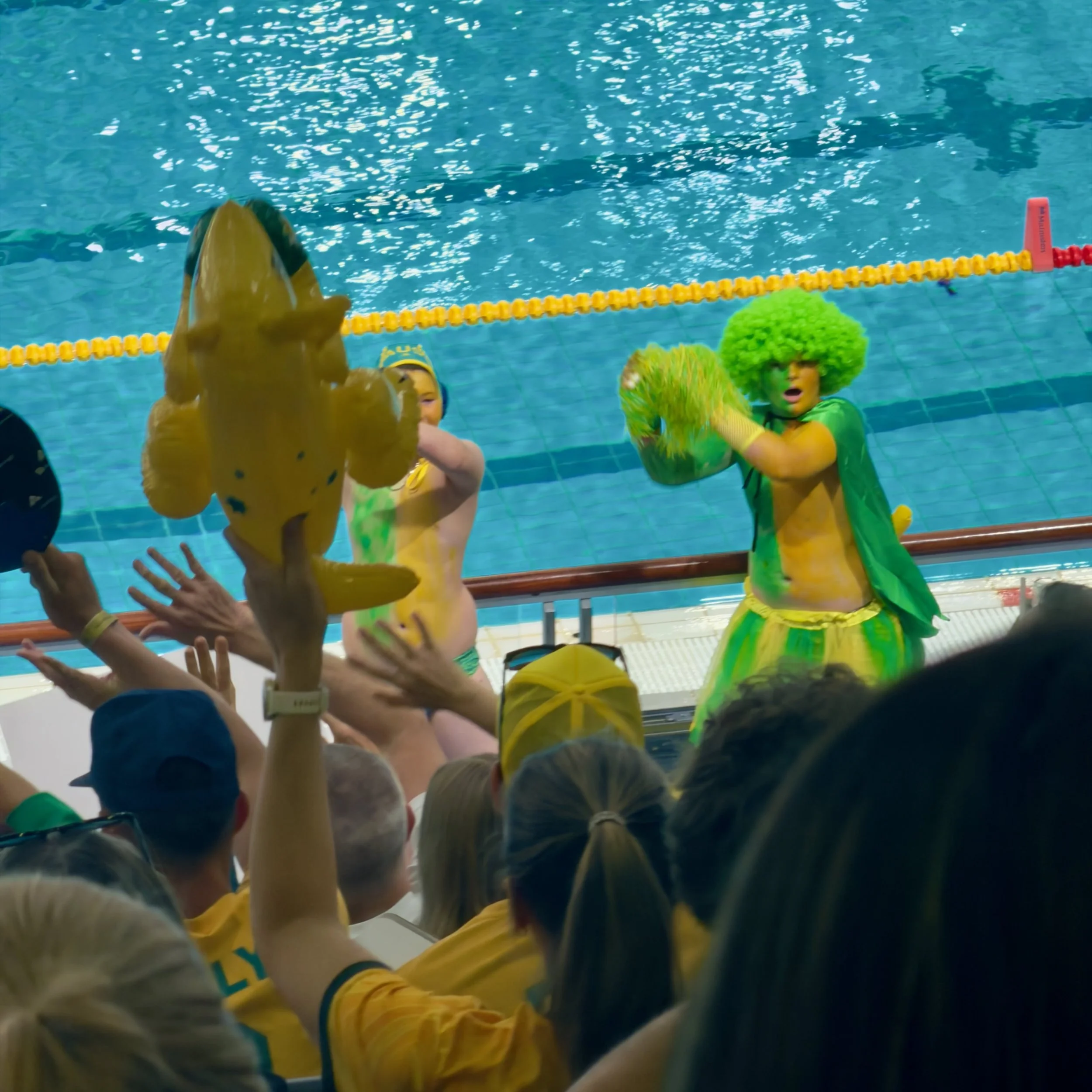
Another couple had attended the AFL nearby. They had not known the Water Polo World Cup Finals were taking place, saw the event while returning to their car and bought tickets at the gate. They found the tournament by accident. Another couple I spoke to had only bought their tickets the previous week despite already being water polo supporters. They had barely known the tournament was happening either.
The spectator guide emailed before the event had been excellent, especially for someone trying to learn the rules and understand what they were about to watch. Those who did arrive were rewarded.
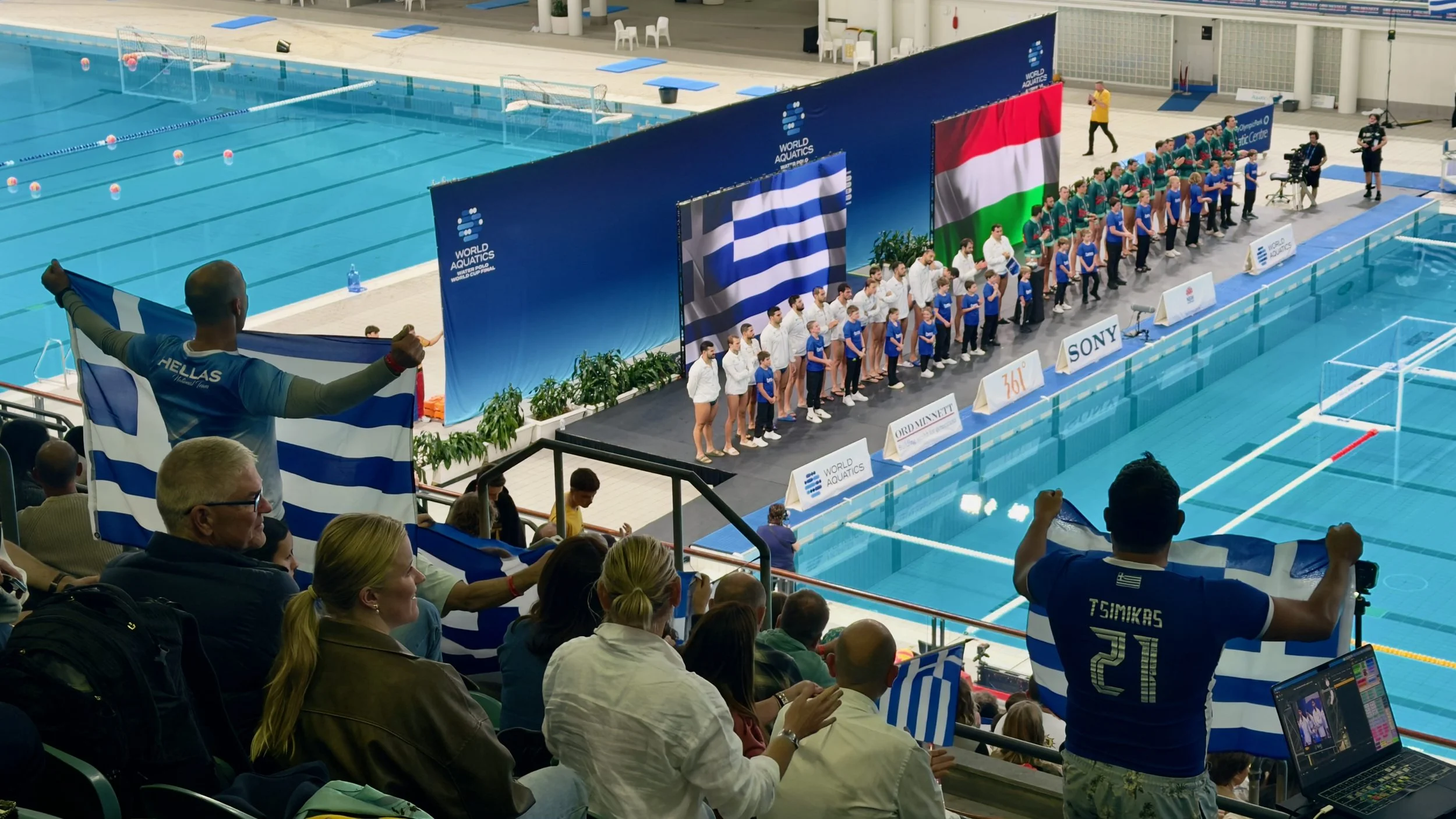
The men’s gold medal match between Greece and Hungary became the outstanding contest of the weekend. For much of the match, neither team could escape. With forty-five seconds remaining, the scores were level and a penalty shootout appeared increasingly likely. Greece scored, defended the final seconds and won the World Cup. The quality of the match was excellent, but the crowd made it something more.
Greek supporters were scattered throughout the venue. Hungarian supporters occupied a more concentrated section and may have been louder per person. Both groups arrived with flags, shirts and voices capable of filling an indoor aquatic centre. Earlier, when only the Greek supporters had become obvious, the match had briefly felt as though it were being played in Athens rather than Sydney. Then the Hungarian section came alive, and the atmosphere became more balanced. The Greeks did not generally refer to themselves as Greek. Their shirts and chants carried the name Hellas, the name their people have used for their country for centuries. Once I understood that, the repeated chant took on more meaning. It was not simply encouragement for a team. It was an expression of identity.
The crowd began clapping in rhythm with the shot clock. With about ten seconds remaining in a possession, the clapping started slowly. It then increased in speed as the clock counted down, building pressure until the shot was taken. Every possession ended with a release: a goal, a save, a turnover or collective disappointment. It had not happened in any other match.
The final brought together everything the weekend had gradually revealed. National pride. Sporting knowledge. Family loyalty. Old memories. New discoveries. People who had travelled, people who lived nearby and people who had found the event by accident.
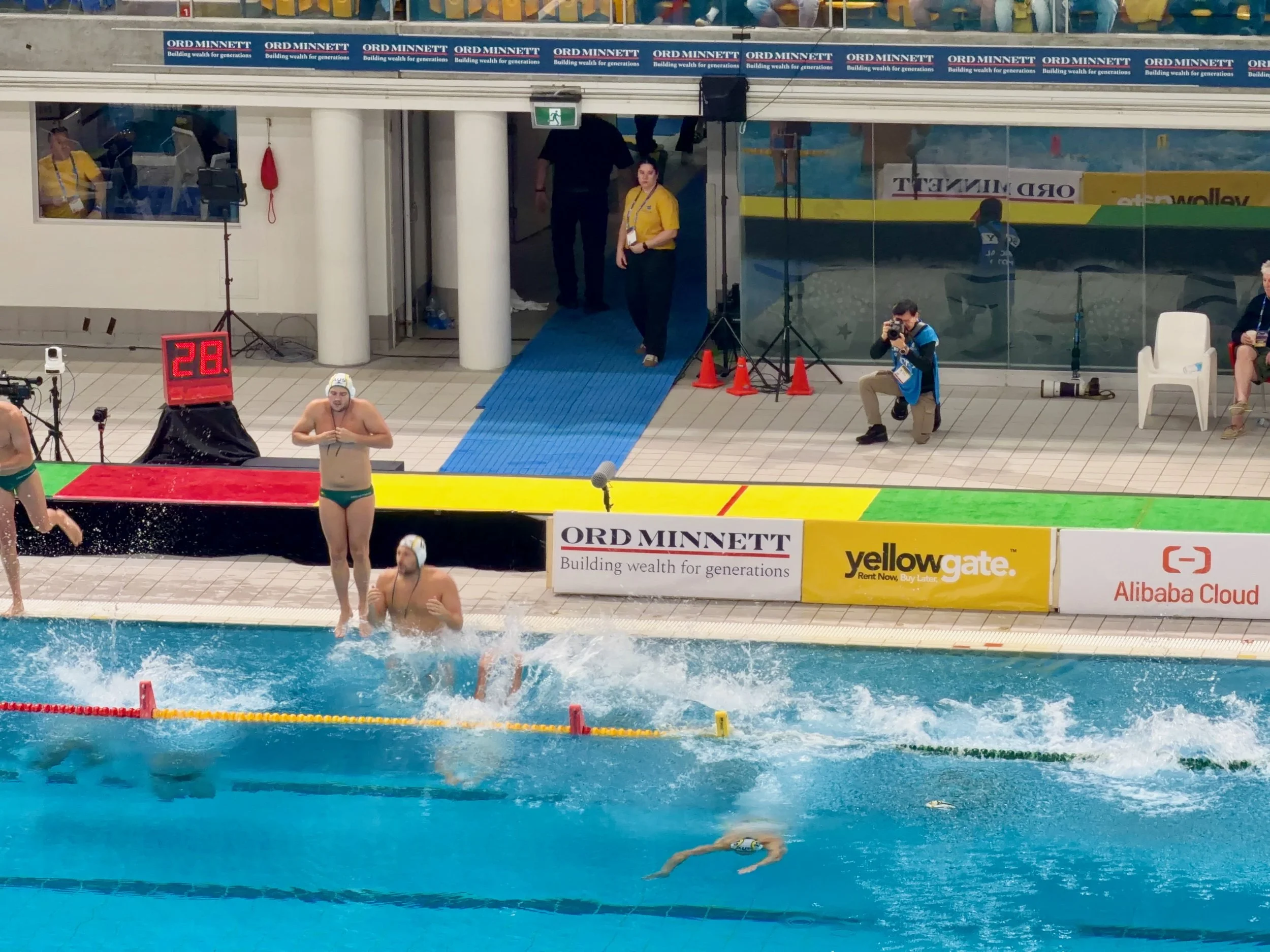
Even the television crew became part of the spectacle. A camera operator spent much of the second half moving between the Greek and Hungarian sections, trying to capture the noise as play shifted from one end of the pool to the other. Much of that work was clearly intended for the broadcast audience rather than the screens inside the venue. The most memorable camera moment was not deliberate. A low camera positioned behind one of the goals was struck by a ball and knocked into the pool. The crowd laughed. It was attached to a tether, quickly retrieved and returned to position. Even the equipment had briefly become involved.
The match finished, the medals were presented, and players gradually began leaving the pool area. I had already watched the women’s ceremony and left before the men’s presentation was complete, but the medal presentation was fascinating. Former Australian athletes, including Olympians, were included in the presentations and recognised by the crowd.
Members of the Australian teams emerged onto the bridge spanning the two grandstands above the pool deck. They stopped for photographs, signed autographs and spoke with supporters. The Australian men had missed a medal and could easily have disappeared. Instead, a large part of the team appeared willing to give their time to families and children waiting there. The players seemed to understand that supporting the sport involved more than playing the game.
By then, the question had become difficult to ignore. Why were all these people here? Nobody seemed to have the same answer.
Some had travelled halfway around the world to support their country. Others had come because their children played water polo, or because they had played it themselves. Some were reconnecting with a sport they had first fallen in love with during the Sydney 2000 Olympics. Others had discovered the tournament by accident.
I had come because I wanted to experience another live sport. We had all spent the weekend around the same pool. We had all watched the same matches. But I don't think any two of us had quite the same experience. The scoreboard decided who won the Water Polo World Cup. It never explained why so many different people chose to spend their weekend around the same pool.
By the end of two days, I realised everyone had a different answer.