Australia v New Zealand - 3rd Women's T20 International
North Sydney Oval, 22 October 2026
Three matches at North Sydney Oval in five days. Sunday, Tuesday and now Thursday. Unfortunately, the weather wasn't particularly interested in the third.
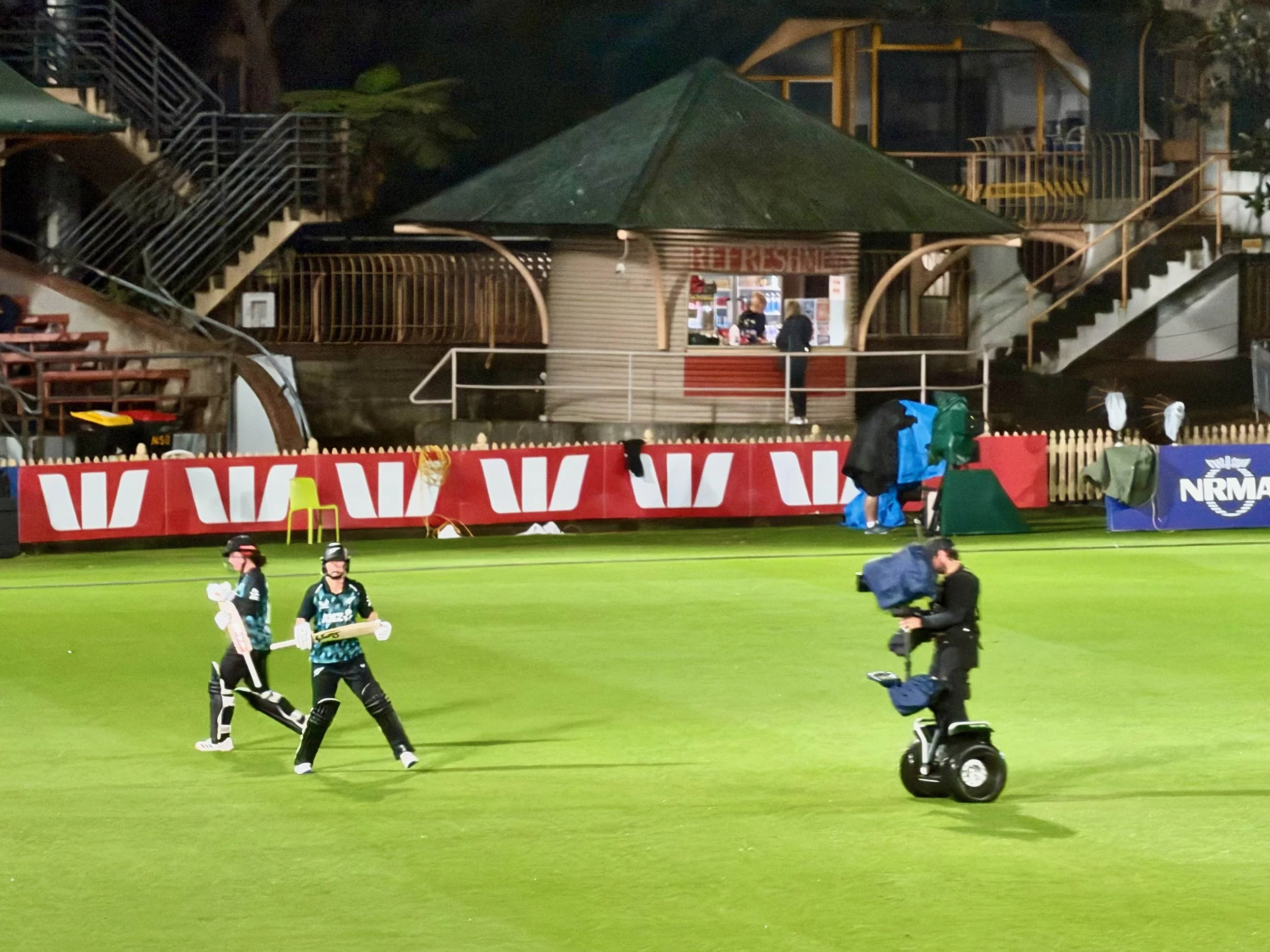
The forecast had been questionable all day, but I arrived about 45 minutes before the scheduled 7.15 pm start. A hot dog, a drink and a seat in the northern stand. The players were warming up, the ground staff had their wet-weather equipment ready, and everything appeared to be proceeding normally.
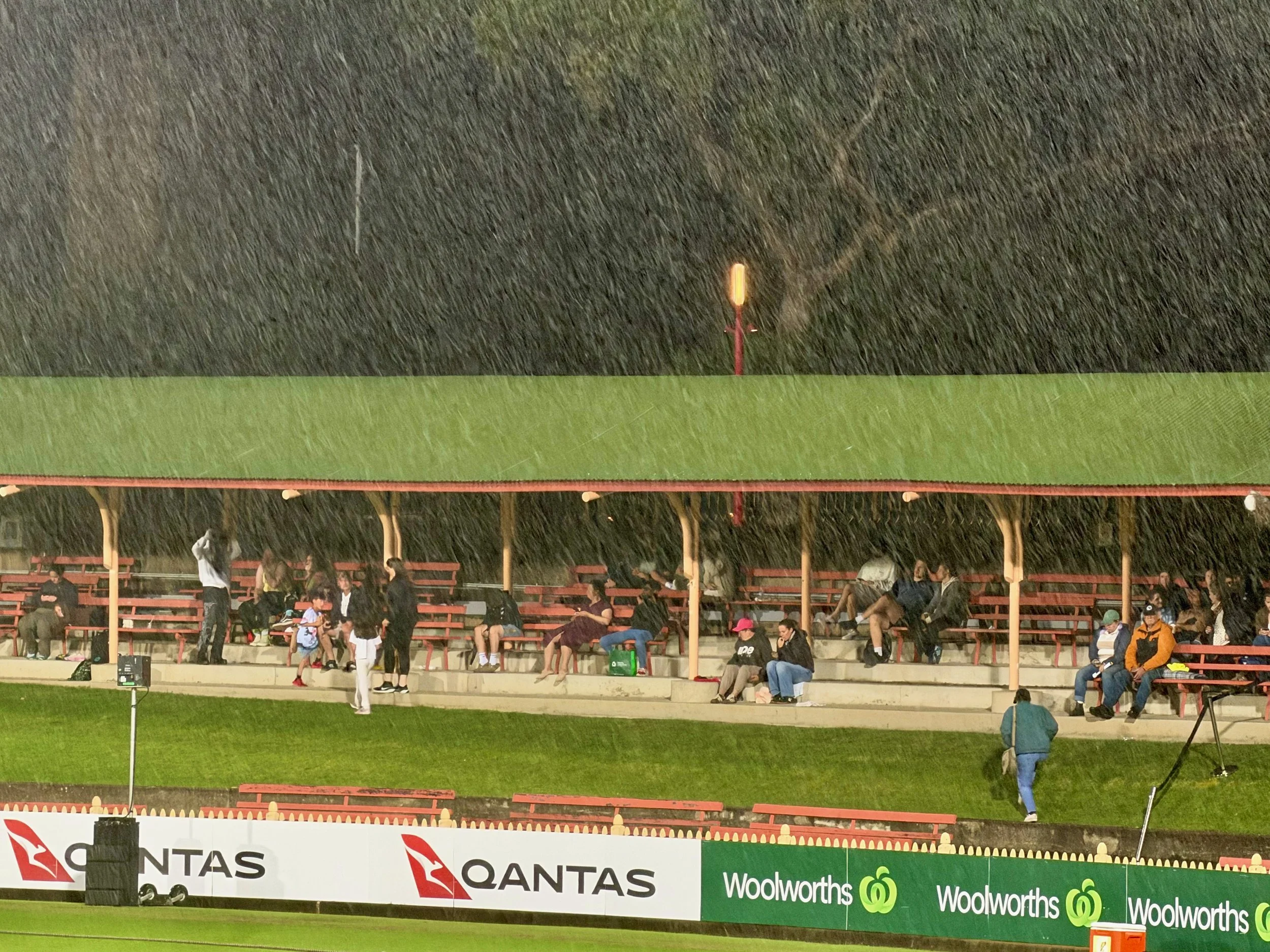
There was a little rain as I entered. Fifteen minutes later, there was considerably more.
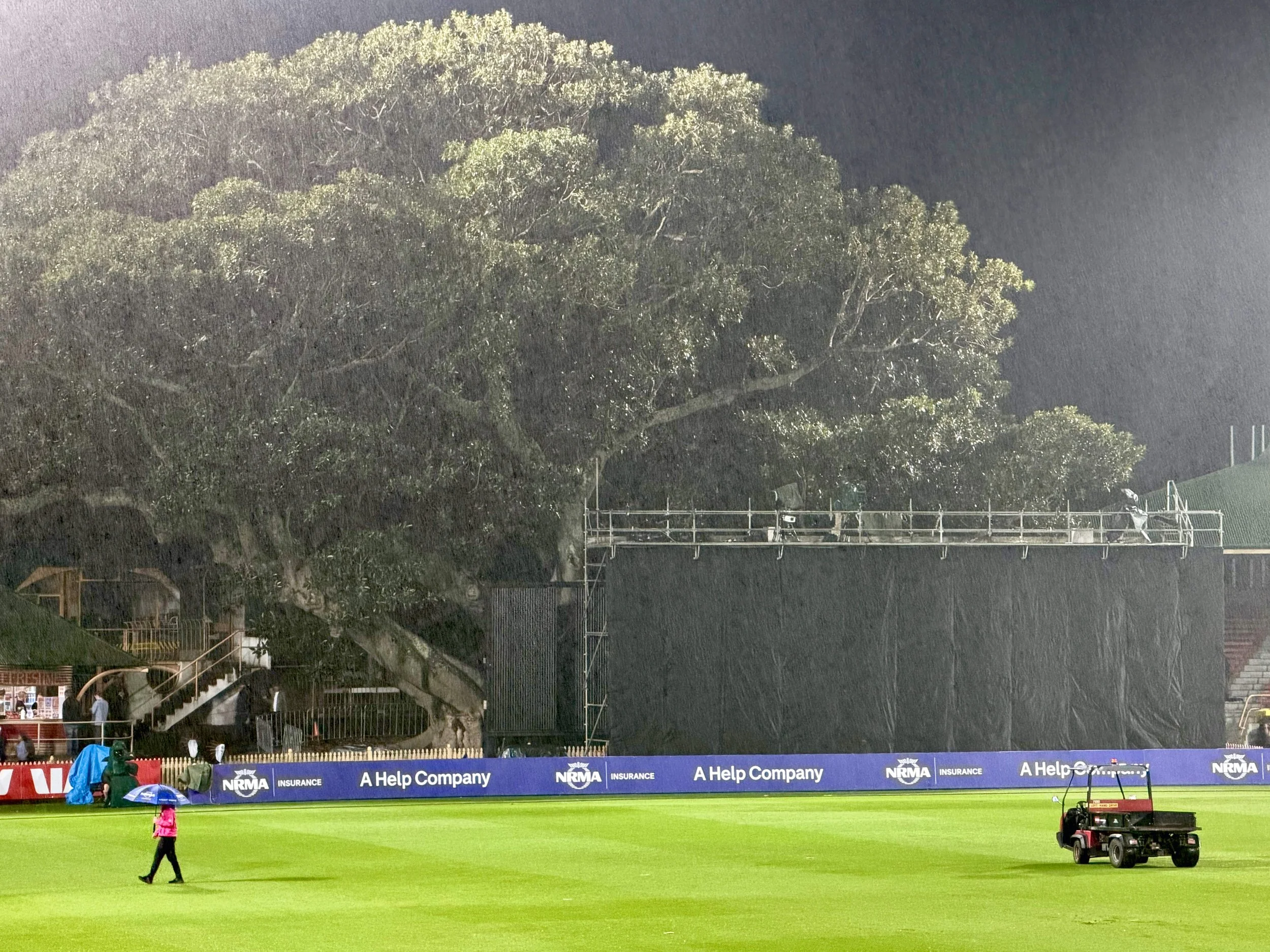
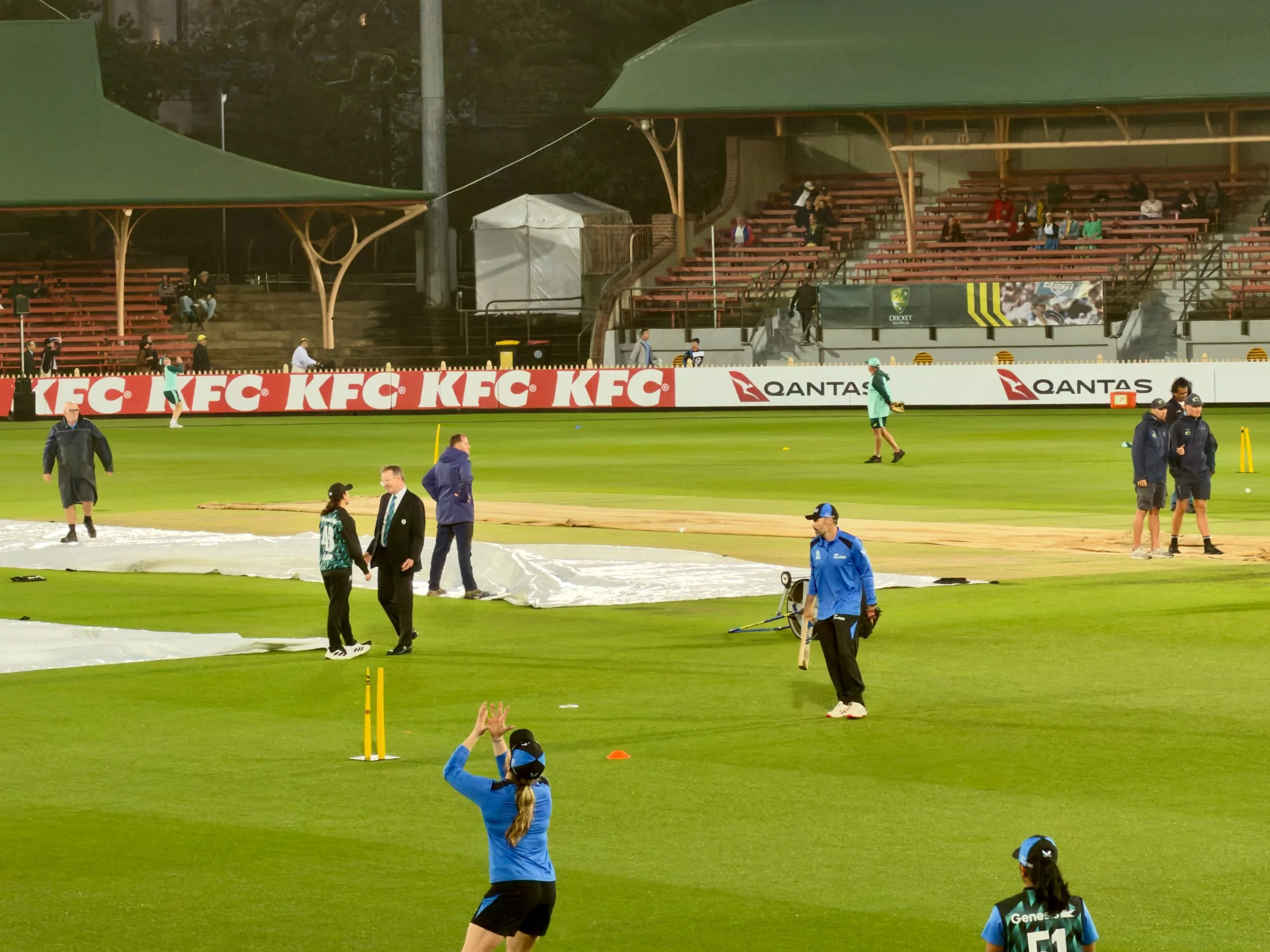
The covers came out, the players disappeared, and we waited.
Eventually, more than an hour late, cricket began. New Zealand managed 11 runs and lost two wickets in 16 deliveries. Sophie Molineux and Kim Garth each took a wicket, giving the small crowd something to applaud.
Then it rained again.
And we waited some more.

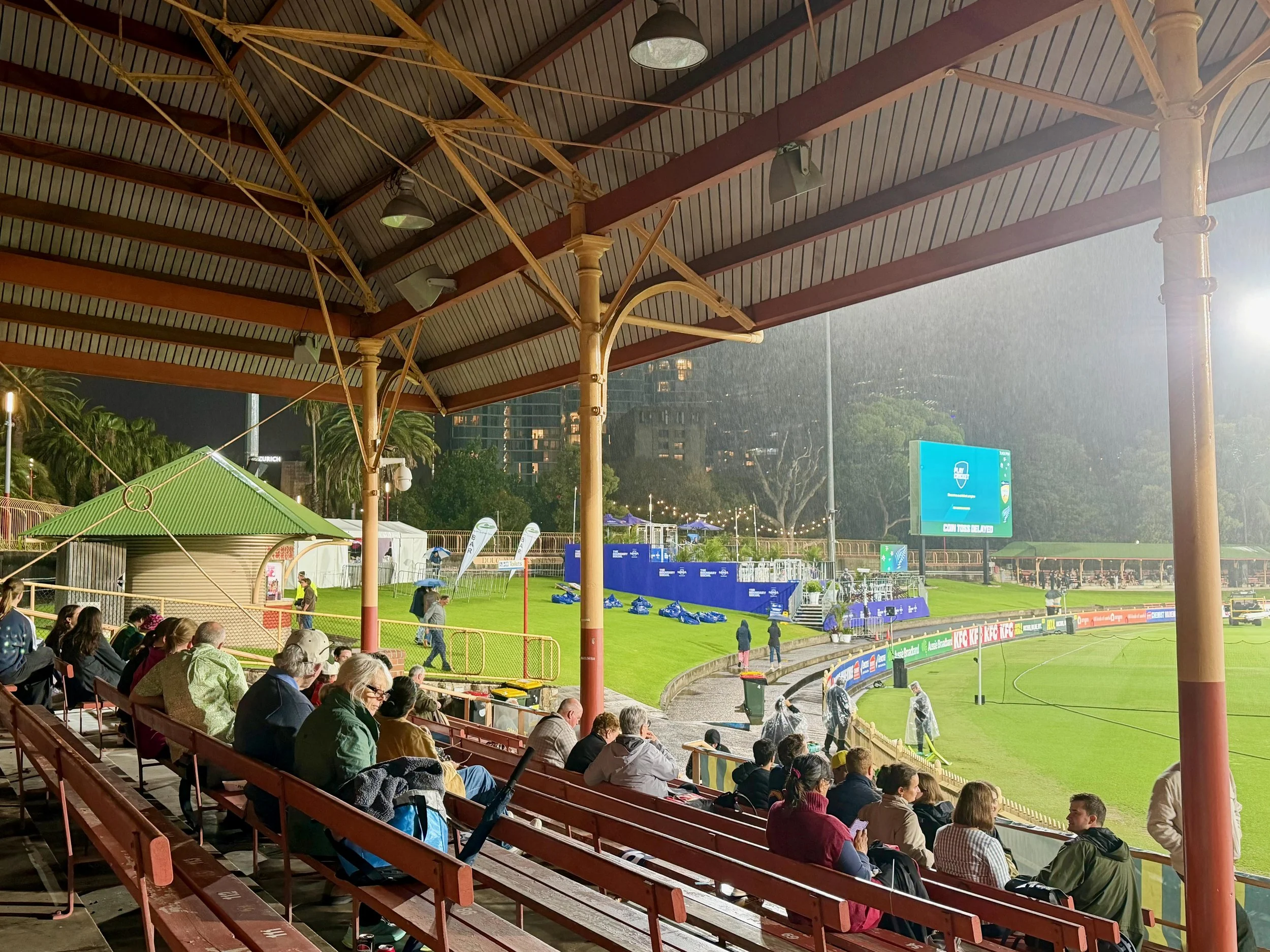
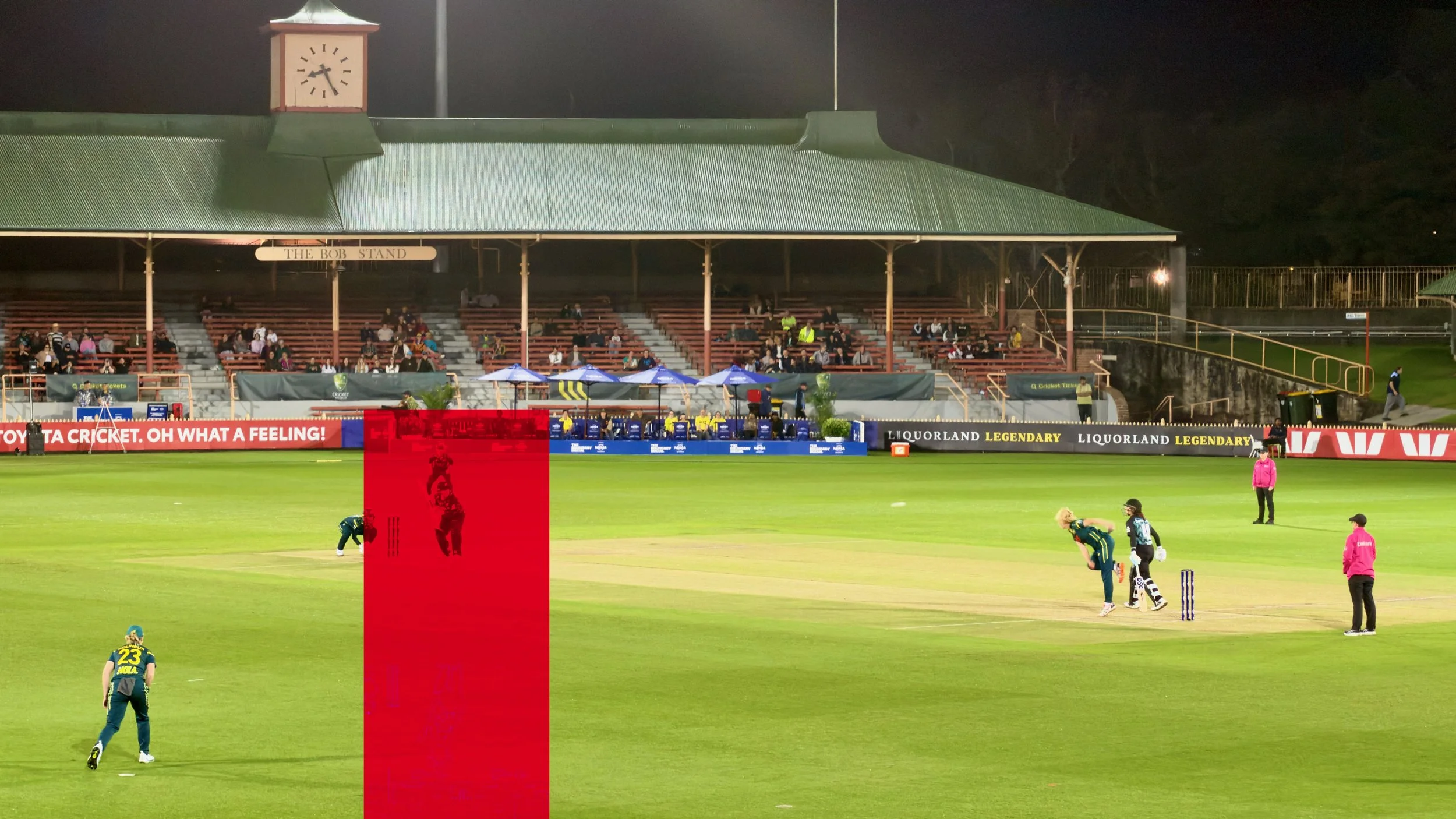
I'd moved to the western stand for a different perspective, although there wasn't much cricket to view from either position.
With little happening on the field, there was plenty of time to appreciate the old wooden stands. Small seats, closely spaced rows, roof supports obstructing the view and structural bracing that seemed to vary from one building to another. None of the uniformity or unobstructed sightlines expected of modern stadiums.
Their imperfections are part of their appeal.
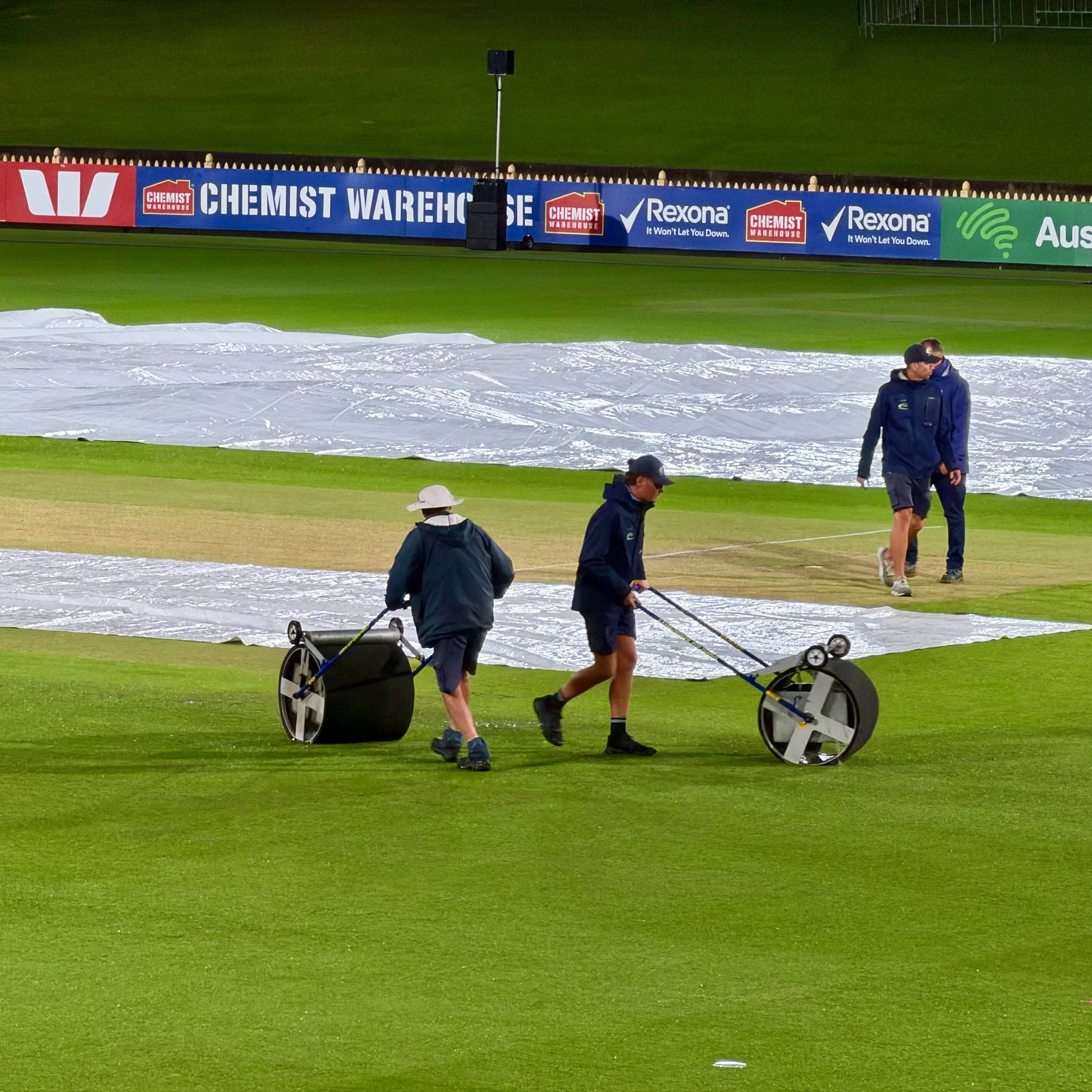
There was also plenty of time to watch the ground staff.
Several layers protected the pitch, with the larger tarpaulin secured against the wind using weights and pegs. Removing it required just as much care, rolling the cover so the accumulated water could be collected and removed with large absorbent rollers.
It was a well-practised routine, repeated whenever the weather offered another opportunity to play.
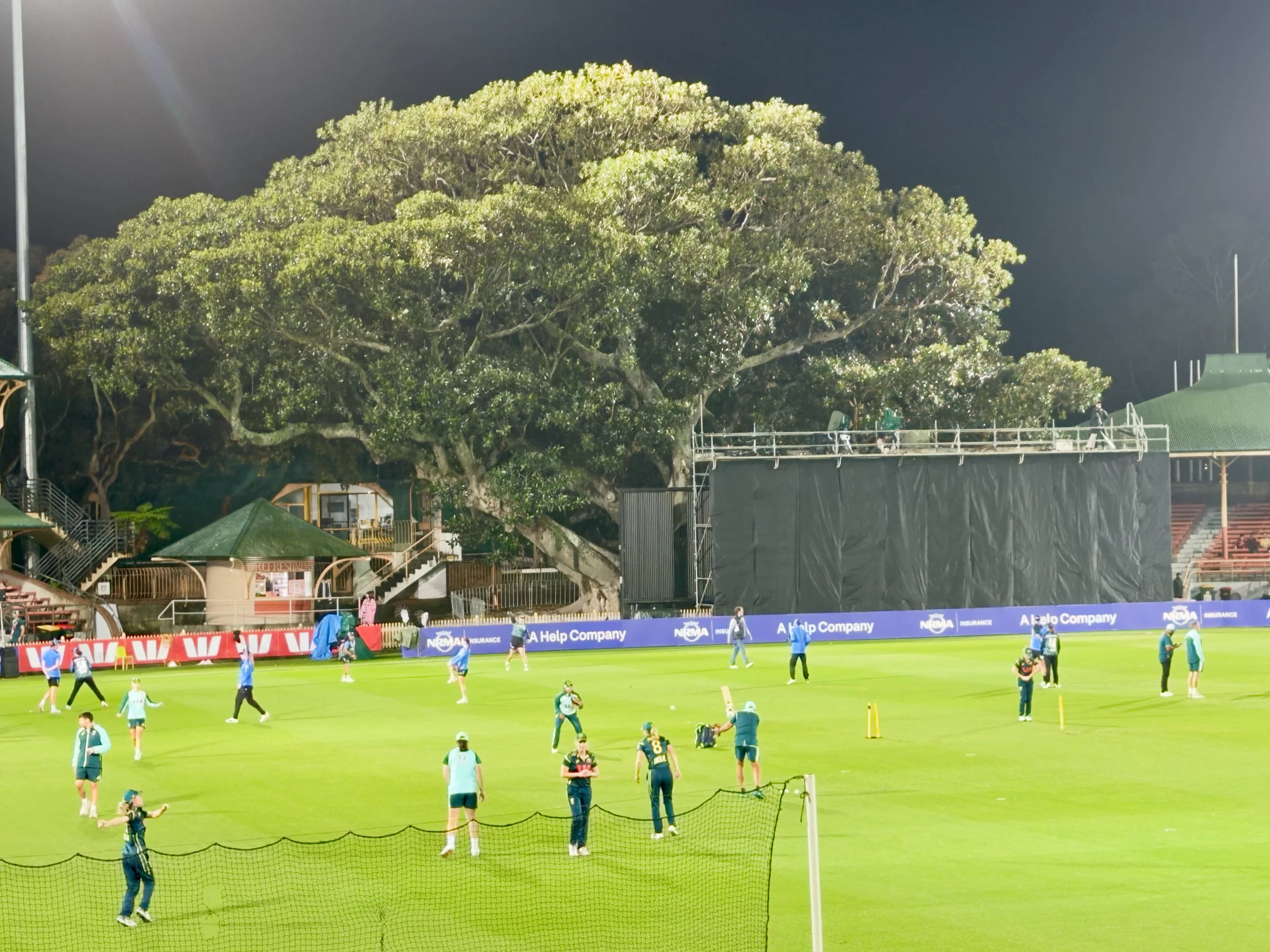
The players were getting plenty of practice too.
Over the evening, I watched the Australians go through essentially the same warm-up routine three times. The same groups returned to the same parts of the ground. Some practised long catches, others bowled or threw balls around, while a few kicked a football between themselves.
Each group had its own routine, repeating familiar movements and getting comfortable with the conditions. Between the players and ground staff, there was considerably more preparation than actual cricket.
Fortunately, I had other cricket to follow.
Australia's men were playing a Test in South Africa, which I was listening to, while NSW were trying to finish off Western Australia in their Sheffield Shield match in Perth. Their opponents' last-wicket resistance was proving considerably more effective than expected.
So while the cricket in front of me had stopped, my evening of cricket hadn't.
Around nine o'clock, spectators began leaving. There had only been a few hundred to begin with, although the atmosphere had been pleasant. I recognised some familiar faces from the previous two matches. Clearly, I wasn't the only one committed to attending the entire series.
Then something happened.
The rain stopped, the covers came off, and the ground staff began preparing the field. Players returned to warm up, and the remaining spectators showed renewed interest. There was even talk of squeezing in the minimum five overs per side required for a result.
For a few minutes, it looked possible.
Then it rained again.
At 9.46 pm, the match was officially abandoned.
Australia had already secured the series and retained the Rose Bowl. Cricket Australia also confirmed that tickets would be refunded, with the email from Ticketek arriving before I reached home.
I'd spent more time watching players warm up than actually play cricket.
At 10.40 pm, I stepped off the train at Hornsby. The mall was completely dry. Not drying out after rain, but dry as though it hadn't rained all evening.
Twenty kilometres away, we'd spent hours waiting for it to stop.